How Much Toe Room in Shoes
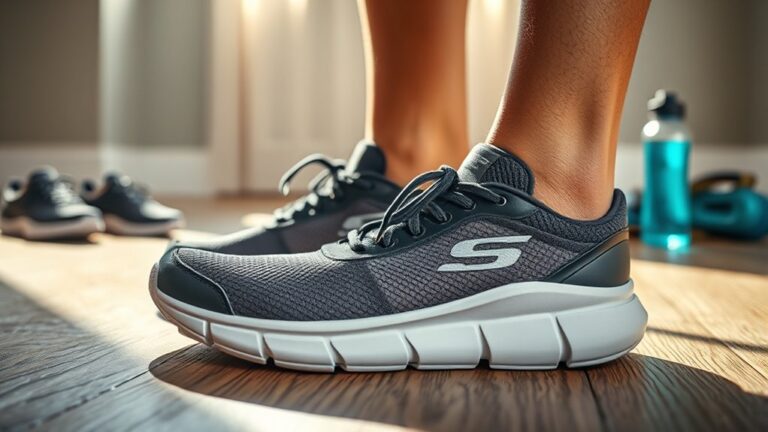
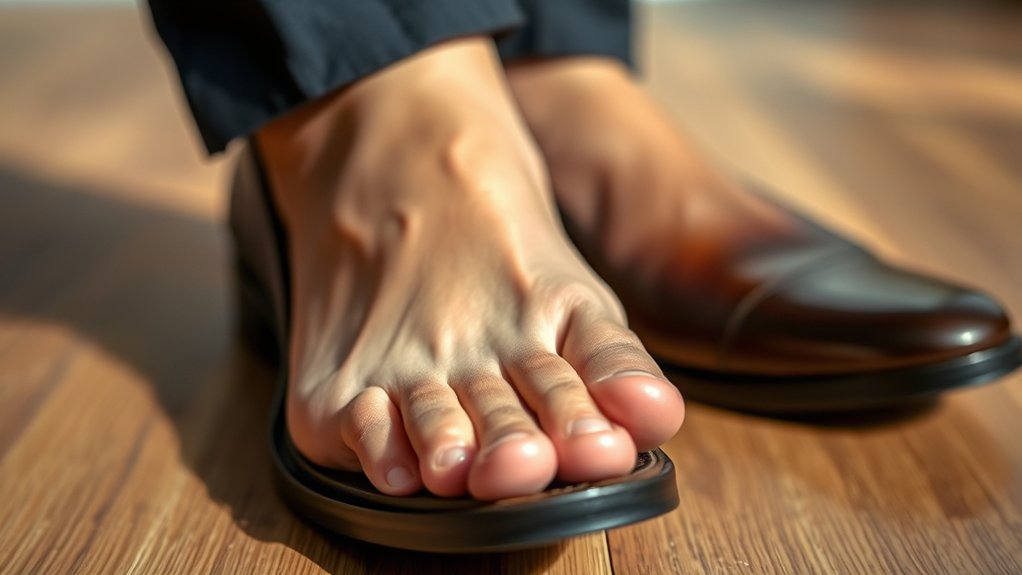
You need about half an inch of toe room in shoes to ensure your toes can move freely without feeling cramped. This space allows natural toe splay, reduces pressure points, and supports proper foot alignment. Measuring by fitting one finger between your longest toe and the shoe’s end helps confirm the right fit.
Insufficient toe room can cause deformities and discomfort, while too much leads to instability. Understanding these details ensures better comfort and foot health as you explore more.
Key Takeaways
- Aim for about a half-inch (roughly one finger’s width) of space between your longest toe and the shoe’s interior end.
- Ensure toes can move freely without feeling cramped to prevent discomfort and foot deformities.
- Test toe room by comfortably fitting your index finger between longest toe and shoe tip while standing.
- Balance toe box flexibility with adequate arch support for optimal foot comfort and function.
- Different shoe types require varying toe room; running shoes need more space than dress shoes for expansion.
How Much Toe Room Do You Really Need?
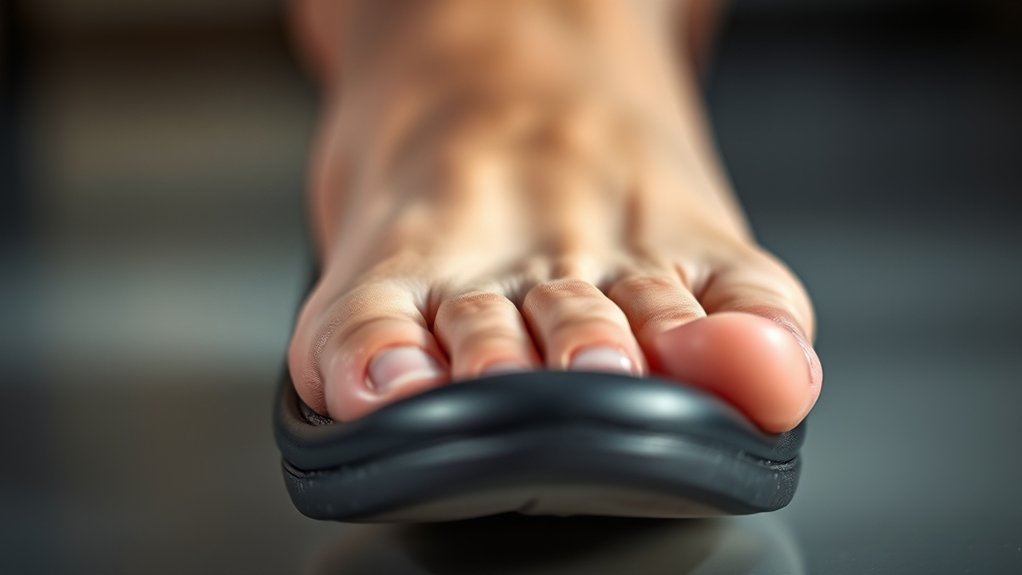
How much toe room do you really need in your shoes? Ideally, you want enough space to allow your toes to move freely without feeling cramped, which helps maintain natural foot mechanics.
The toe box flexibility plays a crucial role here; a flexible toe box adapts to your foot’s shape during movement, preventing pressure points. However, having ample toe room alone isn’t sufficient—you also need proper arch support to maintain overall foot stability.
Arch support ensures your foot’s longitudinal arch stays aligned, reducing strain on your toes and forefoot. In summary, balance toe box flexibility with adequate arch support to achieve optimal comfort and function. Too little toe room restricts movement, and insufficient arch support compromises foot health.
Why Enough Toe Space Is Crucial for Foot Health
Balancing toe box flexibility with proper arch support sets the foundation for foot comfort, but providing enough space for your toes goes beyond comfort. It directly impacts your foot’s health. Insufficient toe room can cause structural and functional issues that degrade foot health over time.
Balancing toe box flexibility and arch support is essential, but ample toe space is crucial for long-term foot health.
When you allow adequate toe space, you:
- Prevent deformities like bunions and hammertoes caused by crowding.
- Promote natural toe splay, which improves balance and weight distribution.
- Reduce pressure points, minimizing the risk of blisters, corns, and calluses.
- Enhance circulation and reduce nerve compression, preventing numbness and pain.
Ensuring proper toe room preserves the anatomical integrity of your feet, supporting overall mobility and comfort throughout daily activities.
How to Measure Toe Room When Trying on Shoes
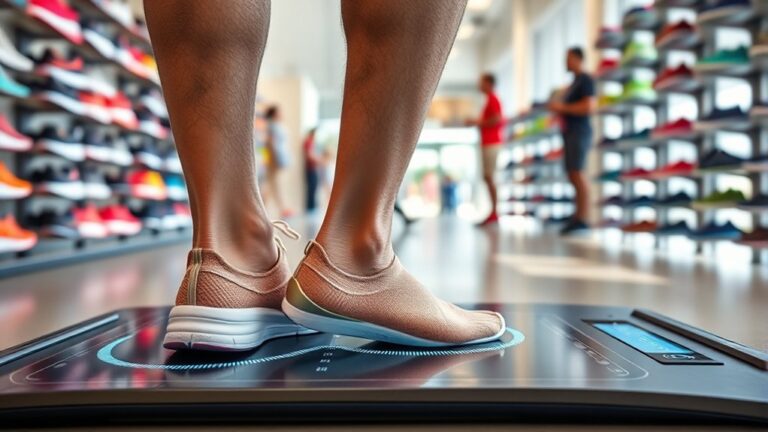
When checking toe room in shoes, you’ll want to guarantee there’s enough space to allow natural toe movement without causing slippage or excessive tightness. Begin by performing a toe measurement using a ruler or a specialized shoe measuring device to determine the length from your longest toe to the front of the shoe’s interior.
Next, conduct toe space testing by placing your index finger between your longest toe and the shoe’s end; ideally, you should fit one finger comfortably without force. Walk around briefly to assess if the toes have unrestricted movement without sliding.
Repeat these steps on both feet, as they can differ in size. Accurate toe measurement and systematic toe space testing ensure the shoe fits well, promoting comfort and foot health.
Signs of Poor Toe Room in Shoes
After accurately measuring and testing toe room, recognizing the indicators of inadequate space becomes essential to avoid discomfort and foot problems. Many toe room myths and shoe sizing confusion lead people to overlook these signs.
Here are four clear indicators you should watch for:
- Toe Crowding: Your toes overlap or are forced into unnatural positions.
- Pressure Points: You feel tightness or pinching around the toes when standing or walking.
- Nail Discoloration or Damage: Constant friction causes bruised or thickened nails.
- Blisters or Calluses: Skin irritation appears on toes due to insufficient space.
Identifying these signs promptly helps you choose shoes with proper toe room, preventing long-term issues and debunking common misconceptions about shoe sizing.
What Happens If Your Shoes Are Too Tight or Too Loose?
Why does the fit of your shoes matter so much? Proper shoe fit, especially adequate toe room, directly affects foot health and comfort. If your shoes are too tight, they compress your toes, restricting circulation and causing blisters, calluses, or even nerve damage.
Tight shoes can also lead to deformities like bunions and hammertoes over time. Conversely, shoes that are too loose fail to provide necessary support, causing your foot to slide forward and increasing friction.
This lack of secure fit can result in blisters, instability, and an increased risk of injury. Ensuring the right balance in toe room and overall shoe fit helps maintain natural foot alignment, promotes proper gait, and prevents discomfort or long-term damage.
Always prioritize precise measurements when selecting shoes.
How Toe Room Needs Vary by Shoe Type and Activity
Understanding the importance of proper toe room sets the foundation for selecting shoes suited to specific activities and designs. When exploring toe box width, you must consider how different shoe types accommodate your foot during varied movements.
Also, factor in the impact of sock thickness, which can alter the effective space in your shoe. Here’s how toe room needs vary:
- Running shoes: Require extra toe box width for forward foot expansion and thicker socks.
- Dress shoes: Offer minimal toe room for a snug fit, often paired with thinner socks.
- Hiking boots: Demand moderate toe space to prevent pressure during uneven terrain walks.
- Casual sneakers: Provide balanced toe room for all-day comfort with average sock thickness.
Adjust your choice accordingly to optimize fit and performance.
How to Adjust Toe Room Without Losing Fit
How can you increase toe room in your shoes without compromising overall fit? First, debunk common toe room myths. More length doesn’t always mean better comfort.
Increasing toe room isn’t just about length; debunk common myths for better shoe comfort.
Instead, focus on optimizing space with strategic lacing techniques. For example, using a “heel lock” or “runner’s tie” can secure your foot, preventing slippage while slightly loosening tension around the toe box.
Experiment with skipping eyelets near the toes to relieve pressure without altering shoe length. Additionally, consider stretching only the toe box area using specialized tools, ensuring the rest of the shoe maintains its structural integrity.
These precise adjustments help maintain proper fit and support, avoiding issues like instability or rubbing. By understanding and applying these methods, you can tailor toe room effectively without sacrificing overall shoe performance.
Top Brands With Comfortable Toe Room
Which shoe brands prioritize toe room without sacrificing overall fit and performance? You’ll find that these brands carefully balance brand fit standards and material stretch to enhance comfort.
- Altra Known for a foot-shaped toe box, Altra ensures natural toe splay with consistent brand fit across models.
- New Balance Offers wide toe boxes and uses engineered mesh for controlled material stretch, maintaining stability.
- Keen Features a roomy toe box combined with durable materials that adapt without compromising support.
- Brooks Integrates flexible uppers with precise brand fit sizing, allowing adequate toe room while preserving performance.
Choosing any of these will give you enough toe room, thanks to their technical design focused on comfort and function.
Frequently Asked Questions
Can Toe Room Affect Balance and Posture?
Yes, inadequate toe room can disrupt your balance and posture by restricting natural foot movement.
Ensuring proper toe room allows your toes to spread, improving stability and alignment, which supports optimal balance and posture during activities.
How Does Toe Room Impact Running Performance?
Toe room directly impacts your running performance by allowing natural toe splay, enhancing balance and propulsion. Insufficient space restricts movement, causing discomfort and inefficiency.
Optimal toe room improves shock absorption and stride stability during runs.
Are There Special Socks That Influence Toe Room?
You’re in luck. Specialized socks exist that subtly enhance toe room by offering a precise sock fit. These socks reduce friction, wick moisture, and prevent bunching, ensuring your toes enjoy optimal comfort and mobility inside your shoes.
Can Toe Room Needs Change With Age?
Yes, your toe room needs change with age due to age-related changes like reduced foot fat and altered toe alignment. You should adjust shoe fit to accommodate these shifts, ensuring comfort and preventing deformities.
Do Custom Insoles Help With Toe Room Issues?
Custom insoles can cleverly create comfort by contouring your foot’s shape, but they don’t directly increase toe room. They optimize support and alignment, reducing pressure on toes, yet proper toe space depends on shoe design and fit.
Conclusion
You might think extra toe room makes shoes feel sloppy, but it actually prevents discomfort and long-term foot issues. Giving your toes enough space—about a half-inch from your longest toe to the shoe’s end—ensures proper circulation and balance.
By measuring carefully and considering activity type, you can find shoes that fit snugly without squeezing. Prioritize toe room to maintain foot health and enjoy lasting comfort every step you take.
Remember, how much toe room in shoes you allow plays a crucial role in keeping your feet healthy and comfortable throughout the day.