How Should Dress Shoes Fit
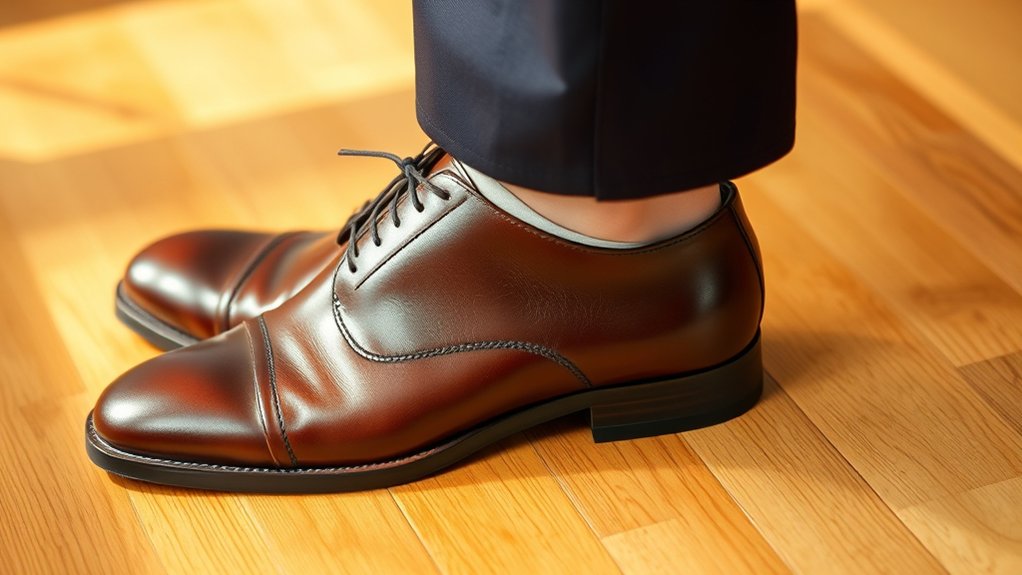
Your dress shoes should feel snug without causing pressure points or pinching, while the heel stays secure with minimal slipping. Proper dress shoe fit is essential for comfort and foot health.
Ensure there’s enough toe room for natural movement and circulation, preventing discomfort and gait issues.
The leather upper should conform smoothly, adapting with break-in to enhance fit and flexibility.
Proper width supports foot shape and prevents internal movement.
Understanding these basics helps you achieve optimal comfort and durability.
Further insights are available to refine your fit and care approach, ensuring your dress shoes remain comfortable and long-lasting.
Key Takeaways
- Dress shoes should fit snugly without pressure points, ensuring the heel stays secure with minimal slipping during walking.
- Adequate toe room is essential to prevent compression, allowing toes to move naturally and supporting proper foot function.
- Width must balance comfort and stability. Too narrow causes pinching, and too wide leads to slipping inside the shoe.
- Leather uppers should conform smoothly to the foot, gradually molding with break-in to enhance fit and flexibility.
- Break in gradually indoors, using stretchers and conditioners to maintain shoe shape, comfort, and durability over time.
Key Signs Your Dress Shoes Fit Perfectly
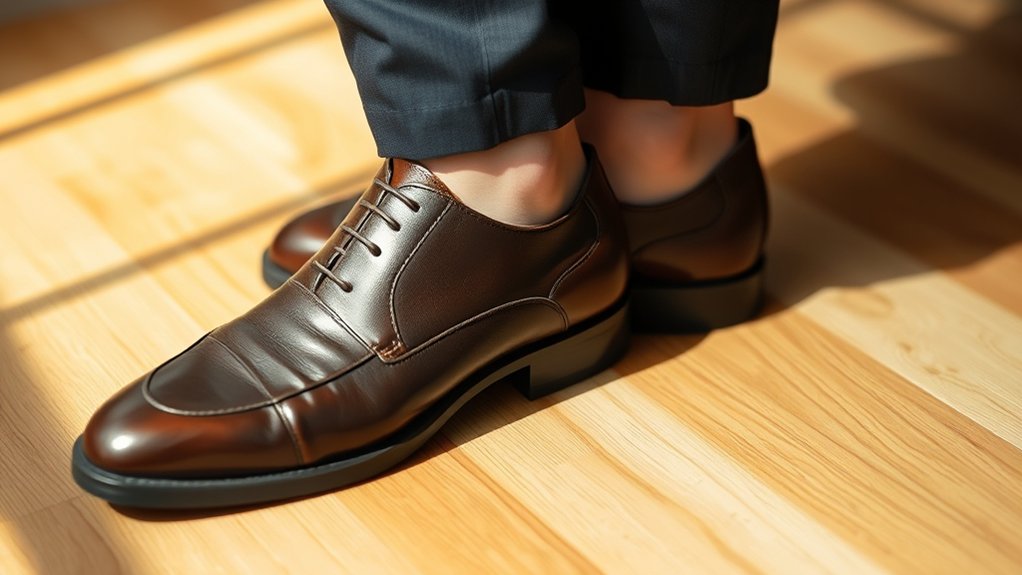
How can you tell if your dress shoes fit perfectly? First, proper shoe sizing is essential; your shoes should feel snug without causing pressure points or pinching. When you walk, your heel should remain secure, preventing slipping that leads to blisters.
Check for even contact between your foot and the shoe’s insole, ensuring no gaps reduce support. The leather upper should conform smoothly without creasing excessively, which can indicate improper fit. Additionally, well-fitted shoes allow natural foot movement without excessive tightness.
Maintaining leather care is vital to preserve shoe shape and flexibility, as dry or cracked leather can distort fit over time. Regularly conditioning the leather ensures it adapts comfortably to your foot’s contours, supporting optimal fit and longevity.
Why Toe Room Matters in Dress Shoes
Why does toe room matter in dress shoes? Proper toe room prevents compression and discomfort within the toe box, which is essential for maintaining foot health. Your toes need enough space to move slightly without being cramped, reducing the risk of blisters, calluses, and nerve pain.
When the toe box is too narrow, it can negatively impact your foot arches by altering your natural gait, leading to strain and long-term structural issues. Adequate toe room also supports circulation and helps avoid swelling during extended wear.
Ensuring the toe box accommodates your toes comfortably allows your foot arches to function optimally, providing necessary support and balance. Prioritize proper toe room to maintain foot integrity and prevent common discomforts associated with ill-fitting dress shoes.
How the Heel Should Feel in Your Dress Shoes
You should feel the heel snugly secured without any slipping or pinching. A properly fitted heel prevents blisters and provides stability as you walk.
Pay attention to comfort indicators that signal the heel is both firm and cushioned.
Heel Comfort Indicators
Where should your heel sit when wearing dress shoes to ensure comfort? Your heel should rest firmly against the back of the shoe without excessive pressure or slipping.
Proper heel cushioning is critical; it absorbs shock and reduces friction, preventing discomfort during prolonged wear. Check that the cushioning material maintains its integrity to support sole durability, which ensures the shoe withstands regular use without compromising comfort.
If your heel feels pinched or slides, the cushioning might be inadequate or the fit incorrect. You should notice a secure yet gentle hold, allowing natural movement without irritation.
Assess heel comfort by walking briefly; any soreness or instability signals that the shoe may not provide the necessary heel support for optimal comfort and durability.
Secure Fit Essentials
Ensuring your heel remains securely positioned within the shoe is a key factor in overall fit and comfort. When conducting fit testing, you should feel minimal heel slippage, as excessive movement can cause blisters and reduce stability.
The heel counter must firmly cradle your heel without causing pressure points or discomfort. Proper arch support complements heel security by maintaining foot alignment and preventing your heel from lifting excessively during walking.
To verify a secure fit, try walking briefly; your heel should stay in place, and there should be no pinching or looseness. If you experience heel lift or instability, consider adjusting the shoe size or selecting a style with enhanced heel locking features.
Prioritizing these secure fit essentials ensures both comfort and longevity in your dress shoes.
Why Width Matters for Avoiding Pinching and Slipping
You need to choose the correct width to prevent pinching that causes discomfort. A proper fit also reduces slipping, which can lead to blisters or instability.
Keep in mind that your unique foot shape plays a vital role in selecting the right width.
Proper Width Prevents Pinching
Why does width play a critical role in dress shoe comfort? Unlike length, which determines how far your foot extends, width controls how your foot fits across the ball and sides.
If the width is too narrow, the toe box design can compress your toes, causing painful pinching and restricting natural movement. Proper width allows your foot to sit comfortably without excess pressure, particularly in the toe box area where toes need space to flex.
When choosing dress shoes, prioritize width over minor length adjustments to avoid discomfort. A well-fitted width prevents tightness that leads to pinching, ensuring your shoes feel secure without squeezing.
Avoiding Slipping With Fit
While proper width prevents pinching by allowing your toes to move freely, it also plays a key role in preventing your foot from slipping inside the shoe. If the shoe width is too wide, your foot can shift laterally, causing instability and discomfort.
Conversely, a shoe width that’s too narrow restricts blood flow and increases pressure points. Achieving an accurate shoe width ensures your foot sits securely without excess room.
Additionally, heel grip is essential to avoid heel slippage, which can lead to blisters and reduced support. A snug heel grip combined with correct shoe width stabilizes your foot, maintaining proper alignment and comfort throughout wear.
Prioritizing these fit aspects helps you avoid slipping and enhances overall shoe performance.
Importance Of Foot Shape
How does foot shape influence shoe fit and comfort? Your foot shape directly affects how dress shoes accommodate your foot, especially regarding shoe width. If the shoe width doesn’t match your foot shape, you risk pinching or excessive slipping.
Narrow shoes on wider feet compress soft tissues, causing discomfort and potential injury. Conversely, wide shoes on narrow feet fail to secure the foot properly, leading to instability.
Accurately assessing your foot shape and selecting corresponding shoe width ensures optimal contact and support. Proper shoe width aligns with your foot’s natural contours, preventing pressure points and reducing friction.
How Material and Break-In Change Dress Shoe Fit
When you first put on a pair of dress shoes, their fit may feel different depending on the material used. Material variations directly influence initial comfort and flexibility. Leather, for instance, molds to your foot over time, while synthetic materials may remain rigid.
Understanding break-in effects helps you anticipate changes in fit after extended wear. Key factors to consider include:
Natural leather stretches and softens with wear
Synthetic materials often resist molding but may cause pressure points
Suede offers moderate flexibility, adapting more slowly
Stiff materials require longer break-in periods
Proper break-in reduces tightness, improving overall comfort
Recognizing these material behaviors ensures you choose dress shoes that will fit better and feel more comfortable as they conform to your foot through wear.
How to Test Dress Shoe Comfort All Day
Why does testing dress shoe comfort throughout the day matter? Because dress shoes can cause discomfort that worsens over hours, leading to pain or foot issues. To accurately assess comfort, wear the shoes during typical activities, focusing on toe width and insole support.
Ensure your toes have adequate room without excessive movement to prevent pressure points or blisters. Evaluate insole support by noting how well it cushions your foot during prolonged standing or walking. Pay attention to any areas of tightness or numbness that may indicate poor fit.
Testing in various conditions, such as walking on different surfaces, helps identify potential problems early. By thoroughly evaluating fit and support all day, you can avoid discomfort and ensure your dress shoes meet your needs.
Choosing Dress Shoe Styles That Fit Your Foot Shape
Selecting the right dress shoe style depends largely on the specific shape and dimensions of your foot. To ensure optimal fit and comfort, consider these factors when choosing dress shoes:
- Assess your shoe width accurately; narrow, medium, or wide widths affect fit and pressure points.
- Identify your arch type; proper arch support within the shoe prevents discomfort and enhances stability.
- For wider feet, opt for styles with a rounded or square toe box to reduce pinching.
- High arches benefit from shoes offering enhanced arch support and cushioning.
- If you have a low or flat arch, select shoes with firm midsole support and structured insoles.
How to Adjust and Break In Dress Shoes for Comfort
How can you guarantee your dress shoes become comfortable without compromising their structure? Begin by wearing them for short periods indoors to allow the comfortable leather to mold to your foot gradually. Use shoe stretchers if you encounter tight spots, focusing on width and instep adjustments.
Applying leather conditioner enhances flexibility while maintaining scuff resistance. Always break in shoes on clean surfaces to prevent premature wear.
| Step | Method | Purpose |
|---|---|---|
| Initial Wear | Short indoor sessions | Gradual molding |
| Stretching | Use shoe stretchers | Alleviate pressure points |
| Conditioning | Leather conditioner | Increase flexibility |
| Surface Choice | Clean, smooth floors | Prevent scuff damage |
| Monitoring Fit | Regular assessment | Maintain comfort |
This structured approach ensures your dress shoes fit comfortably and retain durability.
Frequently Asked Questions
How Often Should I Replace My Dress Shoes?
You should replace your dress shoes every 6 to 12 months, depending on wearing length and arch support deterioration.
Monitor sole wear and cushioning loss to maintain proper foot alignment and prevent discomfort or injury.
Can Insoles Improve Dress Shoe Fit?
Imagine sliding your feet into shoes that cradle every curve; insoles improve dress shoe fit by providing proper arch support and cushioning. Their benefits include enhanced comfort, reduced fatigue, and better posture for all-day wear.
Are Dress Shoes Suitable for Wide Feet?
Yes, dress shoes are wide fitting options exist specifically for wide foot comfort. You should look for brands offering wide widths or specialty designs to ensure adequate space, reducing pressure and preventing discomfort during extended wear.
How Do Dress Shoe Sizes Vary by Brand?
You’ll notice brand sizing variance markedly affects cross brand fit, so always measure carefully. Different manufacturers use varying lasts and sizing standards, meaning your usual size might feel tighter or looser depending on the brand’s specific dimensions.
What Socks Work Best With Dress Shoes?
Wondering which socks material suits dress shoes best? You’ll want thin, breathable fabrics like merino wool or cotton to prevent bulk and maintain fit.
Avoid thick socks; sock thickness impacts comfort and shoe shape substantially.
Conclusion
Ensuring your dress shoes fit just right is key to both comfort and style. Remember, a little wiggle room in the toe, a secure yet gentle heel grip, and the proper width keep your feet feeling their best throughout the day.
Materials may need some gentle persuasion to soften, so give them time to settle. With careful attention and a bit of patience, your dress shoes will become a reliable companion, supporting you with quiet confidence.
Ultimately, how dress shoes fit will determine not only your comfort but also how confidently you carry yourself.