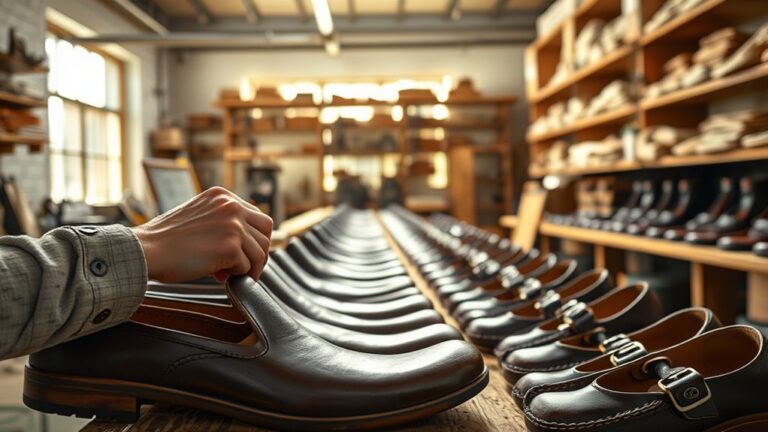

How the Shoes Are Made
You start by creating a detailed concept sketch with exact dimensions to guide shoe design and production. This initial step ensures every element aligns with the intended style and function.
Next, you source high-quality fabrics, leathers, and synthetic materials that meet performance and sustainability standards. These materials form the foundation of a durable and comfortable shoe.
You then cut materials precisely, using automated tools, and apply advanced sewing techniques to assemble ergonomic shoe components. Footbeds are integrated for durability and comfort, while technology tests pressure, flexibility, and wear resistance.
Multiple quality checks ensure structural integrity and fit. Explore the full process to see how innovation shapes each step.
Key Takeaways
- Shoe production begins with a detailed concept sketch outlining design, dimensions, and structural elements.
- Materials like fabrics, leathers, and adhesives are sourced based on quality, functionality, and sustainability.
- Precision cutting and advanced sewing techniques assemble upper components, ensuring durability and ergonomic fit.
- Durable footbeds made from high-density foams are integrated to maintain long-term comfort and support.
- Shoes undergo rigorous testing for pressure, flexibility, and durability, with quality checks at every production stage.
Shoe Design: From Concept to Sketch
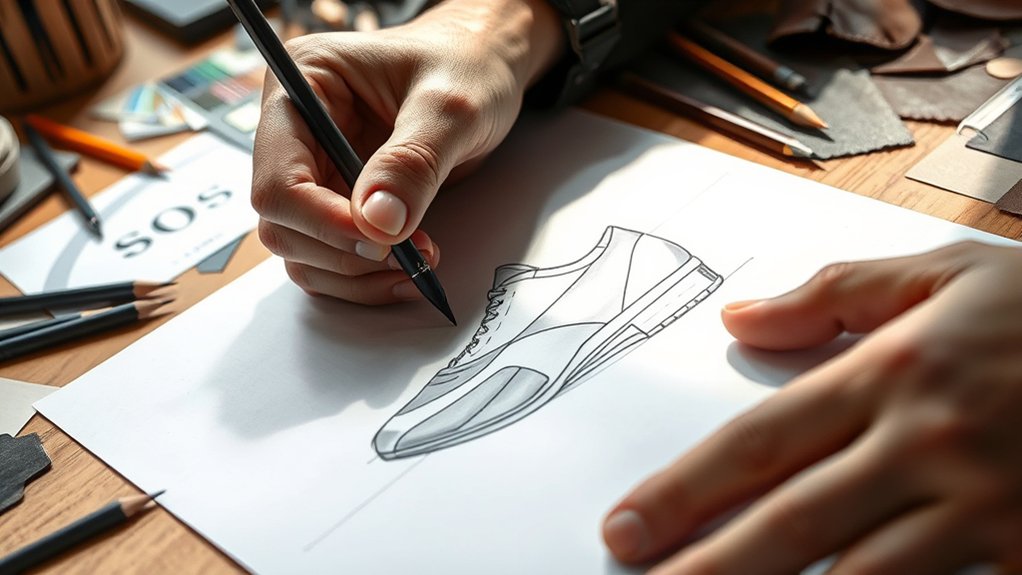
How do designers transform an abstract idea into a tangible shoe concept? You begin by creating a detailed concept sketch, which acts as the blueprint for the entire design process. This sketch includes precise dimensions, structural elements, and aesthetic features, guaranteeing every detail is accounted for.
Next, you focus on material sourcing, identifying suitable fabrics, leathers, and synthetic components that meet performance and durability criteria. This step requires evaluating suppliers for quality and compatibility with the design’s functional requirements.
Key Materials Used in Shoe Making
Once you’ve finalized the concept sketch and identified design requirements, selecting the appropriate materials becomes the next focus. Your design inspiration guides material sourcing to ensure functional and aesthetic coherence.
Key materials include leather, valued for durability and flexibility; synthetic fabrics, chosen for breathability and water resistance; and rubber or EVA for soles, offering traction and shock absorption. You’ll also consider adhesives and threads that meet tensile strength and longevity standards.
Material sourcing demands rigorous vetting of suppliers to obtain certified, high-quality components aligned with sustainability goals. Every choice directly impacts the shoe’s performance, comfort, and lifespan.
Cutting, Sewing, and Assembling Shoes
Although selecting materials sets the foundation, the precision in cutting, sewing, and assembling determines a shoe’s overall quality and fit. You start by ensuring cutting precision with automated dies or laser cutters, which trace patterns onto the material to minimize waste and maintain uniformity.
Next, advanced sewing techniques, such as double-stitching or chain stitching, secure the upper components with consistent tension, preventing deformation. When assembling, you focus on ergonomics, aligning parts to match the natural foot contour for optimal comfort and support.
Finally, you integrate footbeds designed for durability, using high-density foams or reinforced layers that resist compression over time. Each step demands meticulous attention to detail, as errors in cutting, sewing, or assembly can compromise structural integrity and wearer satisfaction.
Technologies That Improve Shoe Comfort and Durability
Why do some shoes feel like they were made just for your feet while others wear out quickly? It comes down to advanced technologies optimizing comfort metrics and durability testing. Manufacturers integrate precise measurements of pressure distribution, flexibility, and breathability to tailor comfort.
Durability testing simulates real-world wear, assessing resistance to abrasion, impact, and material fatigue. Key technologies include:
Durability testing replicates everyday use, evaluating abrasion, impact resistance, and material fatigue for long-lasting footwear.
- Memory foam insoles that adapt to your foot’s contours, enhancing comfort metrics.
- Reinforced stitching combined with thermoplastic polyurethane overlays for structural integrity.
- Advanced mesh fabrics engineered for moisture wicking and ventilation.
- Rubber compounds designed for optimal grip and wear resistance, validated through accelerated durability testing.
Quality Checks for Perfect Shoes
How do manufacturers guarantee each shoe meets exacting standards before it reaches your hands? They conduct rigorous quality checks at multiple production stages. First, they inspect raw materials for tensile strength, flexibility, and consistency.
Next, automated systems detect stitching errors or adhesive flaws invisible to the naked eye. Each shoe undergoes dimensional verification to confirm conformity with design specifications, ensuring no offbeat feature compromises fit or function.
Additionally, dynamic stress testing simulates real-world wear, identifying weaknesses early. While unrelated topics like aesthetic trends influence design, quality control remains strictly technical, focusing solely on performance and durability metrics.
Frequently Asked Questions
How Long Does It Take to Make One Pair of Shoes?
You’ll find the time to produce one pair varies; in mass production, it typically takes around 20 to 30 minutes due to automated processes, while handcrafted shoes demand several hours or even days for precise detailing.
Are Shoes Handmade or Machine-Made?
Like a craftsman shaping clay, you’ll find shoes made using handcrafted techniques for precision, while others rely on mass production with machines. Each method balances detail and efficiency, depending on design complexity and manufacturing scale.
What Environmental Impact Does Shoe Production Have?
You’ll find shoe production considerably increases your environmental footprint through resource-intensive manufacturing and waste. Optimizing supply chain sustainability reduces emissions, water use, and toxic waste, helping you minimize ecological impact during production stages.
How Are Shoe Sizes Standardized Globally?
Imagine ordering shoes online from Japan to the US. You’ll notice global sizing standards, like the Mondopoint system, help convert regional measurement systems. This ensures your size fits precisely despite regional differences in length and width metrics.
Can Customized Shoes Be Made to Order?
Yes, you can order customized shoes using custom materials tailored to your needs. Manufacturers follow strict sizing ethics to ensure precise fit, balancing comfort and durability while accommodating unique foot dimensions and preferences with advanced measurement technology.
Conclusion
Now that you’ve seen how shoes move from design to final quality checks, don’t you appreciate the precision behind every stitch and material choice? Each step, from cutting to advanced comfort technologies, ensures durability and performance.
By understanding these technical details, you can better value the craftsmanship and innovation involved. Next time you wear a pair, remember the meticulous process that guarantees both function and style in every shoe.
This deep appreciation of how the shoes are made highlights the dedication and skill required to produce footwear that meets the highest standards.