How to Loosen Shoes
To loosen your tight shoes, start by wearing thick socks and warming them briefly with a hairdryer to increase material flexibility. This simple step helps soften the shoe, making it easier to stretch. Then, walk around to help the shoes conform to your feet.
For more targeted relief, use a properly sized shoe stretcher with adjustable tension. Alternatively, insert water-filled bags inside the shoes and freeze them to gently expand the material.
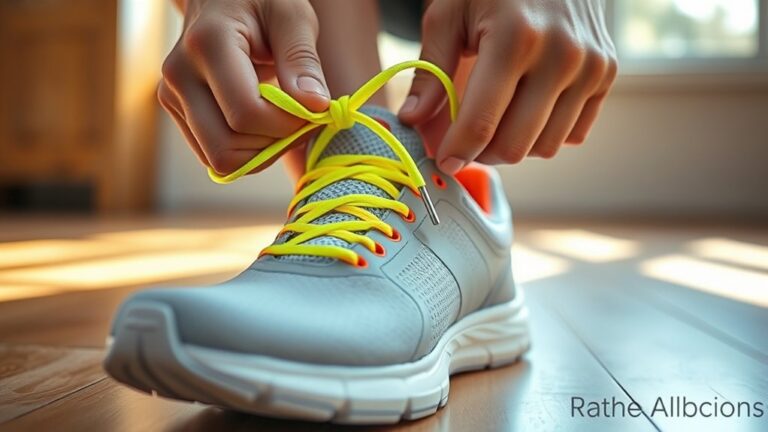
Removing insoles and swapping out laces can also create extra room inside your shoes. These methods protect the shoe’s integrity while improving comfort.
Discover additional ways to safely customize your shoe fit for lasting comfort.
Key Takeaways
- Wear thick socks and warm tight areas with a hairdryer, then walk to stretch shoe material gently.
- Insert a properly sized shoe stretcher and adjust it incrementally for several hours or overnight.
- Freeze water-filled plastic bags inside shoes to expand material gradually through controlled cold treatment.
- Remove insoles or replace laces with adjustable-tension ones to create extra room and comfort.
- Store shoes in a cool, dry place and use stretchers regularly to maintain loosened shape and prevent shrinkage.
Quick Fixes for Tight Shoes You Can Try Now
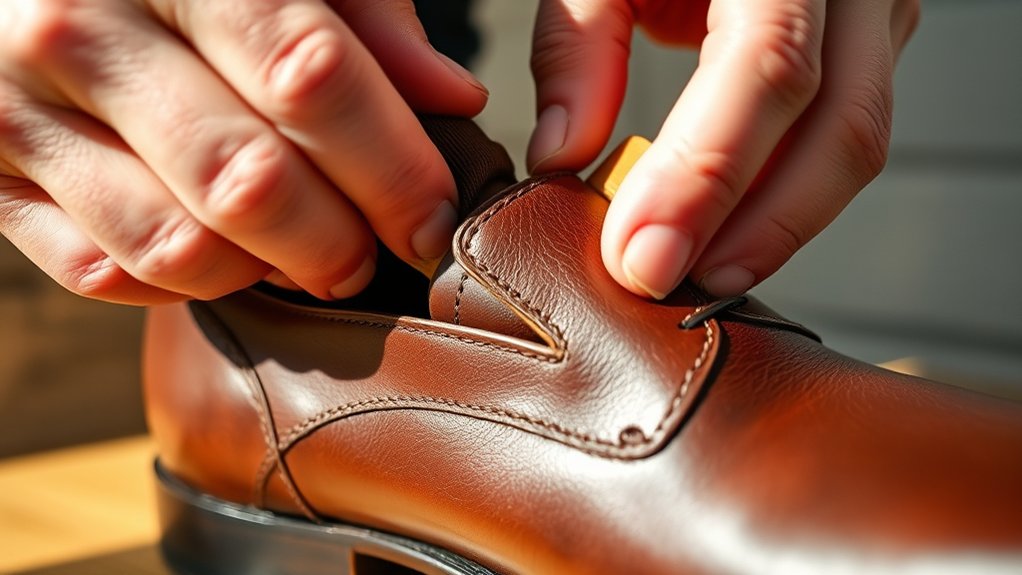
Wondering how to quickly ease the discomfort of tight shoes? Start by applying quick fixes that target specific pressure points. Use a thick pair of socks and gently heat the shoes with a hairdryer for 20-30 seconds, then walk around to stretch the material.
Ease tight shoes fast by wearing thick socks and warming them briefly with a hairdryer before walking.
Alternatively, insert a shoe stretcher to expand the width or length precisely where needed. Another effective shoe tip involves freezing water-filled plastic bags inside your shoes; as the water freezes, it expands, gradually loosening the material.
For leather shoes, apply a leather conditioner to soften the fibers before stretching. These quick fixes require minimal tools and time, allowing you to alleviate tightness efficiently without causing damage.
Implement these shoe tips promptly to improve fit and comfort.
Signs Your Shoes Are Too Tight to Ignore
While quick fixes can provide immediate relief, it’s important to recognize when your shoes are too tight to be safely worn. Ignoring discomfort signals can lead to long-term foot damage.
Many sizing myths convince you to tolerate pain, but persistent tightness, numbness, or redness are clear indicators your shoes don’t fit properly. Pay close attention to these warning signs to avoid complications.
| Discomfort Signal | Possible Cause |
|---|---|
| Numbness | Nerve compression |
| Redness | Poor circulation |
| Blisters | Friction from tight areas |
| Tingling | Restricted blood flow |
| Swelling | Inflammation |
Recognizing these signs early helps you address fit issues before injury occurs. Don’t let sizing myths override your foot health.
How to Loosen Tight Shoes Safely With Household Items
A variety of common household items can help you safely stretch and loosen tight shoes without causing damage. First, try inserting plastic bags filled with water into the shoes and freezing them overnight; the expanding ice will gently stretch the material.
Next, use a hairdryer to warm tight areas while flexing the shoes; this softens fibers for better molding. You can also replace standard laces with alternative laces that allow more adjustable tension, reducing pressure points.
If your shoes have removable insoles, take them out to create more room or use loosened cushions to add comfort without constricting space. Avoid harsh chemicals or excessive force, as these may damage shoe integrity. These household methods offer controlled, safe adjustments to improve fit effectively.
How to Stretch Tight Shoes at Home Without Damage
Effective methods to stretch tight shoes at home focus on controlled application of heat, moisture, and pressure to alter the shoe material without causing damage. You want to avoid overstretching or weakening the shoe structure, so precise techniques are essential. Here’s how you can proceed:
Use shoe stretchers or carefully selected padding; learn how to choose padding that applies uniform pressure without deforming the shoe.
Apply a damp cloth inside the shoe to introduce moisture, then wear thick socks to stretch gradually without compromising material integrity.
After stretching, allow your shoes to dry naturally while maintaining shape; proper how to store footwear practices prevent shrinkage or warping.
How Heat and Cold Can Help Soften and Stretch Shoes
How exactly can temperature changes aid in softening and stretching your shoes? Material science explains that heat increases the flexibility of shoe materials, especially leather and synthetic fabrics, by loosening molecular bonds. When you apply moderate heat, using a hairdryer or warm water, the shoe’s material becomes more pliable, allowing it to conform better to your foot’s shape, improving shoe fit.
Conversely, cold treatment can help reset the material’s structure after stretching, especially when combined with moisture. For instance, filling plastic bags with water inside the shoe and freezing it causes the water to expand, gently stretching the shoe as it freezes.
Using heat and cold strategically leverages material science principles to adjust shoe fit without causing damage, providing an effective, controlled method to loosen tight shoes.
When and How to Use Shoe Stretchers Effectively
You’ll want to select a shoe stretcher that matches your shoe’s size and material to avoid damage. Insert the stretcher carefully, then adjust it incrementally to apply even pressure without overstretching.
For best results, use the stretcher for several hours or overnight, repeating as needed based on the shoe’s stiffness.
Choosing The Right Stretcher
When should you consider using a shoe stretcher, and which type suits your needs best? Choosing stretchers depends largely on your shoe’s material and the specific fit issue you want to address.
For optimal results, consider these factors:
- Material compatibility: Use wooden stretchers for leather shoes to maintain shape and durability. Plastic or metal stretchers suit synthetic materials better.
- Stretching mechanism: Select corkscrew or lever-style stretchers based on how much width or length adjustment you need.
- Specialized features: Some stretchers come with bunion plugs or adjustable knobs for targeting pressure points.
Proper Usage Techniques
Selecting the right stretcher sets the foundation, but using it correctly guarantees effective results without damaging your shoes. Begin by inserting the stretcher fully into the shoe, ensuring it contacts the areas needing expansion. Gradually turn the adjustment knob to apply steady pressure, avoiding sudden force that can deform the shoe.
For targeted loosening, use stretchers with bunion plugs or toe extenders aligned precisely where pressure is felt. After stretching, leave the device in place for several hours to maintain expansion. These loose shoe techniques enhance comfort footwear by improving fit without compromising structural integrity.
Always check the shoe material compatibility to prevent damage. Proper usage maximizes stretchers’ benefits, making tight shoes wearable while preserving their shape and durability.
Timing And Frequency Tips
How often should you use a shoe stretcher to achieve best results without damaging the material? Timing and frequency tips are crucial to avoid overstretching or harming your shoes. Generally, you want to use the stretcher for 6 to 8 hours per session, ideally overnight, allowing the material to adapt gradually.
Frequency depends on the shoe’s stiffness and type:
- Use the stretcher every 24 hours for leather shoes to maintain flexibility without cracking.
- For synthetic materials, limit usage to every 48 hours to prevent weakening fibers.
- Avoid continuous stretching beyond 2-3 sessions per shoe to maintain structural integrity.
How to Loosen Different Shoe Materials Without Harm
Why does the material of your shoes matter in the loosening process? Different materials respond uniquely due to their physical properties, making material science essential for effective, damage-free loosening.
Material science is key to safely loosening shoes, as different materials react uniquely to treatment methods.
For leather, apply gentle heat and moisture to relax fibers without causing cracks. Using a leather conditioner post-treatment addresses comfort concerns by maintaining suppleness. Synthetic fabrics tolerate mild stretching but avoid excessive moisture, which can weaken fibers.
Suede requires careful brushing and minimal moisture to prevent texture damage. For canvas, dampen slightly and stretch gradually to preserve structural integrity.
Understanding each material’s characteristics lets you apply targeted techniques, ensuring you loosen your shoes safely while addressing comfort concerns precisely. This approach prevents irreversible damage, extending the lifespan and maintaining the functional fit of your footwear.
How to Prevent Your Shoes From Becoming Too Tight Again
When do shoes typically become too tight again after loosening? Usually, this occurs due to changes in foot size, material contraction, or improper storage. To prevent this, apply principles from material science and consult shoe fitters for expert advice.
Focus on these key practices:
- Store shoes in a cool, dry place to avoid moisture-induced shrinkage.
- Use shoe stretchers regularly to maintain the expanded shape based on elastic memory.
- Rotate shoes to reduce constant pressure that causes material deformation.
Frequently Asked Questions
Can Tight Shoes Cause Long-Term Foot Problems?
Yes, tight toe pressure can cause long-term foot problems like nerve damage and deformities. If the shoe material doesn’t stretch properly, you’re at higher risk, so choose shoes with good material stretch to prevent issues.
How Do I Know if My Shoe Size Is Correct?
You might feel confident, yet your shoe size could still be off. Use footwear fit assessments. Check toe wiggle room, heel slip, and arch support to ensure proper shoe size confidence and avoid discomfort or long-term foot issues.
Are There Professional Services for Shoe Stretching?
Yes, you can find professional stretching services specializing in shoe alterations. They use mechanical stretchers and heat to precisely expand tight areas, ensuring a comfortable fit without damaging your shoes.
What Are the Best Socks to Wear With Tight Shoes?
You should choose socks to wear made from moisture-wicking fabrics with fabric cushioning, as 75% of foot discomfort stems from poor sock support. These materials reduce friction, enhance comfort, and protect your feet in tight shoes.
Can Insoles Help With Tight Shoes?
Yes, insoles benefit tight shoes by providing cushioning and improving fit, but they generally don’t aid shoe stretching.
To effectively loosen shoes, you’ll need targeted methods like heat application or professional stretching tools.
Conclusion
Loosening tight shoes is like tuning a delicate instrument—precision matters. By applying these techniques carefully, you guarantee your shoes mold comfortably without damage, letting your feet breathe freely.
Whether you use household items, heat, cold, or stretchers, treating your shoes with care transforms discomfort into ease. Remember, preventing tightness is your best defense.
Maintaining proper fit and shoe care helps keep every step smooth and pain-free. Loosening shoes effectively ensures comfort and prolongs the life of your footwear.