How to Get Oil off Suede Shoes
To get oil off your suede shoes, act quickly by gently blotting excess oil with a dry, absorbent cloth—avoid rubbing to protect the delicate nap. This initial step helps prevent the oil from soaking deeper into the material.
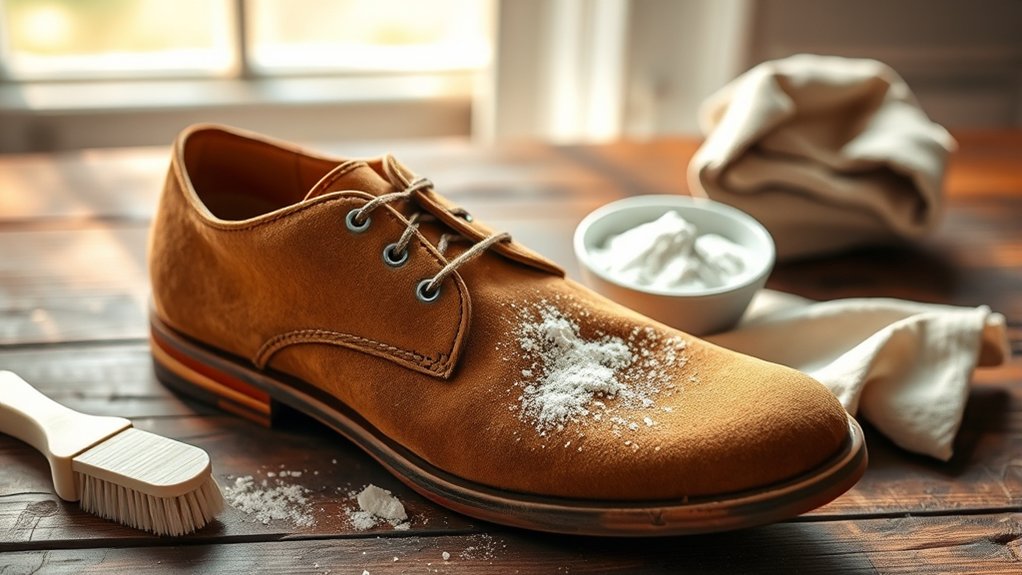
Next, apply cornstarch or talcum powder to absorb deeper oil stains. Let it sit overnight, then brush it off with a suede brush to restore the texture.
For stubborn stains, you can also use a lightly dampened cloth with white vinegar. Always test a hidden spot first to ensure the vinegar doesn’t discolor your suede.
For detailed care and preventive tips, keep exploring further guidance tailored to suede’s unique texture.
Key Takeaways
- Gently blot excess oil with a dry, absorbent material without rubbing to avoid spreading or embedding the stain.
- Apply cornstarch, talcum powder, or baking soda to absorb oil; leave overnight, then brush off with a suede brush.
- Use a cloth dampened with white vinegar to gently blot and lift oil residues, testing a hidden area first for colorfastness.
- Allow shoes to air dry completely between treatments to prevent deepening stains or damaging suede texture.
- Regularly brush suede with a suede brush to restore nap and avoid harsh scrubbing that can ruin the material.
Why Suede Shoes Need Extra Care
Why do suede shoes demand extra care compared to other materials? Unlike smooth leather, suede’s open, fibrous texture makes it highly absorbent and vulnerable to stains.
Material science reveals that suede’s nap, a raised surface of tiny fibers, lacks the protective finish found on other leathers. This means liquids and oils penetrate quickly, complicating removal.
To maintain suede’s look, you’ll need specialized care routines. Regular brushing with a suede brush lifts dirt and restores the nap, while protective sprays create a barrier against moisture and stains.
Avoid soaking suede, as water can cause discoloration and stiffness. By understanding suede’s unique structure and following targeted care routines, you can preserve your shoes’ appearance and extend their lifespan effectively.
Why Oil Stains on Suede Are Tough to Remove
You’ll notice oil stains are stubborn because suede’s porous texture soaks up the oil quickly, allowing it to penetrate deep into the fibers. This deep absorption makes it hard to lift the stain without damaging the delicate material.
To tackle oil on suede, you need methods that target the oil beneath the surface without compromising the shoe’s texture.
Suede’s Porous Texture
How does suede’s unique texture make oil stains so stubborn? The answer lies in suede porosity. Unlike smooth leather, suede’s surface is made up of countless tiny fibers with open spaces between them.
This porous structure allows for high oil absorption, meaning oil doesn’t just sit on top; it quickly seeps into those microscopic gaps. When oil settles into these pores, it binds tightly with the fibers, making the stain difficult to lift.
You can’t just wipe it away because the oil has already been drawn deep into the material’s texture. Understanding suede’s porosity is essential since it explains why traditional cleaning methods often fall short, requiring specific techniques that address how oil interacts with this absorbent surface.
Oil’s Deep Penetration
The porous nature of suede doesn’t just allow oil to settle on the surface; it pulls it deep into the fibers, making removal especially challenging. When oil penetrates, it exploits coverage gaps within the suede’s texture, seeping into spaces that typical cleaning methods often miss.
This deep infiltration causes stain migration, where the oil spreads beyond the initial spot, increasing the affected area. You can’t just blot the surface and expect success; the oil embeds itself, requiring targeted treatment to disrupt its grip.
Understanding how oil moves through these microscopic channels helps you choose the right approach, ensuring you address both visible stains and hidden residues. This insight prevents ineffective cleaning attempts that might worsen the stain or leave coverage gaps untreated.
Difficulty in Absorption
Why does oil cling so stubbornly to suede? The material’s porous texture encourages rapid oil absorption, making stains tough to lift. Once oil penetrates, the saturation risk increases, complicating removal.
You can’t just wipe it off; it seeps deep, bonding with suede fibers.
| Factor | Effect on Suede | Removal Challenge |
|---|---|---|
| Porosity | High oil absorption | Deep stain formation |
| Fiber Texture | Holds oil in place | Difficult to extract |
| Oil Viscosity | Slows evaporation | Prolongs stain presence |
| Saturation Risk | Increases over time | Requires prompt action |
Understanding these factors helps you act quickly to prevent permanent damage and improve cleaning success.
Getting Your Suede Shoes Ready for Cleaning
Where should you begin when preparing your suede shoes for oil stain removal? Start by evaluating the shoe’s condition carefully. Before any cleaning, perform a colorfast testing on an inconspicuous area to ensure your cleaning method won’t cause discoloration.
This step is essential because suede can react unpredictably to moisture and products. Next, gently brush off dirt and dust with a suede brush, restoring the nap and preventing dirt from embedding further.
Avoid applying any scented or fragranced products beforehand; fragrance layering could interfere with the cleaning agents and worsen stains. Finally, keep your shoes dry and avoid direct sunlight or heat, which can alter suede’s texture.
Proper preparation ensures your cleaning efforts are effective and safe, preserving your suede’s delicate finish.
How to Remove Oil From Suede Shoes
Once your suede shoes are properly prepped and free of surface dirt, you can tackle the oil stain directly. Contrary to common oil myths, blotting immediately won’t always help; instead, you need to absorb the oil gently without rubbing, which can push the stain deeper.
Many suede myths suggest water is a quick fix, but water can worsen oil stains by spreading them. Instead, use a dry, absorbent material to lift excess oil carefully. Avoid harsh scrubbing or soaking, as suede’s delicate texture can become damaged.
After absorption, let the shoes air dry completely before assessing if repeat treatment is necessary. Understanding these nuances ensures you don’t make typical mistakes that worsen the stain or ruin your suede’s texture.
Best Household Products to Remove Oil From Suede Shoes
How can you effectively tackle oil stains on your suede shoes using items already in your home? Start with cornstarch or talcum powder. Both absorb excess oil without damaging suede’s delicate texture. Sprinkle generously, let sit overnight, then brush off with a soft suede brush.
Another reliable product is white vinegar. Dampen a cloth lightly and gently blot the stain to lift oil residues. Baking soda also works well for stubborn spots. Apply it similarly to cornstarch and brush away once dry.
Incorporating these household products into your care routine not only removes existing stains but also supports ongoing stain prevention. Remember, always test a small hidden area first to ensure colorfastness before full application. This approach keeps your suede shoes looking fresh and well-maintained.
When to Avoid DIY Cleaning and Seek Professional Help
Although many oil stains on suede can be treated at home, you should avoid DIY cleaning when the stain is extensive, deeply set, or combined with other substances like dye or paint. In these cases, your avoidance strategies should prioritize professional help to prevent further damage.
Attempting aggressive home treatments might worsen discoloration or texture loss, so don’t risk it. Additionally, if you’re unsure about the stain’s nature or how your cleaning method will affect the suede, it’s best not to experiment.
Avoid irrelevant topics like generic cleaning advice that doesn’t specifically address suede or oil stains. By recognizing these limits and acting promptly, you’ll protect your shoes and ensure expert restoration, saving time and expense in the long run.
How to Restore Suede Texture After Oil Stain Removal
After successfully removing oil stains from your suede shoes, you might notice the nap, the soft, raised fibers, looks flattened or uneven. To restore the suede texture, start by gently brushing the affected area with a suede brush, using short, brisk strokes to lift the fibers.
For stubborn spots, a suede eraser can help loosen any remaining residue without damaging the surface. Avoid applying water directly, as it can worsen oil staining and flatten the nap further. Once brushed, let your shoes air dry completely in a well-ventilated area.
If the texture still seems off, lightly steaming the suede from a distance can help relax fibers, making them easier to brush back to their original softness. With careful restoration, your suede shoes will regain their natural, plush appearance.
Tips for Preventing Oil Stains on Your Suede Shoes
You can protect your suede shoes by applying a high-quality protective spray that repels oil and moisture. Be mindful to avoid oily environments where spills are more likely to happen.
Also, store your shoes in a clean, dry place away from potential contaminants to keep them looking their best.
Apply Protective Suede Spray
How can you best protect your suede shoes from stubborn oil stains before they happen? Applying a protective suede spray is essential. This spray forms an invisible barrier that repels oil and water, preserving your shoes’ texture and color.
Opt for sprays designed for suede or synthetic alternatives to maintain material integrity. Always apply in a well-ventilated area, holding the can 6-8 inches away, and allow shoes to dry completely before wearing or storing them in oil free storage spaces.
| Step | Action | Tip |
|---|---|---|
| Preparation | Clean shoes gently | Use a suede brush |
| Application | Spray evenly | Hold can 6-8 inches away |
| Drying | Air dry 24 hours | Avoid direct sunlight |
Regular use ensures lasting protection.
Avoid Oily Environments
Where do most oil stains on suede shoes come from? They often originate in everyday oily environments like kitchens, garages, or places where scented polish and other oily substances are common. To protect your suede shoes, avoid direct contact with these areas.
Be mindful when handling objects with metallic hardware, as grease from your hands can transfer oil onto the suede. If you must be in oily settings, consider wearing protective covers or changing into your suede shoes afterward.
Also, avoid using scented polish near your shoes; their oils can easily seep into the delicate suede, causing stains. By steering clear of oily environments and taking these precautions, you’ll substantially reduce the risk of stubborn oil stains and keep your suede shoes looking pristine longer.
Store Shoes Properly
When should you store your suede shoes to best prevent oil stains? Ideally, store them after cleaning and drying to ensure no residual moisture or oils cause damage. Proper store care extends their lifespan and maintains value for footwear resale.
Follow these steps:
- Use shoe trees or stuff with acid-free tissue to retain shape.
- Keep shoes in breathable dust bags or boxes to protect from dust and accidental spills.
- Store in a cool, dry place away from direct sunlight and heat sources.
- Avoid stacking shoes or placing heavy items on them to prevent deformation.
Frequently Asked Questions
Can Oil Stains on Suede Shoes Cause Permanent Discoloration?
Yes, oil staining can cause permanent suede discoloration if not treated quickly. You’ll want to act fast, using absorbent powders and gentle brushing to minimize damage and restore your shoes’ original look effectively.
Are There Specific Suede Shoe Brands More Resistant to Oil Stains?
Oh sure, some suede brands boast oil stain resistance like superheroes, but in reality, no suede brand comparison reveals true immunity.
You’ll need proper care and protection; no magic brand can fully repel oil stains on suede shoes.
How Long Does It Take for Oil Stains to Set on Suede?
Oil absorption on suede happens quickly, usually within minutes, so stain timing is critical. You shouldn’t use water right away, as it can worsen the stain. Instead, act fast to blot and treat the spot carefully.
Can You Use Water to Treat Oil Stains on Suede Shoes?
Don’t dunk your suede in a rainstorm. Water myths say it helps, but it often makes oil stains worse. You’ll bust common oil stain myths by using dry methods like cornstarch or specialized suede cleaners instead.
Do Suede Shoe Protectors Affect the Shoe’s Breathability?
Suede shoe protectors, especially oil repellents, may slightly reduce breathability, but quality products minimize breathability impact.
You’ll keep your shoes protected without sacrificing comfort, as modern formulas balance water resistance and airflow effectively.