How to Shine Shoes Without Polish
To shine your shoes without polish, start by thoroughly cleaning off dirt and dust with a soft brush or damp cloth, focusing on seams and crevices. This initial step is crucial to ensure a smooth, polished finish.
Next, rub the inside of a banana peel over the leather to add natural oils and moisture for a soft glow. Apply a small amount of olive or coconut oil sparingly, then buff gently with a clean, lint-free cloth to enhance luster.
For stubborn scuffs, use a vinegar-water solution. Discover when traditional polish might better suit your shoe care needs.
Key Takeaways
- Clean shoes thoroughly with a soft brush or damp cloth to remove dirt and prevent scratches before shining.
- Rub the inside of a banana peel on leather to naturally moisturize and add a soft, subtle shine.
- Apply a small amount of natural oils like olive or coconut oil sparingly, then buff gently with a soft cloth.
- Use a mixture of equal parts white vinegar and water to lift grime and scuffs before shining.
- Buff shoes in circular motions with a clean, soft, lint-free cloth to activate natural shine without polish.
Quick Ways to Shine Shoes Without Polish
How can you quickly restore the shine of your shoes without reaching for polish? Start by exploring alternative methods that are both effective and accessible. For instance, a soft cloth lightly dampened with water can instantly lift surface shine.
Another two word idea sharing involves using a banana peel. Its natural oils provide a subtle gloss when rubbed gently over leather.
You might also try a small amount of olive oil, applied sparingly and buffed with a microfiber cloth to avoid buildup. Each of these quick ways leverages household items, providing practical solutions when polish isn’t available.
Prepare Shoes by Cleaning Dirt and Dust Before Shining
Why does preparing your shoes by removing dirt and dust matter before shining? Proper preparation ensures that grime doesn’t scratch or dull your shoe’s surface during shining. You must embrace shoe care ethics by treating your footwear with respect and diligence, avoiding shortcuts that compromise quality.
Use a soft brush or damp cloth to meticulously remove all dirt and dust, paying attention to seams and crevices. This step represents a critical value tradeoff: investing time upfront prevents damage and extends shoe life, outweighing any temptation to rush directly to shining.
Skipping this can trap abrasive particles, leading to uneven shine and material degradation. By committing to thorough cleaning first, you uphold the standards of shoe care ethics and achieve a polished, professional result.
Use Banana Peels and Natural Oils for a Soft Shine
Where can you find an effective, natural alternative to traditional shoe polish? Banana peels and natural oils provide a gentle, eco-friendly shine without harsh chemicals.
First, rub the inside of a banana peel over your shoes to deposit potassium and moisture. Then, apply a small amount of natural oils, like coconut or olive oil, to enhance the luster.
For tough spots, lightly dab vinegar water to remove residue before oiling. This method nourishes leather while producing a soft, appealing glow.
| Ingredient | Purpose | Application Tip |
|---|---|---|
| Banana Peels | Moisturizes, softens | Rub peel inside gently |
| Natural Oils | Adds shine, nourishes | Use sparingly with cloth |
| Vinegar Water | Cleans, removes buildup | Dab lightly on stains |
Buff Shoes Gently Using a Soft Cloth
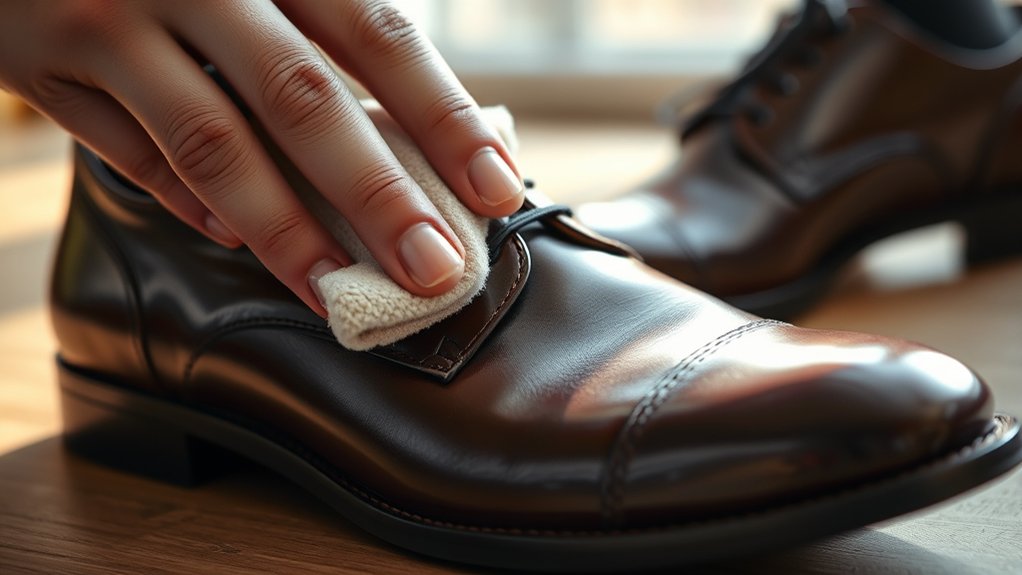
When should you stop applying ingredients and start buffing your shoes? Once the surface appears evenly coated and slightly tacky, it’s time to switch gears. Take a clean buffing cloth, preferably soft and lint-free, and begin with gentle, circular motions.
This step activates the gentle polish effect created by natural oils or banana peels, enhancing the shoe’s shine without harsh chemicals. Avoid pressing too hard; instead, let the friction of the buffing cloth gradually lift excess residue and smooth the leather.
Focus on one section at a time, ensuring consistent coverage and sheen. Buffing gently not only improves shine but also preserves the leather’s integrity, making this technique essential for maintaining polished shoes without traditional polish.
Clean and Condition Leather Shoes Without Polish Using Household Ingredients
You can clean your leather shoes effectively using natural solutions like a mixture of water and mild soap or vinegar, which remove dirt without harsh chemicals. For conditioning, try household ingredients such as olive oil or coconut oil to restore moisture and suppleness.
These DIY methods protect your shoes while maintaining their shine without relying on commercial polish.
Natural Cleaning Solutions
How can you effectively clean and condition leather shoes without relying on commercial polish? By using natural cleaning solutions, you can maintain your shoe care routine with household ingredients while preserving leather quality.
These natural remedies gently remove dirt and nourish leather without harsh chemicals. Consider these options:
- White vinegar and water: Mix equal parts to wipe away grime and restore shine.
- Olive oil: Apply a small amount to condition leather and prevent cracking.
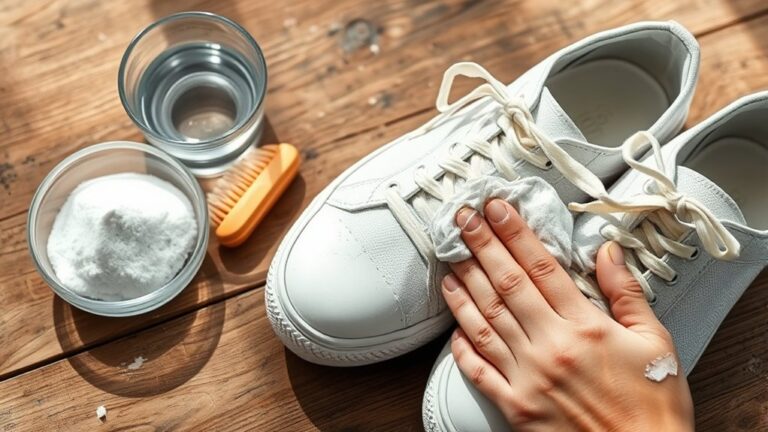
- Baking soda paste: Use a mixture with water to tackle stains and deodorize shoes.
Each solution cleans and conditions leather subtly, promoting durability and a polished look. Incorporating these natural remedies into your shoe care routine ensures your leather shoes stay supple and well-maintained without relying on traditional polish products.
DIY Leather Conditioning
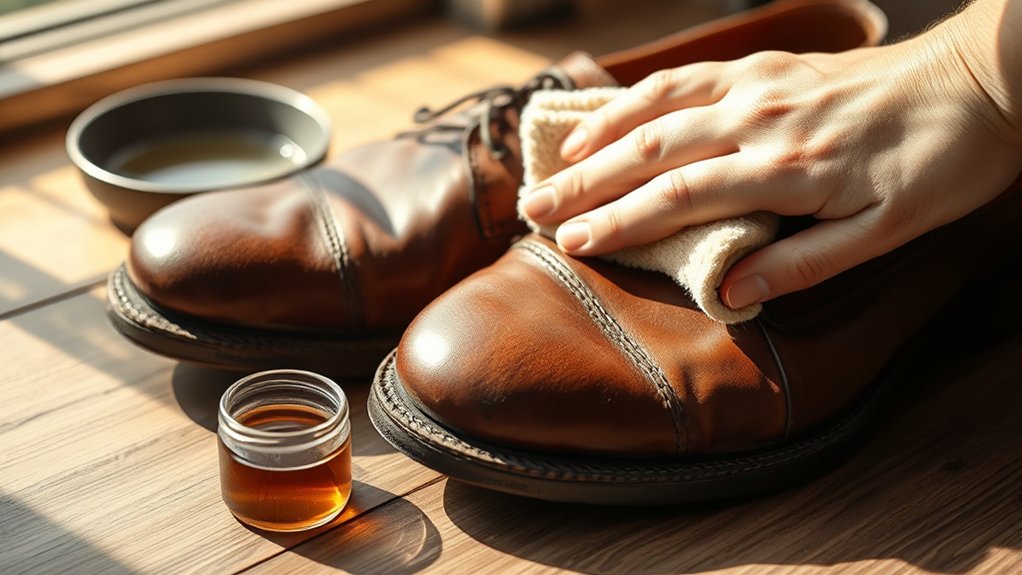
A simple blend of household ingredients can effectively clean and condition leather shoes without polish. For DIY leather conditioning, mix equal parts white vinegar and olive oil.
Vinegar gently cleanses the leather by removing dirt and grime, while olive oil restores moisture and suppleness. Apply this solution sparingly using a soft cloth, rubbing it in circular motions to ensure even absorption.
Let it sit for 10-15 minutes, then buff with a clean, dry cloth to reveal a natural shine. These conditioning tricks reinforce leather care by preventing cracks and prolonging shoe life without synthetic products.
Regularly repeating this process maintains flexibility and enhances appearance, making it an essential step in your no-polish shoe care routine.
Daily Tips to Maintain Shoe Shine Without Polish
Why settle for a dull finish when you can easily maintain your shoe’s shine every day without polish? Keeping your shoes glossy relies on consistent care using simple techniques. Start with the soft brassigination method. Gently brush your shoes with a soft-bristled brush to remove dust and dirt without damaging the leather.
Then, apply the microfiber technique by wiping your shoes with a clean microfiber cloth in small circular motions. This lifts oils and enhances natural shine. Finally, protect your shoes from moisture and scuffs to preserve their luster.
- Use soft brassigination daily to prevent buildup.
- Employ the microfiber technique for a smooth, polished surface.
- Store shoes in a dry, ventilated area to avoid dullness.
These steps maintain shine effortlessly and extend shoe longevity.
When Should You Use Shoe Polish Instead of Natural Fixes?
You should use shoe polish when your shoes have deep scuffs that natural fixes can’t fully repair. Polish is essential for restoring color uniformity and covering worn areas effectively.
It also provides a longer-lasting shine that natural methods typically can’t match.
Deep Scuff Repairs
When should you reach for shoe polish instead of relying on natural fixes for deep scuff repairs? While banana peels and other natural remedies can mask minor scratches, deep scuffs demand a more robust solution to restore your shoe’s surface.
Use shoe polish when:
- The scuff exposes the leather’s inner layers, causing a visible texture difference.
- Natural fixes fail to blend the damaged area with the rest of the shoe.
- You need to protect the leather from further damage and moisture penetration.
Natural methods are great for light touch-ups, but deep scuffs compromise the shoe’s integrity. Applying shoe polish fills in the gouges, evens out color, and seals the surface, ensuring durable repair and a polished finish that natural fixes simply can’t match.
Color Restoration Needs
While deep scuff repairs often require shoe polish to restore the leather’s texture and protect it from further damage, color restoration presents another set of challenges that natural fixes can’t always address. When your shoes show significant fading, uneven tones, or persistent discoloration, natural remedies won’t effectively restore the original hue.
In these cases, you’ll need to apply a quality shoe polish specifically matched to your shoe’s color. This step is essential not just for immediate aesthetic improvement but for long term care, as the polish adds a protective layer that preserves the leather’s vibrancy and prevents further fading. Relying solely on natural fixes here risks uneven color and accelerated wear, making polish indispensable for thorough, lasting color restoration.
Long-Lasting Shine
Achieving a long-lasting shine requires more than just quick natural fixes; it demands the durability and protective qualities that only quality shoe polish can provide. While polish alternatives like oils or waxes can offer temporary shine maintenance, they often lack the resilience needed for extended wear.
You should opt for traditional shoe polish when:
- You need a waterproof barrier that natural fixes don’t provide.
- Your shoes face heavy use, abrasion, or harsh weather conditions.
- Maintaining consistent color and a deep, lasting gloss is critical.
Natural methods are excellent for quick touch-ups or eco-friendly care, but for reliable protection and enduring brilliance, shoe polish remains unmatched. Prioritize polish for sustained results, especially when appearance and shoe longevity are essential.
Use Vinegar and Water to Remove Stubborn Dirt and Scuffs
Although you might not think of vinegar as a cleaning agent for your shoes, it’s incredibly effective at breaking down stubborn dirt and scuffs without damaging the leather. The vinegar technique involves mixing equal parts distilled white vinegar and water.
Dampen a soft cloth with the solution, then gently rub the affected areas. This method dissolves grime and lifts scuffs, restoring your shoes’ natural shine without harsh chemicals.
| Step | Action |
|---|---|
| Mix Solution | Combine 1 part vinegar with 1 part water |
| Apply | Use a soft cloth to gently rub the shoe |
| Buff & Dry | Wipe with a clean cloth and air dry |
This approach precisely targets stubborn dirt, ensuring your shoes look polished and well-maintained.
Frequently Asked Questions
Can These Methods Be Used on Suede Shoes?
You shouldn’t use these methods on suede shoes due to suede compatibility issues; they can damage the delicate texture.
Also, exercise synthetic leather caution, as some techniques might harm non-suede materials or alter their appearance.
How Often Should I Shine My Shoes Without Polish?
You should perform shine maintenance with polish alternatives weekly, or whenever your shoes look dull. Regularly cleaning and buffing helps maintain their appearance and durability, ensuring your shoes always look polished without traditional polish products.
Are Natural Oils Safe for All Leather Types?
Natural oils aren’t safe for all leather types; you should test a small area first. Some leathers absorb oils well, while others can darken or weaken.
Prioritize leather safety by choosing oils suited to your specific leather kind.
Can I Use These Techniques on Synthetic Shoes?
Just as Da Vinci adapted techniques across mediums, you can apply these methods to synthetic shoes, but synthetic compatibility varies. Adjust your maintenance frequency accordingly to avoid damage and ensure optimal results without compromising the material’s integrity.
What Should I Avoid When Shining Shoes Without Polish?
You should avoid harsh chemicals that can damage the shoe material and excessive moisture that weakens glue and leather. Instead, use gentle cleaners and a soft cloth to maintain your shoes’ integrity and achieve a natural shine.
Conclusion
You don’t need polish to keep your shoes looking their Sunday best. By gently erasing dirt with vinegar and water, pampering leather with natural oils, and buffing softly with a cloth, you’re giving your shoes a quiet glow that whispers care and attention.
These simple rituals transform worn leather into a polished story, letting your shoes shine with understated elegance. This gentle approach ensures your footwear stays fresh and cared for, even without traditional products.
In the end, learning how to shine shoes without polish offers a natural, effective way to maintain their beauty and extend their life.