How to Size Running Shoes
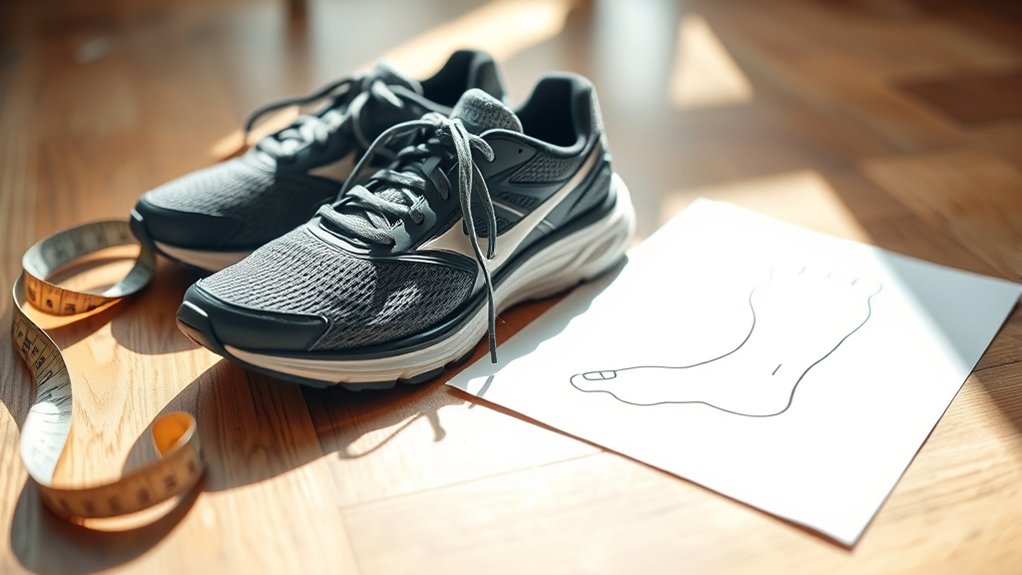
To size running shoes accurately, start by measuring your feet in the late afternoon when they’re naturally largest. Stand on paper, trace your foot, then measure both length and width to get precise dimensions.
Consider your arch type to select proper support and help prevent injuries. Test the fit by walking around, making sure your heel stays secure and there’s about a thumb’s width of space in the toe box for comfort.
Also, account for your foot shape and the thickness of the socks you plan to wear, as these factors affect the overall fit. Understanding these details will help you find the ideal shoe for both comfort and performance.
Key Takeaways
- Measure your feet on a flat surface by tracing the outline and recording length and width for accurate sizing.
- Determine your arch type to select shoes with appropriate support that prevent overpronation or supination.
- Try on running shoes late in the day when your feet are naturally largest to ensure proper fit throughout daily swelling.
- Test shoe fit by standing and walking, ensuring heel stability and about a thumb’s width space in the toe box.
- Consider foot shape and sock thickness, adjusting shoe size or width for wider forefeet, narrow heels, or thicker socks.
How to Measure Your Feet for Running Shoes
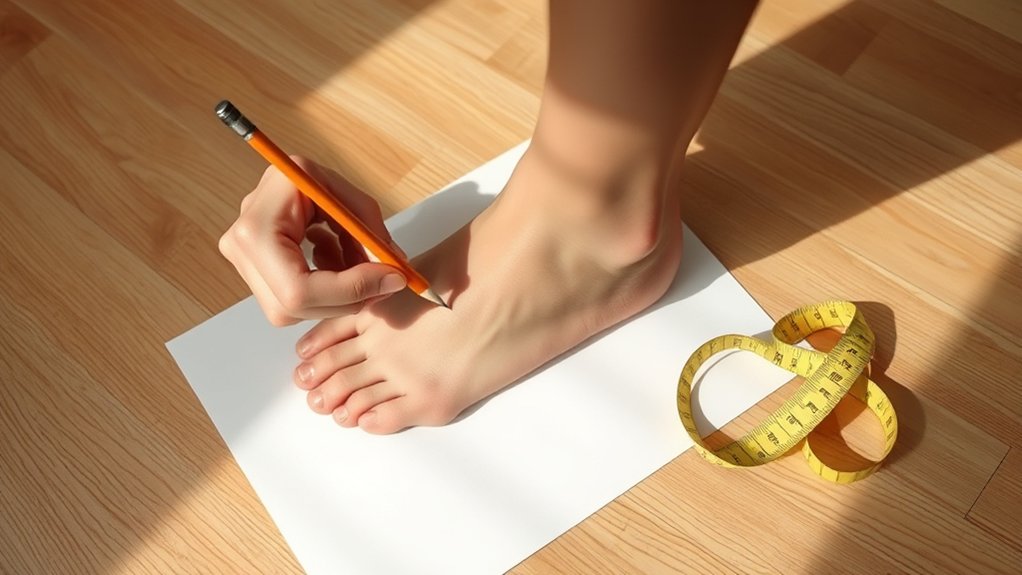
To accurately measure your feet for running shoes, start by preparing a flat surface, a piece of paper, and a pen or pencil. Place your foot firmly on the paper, ensuring your weight is evenly distributed. Trace the outline of your foot carefully, keeping the pen perpendicular to the paper.
Measure the length from the heel to the longest toe and record the foot width at the widest point. Accurate measurement of foot width is essential, as it affects comfort and performance.
Additionally, assess your arch type, whether low, medium, or high, to determine the necessary arch support in your running shoes. Proper arch support prevents overpronation or supination, reducing injury risk.
Use these precise measurements when selecting running shoes to ensure optimal fit and support tailored to your feet.
When’s the Best Time to Try On Running Shoes?
When should you try on running shoes to guarantee the best fit? The best time is late afternoon or early evening. By then, your feet have experienced natural daily expansion caused by standing and walking, leading to slight foot swelling. Trying shoes during this period ensures you account for this increased volume, preventing discomfort during runs.
Foot swelling varies between individuals but typically increases throughout the day, reaching its peak after prolonged activity. If you try on shoes in the morning, when feet are at their smallest, the shoes may feel tight later, causing blisters or pain.
Therefore, to select the correct size and accommodate natural foot changes, always test running shoes when your feet are at their largest, usually after daily activity and before rest.
How to Test Running Shoe Fit Correctly
How do you make sure your running shoes fit perfectly? First, focus on testing the fit while standing and walking in the shoes, ensuring your heel stays secure without slipping. Check for about a thumb’s width of space between your longest toe and the shoe’s front to avoid pressure during runs.
Avoid common sizing myths like assuming shoes must feel tight initially; instead, prioritize comfort and room for foot expansion. Walk on various surfaces to assess stability and support accurately.
This methodical approach creates a clear path for new runners to select properly fitting shoes, reducing injury risk and improving performance. Remember, a correct fit balances snugness and freedom, providing optimal function throughout your running routine.
How Your Foot Shape Changes the Size You Need
Understanding the fit of your running shoes goes beyond length and width measurements; the unique shape of your foot plays a significant role in determining the size you need. Foot shape impacts size variance, requiring adjustments to ensure comfort and performance.
For example, a wider forefoot might need a half size larger or a shoe with a wider toe box, while a high arch may require a snugger midfoot fit.
| Foot Shape | Common Size Variance | Fit Consideration |
|---|---|---|
| Wide Forefoot | +0.5 size | Wider toe box needed |
| High Arch | 0 size | Snug midfoot fit |
| Narrow Heel | -0.5 size | Heel-lock system |
Recognizing your foot shape helps reduce discomfort and injury risk by selecting the optimal size.
How Sock Thickness Affects Running Shoe Fit
Why does sock thickness matter in choosing your running shoe size? Because the thickness directly influences how your foot fits inside the shoe, affecting comfort and performance. Thicker socks occupy more volume, reducing available space and potentially causing a tighter fit.
Sock thickness impacts shoe fit by altering internal space, which affects comfort and performance during runs.
Conversely, thinner socks provide less cushioning, increasing internal room. You must consider sock thickness when sizing to avoid discomfort or blisters. Additionally, the material stretch of your socks plays a role.
Socks with greater stretch conform more closely to your foot, slightly reducing bulk, whereas less stretchy materials maintain a consistent thickness. To ensure optimal fit, measure your foot wearing the socks you intend to run in, factoring in both thickness and material stretch.
This approach helps you select a running shoe size that accommodates your actual in-shoe environment.
Frequently Asked Questions
How Often Should I Replace My Running Shoes?
You should replace your running shoes every 300-500 miles, or when midsoles lose cushioning. Using airflow socks can reduce moisture, prolonging shoe life, but worn-out replaceable midsoles still require timely replacement for optimal support and injury prevention.
Are Expensive Running Shoes Worth the Investment?
Like a well-tailored suit, expensive running shoes offer superior brand comfort, cushion, and longevity. You’ll benefit from enhanced support and durability, making the investment worthwhile if you prioritize these performance factors consistently.
Can Running Shoe Size Differ Between Brands?
Yes, running shoe size can differ between brands due to variations in brand fit and toe box dimensions. You should try shoes on to ensure proper comfort, focusing on adequate toe box space and overall fit specific to each brand.
Should I Buy Shoes for Treadmill or Outdoor Running?
You should choose treadmill running shoes with softer running shoe materials and less tread durability. Outdoor running shoes require more durable materials and enhanced tread durability to handle varied surfaces and provide better traction.
How Do I Break in New Running Shoes Safely?
You’ll reduce risk factors by following a break-in routine: wear new shoes for short runs, gradually increasing time over two weeks. Nearly 60% of injuries stem from rushing this process, so pace yourself carefully to avoid harm.
Conclusion
By measuring your feet accurately and testing shoe fit at the right time, you can avoid the common myth that running shoes should feel tight initially. Your foot expands with each step, so a snug fit can lead to discomfort or injury.
Consider how foot shape and sock thickness impact sizing to ensure optimum support. Remember, sizing isn’t just a number—it’s about how your foot moves inside the shoe, promoting both performance and safety.
When choosing the best fit, keep in mind the importance of how to size running shoes properly to enhance comfort and prevent injury.