How to Size Shoes
You size shoes accurately by measuring your foot length and width while standing, tracing your foot on paper with the heel against a wall. This method ensures you get precise measurements for a better fit.
Since US, UK, and European sizing systems differ, don’t rely on size numbers alone; instead, match your measurements to brand-specific charts using millimeters or inches.
Account for foot shape, arch height, and material stretch to ensure comfort. If you want to avoid returns and ill-fitting shoes, it helps to understand these nuances more deeply.
Key Takeaways
- Measure your feet by standing on a flat surface and tracing the outline to find length and width accurately.
- Compare your foot measurements to brand-specific size charts using millimeters or inches, not just size numbers.
- Understand that US, UK, and European shoe sizes differ; always refer to clear regional size conversion charts.
- Consider foot width, arch height, and material stretch to ensure a comfortable and well-fitting shoe.
- For online purchases or uneven feet, size to the larger foot and check for width options or adjustable models.
How to Understand Different Shoe Size Systems
How do shoe sizes vary across the world, and why is it important to understand these differences? Shoe size systems differ due to measurement units and anatomical standards. The US, UK, and European systems each use distinct scales, which can lead to confusion and mismatched sock pairings if you’re not careful.
When shopping for seasonal footwear, this knowledge becomes essential to avoid discomfort or improper fit. For instance, a size 8 in the US does not equal a size 8 in Europe. Understanding these systems helps you interpret size charts accurately, ensuring a precise fit.
Misinterpretation often results in returns or ill-fitting shoes, disrupting your comfort and style. Grasping these differences streamlines your shopping experience and protects your feet effectively.
How to Measure Your Feet for the Perfect Shoe Size
Why does accurate foot measurement matter when choosing the right shoe size? Precise measurement ensures optimal fit, critical for proper foot arch support and material breathability. These factors affect comfort and performance.
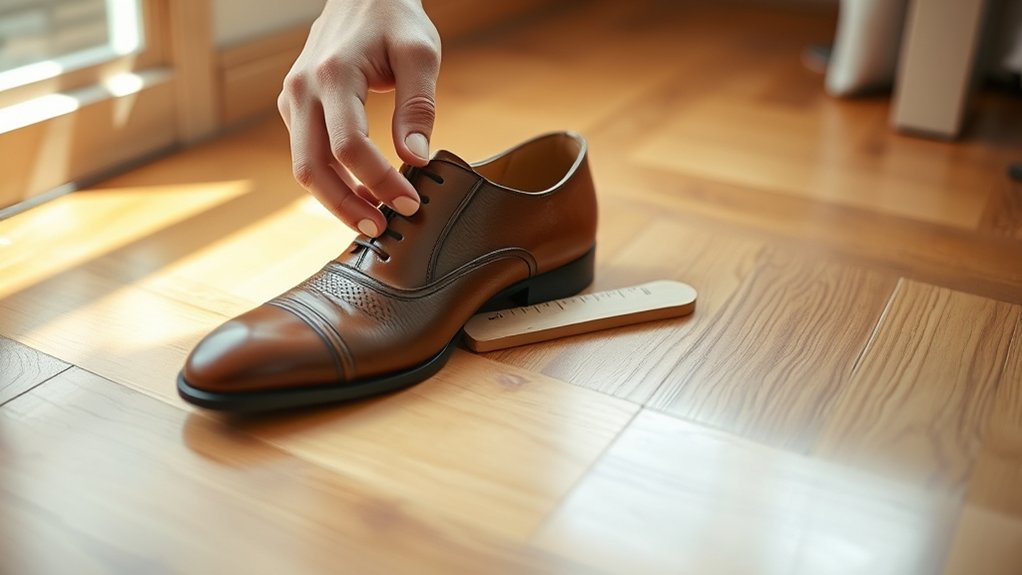
To measure correctly, stand on a flat surface with your heel against a wall. Trace your foot outline on paper, then measure the longest length and widest width.
| Measurement Step | Purpose |
|---|---|
| Heel to longest toe | Determines shoe length |
| Widest part of foot | Determines shoe width |
| Arch height (optional) | Assesses foot arch support needs |
| Note foot swell in PM | Accounts for daily foot expansion |
Accurate data helps you select shoes that accommodate your foot’s shape and optimize breathability, preventing discomfort and injury.
How to Compare Your Foot Measurements to Brand Size Guides
Where do you start once you have your foot measurements? Begin by locating the specific brand size guide for the shoe you want. Each brand has sizing quirks that affect length, width, and overall fit, so you can’t rely solely on standard size charts.
Compare your foot length and width measurements directly to the brand’s provided dimensions, noting any discrepancies. Pay close attention to the brand consistency within their sizing. Some brands maintain uniform sizing across styles, while others vary considerably.
Use millimeter or inch measurements rather than size numbers to reduce errors caused by inconsistent labeling. By carefully aligning your foot data with the brand’s exact size specifications, you’ll mitigate guesswork and improve accuracy in selecting the correct shoe size.
Tips for Choosing the Right Shoe Size and Fit for Comfort
Once you’ve matched your foot measurements to a brand’s size guide, focus on factors beyond length and width to ensure comfort. Conduct comfort testing by wearing the shoes in conditions similar to their intended use, assessing pressure points and overall fit.
Pay close attention to material stretch: natural and synthetic materials vary in elasticity, affecting how the shoe conforms to your foot over time. Avoid shoes that feel tight initially if the material lacks adequate stretch, as they may cause discomfort. Conversely, materials with good stretch can accommodate slight sizing variations.
Ensure the heel fits snugly without slipping, and there’s adequate toe room to prevent compression. Lastly, consider the shoe’s arch support and insole design, as these contribute significantly to long-term comfort and foot health.
Managing Different Shoe Sizes for Uneven Feet
How do you address the challenge when one foot is larger than the other? Managing uneven foot sizing requires selecting shoes that accommodate the larger foot to prevent discomfort and heel slippage. You might consider custom insoles or adjusting lacing techniques on the smaller foot to improve fit.
| Foot Measurement | Shoe Size Recommendation | Adjustment Method |
|---|---|---|
| Larger foot length | Size to fit larger foot | Use thicker socks |
| Smaller foot length | Slightly smaller size | Insert cushioned insoles |
| Heel width (larger) | Wider shoe model | Heel grip pads |
| Heel width (smaller) | Standard width | Tighten lacing |
This approach ensures stability and comfort, minimizing heel slippage and pressure points caused by uneven foot sizing.
Tips for Picking the Right Shoe Size When Buying Online
When buying shoes online, you need to measure your feet accurately using a reliable method to ensure precise sizing. Always consult the specific brand’s size chart, as measurements can vary between manufacturers.
Additionally, factor in shoe width to guarantee a comfortable fit, especially if you have narrow or wide feet.
Measure Feet Accurately
Why does measuring your feet accurately matter when buying shoes online? Precise foot length accuracy ensures you select a shoe size that matches your true dimensions, preventing discomfort or the need for returns.
Start by standing on a flat surface with your heel against a wall, then measure from the wall to the tip of your longest toe using a ruler or tape measure. Record this measurement in millimeters or inches.
Don’t forget to assess the toe box width as well; a shoe that fits foot length perfectly but has a narrow toe box can cause pinching. Use a piece of paper to trace your foot’s outline and measure the widest part for width.
Accurate measurements help you buy shoes that accommodate both length and width, crucial for comfort and performance.
Check Brand Size Charts
Where can you find the most reliable shoe size information? Always start with the brand size charts provided on official websites. These charts reflect the brand consistency in sizing standards and are your best reference when shopping online.
Keep in mind that shoe sizes can differ across brands, even if the nominal size appears identical. Many brands use metric systems, centimeters or millimeters, to specify foot length, offering a precise measurement that helps you select the correct size.
Compare your foot measurements directly to these metric values rather than relying solely on traditional US, UK, or EU sizes. This approach minimizes sizing errors due to variation in regional sizing scales.
Checking brand size charts ensures you pick a shoe that matches the exact dimensions intended by the manufacturer.
Consider Shoe Widths
Alongside length, shoe width plays a significant role in achieving a proper fit. When buying online, you must consider width options carefully to avoid discomfort or foot issues. Shoe widths typically range from narrow to wide, and selecting the right one ensures optimal support and prevents slipping or pinching. Understand your foot’s width by measuring at the widest point.
Keep these points in mind when choosing shoe widths:
- Narrow vs wide sizing affects stability and pressure distribution
- Improper width can cause blisters, calluses, and pain
- Many brands offer multiple width options; check availability before purchase
- Width measurements vary by manufacturer; always consult specific size charts
Prioritize width alongside length to ensure your shoes fit perfectly and support your feet properly.
Frequently Asked Questions
How Often Should I Measure My Feet for Accurate Shoe Sizing?
You should measure your feet measurements every six months to maintain sizing accuracy, as foot dimensions subtly shift with time, weight, and activity.
Regular checks assure your footwear fits perfectly, supporting comfort and foot health effectively.
Do Shoe Sizes Change With Age or Weight Fluctuations?
Yes, your shoe sizes can change due to age-related changes like foot arch flattening and weight fluctuation effects causing swelling or fat redistribution.
Regular measurements assure your shoes fit well and accommodate these variations accurately.
Can Insoles Affect the Shoe Size I Need?
You might be surprised, yes, insoles impact your shoe sizing. Insoles sizing and orthotics fit add volume inside, often requiring a half or full size up to guarantee comfort and proper support without crowding your feet.
What Materials Impact Shoe Stretch and Fit Over Time?
Leather flexibility and canvas stretchability markedly impact shoe fit over time. Leather molds to your foot, offering better conformity, while canvas stretches more predictably, affecting fit differently.
Synthetic materials usually stretch less, maintaining shape longer.
How Do Orthotics Influence Shoe Size Choice?
You need to adjust your orthotics sizing because insoles impact internal space, often requiring a larger shoe size for comfort.
Consider both thickness and width of orthotics to ensure proper fit and avoid foot discomfort.