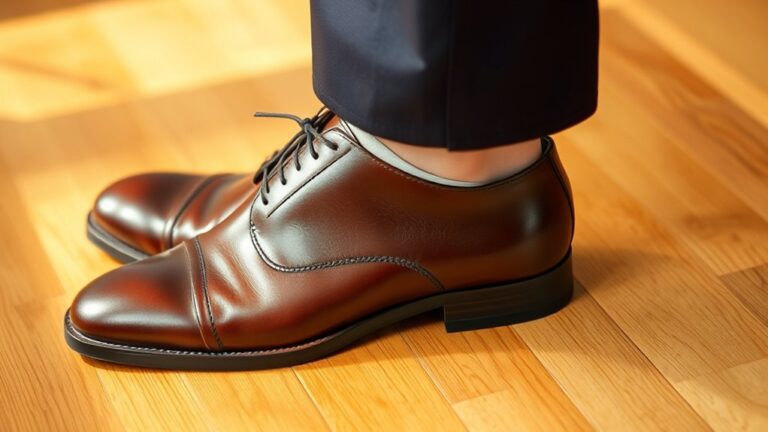
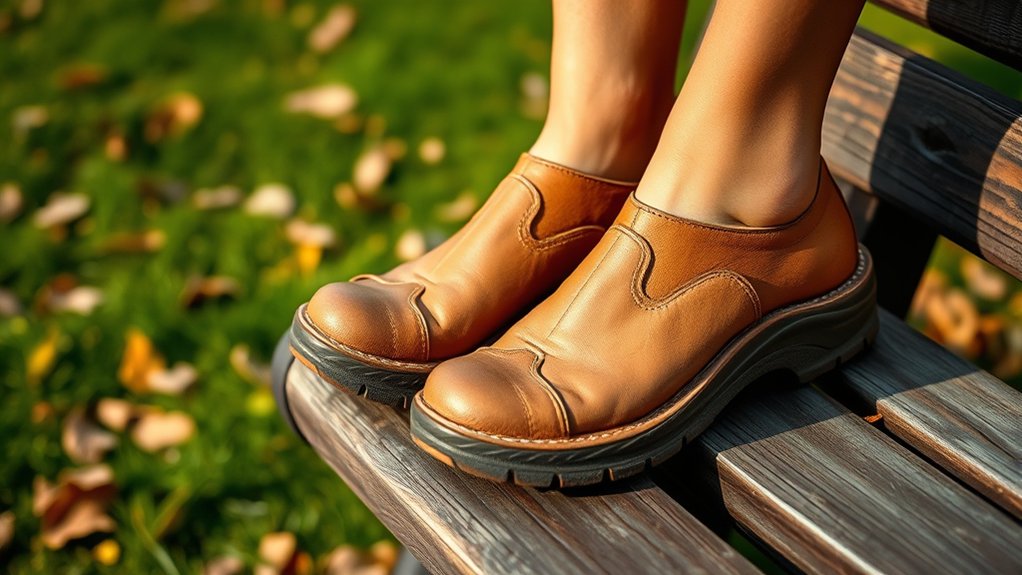
What Are Earth Shoes
Earth Shoes are designed with a unique negative heel, positioning your heel lower than your toes to promote natural posture and improved gait. This patented sole shifts weight distribution, reducing strain on your calves and lower back while enhancing foot stability.
Crafted with ergonomic materials, they minimize impact forces during walking, improving comfort and circulation. These shoes blend sustainable materials with retro-inspired style.
Keep exploring to understand their history, benefits, and how they differ from traditional footwear.
Key Takeaways
- Earth Shoes feature a patented negative heel design, positioning the heel lower than the toes for natural posture.
- The sole supports a heel-to-toe gradient that enhances stability and flexibility while walking.
- Their ergonomic design engages muscles differently, potentially improving balance and foot health.
- Originating in the 1970s, they reflect a blend of natural living, wellness, and eco-consciousness.
- Earth Shoes use sustainable materials and offer comfort by reducing impact forces during movement.
What Earth Shoes Are and How They Work
What makes Earth Shoes unique is their patented negative heel design, which positions your heel lower than your toes. This deliberate alteration from conventional shoe construction shifts your weight distribution, encouraging a more natural posture and gait.
Earth Shoes feature a patented negative heel design that promotes natural posture by lowering the heel below the toes.
When you wear Earth shoes, the negative heel design reduces strain on your lower back and knees by promoting an aligned spinal position and activating calf muscles more effectively. The sole structure is engineered to support this heel-to-toe gradient, providing stability while allowing flexibility.
Earth shoes incorporate materials and ergonomics that enhance comfort and minimize impact forces during walking. By adopting this design, you engage muscles differently compared to traditional footwear, potentially improving balance and overall foot health.
Understanding this mechanism clarifies why Earth shoes stand out in functional footwear technology.
The Story of Earth Shoes: From the 1970s to Today
Footwear innovation often reflects broader cultural and technological trends, and Earth Shoes are no exception. You’ll notice their history trends mirror shifts in societal values and fashion marketing strategies. Emerging in the 1970s, Earth Shoes capitalized on growing interest in natural living and ergonomic design.
Their distinct negative heel design quickly attracted attention, aligning with environmental awareness and wellness movements.
Key points in their story include:
- Initial surge in popularity driven by health-conscious consumers
- Decline due to market oversaturation and production challenges
- Revival through targeted marketing focused on sustainable materials and modern comfort
Today, Earth Shoes blend retro appeal with contemporary technology, adapting to evolving consumer demands while maintaining their signature ergonomic principles. Understanding this trajectory helps you appreciate their lasting influence in footwear innovation.
Why Earth Shoes Use a Negative Heel Design
The distinct negative heel design sets Earth Shoes apart, reflecting a deliberate choice rooted in biomechanics and comfort. This design lowers the heel below the forefoot, promoting a more natural foot position that encourages better posture and reduces strain on your calves and lower back.
By altering your gait, Earth Shoes aim to distribute weight more evenly, enhancing stability and minimizing joint stress. This innovative approach aligns with principles of earth fashion, blending functionality with style inspired by retro trends of the 1970s.
When you wear Earth Shoes, you’re engaging with a design that not only honors the past but also prioritizes your biomechanical health. This negative heel configuration remains a defining feature, distinguishing Earth Shoes within both fashion and ergonomic footwear markets.
Earth Shoes vs. Traditional Footwear: What’s the Difference?
When you compare Earth Shoes to traditional footwear, the key differences lie in their design and construction, especially the negative heel feature unique to Earth Shoes. This design directly influences comfort and support by promoting natural posture and reducing strain on your feet and legs.
Understanding these distinctions helps you make an informed choice based on your foot health needs.
Design And Construction
How do Earth Shoes differ in design and construction compared to traditional footwear? You’ll notice the distinct Earth heel aesthetics immediately, an innovative negative heel design that angles your foot slightly downward. Unlike conventional shoes, Earth Shoes use organic materials extensively, focusing on sustainability and natural comfort.
The construction emphasizes a unique sole architecture that supports natural foot positioning.
Key design and construction differences include:
- Negative heel sole: Angled sole encourages improved posture.
- Organic materials: Use of leather, cork, and natural rubber reduces synthetic components.
- Layered sole construction: Combines cushioning with durable outsole materials for longevity.
This precise engineering sets Earth Shoes apart by prioritizing biomechanical alignment over conventional, flat-soled designs.
Comfort And Support
You’ll find that Earth Shoes deliver distinctive comfort and support by aligning with your natural biomechanics, unlike traditional footwear that often prioritizes style over functional foot health. Earth Shoes emphasize a comfort focus through features like negative heel technology and ergonomic soles, which reduce strain on your feet and joints.
While traditional footwear offers broader stylistic options, it may sacrifice essential support. Here’s a concise comparison:
| Feature | Earth Shoes | Traditional Footwear |
|---|---|---|
| Heel Design | Negative heel for alignment | Standard flat or raised heels |
| Arch Support | Enhanced ergonomic support | Varies, often minimal |
| Comfort Focus | Prioritized for foot health | Secondary to appearance |
Choosing Earth Shoes means opting for scientifically designed comfort over conventional style-first choices.
Health Benefits of Wearing Earth Shoes
Why should you consider Earth Shoes for your daily footwear? These eco friendly, fashion forward shoes provide notable health benefits by promoting natural alignment and reducing strain on your feet and joints. Their unique design encourages proper posture, which can alleviate lower back pain and improve overall musculoskeletal function.
Key benefits include:
- Enhanced foot stability through specialized sole construction that mimics natural walking patterns
- Reduced impact stress on knees and hips, benefiting those with joint sensitivity
- Improved circulation from the ergonomic fit and supportive footbed design
Who Should Consider Earth Shoes?
The health advantages of Earth Shoes make them a practical choice for a variety of individuals. You should consider them if you experience foot pain, seek improved posture, or want to align with sustainable earth trends.
Despite some fashion myths, Earth Shoes balance function and style, debunking the notion that comfort sacrifices aesthetics.
| Who Benefits Most | Key Advantage | Relevant Earth Trend |
|---|---|---|
| People with foot pain | Arch support | Ergonomic footwear |
| Posture-conscious users | Spinal alignment | Wellness-focused trends |
| Eco-conscious buyers | Sustainable materials | Green fashion trends |
Where to Find and Buy Earth Shoes Today
Where can you find authentic Earth Shoes in today’s market? After a retail reset, these shoes with their distinctive negative heel design have regained fashion relevance. You can source them from reliable outlets that maintain quality and authenticity.
Consider these options:
- Official Earth Shoes Website: Offers the latest models incorporating the classic negative heel with modern updates.
- Specialty Footwear Retailers: Stores focusing on orthopedic or comfort shoes often stock authentic Earth Shoes.
- Certified Online Marketplaces: Platforms like Amazon or Zappos provide verified sellers ensuring genuine products.
Frequently Asked Questions
How Do You Clean and Care for Earth Shoes?
To clean Earth Shoes, use a soft brush and mild soap with water, avoiding harsh chemicals.
Care tips include air drying away from direct heat and regularly checking soles for wear to maintain support and longevity.
Are Earth Shoes Suitable for Running or Sports?
You’d think Earth Shoes could conquer any terrain, but their running suitability is limited. They prioritize comfort and posture over high-impact support, making them unsuitable for intense running or sports requiring rapid movements and stability.
Can Earth Shoes Be Worn in Wet or Snowy Conditions?
You can wear Earth Shoes in wet or snowy conditions if they have a slip-resistant tread, enhancing grip. Their earth-friendly materials provide durability, but always check specific models for waterproof features to ensure optimal performance in moisture.
Do Earth Shoes Come in Wide or Narrow Sizes?
Yes, Earth Shoes offer both wide sizing and narrow sizing options to ensure ideal fit and comfort. You’ll find precise measurements accommodating various foot widths, enhancing stability and support tailored to your specific needs.
Are There Any Celebrity Endorsements of Earth Shoes?
You won’t find prominent celebrity endorsements for Earth Shoes, as their appeal centers on biomechanical benefits rather than fashion innovation. The brand focuses on ergonomic design over mainstream celebrity-driven marketing strategies.