What Are the Most Comfortable Shoes
You want the most comfortable shoes that fit precisely, offer proper arch support, and distribute weight evenly to prevent pressure points and fatigue. Look for cushioning like memory foam that molds to your foot and orthotic compatibility to enhance alignment and shock absorption.
Breathable materials keep your feet dry and comfortable during prolonged wear. Whether walking, running, or casual, matching shoe shape to your foot type is key.
Discover how specific styles and maintenance improve comfort throughout your day.
Key Takeaways
- The most comfortable shoes have a precise fit with correct length, width, and ample toe box room to prevent pressure points and blisters.
- Shoes with memory foam insoles mold to feet, evenly distribute weight, and provide superior cushioning for prolonged wear.
- Proper arch support aligns feet naturally, reduces strain, and enhances overall foot health and posture.
- Breathable materials like mesh or high-grade leather promote airflow, reducing moisture buildup and increasing comfort.
- Versatile styles with adjustable straps, cushioned insoles, and ergonomic designs offer both comfort and functional support for various activities.
What Makes a Shoe Comfortable All Day?
What factors contribute to a shoe’s comfort throughout an entire day? You need to consider both comfortable aesthetics and sensory fit. Comfortable aesthetics ensure the shoe not only looks suitable for your style but also supports natural foot alignment, reducing strain.
Sensory fit refers to how well the shoe conforms to your foot’s unique shape and movements. When you choose a shoe with precise contouring, flexible materials, and minimal pressure points, you experience fewer distractions and discomfort.
Additionally, breathability and appropriate weight distribution enhance your sensory experience, maintaining comfort during prolonged wear. By prioritizing these elements, you can select shoes that support your foot’s biomechanics and personal comfort preferences, ensuring all-day wearability without compromising on appearance or tactile sensation.
Why Cushioning and Support Matter for Comfortable Shoes
How does cushioning and support influence your shoe’s comfort? Cushioning science shows that well-designed padding absorbs shock, reducing stress on your feet and joints during movement. This decreases fatigue and prevents discomfort, especially when you stand or walk for long periods.
Proper cushioning also distributes pressure evenly, minimizing pain in high-impact areas.
Equally important is arch support, which maintains the natural alignment of your foot. It stabilizes your arch, preventing overpronation or supination that can lead to pain or injuries.
When your shoes provide adequate arch support, your posture improves, and your muscles work more efficiently. By combining effective cushioning science with precise arch support, your shoes will offer optimal comfort, reducing strain and enhancing overall foot health throughout your day.
Which Shoes Are Best for Walking, Running, and Casual Wear?
When selecting shoes for walking, running, or casual wear, you need to contemplate specific features that match each activity’s demands. For walking, choose comfort focused shoes with ample cushioning and arch support to reduce strain during prolonged use.
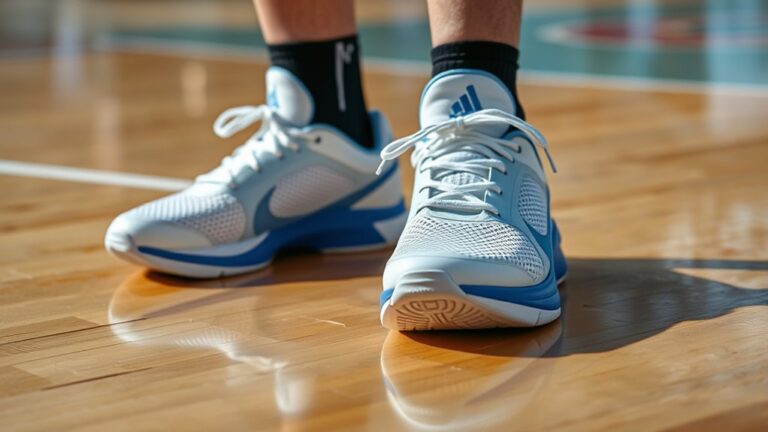
Running shoes require enhanced shock absorption, lightweight materials, and stable soles to protect your joints and optimize performance. Casual wear shoes balance comfort focused design with fashion forward aesthetics, ensuring you stay comfortable without sacrificing style.
Prioritize breathable fabrics and ergonomic construction for all categories to maintain foot health. By aligning your shoe choice with the activity’s biomechanical needs, you enhance comfort and prevent injury. This targeted approach ensures you select the best footwear for walking, running, and casual wear efficiently and effectively.
Choosing Comfortable Shoes for Your Foot Shape
You need to start by identifying your foot type to ensure optimal comfort. Matching shoes to your specific foot shape helps prevent discomfort and injury.
Identifying Your Foot Type
Understanding your foot type plays a crucial role in selecting shoes that offer optimal comfort and support. Identifying your foot type begins with examining your arch: low, normal, or high.
You can perform a simple wet test. Wet your foot, step on a surface that shows your imprint, and analyze the shape. A wide imprint indicates a low arch, a narrow imprint suggests a high arch, and a medium imprint corresponds to a normal arch.
Additionally, consider foot width and toe shape, as these factors influence fit and pressure distribution. By identifying your foot type, you can avoid discomfort and potential injury.
This precise assessment guides you in choosing shoes that accommodate your unique anatomy, enhancing overall foot health and comfort throughout daily activities.
Matching Shoes To Shape
How do you guarantee your shoes complement your foot shape for maximum comfort? Start by assessing your foot’s contours and width accurately. Matching shoes to your shoe shape ensures even pressure distribution and reduces discomfort.
If you have a narrow foot, choose shoes with a tapered toe box to provide support without pinching. Conversely, wider feet benefit from shoes with a broader toe box that accommodates natural foot expansion during movement.
Pay attention to the arch type; low arches require shoes with enhanced midsole support, while high arches need cushioned soles to absorb impact. Understanding these relationships between foot shape and shoe design helps you select footwear that aligns anatomically, minimizing strain and enhancing comfort throughout the day.
Matching shoes precisely to your shoe shape is essential for optimal comfort and foot health.
Importance Of Proper Fit
Accurately matching shoes to your foot shape lays the foundation for comfort, but ensuring a proper fit takes that comfort to the next level. Fit accuracy is critical; shoes that are too tight or too loose can cause discomfort, blisters, or long-term foot issues.
When trying on shoes, assess both length and width to avoid pressure points. Additionally, proper arch support aligned with your foot’s natural contour prevents strain and promotes stability. Without precise fit, even well-designed shoes fail to provide adequate support.
You should also consider heel snugness and toe box room to accommodate natural foot movement. Prioritize fit accuracy alongside your foot shape to maximize comfort and prevent injury, ultimately ensuring your chosen shoes serve your needs effectively throughout daily activities.
Top Comfortable Sneakers for All-Day Wear
Why settle for less when you can wear sneakers that support your feet throughout the entire day? When selecting top comfortable sneakers, focus on advanced footbed materials that provide cushioning and pressure distribution.
EVA foam and memory foam insoles effectively absorb impact, reducing foot fatigue during extended wear. Additionally, sneakers with structured ankle support help stabilize your foot, preventing strain and enhancing overall comfort.
Look for designs incorporating padded collars and adjustable lacing systems to secure your ankle properly. Breathable uppers made from mesh or knit fabrics improve ventilation, keeping your feet dry and comfortable.
Brands utilizing ergonomic sole designs also promote natural foot movement and reduce joint stress. Prioritizing these features ensures your sneakers deliver reliable comfort and support from morning to night.
Best Comfortable Sandals and Slip-Ons to Try
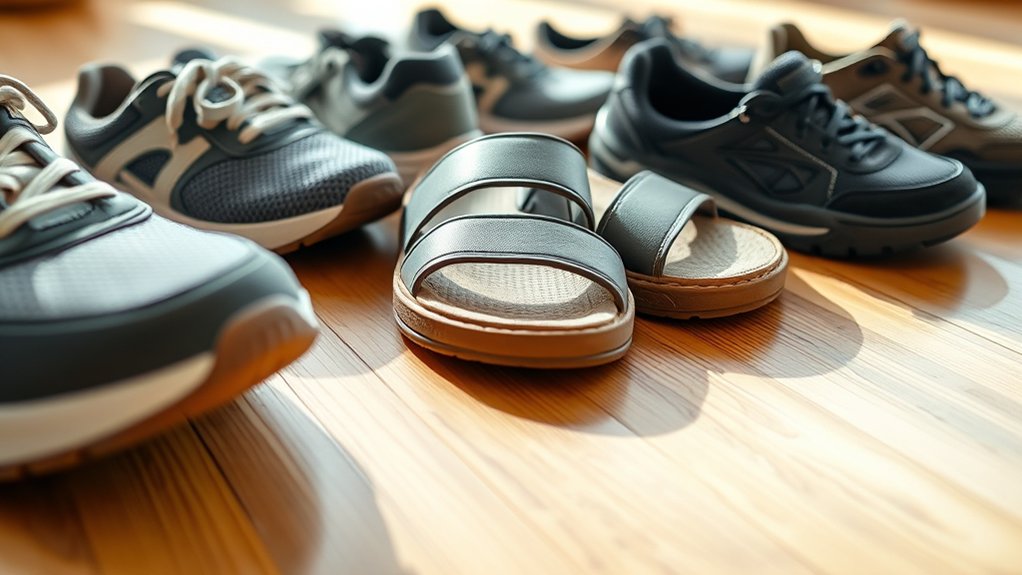
When choosing comfortable sandals and slip-ons, focus on cushioning and support features that protect your feet during prolonged wear. You’ll want breathable materials that maintain airflow and high-quality construction for durability.
Additionally, consider versatile styles that suit everyday use without compromising comfort.
Cushioning and Support Features
How do cushioning and support features impact the comfort of sandals and slip-ons? In comfort science, these elements are crucial for reducing foot fatigue and enhancing stability. Cushioning absorbs shock, while support maintains proper foot alignment.
Advanced footwear materials like memory foam and EVA contribute significantly to these benefits.
| Feature | Function |
|---|---|
| Memory Foam | Provides adaptive cushioning |
| Arch Support | Maintains foot structure and balance |
| EVA Midsole | Offers lightweight shock absorption |
When you select sandals or slip-ons with these features, you ensure prolonged comfort and reduce the risk of discomfort caused by inadequate support or insufficient cushioning. These components work synergistically to optimize your wearing experience.
Breathability and Material Quality
Where you choose to wear your sandals or slip-ons greatly influences the importance of breathability and material quality. When selecting comfortable footwear, prioritize breathable material that facilitates air circulation to reduce moisture and heat buildup.
This is crucial for maintaining foot hygiene and preventing discomfort during prolonged wear. Additionally, quality construction ensures durability and consistent performance. Look for materials like high-grade leather, mesh, or advanced synthetics that combine breathability with structural integrity.
Pay attention to stitching, sole attachment, and reinforcement points; these aspects reflect the shoe’s overall craftsmanship. By focusing on breathable material and quality construction, you ensure your sandals or slip-ons provide comfort without compromising longevity, making them suitable for various environments and extended wear periods.
Versatile Styles for Everyday
Beyond breathable materials and solid construction, selecting versatile styles can considerably enhance your daily comfort. Comfortable sandals and slip-ons with ergonomic designs offer a practical solution for varied activities. Prioritize models featuring adjustable straps to ensure a secure, comfortable fit tailored to your foot shape.
Additionally, look for options with built-in arch support to maintain proper foot alignment and reduce strain during extended wear. Slip-ons with cushioned insoles and flexible soles provide shock absorption and ease of movement, essential for prolonged standing or walking.
Versatile styles should balance functionality with aesthetics, allowing seamless transition from casual to semi-formal settings without compromising comfort. By focusing on these features, you can confidently select sandals or slip-ons that deliver consistent support and adaptability for everyday wear.
How Memory Foam and Orthotics Boost Shoe Comfort
Memory foam and orthotics substantially enhance shoe comfort by providing targeted support and cushioning tailored to your foot’s unique shape and pressure points. Memory foam molds to your foot, evenly distributing weight and reducing impact, which directly causes increased comfort during prolonged wear.
Memory foam and orthotics deliver personalized support and cushioning, boosting comfort by adapting to your foot’s unique shape.
Orthotics, whether custom or over-the-counter, correct biomechanical imbalances, improving fit and alignment. This causation between support and comfort minimizes fatigue and prevents common foot ailments.
Recent fit trends emphasize integrating memory foam insoles and orthotic-friendly designs, recognizing their role in optimizing shoe performance. By choosing shoes with these features, you ensure personalized cushioning and structural support, which translates to superior comfort.
Understanding how memory foam and orthotics interact with your foot anatomy helps you select footwear that supports both function and comfort effectively.
Tips for Breaking In and Maintaining Comfortable Shoes
How can you guarantee your shoes remain comfortable over time? Implementing a consistent break-in routine and employing maintenance tricks is essential. Start with these three steps:
- Gradually increase wear time during the break-in routine to allow materials to conform to your foot shape, reducing pressure points.
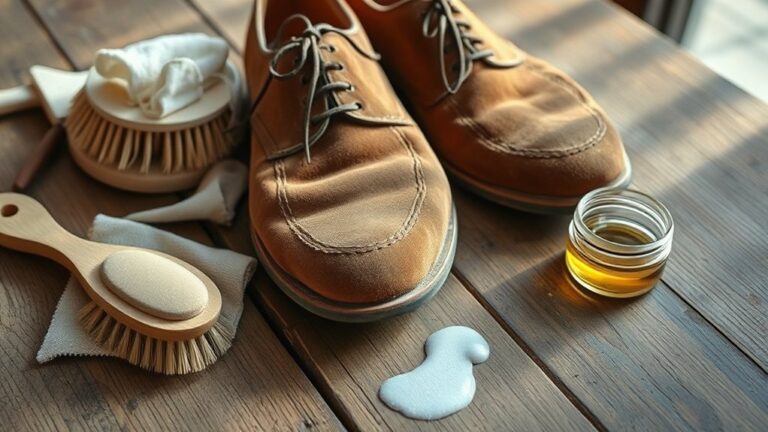
- Use appropriate moisturizers or conditioners on leather shoes to maintain flexibility and prevent cracking, integral to long-term comfort.
- Regularly clean and inspect shoes for wear, addressing minor issues such as sole separation or insole compression early, which preserves structural support.
Frequently Asked Questions
Can Comfortable Shoes Help Improve Posture and Reduce Back Pain?
Yes, wearing shoes with proper support can promote posture improvement and offer back pain relief. Choosing footwear made from eco-friendly materials further benefits your health and environment, enhancing overall comfort and spinal alignment effectively.
Are There Eco-Friendly Materials Used in Making Comfortable Shoes?
Yes, you’ll find eco-friendly, sustainable materials like organic cotton, cork, and recycled rubber used in comfortable shoes. These materials minimize environmental impact while maintaining durability and cushioning, supporting both your comfort and conscientious consumer choices.
How Do Climate and Weather Affect Shoe Comfort Throughout the Day?
You’ll experience climate induced fatigue if your shoes lack weather based cushioning, as extreme temperatures and moisture affect foot stability and comfort.
Proper cushioning adapts to weather changes, reducing strain and maintaining comfort throughout the day.
Can Comfortable Shoes Prevent Foot Conditions Like Plantar Fasciitis?
Think of your feet as a delicate machine; with proper footwear fit and cushioning impact, you can considerably reduce stress on the plantar fascia. This helps prevent plantar fasciitis and ensures your foot’s long-term health and comfort.
What Are the Best Comfortable Shoes for People With Diabetes?
You should choose diabetic friendly footwear featuring cushioned insoles, seamless interiors, and ample toe room to reduce pressure and prevent ulcers.
Prioritize shoes with adjustable closures and breathable materials for optimal foot health and comfort.