Where Are Saucony Shoes Made
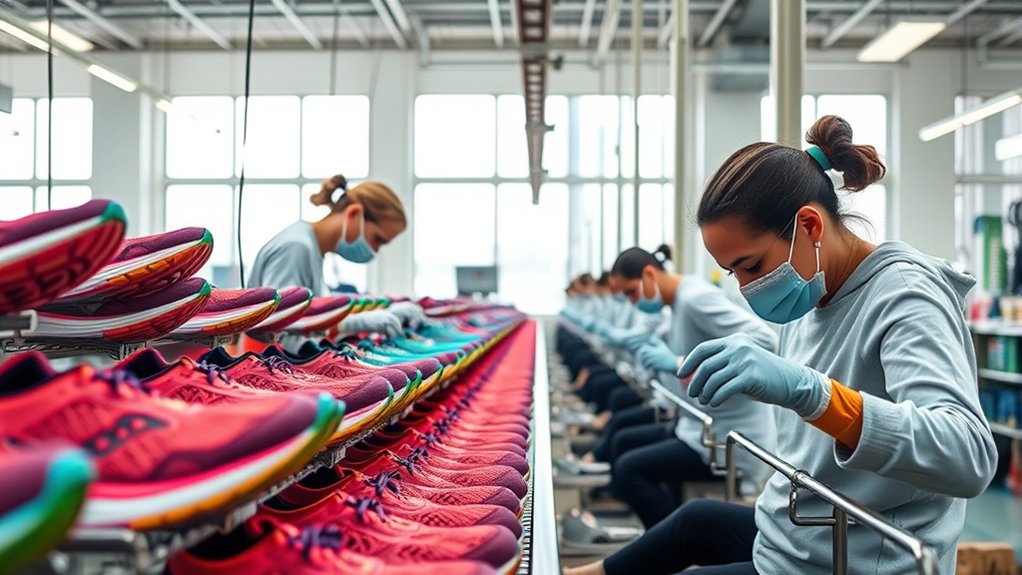
Saucony shoes are primarily made in Asia, with key production centers in Vietnam and China to balance cost efficiency, quality, and supply chain reliability. This location choice leverages lower labor costs and material availability while maintaining rigorous quality control standards globally.
Some models are still produced in the USA to ensure tighter quality management and support ethical labor practices. Understanding these manufacturing strategies helps clarify how Saucony navigates cost, quality, and ethical considerations in its production.
Key Takeaways
- Saucony shoes are primarily manufactured in Asia, notably in Vietnam and China, to optimize cost and supply chain efficiency.
- Historically, Saucony shoe production began in Kutztown, Pennsylvania, USA, focusing on artisanal, domestic manufacturing.
- Since the 1990s, manufacturing shifted to Asia to reduce costs and scale production while maintaining quality standards.
- Some Saucony shoes are still made in the USA to ensure tighter quality control and support ethical labor practices.
- Manufacturing locations impact pricing, balancing lower offshore labor costs with potential tariffs and higher domestic production expenses.
Where Are Saucony Shoes Made Today?
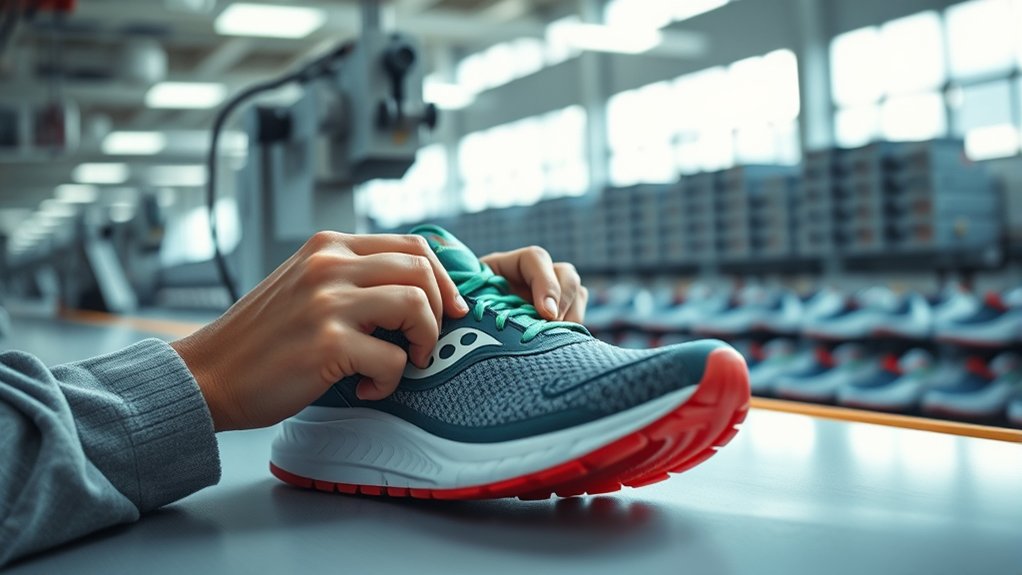
Where exactly are Saucony shoes manufactured today? You’ll find that production primarily occurs in Asia, notably in Vietnam and China. This location choice reflects Saucony’s integration into global supply chains designed to optimize cost efficiency and supply reliability.
By leveraging manufacturing hubs with established infrastructure, the brand controls production expenses, directly influencing their pricing strategies. You’ll notice that maintaining these global supply chains allows Saucony to balance quality standards against competitive market pricing.
Additionally, local labor costs and material availability in these regions contribute to the final retail prices you see. Understanding this production distribution helps you appreciate how Saucony adapts operationally to global economic variables, ensuring they deliver performance footwear at strategic price points without compromising manufacturing consistency or innovation.
Saucony Shoe Manufacturing Origins
Understanding the current manufacturing locations offers insight into Saucony’s operational strategies, but tracing the brand’s production origins reveals how its manufacturing philosophy evolved. You’ll find that Saucony’s historical origins trace back to the early 20th century in the United States, where factory localization centered around Pennsylvania.
Initially, production focused on domestic manufacturing to maintain quality control and brand identity.
| Era | Location | Manufacturing Focus |
|---|---|---|
| 1898-1960s | Kutztown, PA, USA | Domestic, artisanal |
| 1970s-1980s | USA & Japan | Expansion, technology shift |
| 1990s-2000s | Asia (China, Vietnam) | Cost reduction, scaling |
| 2010s-Present | Mixed locations | Global, strategic localization |
This shift highlights how factory localization evolved to balance cost, quality, and global demand.
Why Does Saucony Make Some Shoes in the USA?
Why does Saucony continue producing certain shoe models in the USA despite global manufacturing trends favoring lower-cost countries? You should consider two word discussion ideas like production ethics and local expertise.
Saucony prioritizes production ethics by ensuring fair labor practices and compliance with stringent U.S. regulations, which are harder to guarantee abroad. Additionally, manufacturing domestically allows the company to maintain tighter quality control and responsiveness to market demands.
You benefit from shorter supply chains that reduce lead times and inventory costs. Furthermore, keeping some production in the USA supports local economies and aligns with brand values emphasizing sustainability and transparency.
While cost efficiency drives offshore manufacturing, Saucony balances this with production ethics and brand integrity by selectively producing shoes domestically, meeting consumer expectations for responsible sourcing.
How Saucony Shoes’ Production Locations Affect Quality
How does the location of Saucony’s manufacturing impact the quality of their shoes? Production sites directly influence quality through variations in supply chain efficiency and adherence to labor standards.
Facilities in the USA benefit from stringent labor regulations, ensuring skilled craftsmanship and consistent quality control. Conversely, factories in Asia leverage advanced manufacturing technologies and optimized supply chains, reducing defects and maintaining material integrity.
USA facilities ensure skilled craftsmanship, while Asian factories utilize advanced technology and optimized supply chains for quality.
However, differences in labor standards can affect worker training and product consistency. Saucony manages these variables by enforcing rigorous quality assurance protocols across all locations, standardizing materials and processes regardless of geography.
As a result, the company maintains a baseline quality level while adapting to regional supply chain dynamics. You’ll notice that production location decisions balance cost, quality, and ethical labor practices to meet Saucony’s performance benchmarks.
What Manufacturing Choices Mean for Saucony Prices
Where exactly Saucony chooses to manufacture its shoes directly shapes their price points. Offshore outsourcing and cost driven sourcing are central to this dynamic. You’ll notice that:
- Labor costs in offshore locations reduce production expenses, enabling Saucony to offer competitive retail prices.
- Shipping and import tariffs add variable costs that can increase end-user prices despite low manufacturing costs.
- Higher-cost domestic or nearshore production drives prices up but can improve supply chain responsiveness and quality control.
- Economies of scale in large offshore factories allow Saucony to leverage bulk material purchases, further lowering unit costs.
Frequently Asked Questions
What Materials Are Used in Saucony Shoes?
You’ll find Saucony shoes use engineered mesh, EVA foam, TPU overlays, and rubber outsoles. These materials balance durability and performance.
Manufacturing locations influence material sourcing, ensuring quality control and adherence to technical specifications for optimal function.
Are Saucony Shoes Suitable for Wide Feet?
If your feet crave space like rivers carving valleys, Saucony’s wide toe box offers relief. Their shoes provide reliable arch support, making them a solid choice for those needing extra room and structured stability during runs.
How Do Saucony Shoes Compare to Other Brands?
You’ll find Saucony branding emphasizes running biomechanics and cushioning technology. Compared to other brands, their price points are mid-range, offering durable materials and advanced features. This makes them competitive for performance without premium pricing.
Do Saucony Shoes Require a Break-In Period?
You don’t usually need a long break-in period with Saucony shoes; their engineered design ensures immediate comfort.
Data shows minimal initial stiffness, supporting long-term durability without sacrificing early performance or fit adaptation.
Are Saucony Shoes Environmentally Friendly?
Yes, Saucony incorporates eco friendly materials like recycled polyester and TPU in some models.
They improve supply chain transparency by publishing sustainability reports and partnering with certified suppliers to reduce environmental impact throughout production processes.
Conclusion
When you look closer, Saucony’s manufacturing spread—from the USA to overseas—reveals a strategic balance between quality control and cost efficiency. You’re not just buying shoes; you’re investing in carefully managed production processes that impact durability and price. Like a well-oiled machine, each location plays a precise role in delivering performance you can trust.
Understanding this helps you make smarter choices, ensuring your Saucony shoes meet both your expectations and your budget. Knowing where Saucony shoes are made can give you added confidence in the quality and value of your purchase.