How Long Do Hoka Shoes Last
You can expect your Hoka shoes to last between 300 and 500 miles before cushioning and outsole grip noticeably degrade.
The lifespan of Hoka shoes depends on factors like your running style—heel or forefoot strike—and the type of terrain you run on.
Trail running, for example, causes faster outsole abrasion compared to road running.
Midsole foam compresses over time, reducing shock absorption, so it’s important to replace your Hokas promptly when you notice midsole flattening or outsole tread erosion beyond 50%.
Proper care and rotating between multiple pairs can also extend their lifecycle.
Explore how various factors influence the durability and replacement timing to get the most out of your Hoka shoes.
Key Takeaways
- Hoka shoes typically last between 300 to 500 miles before cushioning and outsole grip degrade.
- Midsole foam compression and outsole wear signal when to replace Hoka shoes to maintain performance.
- Running style, pace, and terrain impact Hoka shoe wear rate and overall lifespan.
- Proper fit, shoe rotation, and care extend Hoka shoe durability and cushioning effectiveness.
- Replace Hokas promptly to support injury prevention and preserve the shoe’s engineered ride quality.
How Long Do Hoka Shoes Last for Runners?
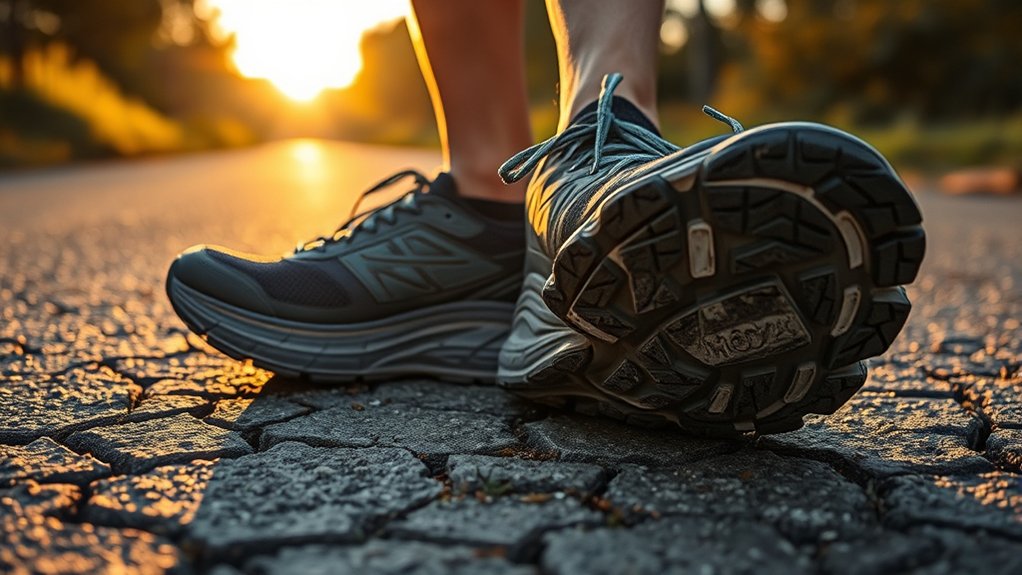
How long can you expect your Hoka shoes to perform at their best as a runner? Typically, you’ll find Hoka shoes maintain optimal shoe cushioning and outsole grip for approximately 300 to 500 miles. This range depends on your running style and terrain but reflects the average lifespan before midsole compression diminishes shock absorption and outsole traction wears down.
The signature EVA foam in Hoka midsoles offers excellent energy return and comfort but gradually loses resilience with use. Meanwhile, the outsole grip, crafted from durable rubber compounds, resists abrasion but eventually thins, reducing traction and stability on varied surfaces. Monitoring these factors closely ensures you replace your Hokas before performance degrades, helping you avoid injury and maintain efficient biomechanics throughout your runs.
What Affects How Long Your Hoka Shoes Last?
The lifespan of your Hoka shoes depends on several factors that influence wear and performance degradation. The shoes materials, including midsole foam density and outsole rubber compounds, directly affect durability. Additionally, manufacturing processes such as bonding techniques and stitching quality determine structural integrity.
Environmental exposure and activity type also play roles, but materials and manufacturing are primary.
| Factor | Impact on Lifespan |
|---|---|
| Shoes Materials | High-density foams resist compression better |
| Manufacturing Processes | Advanced bonding reduces sole separation |
| Usage Environment | Rough terrain accelerates outsole wear |
| Maintenance | Proper cleaning preserves materials and structure |
Understanding these elements helps you gauge when your Hokas might need replacement, ensuring optimal performance and safety.
Does Your Running Style Change How Long Hokas Last?
Your running style directly impacts how long your Hoka shoes last, especially through foot strike patterns and running pace. A heavy heel strike generates more concentrated wear on the rear midsole, accelerating material breakdown.
Similarly, faster paces increase repetitive impact forces, which can reduce overall shoe durability.
Impact Of Foot Strike
When considering the lifespan of Hoka shoes, you must evaluate the impact of your foot strike pattern. Your foot strike directly influences impact alignment and gait balance, which in turn affect how the shoe’s midsole compresses and wears down.
For instance, a heavy heel striker exerts concentrated force on the rearfoot, accelerating wear in the heel area. Conversely, a forefoot striker shifts stress to the shoe’s front, altering cushioning durability there.
Key factors to assess include:
- Strike location intensity influencing sole compression
- Impact alignment affecting midsole resilience
- Gait balance determining uneven wear patterns
- Adaptations in stride altering degradation rates
Understanding these dynamics helps you predict how your running mechanics will affect the structural integrity of your Hokas over time.
Influence Of Running Pace
Foot strike patterns shape how your Hokas wear, but running pace also plays a significant role in shoe longevity. Your pace affects durability by influencing the rate of cushioning breakdown.
Faster paces generate higher impact forces, accelerating midsole compression and outsole abrasion. Conversely, slower paces distribute forces more evenly, slowing material degradation. Understanding this relationship helps you anticipate when to replace your Hokas.
| Running Pace | Impact Force Level | Expected Hoka Lifespan (Miles) |
|---|---|---|
| Easy Jogging | Low | 400-450 |
| Moderate Tempo | Moderate | 350-400 |
| Fast Intervals | High | 300-350 |
| Sprint Training | Very High | 250-300 |
| Recovery Runs | Low | 400-450 |
Adjust your replacement schedule accordingly to maintain optimal cushioning and support.
How Does Terrain Impact Hoka Shoe Wear?
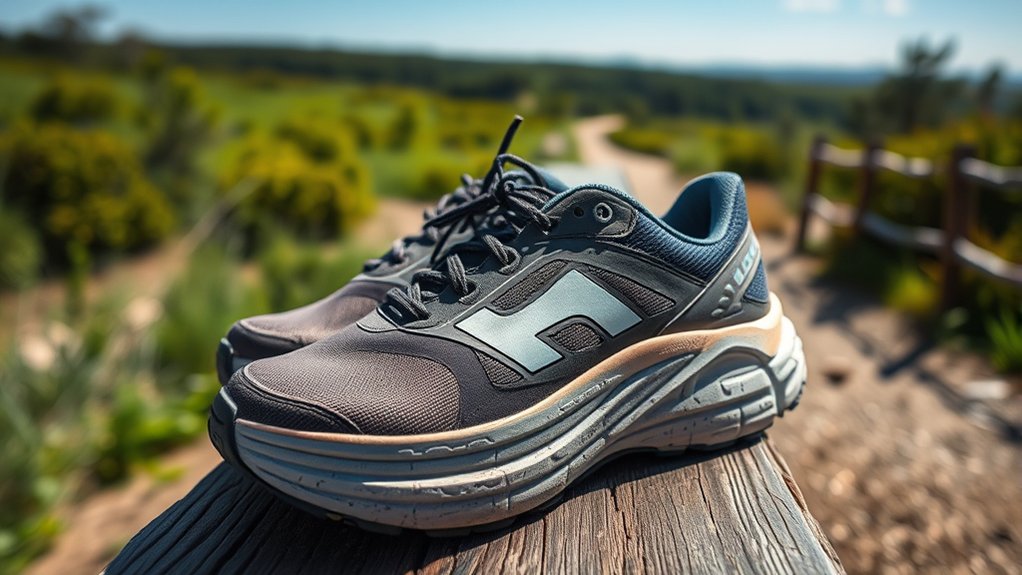
When you run on trails, expect faster outsole abrasion compared to road surfaces due to rough rocks and uneven terrain. Rough surfaces increase midsole compression, accelerating cushioning breakdown in your Hoka shoes.
Additionally, wet conditions can degrade materials and reduce traction, further impacting shoe longevity.
Trail Versus Road Durability
How does the terrain you run on affect the longevity of your Hoka shoes? Understanding the durability ideation behind Hoka’s design helps clarify why trail and road use impact material fatigue differently.
Trail running exposes your shoes to uneven, abrasive surfaces, accelerating wear on the outsole and midsole. Road running, while more consistent, induces repetitive stress that leads to gradual material breakdown.
Consider these factors:
- Trail shoes often use tougher materials to resist cuts and abrasions.
- Road shoes prioritize cushioning to manage repetitive impact.
- Material fatigue occurs faster on trails due to variable terrain stress.
- Durability ideation balances protection and flexibility based on intended terrain.
Impact of Rough Surfaces
Why does running on rough surfaces accelerate wear in your Hoka shoes? Rough terrain increases mechanical abrasion and uneven pressure on the outsole and midsole materials, pushing their limits beyond typical road conditions.
Despite common durability myths suggesting Hoka shoes can withstand all terrains equally, design constraints such as lightweight foam compounds and specific tread patterns prioritize cushioning and responsiveness over rugged abrasion resistance.
The aggressive contact with rocks, gravel, and roots results in faster degradation of the EVA foam and rubber compounds, leading to compromised cushioning and grip.
Understanding these technical factors helps you realistically assess your shoe lifespan based on terrain. So, if you frequently tackle rough surfaces, expect accelerated wear and plan replacements accordingly to maintain optimal performance and injury prevention.
Effect of Wet Conditions
Just as rough surfaces accelerate wear by increasing mechanical abrasion, wet conditions introduce unique challenges that affect the durability of your Hoka shoes. Moisture compromises absorbency durability, leading to material breakdown and reduced cushioning efficiency.
Wet traction, essential for safety, can degrade quickly when the outsole rubber softens or becomes clogged with debris. Additionally, consistent exposure to moisture can weaken adhesives, causing sole separation.
Key factors influencing wear in wet conditions include:
- Decreased outsole grip due to slick, water-lubricated surfaces
- Accelerated midsole foam degradation from trapped moisture
- Upper material saturation reducing structural integrity
- Increased risk of sole delamination from weakened bonds
Understanding these effects helps you choose appropriate Hoka models and maintain their performance across wet terrains.
When Should You Replace Your Hoka Shoes?
When do you know it’s time to replace your Hoka shoes? Monitor midsole compression and outsole wear closely; once the cushioning visibly flattens or the tread pattern erodes beyond 50%, performance and injury risk escalate.
Pay attention to reduced shock absorption or instability during runs. These indicate material fatigue. Unlike off brand alternatives, Hokas use advanced EVA foam that degrades predictably, so tracking mileage (typically 300-500 miles) helps gauge lifespan.
Avoid storing your Hokas in damp or compressed environments; improper storage solutions accelerate material breakdown. Also, examine the upper for tears or loosening seams, which compromise support.
Replacing your Hokas promptly ensures optimal biomechanics and injury prevention, maintaining the brand’s engineered ride quality and responsiveness throughout your training cycle.
How Can You Extend the Life of Your Hoka Shoes?
How exactly can you maximize the durability of your Hoka shoes without compromising their performance? Start by addressing essential factors like sizing considerations and maintenance routines. Proper fit reduces undue stress and wear on materials.
Additionally, following recommended care protocols preserves cushioning and outsole integrity. To extend your Hokas’ life effectively:
- Rotate shoes to allow midsole recovery, preventing premature compression
- Clean regularly with mild soap, avoiding harsh chemicals that degrade materials
- Store in a cool, dry place to prevent moisture damage and material breakdown
- Learn how to recycle Hokas responsibly when they reach end-of-life to minimize environmental impact
These steps ensure your Hoka shoes deliver optimal support and longevity, protecting your investment and performance.
Frequently Asked Questions
Are Hoka Shoes Good for Walking Long Distances?
You’ll find Hoka shoes excellent for walking long distances because they balance durability vs. comfort effectively. Their cushioning supports mileage without sacrificing pace, letting you maintain steady performance while protecting your feet over extended walks.
What Materials Are Hoka Shoes Made Of?
Hoka shoes use engineered mesh uppers for breathability and lightweight durability. Their midsoles feature EVA foam or PROFLY™ construction types, providing responsive cushioning.
Outsoles incorporate rubber compounds for traction and wear resistance, ensuring performance and longevity.
Do Hoka Shoes Provide Good Arch Support?
Wondering if Hoka shoes provide solid arch support? You’ll appreciate their advanced concept durability and engineered midsole, which guarantees consistent arch support, reducing fatigue while enhancing stability during prolonged wear and varied activities.
Can Hoka Shoes Be Used for Trail Running?
Yes, you can use Hoka shoes for trail running. They offer excellent trail durability and grip performance thanks to their rugged outsoles and advanced rubber compounds. This ensures stability and traction on varied, technical terrains.
Are Hoka Shoes Waterproof or Water-Resistant?
You won’t find full waterproofing in all Hoka shoes, but many pass rigorous waterproof testing, offering water-resistant protection through advanced material durability.
This balance keeps your feet dry without sacrificing breathability or weight.
Conclusion
You’ve learned that your Hoka shoes typically last between 300 to 500 miles, influenced by your running style, terrain, and maintenance habits. Just like a knight’s armor, your shoes need regular care to perform at their best.
Monitor sole wear and cushioning loss closely, replacing them before performance drops. By understanding these technical factors and acting promptly, you’ll ensure optimal support and injury prevention throughout your runs.
Treat your Hokas like precision instruments—they’re built to last. Knowing how long Hoka shoes last helps you get the most out of every mile while keeping your feet protected.