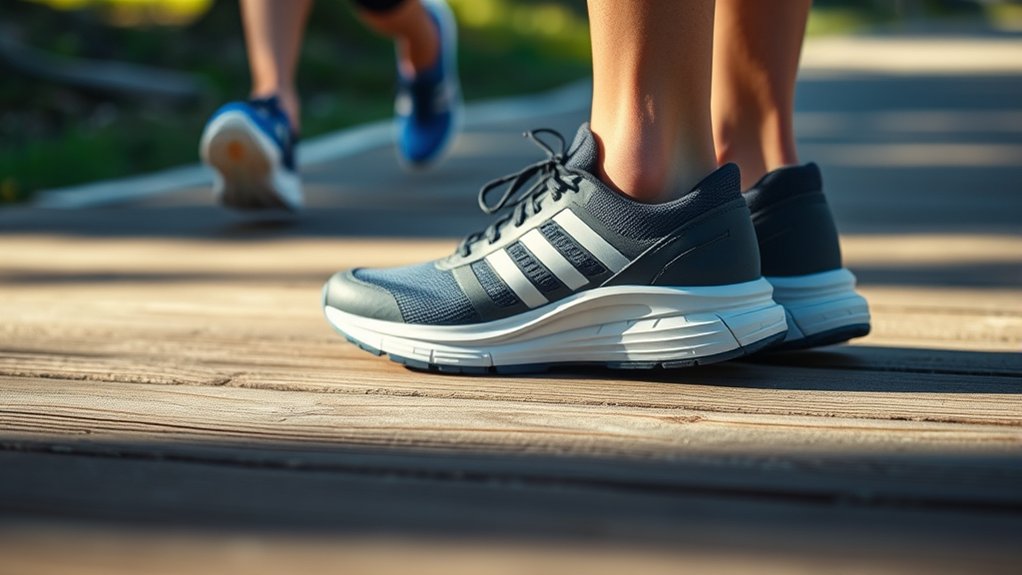
What Are Stability Running Shoes
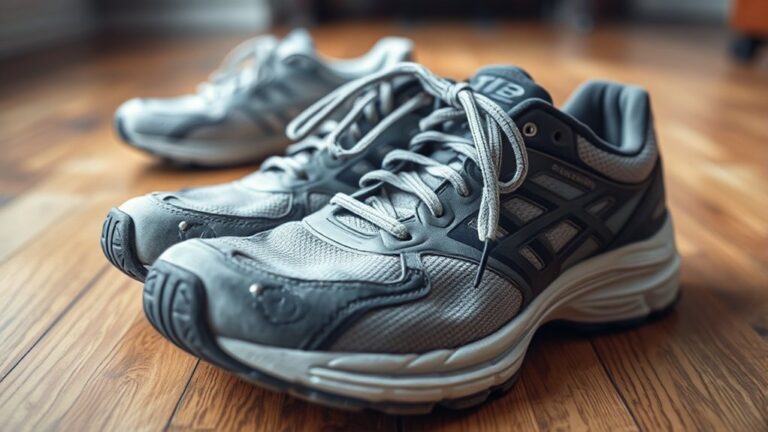
Stability running shoes are specifically designed to control overpronation by providing firm arch support and reinforced midsoles that resist your foot’s inward roll. These shoes help maintain proper foot alignment, making them ideal for runners who need extra support to prevent injury.
They feature medial posts and structured heel counters that guide your foot back toward a neutral position. This improves alignment and gait efficiency, helping you run more comfortably and effectively.
If you notice uneven wear on the inner sole or experience discomfort from improper foot motion, stability running shoes can offer significant relief. Understanding their key features and ensuring a proper fit will help you get the right support for your stride.
Key Takeaways
- Stability running shoes provide enhanced support to control overpronation, preventing the foot from rolling excessively inward during running.
- They feature a medial post and firmer midsole to reinforce the arch and guide the foot toward a neutral alignment.
- Key design elements include a structured midsole and heel counter that improve stability without overcorrecting foot motion.
- Stability shoes are best suited for runners with mild to moderate overpronation, offering support without the rigidity of motion control shoes.
- Proper selection involves gait analysis, ensuring a snug fit, firm heel support, and appropriate arch and midsole technology for comfort and control.
What Are Stability Running Shoes and Who Needs Them
What exactly are stability running shoes, and how do you know if you need them? Stability shoes are engineered to provide enhanced support and control, specifically designed to address overpronation, a condition where your foot rolls excessively inward during the gait cycle.
If you notice uneven wear on the inner edge of your shoe or experience discomfort linked to improper foot alignment, you likely require overpronation correction. Stability shoes incorporate firmer midsoles and medial posts to reinforce the arch and guide your foot into a more neutral position.
Top Features of Stability Running Shoes
Understanding how stability running shoes correct overpronation sets the stage to examine the key components that make these shoes effective. You’ll notice that quality stability shoes include medial posts, structured midsoles, and supportive heel counters.
These features work together to control motion without overcorrecting, dispelling common supporting myths and countering misleading marketing claims.
| Feature | Function | Benefit |
|---|---|---|
| Medial Post | Limits inward roll | Enhances stability |
| Structured Midsole | Provides firm arch support | Prevents excess pronation |
| Heel Counter | Locks heel in place | Improves alignment and control |
How Stability Running Shoes Correct Overpronation
How do stability running shoes effectively counteract overpronation? Pronation is the natural inward roll of your foot during the gait cycle, but overpronation occurs when this roll is excessive, causing instability.
Stability shoes correct overpronation by integrating firmer shoe material along the medial side, usually between the arch and midsole. This denser material resists inward collapse, providing support that realigns your foot into a neutral position.
Additionally, the shoe’s dual-density foam and structured heel counter enhance control, limiting excessive motion without restricting natural foot movement. By reinforcing key areas with precise shoe material selection, stability running shoes improve your gait efficiency, reduce injury risk, and optimize comfort during runs.
Understanding what is pronation helps you appreciate how these shoes tailor support to your biomechanical needs.
When to Choose Stability Running Shoes Over Neutral or Motion Control Shoes
When should you choose stability running shoes instead of neutral or motion control options? Rely on a thorough gait analysis rather than overpronation myths to guide your decision. Stability shoes suit you if your gait reveals mild to moderate overpronation, providing structured support without the rigidity of motion control shoes.
Choose stability shoes for mild to moderate overpronation, guided by thorough gait analysis—not myths.
Neutral shoes fit best when your foot shows a balanced pronation pattern, requiring cushioning but minimal corrective features. Motion control shoes are reserved for severe overpronators needing maximum support and control.
Avoid choosing shoes based solely on outdated overpronation myths; improper selection can lead to discomfort or injury. Instead, trust precise biomechanical data from gait analysis to match your foot’s specific needs, ensuring optimal performance and injury prevention.
Stability shoes strike the balance between support and flexibility for many runners.
How to Find the Right Stability Running Shoes for You
Where do you start when selecting stability running shoes tailored to your unique biomechanics? Begin by assessing fit meticulously. Your shoe should snugly cradle your foot without pressure points.
Prioritize finding comfort over style; the right shoe supports your gait efficiently. Consider your arch type and pronation level to match the shoe’s stability features appropriately.
Don’t overlook the shoe’s midsole technology, as it directly impacts motion control and cushioning.
Focus on:
- Getting a professional gait analysis
- Trying shoes later in the day when feet swell
- Testing shoes with your typical running socks
- Ensuring heel counters provide firm support
- Checking for adequate toe box space
Frequently Asked Questions
Can Stability Shoes Be Used for Trail Running?
You can use stability shoes for trail running if they offer adequate grip stability and trail comfort. Ensure their outsole provides secure traction on uneven terrain while maintaining support to prevent overpronation during your runs.
How Long Do Stability Running Shoes Typically Last?
You won’t wear stability running shoes until they crumble like ancient ruins; their stability lifespan usually spans 300-500 miles, depending on shoe durability and terrain.
Monitor wear patterns closely for optimal performance and injury prevention.
Are Stability Shoes Suitable for Beginners?
Yes, stability shoes can be beginner friendly if you prioritize cushion over support initially. Advanced gait analysis isn’t always necessary, but as you progress, shifting focus to support ensures proper alignment and injury prevention during your runs.
Can Stability Shoes Help Prevent Injuries?
Yes, stability design in these shoes supports your foot’s natural motion, reducing overpronation and enhancing injury prevention.
You’ll benefit from improved alignment and shock absorption, which lowers stress on joints and muscles during runs.
Do Stability Running Shoes Affect Running Speed?
Stability shoes may slightly affect your running speed by adding support and control, which can alter your natural stride. However, for most runners, this impact is minimal.
Increased stability often enhances overall performance.