Do Pointe Shoes Hurt
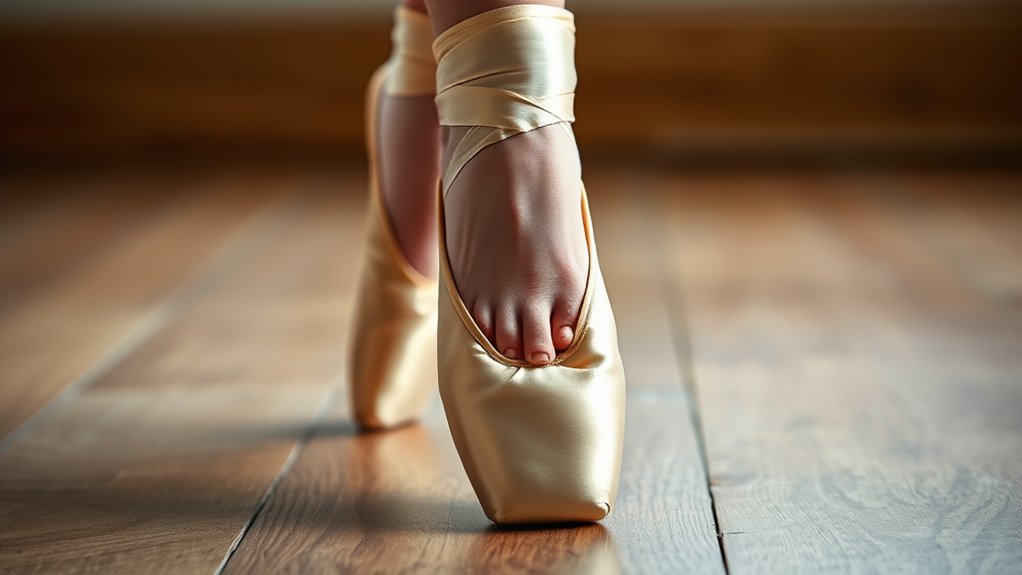
Yes, pointe shoes can hurt due to intense pressure on your toes and metatarsals combined with stiff materials that initially limit shock absorption. Your foot muscles tire, reducing stabilization and increasing discomfort as the shoe’s box and shank break in unevenly.
Proper fit and conditioning drastically reduce pain and injury risk by distributing weight evenly. Managing break-in and preventive footcare further support comfort and performance.
You’ll find detailed insights on pain causes, fitting, and care beyond this overview.
Key Takeaways
- Pointe shoes often hurt due to intense pressure on toes and metatarsals during dancing.
- Pain increases during the break-in phase as the stiff box and shank soften unevenly.
- Common pains include blisters, calluses, bruised toenails, metatarsal pain, and tendonitis from mechanical demands.
- Proper fitting significantly reduces pain by minimizing pressure points and distributing weight evenly.
- Preventive footcare and gradual break-in help manage discomfort and reduce injury risk.
Why Do Pointe Shoes Hurt Your Feet?
Why do pointe shoes hurt your feet? The primary reason lies in the intense pressure they exert on your toes and metatarsals, which your feet aren’t naturally designed to withstand.
During the initial pointe shoe breakup, the stiff box and shank gradually soften, but this process also causes uneven support, increasing localized stress. As you dance, foot muscle fatigue sets in, reducing your ability to stabilize and absorb shock effectively.
This fatigue amplifies discomfort and can lead to pain as your muscles struggle to compensate for the shoe’s rigidity and the unnatural alignment of your toes. Understanding these mechanical and physiological factors helps you anticipate why pointe shoes hurt and highlights the importance of proper shoe fitting and conditioning to minimize injury risk.
Common Pointe Shoe Pains Dancers Experience
How do pointe shoes affect your feet during intense practice and performance? You’ll quickly notice that common pains emerge from the mechanical demands placed on your toes and arches.
Dancer anecdotes often reveal persistent issues that become part of backstage rituals such as taping, ice packs, or padding to manage discomfort. Typical pains you might experience include:
- Blisters and calluses from friction and pressure points
- Bruised toenails due to repeated impact and compression
- Metatarsal pain caused by uneven weight distribution
- Tendonitis from overuse and improper alignment
Recognizing these pains helps you anticipate what backstage rituals to adopt. Understanding the specific stresses pointe shoes place on your feet allows you to better prepare for the rigors of dance, minimizing interruptions during performance.
How Proper Pointe Shoe Fitting Reduces Pain
Experiencing pain from pointe shoes often signals an issue with fit rather than an unavoidable side effect of dancing. When you guarantee your shoes fit properly, you minimize pressure points and distribute weight evenly across your foot.
A precise fit requires evaluating your foot’s length, width, and arch shape, and considering how durable fabrics in the shoe’s construction affect support and flexibility. Modern pointe shoes incorporate durable fabrics that maintain shape without excessive stiffness, reducing friction and discomfort.
While color trends might influence your aesthetic choice, prioritize structural integrity and fit over appearance. Proper fitting also accounts for slight foot swelling during activity, so shoes shouldn’t feel tight initially but should provide firm support.
This approach dramatically lowers pain and enhances performance longevity.
How to Choose Comfortable Pointe Shoes
You need to prioritize a precise fit when selecting pointe shoes to minimize discomfort and injury risk. Focus on the materials and construction, as these directly affect support and flexibility.
Consulting a professional fitter ensures your shoes align with your foot shape and technique.
Proper Fit Importance
Why does the proper fit of pointe shoes matter so much? Because your foot anatomy directly influences performance and injury risk. A precise fit ensures that the shoe supports your arch, toes, and heel without causing unnecessary pressure or instability.
When you choose pointe shoes, consider these critical factors:
- Toe box shape aligning with your toe length and width to prevent bruising and blisters
- Arch support matching your foot’s natural curve for optimal balance and strength
- Heel fit snug enough to avoid slipping but not constrict circulation
- Shoe length accommodating your toes fully without excessive space
Ignoring your foot anatomy and proper fit can lead to pain, calluses, and compromised technique. Always prioritize fit over style or brand to protect your feet and enhance your dancing.
Material and Construction
How does the material and construction of pointe shoes impact comfort and performance? The choice of materials directly affects durability, breathability, and overall foot support. You want a shoe with tightly woven satin or canvas that balances material aesthetics and function, ensuring the exterior looks polished without sacrificing strength.
The toe box design is critical. It must provide a firm platform while molding comfortably to your toes. A well-constructed toe box distributes pressure evenly, reducing hotspots and discomfort during en pointe work.
Additionally, the stiffness of the shank and the glue used in the shoe’s construction influence your foot’s stability and articulation. By understanding these technical aspects, you can select pointe shoes that enhance your performance while minimizing pain and injury risk.
Professional Fitting Tips
Where should you begin when selecting pointe shoes that offer both comfort and optimal performance? Start with a professional fitting to ensure precise sizing, as even minor discrepancies can cause discomfort or injury.
Pay attention to the shoe’s construction. Technical sewing must be flawless to avoid pressure points. Choose appropriate toe padding to protect your toes without altering fit.
Consider these key tips:
- Assess foot shape and arch support to match shoe design
- Evaluate box hardness and vamp length for stability and flexibility
- Test multiple sizes and brands to find the best technical sewing quality
- Use custom toe padding to balance protection and comfort
How to Break In Pointe Shoes Without Extra Pain
When should you start breaking in your pointe shoes to minimize discomfort? Begin gently within a few days of purchase to allow gradual molding without over-stressing the materials. Factors affecting shoe break in include the shoe’s construction, your foot shape, and usage intensity.
To break in effectively, flex the shoe carefully without compromising structural integrity. Avoid excessive bending or hammering, which can weaken support and cause pain. Focus on how to avoid blisters by ensuring your shoes fit snugly but not too tight, and by wearing appropriate toe pads or lamb’s wool.
Gradually increase wear time during rehearsals rather than full classes. This controlled approach lets the shoe adapt to your foot without causing unnecessary pain or injury.
How Dancers Manage and Prevent Pointe Shoe Pain
You’ll need effective pain relief techniques to keep discomfort from pointe work manageable. Prioritizing preventative foot care helps reduce the risk of injury and prolongs your dance longevity.
Let’s explore the methods dancers use to protect their feet and minimize pain.
Pain Relief Techniques
How do dancers endure the intense pressure and friction pointe shoes place on their feet? Effective pain relief techniques are essential, especially when misfit issues cause additional discomfort. You can manage pain by targeting the areas most vulnerable to stress and abrasion.
To alleviate pain, consider these approaches:
- Use gel pads or toe spacers to reduce friction and cushion pressure points.
- Apply athletic tape strategically to protect skin and stabilize joints.
- Soak feet in Epsom salt baths post-dance to decrease inflammation.
- Incorporate topical analgesics for localized pain relief without impairing sensation.
These methods address acute pain from shoe misfit and repetitive strain, helping you maintain performance while minimizing discomfort. Consistently applying these techniques enhances your ability to endure pointe work despite inherent challenges.
Preventative Foot Care
A disciplined routine focused on preventative foot care considerably reduces the risk of pointe shoe pain and injury. You need to understand pointe shoe anatomy thoroughly. Recognizing how the box, shank, and vamp interact with your foot helps you select shoes that offer optimal support and minimize pressure points.
Incorporate daily foot conditioning exercises to strengthen intrinsic muscles and improve joint flexibility, which enhances shock absorption and alignment. Use toe pads or lamb’s wool strategically to protect vulnerable areas without compromising fit.
Regularly inspect your shoes for wear, replacing them before structural integrity declines. Lastly, maintain proper hygiene and moisturize skin to prevent calluses and blisters. By integrating preventive footcare into your routine, you proactively manage discomfort and extend your dancing longevity.
When Does Pointe Shoe Pain Signal an Injury?
When should you be concerned that pain from pointe shoes indicates an injury rather than normal discomfort? Understanding pointe shoe anatomy helps differentiate typical soreness from signs of backstage injuries. Pain signaling injury often involves more than just surface discomfort; it reflects underlying tissue damage or structural strain.
Recognizing pain beyond typical soreness is key to identifying possible pointe shoe injuries early.
Watch for these warning signs:
- Persistent sharp or throbbing pain during or after dancing
- Swelling, bruising, or redness localized around the toes or metatarsals
- Numbness or tingling sensations indicating nerve involvement
- Inability to bear weight or diminished range of motion in the foot
If you experience these symptoms, it’s crucial to stop dancing and seek professional evaluation to prevent exacerbating potential injuries. Ignoring such signals risks long-term damage beyond routine pointe shoe discomfort.
Frequently Asked Questions
How Long Do Pointe Shoes Typically Last Before Needing Replacement?
You’ll typically replace pointe shoes after 10 to 20 hours of use, as wiggles and fatigue degrade support. Ensuring sizing accuracy delays wear, but constant stress means shoes lose structure quickly, demanding frequent assessment and replacement.
What Materials Are Pointe Shoes Usually Made From?
You might not expect it, but pointe shoes use layers of satin, glue-hardened cardstock, and leather or leather alternatives.
Increasingly, vegan materials replace animal leather, offering durable, cruelty-free options without compromising performance or support.
Can Pointe Shoes Affect Foot Growth in Young Dancers?
Yes, pointe shoes can impact podiatric growth by altering adolescent biomechanics.
You need proper guidance to avoid long-term deformities, ensuring your foot structures develop healthily while adapting to the unique stresses pointe work imposes.
How Do Professional Ballerinas Customize Their Pointe Shoes?
Imagine sculpting clay. Professional ballerinas use adjustment techniques like darning, stretching, and customizing shoe sizing to mold pointe shoes perfectly.
This precise process ensures optimum fit, support, and performance, adapting each shoe to their unique foot shape.
Are There Alternative Footwear Options for Beginners to Pointe Shoes?
Yes, beginner alternatives like ballet slippers or demi-pointe shoes reduce strain. When selecting, focus on shoe fitting tips: ensure snug fit without pinching, check arch support, and avoid excess room to promote proper technique and foot alignment.