Why Do Shoes Squeak
You hear your shoes squeak because friction between the sole, insole, and walking surface creates vibrations that produce noise. Moisture trapped inside or on the sole alters friction levels, causing sticks and slips that generate sound.
Material properties like rubber hardness, tread pattern, and sole texture influence how much noise occurs. Construction factors such as sole layering and moisture resistance also play roles.
Understanding these details can help you pinpoint why your shoes squeak and find effective solutions.
Key Takeaways
- Shoes squeak due to friction between shoe components or between the sole and walking surface.
- Moisture trapped inside or between layers causes temporary lubrication followed by adhesion and release cycles, producing squeaks.
- Rubber hardness, elasticity, and tread pattern influence grip and friction, affecting noise generation during walking.
- Surface texture and micro-slip events at the sole-ground interface create vibrations that result in audible squeaks.
- Structural issues like sole separation, loose stitching, or worn-out heel caps can cause persistent squeaking.
Why Do Shoes Squeak?
Why do shoes squeak when you walk? The noise typically results from friction between different shoe components or between the shoe and the walking surface.
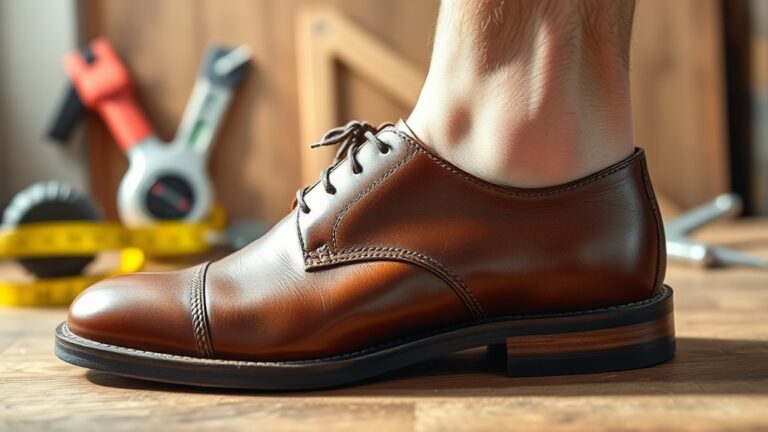
In shoes made with shoe leather, squeaking can occur when the leather’s surface interacts with the sole or insole materials. The application of color dye during manufacturing may alter the leather’s texture or stiffness, sometimes increasing friction and contributing to squeaking.
Additionally, residual chemicals from the dyeing process can affect the leather’s moisture content and flexibility, influencing how parts move against each other. Understanding these material interactions helps pinpoint why certain shoes produce squeaks under pressure.
How Moisture, Sole Material, and Construction Cause Squeaking
How do moisture levels, sole materials, and shoe construction combine to create squeaks? Moisture dynamics play a crucial role by altering friction between surfaces. When water infiltrates shoe components, it modifies the interaction between sole materials and the ground, often intensifying squeaks.
Sole material interactions, especially between rubber, leather, and synthetic compounds, influence sound production due to varying friction coefficients. Construction factors like layering, adhesives, and stitching impact how these materials move relative to each other under pressure.
| Factor | Effect on Squeaking |
|---|---|
| Moisture Dynamics | Increases friction via surface wetness |
| Sole Material Interactions | Different materials create variable friction sounds |
| Construction Quality | Poor joins amplify material movements |
Understanding these combined elements helps you grasp why some shoes squeak more than others.
Simple Tricks to Stop New Shoe Squeaks
When does a new shoe’s squeak become a nuisance you want to fix immediately? Random squeaks often arise from friction between sole layers or trapped moisture, disrupting your dry grip on surfaces. To address this, try these simple, effective tricks:
Sprinkle baby powder or cornstarch inside the shoe to absorb moisture and reduce squeaking caused by dampness. Apply a thin layer of silicone spray or talcum powder between the sole and insole to minimize friction. Gently scuff the outsole on rough concrete to break in the shoe and eliminate squeaks caused by stiff materials.
These methods target the mechanical causes of squeaking in new shoes, restoring your dry grip and quieting annoying sounds without complex repairs or replacements.
Easy Fixes for Squeaky Worn Shoes
While new shoes often squeak due to moisture or friction between fresh materials, worn shoes develop different issues that cause noise. Your shoe design might include glued soles or layered insoles that loosen over time, creating friction and squeaks.
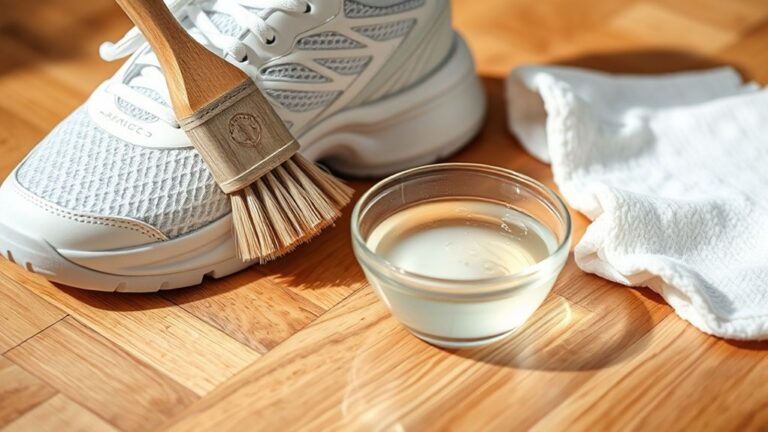
To fix this, apply a small amount of talcum powder or cornstarch beneath the insole to reduce friction. Inspect worn-out heel caps or soles. Replacing them can eliminate noise effectively.
Sometimes, tightening loose stitching or re-gluing detached parts addresses squeaks caused by compromised shoe integrity. Keep in mind that shoe color trends don’t affect squeaking, but maintaining your footwear’s structure does.
When to Consult a Shoe Repair Expert for Persistent Squeaks
If your shoe’s squeak persists despite home fixes, it’s time to identify underlying causes like damaged insoles or sole separation that require expert assessment. You can’t always fix structural issues or hidden moisture buildup without specialized tools and materials.
Consulting a shoe repair expert ensures precise diagnosis and durable solutions that restore function and comfort.
Identifying Persistent Squeak Causes
How can you pinpoint the root causes of a persistent shoe squeak before deciding to seek professional repair? First, examine your shoe’s sole and insole for wear or moisture accumulation, common culprits in both classic and modern shoe trends. Athletic gear often faces squeaking due to material breakdown or improper fit.
Next, isolate the squeak’s location by flexing and walking on various surfaces. Focus on these key areas:
- Sole separation or loose components causing friction
- Moisture trapped between layers or inside the shoe
- Structural damage in the heel or toe box
If these checks don’t reveal or fix the problem, it’s time to consult a shoe repair expert. They can diagnose issues beyond surface inspection, ensuring your footwear’s longevity and comfort.
When Home Fixes Fail
When should you recognize that home remedies won’t resolve your shoe’s persistent squeak? If you’ve exhausted common weekend projects, applying talcum powder, tightening loose components, or inspecting for moisture, and the noise endures, it’s time to contemplate professional intervention.
Persistent squeaks often stem from internal structural issues like sole separation, worn insoles, or faulty stitching that basic shoe care can’t address. Attempting further DIY fixes risks worsening damage or voiding warranties.
A shoe repair expert uses specialized tools and materials to diagnose and correct underlying problems efficiently. Consulting a professional ensures precise restoration, extending your footwear’s lifespan and maintaining comfort.
When your efforts don’t silence the squeak, entrust your shoes to an expert rather than prolonging ineffective weekend projects.
Benefits of Professional Repair
After you’ve ruled out common DIY fixes, turning to a professional shoe repair expert becomes the most effective step for addressing persistent squeaks. Experts diagnose issues related to complex interactions between shoe materials and structural components that you might miss. They assess sole alignment and internal wear, which are often the root causes of squeaking.
Consult a professional if you notice:
- Misaligned soles affecting foot mechanics and causing noise
- Degradation or incompatibility of specific shoe materials
- Recurring squeaks despite standard lubrication or cleaning
A repair expert utilizes specialized tools and replacement parts to restore your shoes’ function and silence. By addressing the underlying mechanical problems precisely, you extend your shoe lifespan and maintain comfort. Don’t hesitate to seek expert care when squeaks persist beyond simple fixes.
How Your Shoe’s Build and Fit Make It Squeak
Why do some shoes start squeaking the moment you wear them? It often comes down to how the shoe’s build and fit interact with your foot. If the shoe’s structure compromises shoe durability, like weak adhesives or poorly aligned components, friction increases inside the shoe, causing noise.
Inadequate heel cushioning also plays a role. When the cushioning doesn’t absorb impact effectively, your heel presses harder against rigid materials, generating squeaks. Additionally, if your shoes don’t fit snugly, subtle movements create friction between layers, such as the insole and lining.
This friction is amplified if materials are synthetic or prone to moisture retention, reducing shoe durability. Ensuring proper fit and high-quality construction minimizes internal friction, preventing squeaks and prolonging your shoe’s lifespan.
Why Your Shoe’s Sole Causes Squeaking
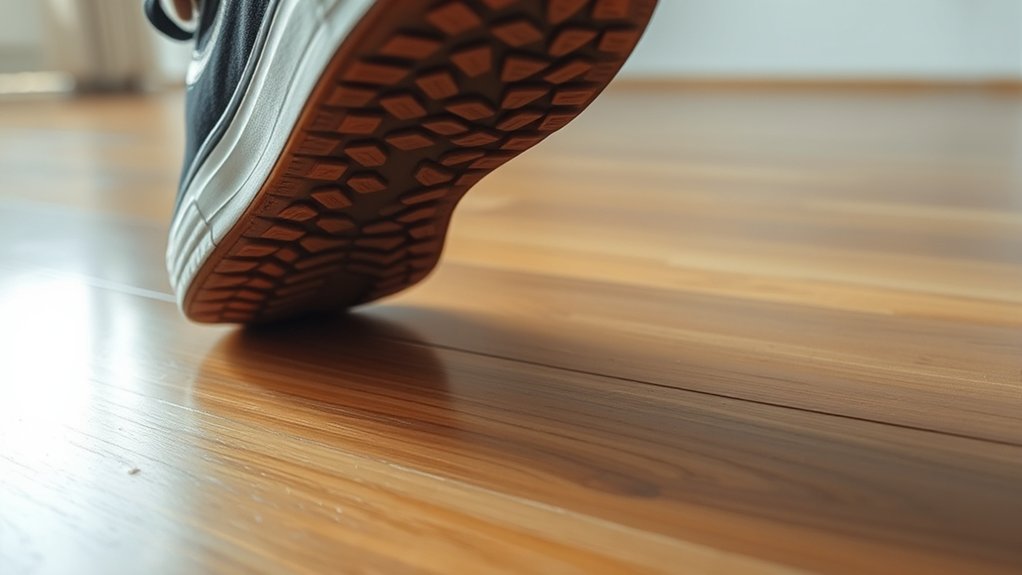
Your shoe’s sole often causes squeaking due to friction between the sole material and the floor surface. Different materials, like rubber or leather, create varying levels of resistance that generate sound when they rub together.
Additionally, moisture trapped in or on the sole can increase this friction, intensifying the squeak.
Material Friction Effects
Many factors in the composition and texture of a shoe’s sole directly influence the frictional forces that cause squeaking. When you examine shoe design, tread patterns, and materials friction, you’ll see they each affect how the sole interacts with surfaces. For example, the type of rubber or synthetic compound determines grip and friction levels.
The tread pattern influences how the sole engages with the floor, altering vibration and noise generation. Additionally, subtle moisture interaction on the sole’s surface can modulate friction, though moisture’s broader impact is discussed later.
Key contributors to materials friction include:
- Rubber hardness and elasticity affecting grip strength
- Tread geometry influencing contact points and slip
- Surface texture controlling micro-slip events that create sound
Understanding these factors helps you identify why your shoes squeak.
Moisture Impact on Soles
While the material composition and tread pattern set the stage for friction-related noise, moisture on the sole’s surface can considerably alter how those forces play out. When water or sweat penetrates the interface between your shoe sole and the walking surface, it changes the coefficient of friction, often increasing squeaking.
Moisture acts as a lubricant initially but then causes localized adhesion and release cycles, generating audible noise. This effect is particularly noticeable in soles with specific shoe cushioning materials, such as certain foams or gels, which may absorb moisture differently.
Additionally, some color options in sole materials indicate chemical treatments that affect moisture absorption and retention, influencing squeak propensity. Understanding moisture’s role can help you select shoes that minimize squeaking by considering sole composition, cushioning type, and moisture resistance.
Frequently Asked Questions
Can Shoe Squeaks Damage My Feet or Cause Health Issues?
Shoe squeaks don’t pose direct health risks but can cause distraction or discomfort. You should focus on squeak mitigation to prevent irritation, ensuring your footwear remains comfortable and doesn’t indirectly affect your foot health or posture.
Do Certain Brands or Types of Shoes Squeak More Than Others?
You’ll find that brand variation and material differences sing unique squeak symphonies; synthetic soles often squeak more than leather. Budget brands may use materials prone to noise, while premium ones usually minimize squeaks through design.
Is Shoe Squeaking Affected by Outdoor Weather Conditions?
Yes, outdoor humidity affects shoe squeaking by altering shoe materials’ moisture content. When humidity rises, materials like rubber and leather absorb moisture, increasing friction and causing more squeaks during movement on various surfaces.
Can Insoles or Socks Reduce Shoe Squeaking?
You can reduce squeak caused noise by choosing insoles vs socks carefully; insoles absorb friction inside shoes better, while thick, moisture-wicking socks minimize foot movement, both effectively dampening the noise depending on the cause.
Are There Any Long-Term Effects of Constantly Wearing Squeaky Shoes?
You won’t face significant long-term effects from squeaky shoes, but persistent noise might indicate sole wear or moisture issues, potentially affecting your foot comfort and health.
Addressing squeak promptly helps maintain optimal foot function and squeak health.