Can You Wash Shoes in the Dishwasher
You can wash shoes in the dishwasher, especially rubber, plastic, or synthetic slip-ons, and even plain canvas sneakers. Just remove laces and insoles, use a gentle cycle with warm water, and avoid heated drying.
Avoid leather, suede, or glued shoes since heat and water can damage them. This method cleans well but carries risks like warping or residue.
If you want to make the most of this cleaning hack safely, there are important tips and alternatives to contemplate.
Key Takeaways
- Rubber, plastic, synthetic slip-ons, and some canvas shoes can be safely washed in the dishwasher without losing shape or color.
- Remove laces and insoles, brush off debris, and place shoes securely on the top rack before washing.
- Use a gentle, low-temperature cycle with mild, fragrance-free detergent, and skip the drying phase to prevent damage.
- Avoid washing leather, suede, or shoes with glued parts to prevent warping, weakening, or material damage.
- Dishwasher washing can remove dirt effectively but may risk shoe damage, detergent residue, and void warranties.
Can You Really Wash Shoes in the Dishwasher?
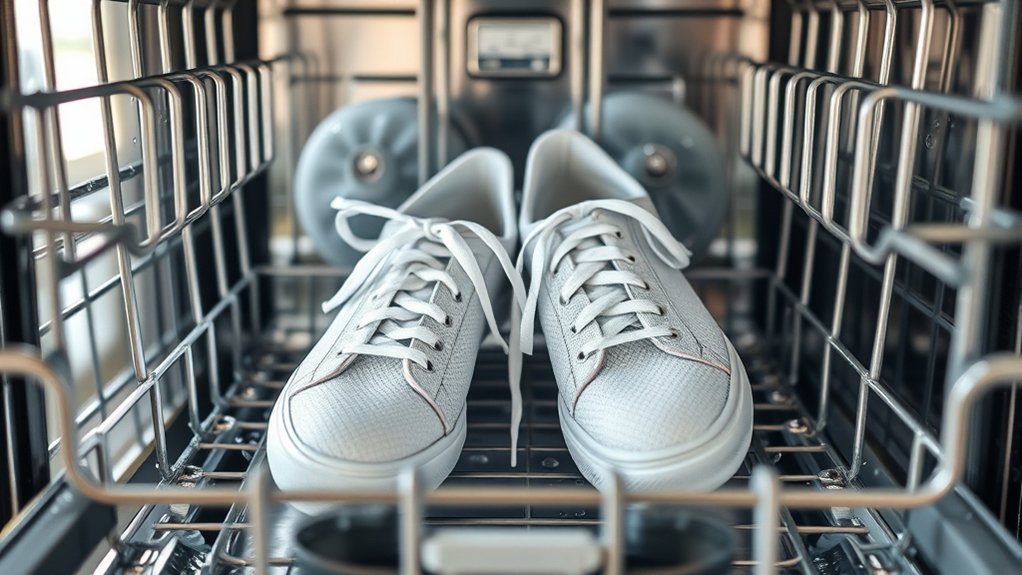
Can you really wash shoes in the dishwasher without damaging them or your appliance? The answer depends on several factors. Using the dishwasher for shoes isn’t an unrelated topic or off topic discussion; it’s a practical question about alternative cleaning methods.
While the dishwasher’s water temperature and detergent might seem effective for cleaning, they can harm certain shoe materials and the dishwasher itself. You need to consider shoe construction, materials, and the dishwasher’s settings to avoid damage.
Furthermore, residual dirt and shoe odors may linger, affecting your dishwasher’s cleanliness. So, while it’s possible to wash shoes in the dishwasher, you must approach it cautiously to prevent harm to both your shoes and appliance, rather than rushing into an off topic discussion or unrelated topic.
Which Shoes Are Safe to Wash in the Dishwasher
Certain types of shoes are better suited for dishwasher cleaning than others. To ensure shoe safety and effective odor control, you need to pick the right pairs. Here are three types that generally work well:
1. Rubber Shoes
Waterproof and durable, they can withstand dishwasher heat and water without damage.
2. Plastic or Synthetic Slip-Ons
These materials tolerate dishwasher cycles and won’t lose shape or color easily.
3. Canvas Sneakers (without delicate embellishments)
They can handle gentle dishwasher cleaning, but avoid high heat settings to maintain shoe safety.
Avoid leather, suede, or shoes with glued parts, as the dishwasher can cause warping and damage. Choosing appropriate shoes helps maintain their condition while eliminating odors effectively, making dishwasher cleaning a practical option.
How to Prepare Shoes and Set Your Dishwasher
Before loading your shoes into the dishwasher, you’ll want to remove any loose dirt and debris by giving them a quick brush or rinse. This step is essential for proper shoe care and prevents clogging your dishwasher.
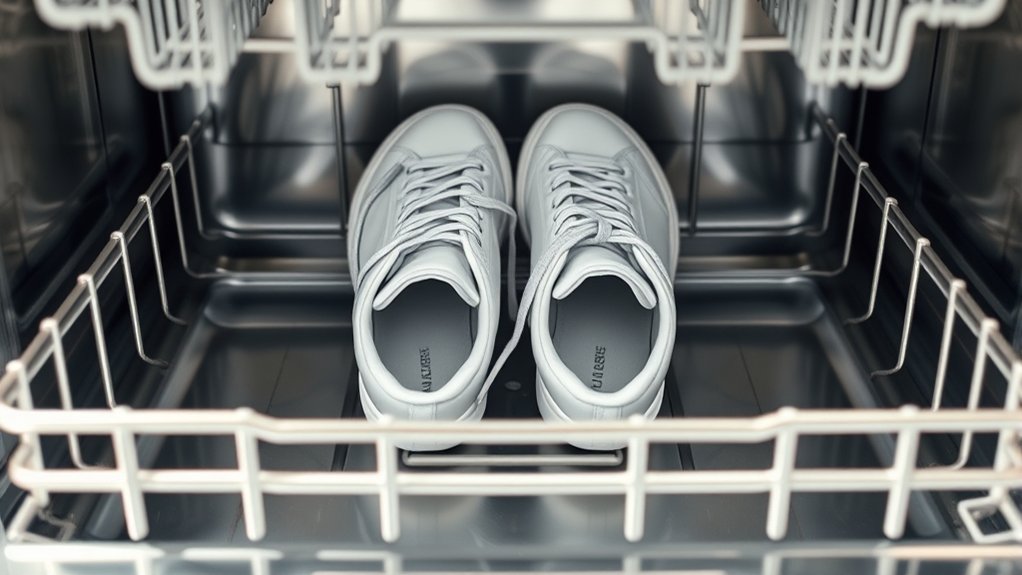
Next, remove the laces and insoles to avoid damage or tangling. Place your shoes securely on the top rack, ensuring they won’t shift during the cycle.
Avoid using harsh detergents; opt for a gentle, fragrance-free dishwasher detergent to protect your shoes and maintain dishwasher safety. Select a low-temperature, gentle wash cycle without heated drying to prevent warping or melting.
Pros and Cons of Washing Shoes in the Dishwasher
You can get your shoes surprisingly clean in the dishwasher, thanks to the hot water and strong jets. However, you should be aware that this method can also cause damage, like warping or weakening certain materials.
Balancing the cleaning benefits against potential risks is key before you decide to use your dishwasher for shoes.
Cleaning Effectiveness
How well does washing shoes in the dishwasher actually clean them? The answer depends largely on the shoe materials and the cleaning methods used. Dishwashers can effectively remove surface dirt and grime, but their efficiency varies.
- Hard rubber soles and synthetic fabrics respond well, as dishwasher jets target tough dirt without harsh scrubbing.
- Delicate materials like leather or suede may not clean thoroughly, as water and heat can cause uneven cleaning.
- The absence of detergent specifically designed for shoes means some stains might persist despite the dishwasher cycle.
While this method offers a convenient cleaning option, it’s best suited for durable, washable shoe materials. You should still consider alternative cleaning methods for delicate shoes to ensure a thorough clean without compromising fabric integrity.
Potential Damage Risks
What risks come with washing shoes in the dishwasher? While it might seem convenient, this method can cause significant damage. High heat and strong water jets may warp shoe soles or weaken glue, compromising your shoe upkeep.
Plastic parts can melt or deform, and metal eyelets might rust over time. Additionally, detergent residues can linger, irritating your skin or damaging materials. Many dishwasher myths suggest this is a safe cleaning shortcut, but it often results in more harm than good.
You risk voiding shoe warranties and reducing their lifespan. For effective shoe upkeep, stick to methods designed for footwear care, like hand washing with mild soap or specialized cleaners. Avoiding dishwasher use prevents unintended damage and keeps your shoes in optimal condition longer.
Best Dishwasher Settings for Cleaning Shoes
To clean your shoes effectively, set your dishwasher to a low or medium water temperature to prevent damage. Choose a gentle or delicate wash cycle to protect the shoe materials.
These settings help guarantee a thorough clean without risking wear and tear.
Optimal Water Temperature
When choosing the optimal water temperature for washing shoes in your dishwasher, you’ll want to balance cleanliness with shoe care. Too hot, and you risk damaging materials or reducing shoes waterproofing; too cold, and odor prevention may be ineffective. Aim for a moderate temperature that cleans thoroughly without harm.
Here’s what to keep in mind:
- Use warm water (around 110°F to 120°F) to effectively remove dirt and odors without compromising waterproof coatings.
- Avoid high heat settings that can warp soles or degrade adhesives, affecting shoe durability.
- Ensure your dishwasher’s water temperature aligns with manufacturer guidelines to maintain both hygiene and shoe integrity.
Selecting the right temperature helps preserve your shoes while ensuring they come out fresh and odor-free.
Recommended Wash Cycle
How can you ensure your shoes get clean without damage in the dishwasher? Start by choosing the right wash cycle. Use a gentle or delicate cycle to protect the shoe’s materials and maintain shoe care.
Avoid heavy-duty or high-temperature cycles, as they can warp or damage your shoes and compromise appliance safety. Select a short cycle to reduce exposure to heat and water pressure. Skip the drying phase to prevent shrinkage or deformation.
Place shoes securely on the top rack, away from the heating element. This setup balances effective cleaning with preserving your shoes and your dishwasher’s integrity. Following these settings helps you safely refresh your shoes while maintaining both shoe care and appliance safety.
Alternatives to Washing Shoes in the Dishwasher
Although using a dishwasher might seem convenient, there are safer and more effective methods to clean your shoes without risking damage. Dishwashers can harm delicate shoe materials and pose safety concerns like detergent residue and heat exposure. Instead, try these alternatives:
Dishwashers may damage shoes; safer, more effective cleaning methods are recommended to protect your footwear.
- Hand Washing: Use mild soap and a soft brush to gently clean shoes, ideal for leather, canvas, and mesh.
- Machine Washing: Place shoes in a mesh laundry bag and wash on a gentle cycle with cold water, suitable for fabric sneakers.
- Spot Cleaning: For minor stains, apply a specialized cleaner directly, preserving shoe integrity and avoiding full immersion.
These methods protect your shoes’ structure and appearance while ensuring thorough cleaning without the risks associated with dishwashers.
Frequently Asked Questions
Can Washing Shoes in a Dishwasher Damage the Dishwasher Itself?
Yes, washing shoes in a dishwasher can harm dishwasher reliability by clogging filters or damaging components.
For proper shoe hygiene, it’s best to use methods designed for footwear cleaning to protect both your shoes and appliance.
How Often Should I Clean My Dishwasher to Avoid Shoe Odor?
You should clean your dishwasher monthly to prevent shoe odor buildup. Pay attention to shoe materials that might release residues affecting dishwasher safety.
Regular cleaning keeps your dishwasher fresh and protects its performance effectively.
Can Dishwasher Detergent Cause Discoloration on Shoes?
Oh, sure. Dishwasher detergent loves to brighten your shoe material, just not always in a good way. It can cause discoloration and worsen odor caused by breaking down fabrics.
Is It Safe to Wash Insoles Separately in the Dishwasher?
You shouldn’t wash insoles separately in the dishwasher, as it can damage their material and affect shoe care.
For dishwasher safety, hand washing insoles with mild soap and air drying is a much safer, practical option.
Will Washing Shoes in the Dishwasher Remove All Types of Stains?
Imagine scrubbing grass stains off sneakers in the dishwasher. It won’t guarantee full stain removal. You’ll need to balance stain removal with footwear safety, choosing methods that protect your shoes from damage while targeting tough spots effectively.
Conclusion
So, you want to toss your shoes in the dishwasher and call it a day? While it sounds like a clever hack, not every shoe is dishwasher-friendly, and your dishwasher isn’t exactly designed for sneakers.
Sure, it can clean some shoes, but you might end up with soggy soles or a broken appliance. Sometimes, the old-fashioned way—soap, water, and elbow grease—is the real cleaning hack you didn’t know you needed.
When it comes to whether you can wash shoes in the dishwasher, it’s best to think twice. Not all shoes will survive the cycle, and your dishwasher might not appreciate the load.