
How to Disinfect Shoes From Fungus
To disinfect shoes from fungus, start by cleaning and drying them thoroughly to reduce moisture that fosters fungal growth. Proper disinfection is essential to eliminate fungal spores and prevent reinfection.
Use appropriate disinfectants based on shoe material—alcohol sprays work well for synthetics, gentle non-water agents are best for leather, and antifungal sprays are suitable for fabrics. Always apply disinfectants in a well-ventilated area and wear gloves to protect your skin.
Treat insoles separately, as they can harbor fungi even after the outer shoe is cleaned. Regular drying in ventilated spaces and rotating shoes also help prevent fungal recurrence.
Further guidance covers home remedies, care tips, and safe disinfectant use to maintain shoe hygiene and prevent fungus effectively.
Key Takeaways
- Clean and dry shoes thoroughly before applying any disinfectant to maximize effectiveness and prevent fungal growth.
- Use antifungal sprays suitable for shoe material, such as alcohol sprays for synthetics and gentle disinfectants for leather.
- Apply home remedies like vinegar soak, baking soda, or diluted tea tree oil to eliminate fungal spores and reduce moisture.
- Disinfect insoles separately, as they often harbor the most odor and fungal contamination.
- Store shoes in a dry, well-ventilated area and rotate usage to allow complete drying and reduce fungal risk.
Why Disinfecting Shoes Prevents Foot Fungus and Odor
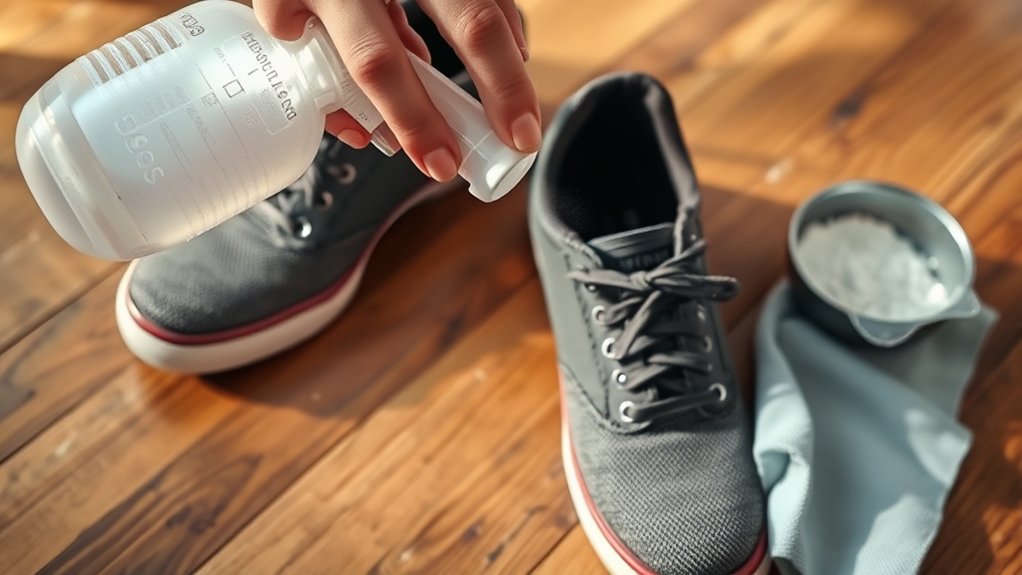
Why is it essential to disinfect your shoes regularly? You need to control shoe humidity, a key factor that creates an environment conducive to fungal growth. Moisture trapped inside your shoes promotes the proliferation of fungi, leading to infections and unpleasant odors.
Disinfecting your shoes disrupts this cycle by eliminating fungal spores and reducing moisture levels. This process is crucial for odor prevention, as fungi produce volatile compounds responsible for the characteristic smell.
How Fungus Grows Inside Your Shoes
How exactly does fungus establish itself inside your shoes? Fungus growth begins when spores enter a warm, damp environment. These conditions your shoes frequently provide.
Fungal spores thrive when they find warm, damp environments—just like the inside of your shoes.
Sweat accumulates inside, raising moisture levels and creating an ideal habitat for fungal spores to thrive. Without proper moisture control, this dampness persists, allowing fungi to multiply rapidly on the insole and interior lining.
Additionally, poor ventilation traps humidity, exacerbating fungal proliferation. The dark, enclosed space of shoes limits airflow, preventing moisture evaporation.
Over time, this environment supports biofilm formation, making fungus harder to eliminate. To understand fungus growth fully, recognize that moisture control is critical.
Simple Home Remedies to Kill Shoe Fungus
You can effectively combat shoe fungus using simple home remedies like vinegar soaks, baking soda applications, and tea tree oil treatments. Each method targets fungal growth through different antimicrobial properties.
Applying these treatments consistently helps disinfect your shoes and reduce fungal presence.
Vinegar Soak Method
Where can you find an effective and affordable solution to disinfect shoes from fungus? The vinegar soak method offers a straightforward approach. Vinegar’s acetic acid targets fungal cells, disrupting their growth and helping you maintain proper shoe storage and odor management.
To use this method:
- Mix one part white vinegar with two parts water in a basin.
- Submerge your shoes for 15-30 minutes.
- Use a soft brush to scrub stubborn areas.
- Rinse with clean water and air dry completely.
- Repeat weekly to prevent fungal recurrence.
This method suits many shoe types but avoid soaking leather excessively to prevent damage. Incorporating vinegar soaks into your routine supports hygiene, reduces odors, and promotes healthier shoe environments.
Baking Soda Application
Why choose baking soda to combat shoe fungus? Baking soda effectively neutralizes moisture and alters pH, creating an inhospitable environment for fungi. It also absorbs odors without merely masking them, unlike some products. However, avoid baking soda misuse, such as excessive application, which may damage shoe materials.
Use the table below to apply baking soda correctly:
| Step | Action | Notes |
|---|---|---|
| 1 | Clean shoes thoroughly | Remove dirt before treatment |
| 2 | Sprinkle baking soda inside | Cover all affected areas |
| 3 | Let sit overnight | Ensures moisture absorption |
| 4 | Shake out excess powder | Prevent baking soda misuse |
| 5 | Repeat as needed | Monitor odor, avoid odor masking |
This method is safe, cost-effective, and clinically sound for fungal control.
Tea Tree Oil Treatment
Apply tea tree oil to combat shoe fungus effectively, leveraging its natural antifungal properties. This oil treatment targets fungal spores, reducing contamination and preventing regrowth inside your shoes.
To apply tea tree oil treatment properly:
- Dilute tea tree oil with a carrier oil (e.g., coconut oil) to prevent skin irritation.
- Use a cotton ball or swab to apply the solution evenly inside the shoe.
- Allow the shoe to air dry completely in a well-ventilated area.
- Repeat the treatment daily for at least one week to ensure efficacy.
- Store shoes in a dry environment to inhibit fungal growth post-treatment.
This method offers a simple, chemical-free approach to disinfect shoes from fungus, making it a practical choice for ongoing shoe hygiene.
Safe Use of Commercial Shoe Disinfectants
How should you handle commercial shoe disinfectants to guarantee effectiveness and safety? First, always follow the manufacturer’s instructions carefully. Avoid off label usage, as using these products beyond their intended purpose can reduce efficacy and pose health risks.
Commercial disinfectants designed specifically for shoes target fungal pathogens without engaging in non mold remediation, so don’t expect them to solve unrelated contamination issues. When applying, ensure shoes are clean and dry to maximize the disinfectant’s penetration and contact time.
Use protective gloves and work in a well-ventilated area to minimize exposure to chemicals. Store disinfectants out of reach of children and pets. Proper handling not only ensures effective fungus elimination but also prevents chemical hazards and prolongs the lifespan of your shoes.
Best Practices for Disinfecting Different Shoe Types
When disinfecting different types of shoes, what methods guarantee both effectiveness and material preservation? You need to tailor your approach based on shoe materials and odor sources.
Synthetic shoes tolerate alcohol-based sprays well, while leather requires gentler, non-water-based disinfectants to avoid damage. For fabric shoes, use antifungal sprays that penetrate fibers without soaking.
Synthetic shoes handle alcohol sprays; leather needs gentle, non-water disinfectants; fabric benefits from antifungal sprays that reach fibers.
Rubber soles benefit from diluted bleach solutions but avoid prolonged contact to prevent deterioration. Insoles demand special attention since odor sources often reside there; remove and treat them separately.
Consider these best practices:
- Identify shoe materials before selecting disinfectants
- Use alcohol-based solutions for synthetic uppers
- Apply non-aqueous disinfectants on leather
- Penetrate fabric fibers with antifungal sprays
- Remove and treat insoles separately to target odor sources
These steps ensure thorough disinfection without compromising shoe integrity.
How to Clean and Dry Shoes to Prevent Shoe Fungus
You need to clean your shoes thoroughly to remove dirt and moisture that promote fungal growth. Use appropriate cleaning agents based on the shoe material to ensure effective disinfection.
After cleaning, dry your shoes completely using ventilation or absorbent materials to prevent a damp environment where fungus can thrive.
Proper Shoe Cleaning
Why does proper cleaning and drying play a pivotal role in preventing shoe fungus? Fungi thrive in damp, unclean environments, making meticulous shoe maintenance essential. You should focus on cleaning ergonomics to ensure thorough decontamination with minimal effort and risk of cross-contamination. Proper odor management also indicates effective fungal control.
Follow these steps for proper shoe cleaning:
- Remove insoles and laces before cleaning.
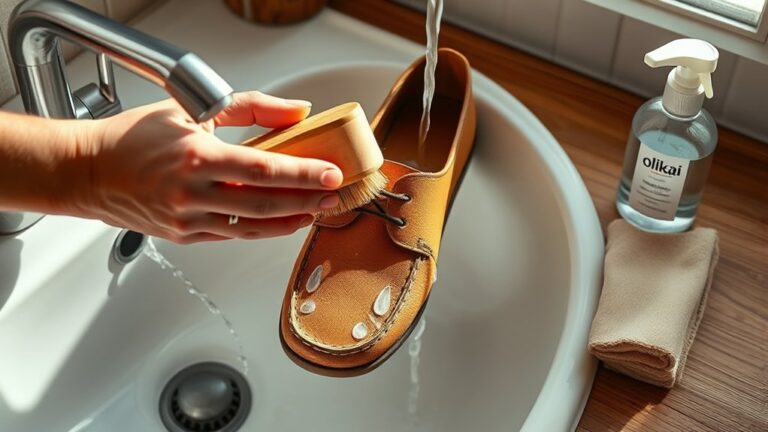
- Use a soft brush and mild detergent to clean shoe interiors and exteriors.
- Disinfect with antifungal sprays or solutions approved for footwear.
- Rinse thoroughly to eliminate detergent residue.
- Air shoes in a well-ventilated area, avoiding damp or enclosed spaces.
Adhering to these practices reduces fungal spores and moisture, markedly lowering the risk of shoe fungus development.
Effective Shoe Drying
How does effective drying contribute to preventing shoe fungus? Proper drying eliminates moisture that fungi thrive on, essential for all shoe materials regardless of manufacturing processes.
You should prioritize humidity control by drying shoes in a well-ventilated area, avoiding direct heat that may damage sport specific footwear or compromise cosmetic care. This approach not only prevents odor but also maintains athletic performance and aligns with fashion trends by preserving shoe integrity.
Consider using drying aids compatible with your shoe type to support recycling methods and budget considerations. Consistent, effective drying reduces fungal risk and extends the lifespan of your footwear.
Maintaining Shoe Hygiene to Avoid Future Fungus
Maintaining consistent shoe hygiene plays a pivotal role in preventing fungal growth and reinfection. Proper care minimizes moisture and inhibits fungal spores, ensuring healthier footwear.
Pay close attention to shoe storage and odor control, as they directly impact fungal proliferation. To maintain shoe hygiene effectively, you should:
- Store shoes in a well-ventilated, dry area to prevent moisture buildup.
- Use moisture-absorbing inserts or silica gel packets for odor control.
- Rotate shoes regularly to allow complete drying between uses.
- Clean insoles and linings with antifungal sprays or wipes.
- Avoid wearing the same pair consecutively to reduce fungal contamination risk.
Adhering to these practices will significantly reduce fungal recurrence and maintain long-term shoe hygiene.
When to Clean or Replace Your Shoes
Anyone dealing with fungal infections should regularly assess their shoes for signs of contamination or wear. Inspect the shoe materials for structural damage such as cracks or thinning, which can harbor fungal spores despite cleaning.
Persistent foul odor, beyond normal odor mechanics related to sweat and moisture, indicates microbial colonization that cleaning alone may not resolve. When odor persists after thorough disinfection, or if the shoe materials degrade, it’s time to replace your shoes to prevent reinfection.
Additionally, consider replacing shoes that have been exposed to prolonged moisture or heavy contamination, as embedded fungi can resist standard cleaning methods. Regular evaluation ensures you maintain a safe environment for your feet, reducing fungal recurrence and promoting overall foot health.
Frequently Asked Questions
Can Shoe Fungus Spread to Other Household Items?
Yes, shoe fungus can spread to other household items through contact or shared surfaces. You should regularly clean and disinfect shoes and surrounding areas to prevent cross-contamination.
This helps protect your environment from fungal growth.
Are Certain Fabrics More Resistant to Fungus?
Like a fortress, certain fabrics resist fungal invasion better. You’ll find soft fabrics with moisture resistance, such as microfiber or treated synthetics, inhibit fungus growth effectively, reducing the risk compared to porous, moisture-retentive materials.
How Long Does Shoe Fungus Survive Outside Shoes?
Shoe fungus survival duration outside shoes varies but typically lasts from days to weeks, depending on environmental conditions like humidity and temperature.
You should assume it can persist long enough to reinfect if not properly cleaned.
Can Antifungal Sprays Damage Shoe Materials?
Yes, antifungal sprays can damage delicate shoe materials like leather or suede if used improperly. You should test sprays on a small area first and follow manufacturer instructions to avoid discoloration or material degradation.
Is It Safe to Disinfect Shoes With Bleach?
You shouldn’t use bleach to disinfect shoes unless you confirm fabric compatibility first. Bleach safety is essential because it can damage materials, discolor fabrics, and weaken adhesives, so test a small area before applying it widely.
Conclusion
Disinfecting your shoes is like fortifying a fortress against invading fungus and odor. By understanding how fungus thrives and applying effective home remedies or commercial disinfectants, you stop the problem at its source.
Consistently cleaning, drying, and maintaining shoe hygiene prevents recurrence and protects your foot health. Remember to inspect your shoes regularly and replace them when necessary.
To guarantee a safe, fungus-free environment for your feet, it is essential to disinfect shoes from fungus regularly. This ensures lasting protection and comfort for your feet.