How to Lace Oxford Shoes
To lace your Oxford shoes properly, start by inspecting and cleaning them.
Choose thin, round laces for the best fit and appearance.
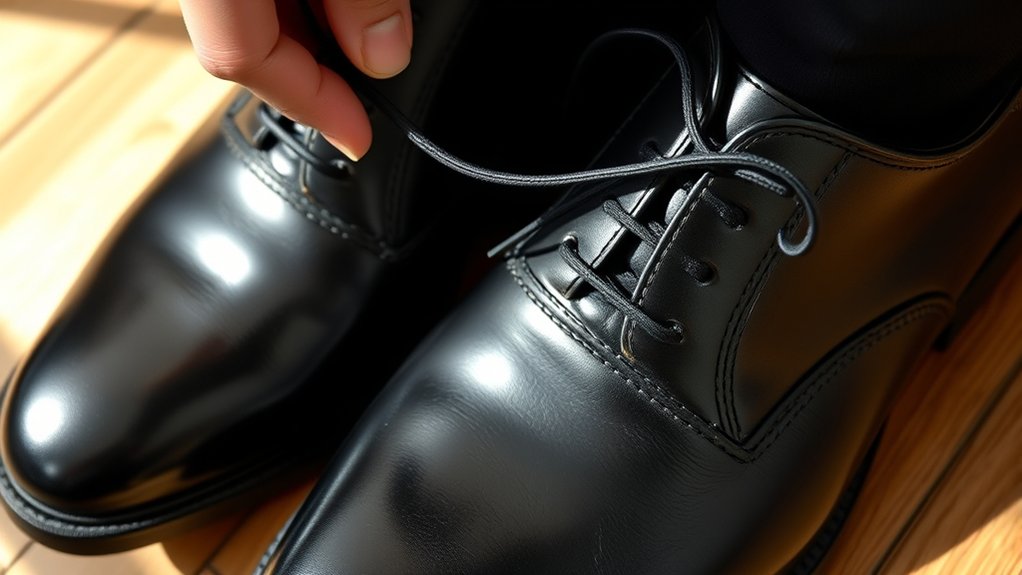
Thread the lace evenly through the bottom eyelets, maintaining consistent tension as you work your way up.
You can weave straight bars or alternate crosses depending on your preferred style.
Make sure the laces lie flat against the shoe and finish with a secure, neat bow.
Adjust the tension as needed to prevent any pressure points.
Select a lacing style that balances both formality and comfort.
Explore these techniques to master style and security with precision.
Key Takeaways
- Clean and inspect Oxford shoes and eyelets before lacing to ensure smooth threading and prevent damage.
- Start lacing by threading thin, round laces evenly through the bottom eyelets with consistent tension.
- Cross laces alternately under and over while tightening progressively from bottom to top for uniform hold.
- Choose lacing styles like straight (bar) for formal looks or criss-cross for a relaxed yet elegant fit.
- Secure laces with double or surgeon’s knots and adjust tension evenly to maximize comfort and stability.
Preparing Your Oxford Shoes for Lacing
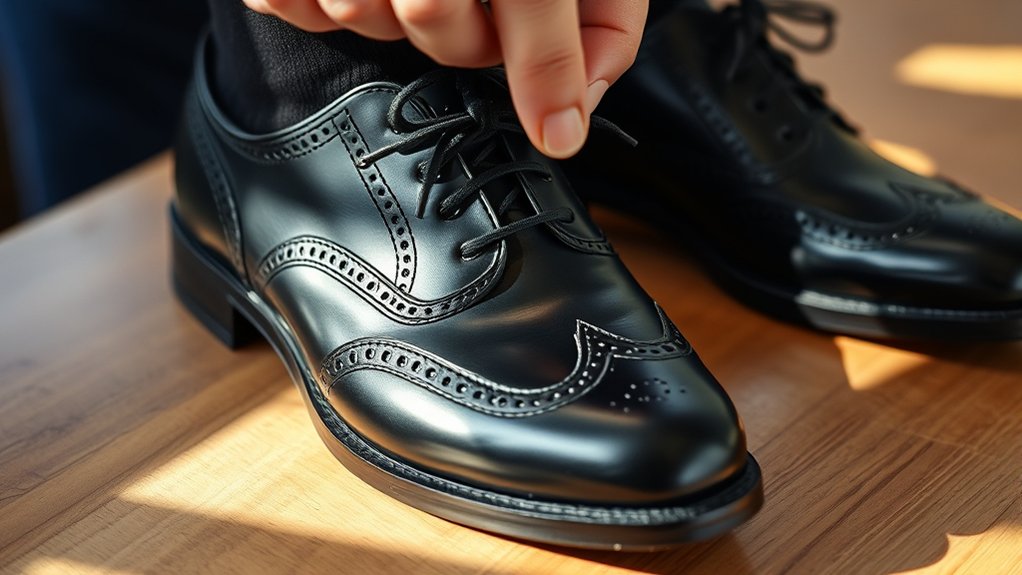
Before you start lacing your Oxford shoes, you need to guarantee they’re properly prepared to achieve a clean and secure fit. Begin by inspecting your shoes for any damage or dirt that could interfere with the lacing process. Use appropriate prepping materials such as a soft brush or cloth to clean the eyelets and leather surface.
Check your shoelace inventory to ensure you have the correct type and length of laces, as Oxford shoes typically require thin, round laces for optimal appearance and function. Organize your materials neatly to streamline the lacing process. Ensuring these preparatory steps are complete will help you avoid complications and maintain the structural integrity and aesthetic of your Oxford shoes once they’re laced.
Step-by-Step Guide to Lacing Oxford Shoes
How exactly do you achieve the perfect lacing on your Oxford shoes? Start by threading the lace through the bottom eyelets, ensuring even length on both sides. Maintain a consistent lacing speed to avoid uneven tension, which affects fit and appearance. Select laces with dye compatibility to prevent color bleeding onto your leather.
Begin lacing your Oxfords at the bottom eyelets, keeping even lengths and consistent tension throughout.
Follow these steps carefully:
- Insert laces straight across each eyelet pair, creating a clean horizontal pattern.
- Alternate crossing laces under and over for a secure hold.
- Tighten progressively from bottom to top for uniform tension.
- Adjust lace length to prevent excess slack or tightness.
- Finish by tying a neat bow, ensuring it lies flat against the shoe.
This method guarantees optimal functionality and aesthetics for your Oxford shoes.
Which Oxford Lacing Style Is Right for You?
Which Oxford lacing style suits your needs depends on both function and aesthetics. To choose which lacing style complements your Oxford aesthetics, consider the shoe’s design and your intended use.
The closed lacing system, typical for Oxfords, emphasizes a sleek, formal look by pulling the quarters tightly together. Straight (bar) lacing enhances this clean appearance, maintaining symmetry and sophistication. This style is ideal for business or formal settings.
Alternatively, the criss-cross method offers a slightly more relaxed fit without compromising elegance. It is suitable for casual or semi-formal wear. Your choice should balance how the shoe looks with how it performs.
Tips for a Comfortable, Secure Fit in Oxford Shoes
Where should you focus to achieve a comfortable, secure fit in Oxford shoes? Prioritize a balance between snugness and flexibility, ensuring the shoe supports without constricting. The key lies in proper tension across the lacing and tying secure knots that won’t loosen with movement.
To optimize comfort fit and maintain stability, consider these technical points:
To optimize comfort and stability, focus on even lacing tension and secure knot techniques.
- Adjust lacing tension evenly from toe to ankle to prevent pressure points.
- Use a straight (bar) lacing style for uniform support.
- Tie double knots or surgeon’s knots to keep laces firmly secured.
- Check the tongue alignment to avoid discomfort caused by bunching.
- Select laces with slight elasticity to accommodate foot expansion during wear.
Following these tips ensures your Oxfords stay comfortably fitted and securely fastened throughout the day.
Fixing Common Oxford Lacing Problems
Why do your Oxford shoes sometimes feel uncomfortable or look uneven despite careful lacing? Common lacing issues often cause this. Uneven tension across eyelets leads to pressure points and misalignment.
Start fixing problems by loosening all laces before re-lacing to guarantee consistent tension. Use a criss-cross pattern for balanced distribution and avoid overly tight knots that restrict movement.
If your shoes gap at the instep, check for uneven eyelet spacing or lace length mismatches, and adjust accordingly. Also, inspect the laces for wear or stiffness, as damaged laces can cause uneven lacing.
Frequently Asked Questions
What Materials Are Best for Oxford Shoe Laces?
You should choose leather laces for a classic, durable finish, but synthetic options offer greater flexibility and water resistance. Both materials provide strength, so pick based on your preference for appearance and maintenance needs.
How Often Should I Replace My Oxford Shoe Laces?
Think of your laces as the shoe’s lifeline; replace them every 6-12 months or when frayed. Choose replacement laces in durable materials with color options matching your Oxford’s elegance for a sharp, precise look.
Can I Use Waxed Laces on Oxford Shoes?
You can use waxed laces on Oxford shoes; they provide durability and water resistance.
For leather alternatives, choose synthetic waxed laces designed to mimic leather’s texture and strength while maintaining a polished appearance.
Are There Eco-Friendly Lacing Options for Oxford Shoes?
Yes, you can find eco friendly materials like organic cotton or recycled polyester laces for your Oxfords. Prioritize brands committed to sustainable sourcing to ensure durability and minimize environmental impact while maintaining classic style.
How Do I Clean and Maintain Oxford Shoe Laces?
Don’t rush. Clean your laces carefully! Start with a gentle washing routine, using mild soap for cotton; leather requires conditioner.
Compare materials: cotton absorbs water, leather needs moisture protection. Dry naturally to maintain durability and appearance.
Conclusion
Now that you’ve mastered lacing your Oxford shoes, think of it as weaving the perfect fabric—each loop and cross adds strength and style. By preparing your shoes properly, following the step-by-step guide, and choosing the right lacing style, you ensure a secure, comfortable fit.
Remember to address common issues promptly, so your Oxfords not only look sharp but feel tailored to you. Lacing isn’t just a task; it’s the foundation of impeccable footwear.
In conclusion, mastering how to lace Oxford shoes is essential for both appearance and comfort.