How to Ship Shoes
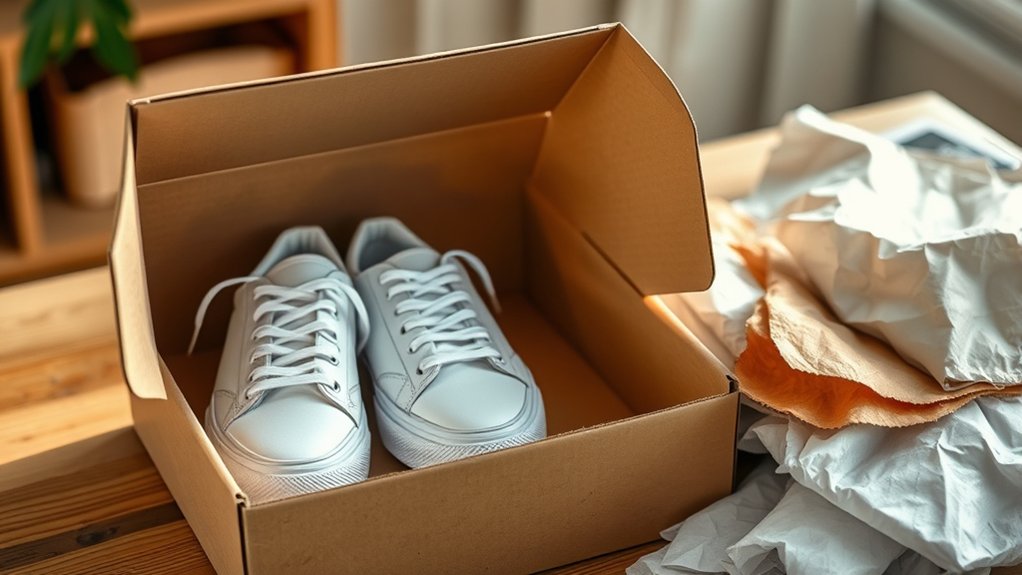
To ship shoes safely, start by inspecting each pair carefully. Wrap them individually with cushioning materials like acid-free tissue to prevent damage during transit.
Use sturdy, appropriately sized boxes to protect the shoes. Ensure the boxes have secure, clear labels displaying accurate contents and addresses. Add protective padding inside to minimize movement and guard against moisture exposure.
Choose reliable shipping methods that offer tracking options for peace of mind. Keep all shipping documentation handy to address any claims in case of issues. Following these steps ensures your shoes arrive intact and ready for use.
Explore how to optimize each step for the best shipping results.
Key Takeaways
- Inspect shoes for defects, wrap individually with acid-free tissue, and use cushioning to prevent damage during transit.
- Choose sturdy, appropriately sized boxes with protective padding and secure sealing to ensure packaging durability.
- Clearly label packages with accurate, legible information and include all required shipping and customs documentation.
- Select suitable shipping methods based on weight and destination, and use tracking services to monitor shipment progress.
- Prepare and maintain detailed records and evidence for claims in case of damage or loss during shipping.
Shipping Shoes Safely: What You Need to Know
How do you guarantee your shoes arrive in perfect condition? Start by considering language ethics when communicating with buyers or partners, especially in international swaps. Clear, honest descriptions prevent misunderstandings and ensure expectations align.
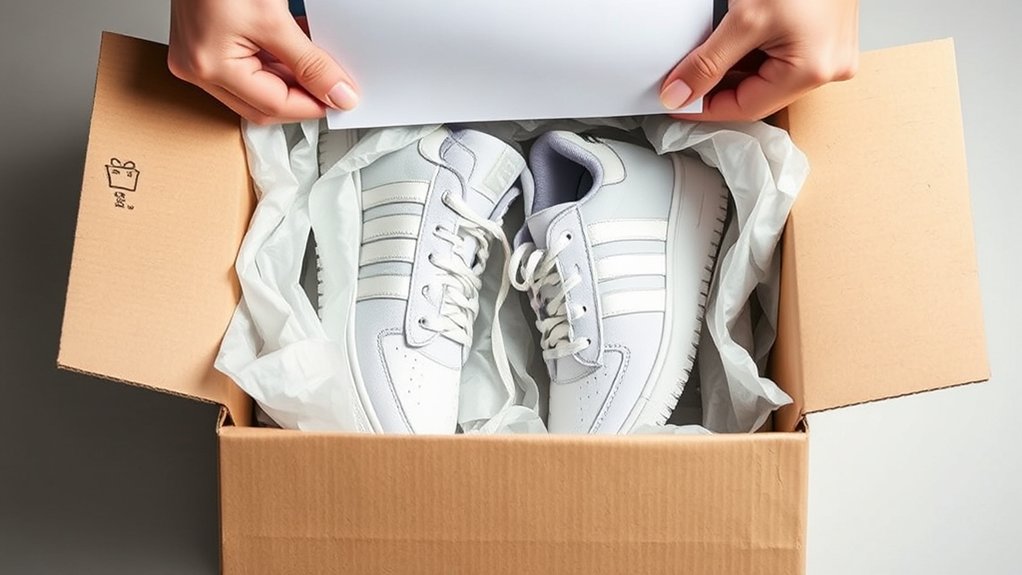
You’ll want to inspect each pair thoroughly for defects before shipping. Wrap shoes individually to avoid scuffs and use cushioning to absorb shocks during transit.
Label the package accurately and include any necessary customs documentation if shipping internationally. This attention to detail respects your recipient and upholds your professional integrity.
Choosing the Right Packaging for Shoe Shipping
You’ll want to choose durable packaging that can withstand handling and protect your shoes during transit. Use sturdy boxes or reinforced mailers to prevent crushing, and add protective materials like bubble wrap or tissue paper to cushion the shoes.
Proper packaging ensures they arrive in perfect condition without unnecessary damage.
Selecting Durable Packaging
Where should you start when selecting durable packaging for shoe shipping? Begin by choosing a sturdy box that fits the shoes snugly, minimizing movement during transit. Ensure the box material withstands pressure and moisture, protecting the contents effectively.
Incorporate durable cushioning inside to absorb shocks without adding unnecessary weight. This prevents damage and keeps your shoes looking pristine upon arrival.
Additionally, consider packaging sustainability by opting for recyclable or biodegradable materials, which reduce environmental impact. Avoid oversized boxes that require excess filler, as they increase shipping costs and waste.
Using Protective Materials
Why does choosing the right protective materials matter when shipping shoes? Proper protective materials ensure your shoes arrive undamaged, maintaining their shape and appearance.
Start by selecting cushioning methods like bubble wrap or foam inserts to absorb shocks. Wrap each shoe individually to prevent scuffs and scratches.
Use tissue paper or shoe bags inside the shoes to guard against moisture and dust. Place the wrapped shoes in a sturdy box with additional cushioning materials filling any gaps to avoid movement during transit.
Avoid using newspaper, as the ink can transfer onto the shoes. By carefully choosing and applying appropriate protective materials and cushioning methods, you reduce the risk of damage, ensuring customer satisfaction or preserving your shoes’ condition if shipping for personal reasons.
Protecting Your Shoes From Damage During Transit
How can you guarantee your shoes arrive in perfect condition? Start by understanding the specific shoe materials you’re shipping. Leather, suede, canvas, and synthetic fabrics each require different handling to prevent damage.
Use acid-free tissue paper to wrap shoes, which protects delicate surfaces and helps maintain shape. Pay close attention to dye safety; some dyes may bleed or fade if exposed to moisture or friction.
Avoid direct contact between shoes to prevent color transfer, especially with vibrant or dark dyes. Secure shoes inside a sturdy box with cushioning materials like bubble wrap or packing peanuts to absorb shocks.
Keep the package dry and avoid extreme temperatures to preserve material integrity. These steps ensure your shoes are shielded from scuffs, deformation, and dye-related damage during transit.
Labeling Your Shoe Package the Right Way
You’ll want to choose a durable, clear label that withstands handling and weather. Position the label on a flat, visible surface to ensure it’s easily scannable during transit.
Don’t forget to include all essential shipping information, like the recipient’s address and your return details, to avoid delivery issues.
Choosing The Correct Label
When selecting a label for your shoe package, what details should you prioritize to guarantee smooth delivery? Focus on label readability and label durability. Your label must withstand handling, moisture, and temperature changes while clearly displaying essential shipping information.
Choose materials like waterproof or tear-resistant labels to prevent damage. Ensure the font size and style offer clear visibility to scanners and handlers.
| Factor | Importance |
|---|---|
| Label Readability | Ensures accurate scanning |
| Label Durability | Prevents damage during transit |
| Adhesive Quality | Keeps label firmly attached |
| Size & Format | Fits package without obstruction |
Positioning The Label Properly
Where you place your shipping label can make all the difference in ensuring your shoe package reaches its destination without delay. Start by positioning the label on the largest, flattest surface of the box. This ensures optimal tag visibility and prevents it from folding or peeling during transit.
Align the label so that it’s straight and centered, avoiding edges or corners that may get damaged. Use clear tape to secure the label fully, but don’t cover barcodes or QR codes, which need to remain scannable.
If your package has previous labels, remove or cover them entirely to avoid confusion. Proper label alignment and tag visibility reduce scanning errors and delivery delays, making your shoe shipment smooth and efficient. Follow these steps to guarantee your package arrives on time.
Including Essential Shipping Information
How exactly do you guarantee your shoe package gets labeled correctly for seamless delivery? Start by clearly printing the recipient’s full name, address, and contact number on the label. Include your return address in case of delivery issues.
Incorporate details like shoe size trends when relevant, especially if shipping multiple pairs, to avoid confusion. Use waterproof ink or printed labels to prevent smudging. Apply the label flat on the largest, most visible surface of your package, avoiding seams or edges.
Since you’re committed to eco friendly materials, choose recyclable labels and adhesives to complement your packaging. Double-check all information for accuracy, then securely affix the label. Following these steps ensures your shoe shipment arrives promptly and efficiently without delays or errors.
Affordable Shipping Methods for Shoes
Choosing an affordable shipping method for shoes requires balancing cost, speed, and package protection. To get affordable rates while ensuring your shoes arrive safely, consider these options:
- USPS First-Class Package Service – Ideal for lightweight shoe shipments with affordable rates and reliable delivery.
- FedEx Ground/Home Delivery – Offers competitive pricing and faster delivery for heavier packages.
- Courier Consolidators – Use third-party consolidators for discounted international options, reducing costs substantially.
- Flat Rate Boxes – USPS flat rate boxes can save money when shipping heavier shoes domestically.
Compare services based on destination, package weight, and delivery time. Always check for international options if shipping abroad, as some carriers provide better rates for global shipments. This way, you’ll ship your shoes cost-effectively without compromising protection or timeliness.
Tracking and Handling Shoe Shipping Issues
Stay proactive by tracking your shoe shipments closely to ensure they reach their destination on time and in good condition. Use reliable carriers that provide real-time tracking updates to monitor your package every step of the way.
If you notice tracking delays, contact the carrier immediately to identify the cause and request a resolution. When shipping internationally, pay close attention to customs considerations. Accurate documentation and proper declarations help prevent unnecessary hold-ups or fees.
Prepare for potential inspections by packaging your shoes securely and clearly labeling the contents. In case of damage or loss, report the issue promptly with supporting evidence like photos and receipts to initiate claims.
Frequently Asked Questions
Can I Ship Shoes Internationally Without Extra Customs Fees?
You can’t always ship shoes internationally without extra customs fees. International customs and international duties depend on the destination country’s regulations and declared value.
To minimize fees, declare accurately and check specific import rules beforehand.
How Do I Clean Shoes Before Shipping?
Picture your shoes as blank canvases; start cleaning logistics by wiping dirt gently with a damp cloth, using a soft brush for crevices.
Dry them thoroughly, then proceed with precise packaging prep to ensure they arrive spotless and secure.
Are There Restrictions on Shipping Certain Shoe Materials?
Yes, you’ll face international restrictions on shipping certain shoe materials like leather or exotic skins. Check destination country rules carefully to avoid issues, as some materials require permits or are outright prohibited for import or export.
Can I Ship Shoes With Insoles Inside?
You absolutely can ship shoes with insoles inside. Forget worrying about damage! Just ensure your shoe packaging is sturdy and snug to keep insoles shipped securely, preventing shifting or crushing during transit. Precision matters for perfect delivery!
How Long Does Shoe Shipping Usually Take Domestically?
Shipping timelines for domestic shoe shipments usually range from 2 to 7 business days.
You’ll want to use sturdy packaging and cushioning to protect the shoes, ensuring timely delivery without damage or delays.
Conclusion
Now that you know how to package, protect, and label your shoes perfectly, the real challenge begins—choosing the right shipping method to keep them safe and on time.
Don’t underestimate the power of tracking and handling issues promptly; it could be the difference between a happy recipient and a lost package.
Ready to ship your shoes with confidence? The next step is in your hands—will you make it flawless?
By following these steps, you’ll master how to ship shoes securely and efficiently every time.