What Are Ballet Shoes Called
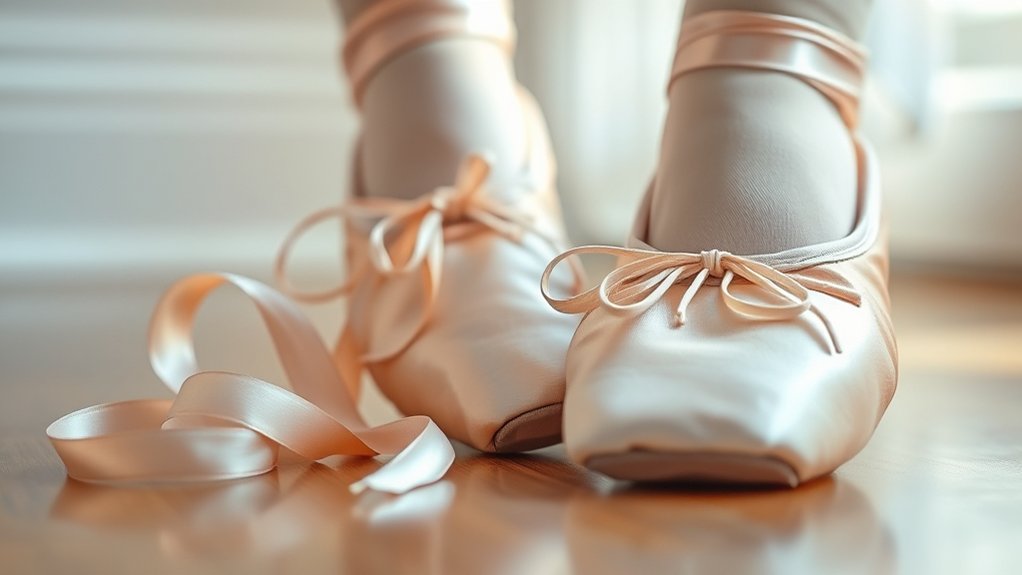
Ballet shoes are called ballet slippers or pointe shoes, depending on their design and purpose. Ballet shoes play a crucial role in a dancer’s performance and technique. You’ll use ballet slippers for basic movements; they’re lightweight, flexible, and provide comfort.
Pointe shoes have a reinforced toe box, allowing you to perform en pointe with necessary support and balance. Choosing the right shoes affects your control, balance, and artistic expression on stage.
Understanding their materials and fit plays a key role in mastering both classical and contemporary ballet techniques. More details reveal why these shoes are essential.
Key Takeaways
- Ballet shoes are commonly called “ballet slippers” or simply “slippers” for basic ballet movements.
- Specialized ballet shoes designed for dancing on the tips of toes are called “pointe shoes.”
- Ballet slippers are lightweight and flexible, providing comfort and support for foundational techniques.
- Pointe shoes have a reinforced toe box for support, enabling dancers to perform en pointe.
- Both ballet slippers and pointe shoes are essential for different ballet techniques and performance aesthetics.
What Ballet Shoes Are and Why They Matter
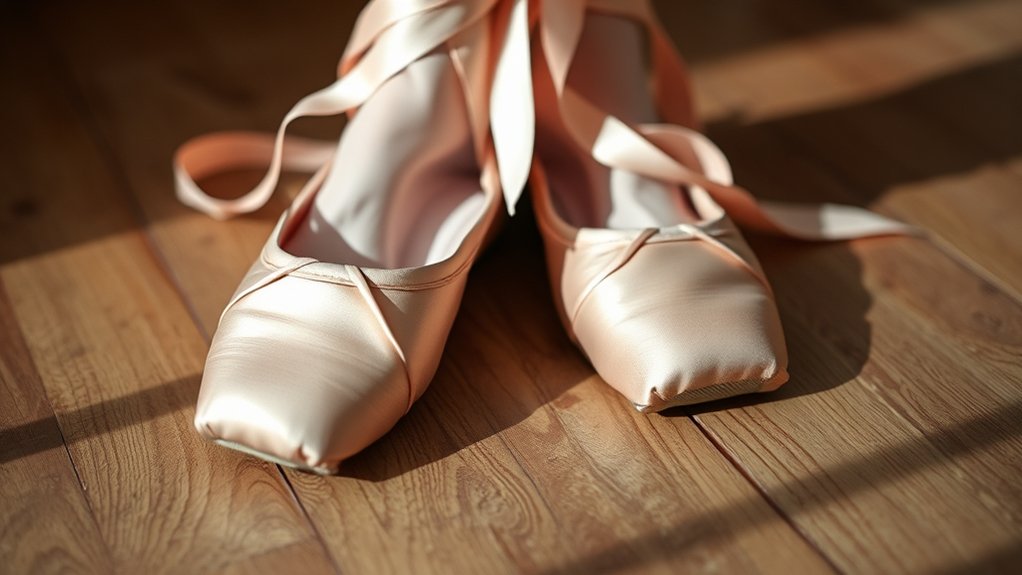
What makes ballet shoes essential to a dancer’s performance? These shoes provide the necessary support and flexibility to execute precise movements that define ballet, yet their significance extends beyond classical dance.
When you explore techniques in modern dance, you’ll find that the choice of footwear, including ballet shoes, affects your balance, articulation, and overall expression. Ballet shoes create a seamless connection between your feet and the stage, allowing fluidity and control crucial for refined technique.
Additionally, just as stage makeup for performances enhances visual storytelling, the right ballet shoes contribute to your aesthetic presentation, ensuring your lines and movements appear polished and intentional. Understanding what ballet shoes are and why they matter is fundamental to mastering both traditional and contemporary dance forms.
Difference Between Ballet Shoes: Slippers vs. Pointe Shoes
You’ll find that ballet slippers and pointe shoes serve distinct roles in dance technique and performance. Ballet slippers are lightweight and flexible, designed for comfort and basic movement, while pointe shoes provide the necessary support for dancers to perform en pointe.
Understanding their material and construction differences is essential to appreciating their unique functions.
Ballet Slippers Overview
How do ballet slippers differ from pointe shoes in both function and design? Ballet slippers, often called ballet shoes, are lightweight and flexible, designed to allow you full foot articulation and comfort during technique practice. They typically feature a soft leather, canvas, or satin upper with a thin sole, reflecting a long ballet shoe history rooted in enabling dancers’ fluid movements.
Their cultural significance is profound, symbolizing the foundational skills of ballet. Unlike pointe shoes, slippers lack the rigid structure that supports en pointe work, focusing instead on enhancing your foot’s natural alignment and flexibility. When you wear ballet slippers, you prioritize grace and precision in your footwork, embodying the elegance that has defined ballet’s tradition for centuries.
Purpose of Pointe Shoes
Why do pointe shoes hold such a pivotal role in ballet? They enable you to dance en pointe, creating an ethereal, weightless appearance essential to classical ballet’s aesthetic. Understanding pointe shoe history reveals how dancers transitioned from soft slippers to shoes with reinforced toe boxes, allowing them to balance on their toes safely.
The toe box evolution is crucial; it supports your toes and distributes weight, preventing injury. This functionality differentiates pointe shoes from regular ballet slippers, which provide flexibility but no structural support.
By wearing pointe shoes, you enhance artistic expression through elevated movement, physical strength and technique development, and the visual illusion of lightness and grace.
These factors underscore why pointe shoes are indispensable in ballet performance.
Material and Construction Differences
What sets ballet slippers apart from pointe shoes lies primarily in their material and construction. Ballet slippers typically use soft leather or canvas, offering flexibility and comfort. Pointe shoes incorporate layers of satin, hardened glue, and a rigid box to support the dancer en pointe.
The material durability of pointe shoes reflects their demanding purpose, contrasting with slippers’ lightweight design honoring cultural history rooted in grace and fluidity.
| Feature | Ballet Slippers |
|---|---|
| Material | Soft leather or canvas |
| Construction | Flexible, stitched sole |
| Durability | Moderate, for floor contact |
| Cultural History | Emphasizes elegance and flow |
| Feature | Pointe Shoes |
| Material | Satin, hardened glue, cardboard |
| Construction | Rigid box, shank support |
| Durability | Short-term, designed for strength |
| Cultural History | Symbolizes strength and technique |
Materials and Construction of Ballet Shoes
Wherever you look, ballet shoes reveal their craftsmanship through carefully selected materials and meticulous construction. When you choose ballet shoes, you engage with high-quality material sourcing that guarantees durability and flexibility.
Ballet shoes embody craftsmanship with premium materials ensuring durability and flexible performance.
Color trends often influence the satin or canvas used, aligning with both tradition and contemporary aesthetics. The construction balances strength and softness to support your movements while maintaining comfort.
Key aspects include:
Material sourcing: Selecting premium satin, canvas, or leather to optimize performance and longevity.
Sole design: Employing suede or leather soles that provide grip and facilitate smooth turns.
Stitching and fit: Precision stitching enhances durability; elastic bands secure the shoe on your foot without restricting motion.
Understanding these elements helps you appreciate the intricate design behind every pair of ballet shoes.
Common Ballet Shoe Styles and What Makes Them Unique
Ballet shoes come in several distinct styles, each designed to meet specific functional and aesthetic needs. When you explore ballet shoes, you’ll encounter two primary types: slippers and pointe shoes.
Slippers are lightweight and flexible, ideal for exercises requiring comfort and agility. Pointe shoes, by contrast, offer structured support, enabling dancers to perform on the tips of their toes. Within slippers, you’ll find variations such as canvas or leather, each providing different levels of durability and grip.
Understanding these distinctions helps you appreciate the technical demands of ballet. While this might seem like an offbeat inquiry compared to an unrelated topic like costume design, it’s essential for grasping how footwear impacts performance. Recognizing what makes each style unique ensures you approach ballet with informed precision.
Choosing Ballet Shoes for Beginners and Professionals
How do you select the right shoes that match your skill level and performance needs? When choosing ballet shoes, consider the distinct requirements of beginners and professionals.
Beginners should prioritize comfort and affordability, focusing on beginner shoe budgeting while ensuring adequate support. Professionals, however, require shoes with enhanced ballet shoe durability to withstand rigorous use and deliver optimal performance.
Key factors to consider include:
- Fit and comfort: Proper sizing prevents injury and enhances technique.
- Material quality: Leather or canvas influences flexibility and longevity.
- Sole type: Full or split sole affects foot arch support and movement.
How Ballet Shoes Affect a Dancer’s Performance
You’ll find that the fit of your ballet shoes directly influences your range of movement and comfort during performance. The flexibility of the sole plays a crucial role in allowing fluid foot articulation and precise control.
Additionally, proper support and balance from your shoes enhance stability, which is essential for executing complex techniques effectively.
Fit Impact On Movement
Why does the fit of ballet shoes play such an essential role in a dancer’s performance? The relationship between technique vs. footwear is critical; improperly fitted shoes can hinder your precision and control. When your shoes fit well, you optimize balance and fluidity, allowing your movements to be seamless.
The balance between grip vs. cushioning also depends heavily on fit. Shoes that are too tight restrict movement, while loose shoes compromise stability and increase injury risk.
Consider these points:
- Proper fit enhances your ability to execute technical steps with accuracy.
- Balanced grip and cushioning prevent slips while maintaining comfort.
- Well-fitted shoes support foot alignment, reducing fatigue and strain.
Ultimately, your ballet shoe fit directly impacts your agility, safety, and overall artistry on stage.
Sole Flexibility Importance
Where does the flexibility of a ballet shoe’s sole fit into your performance? Sole flexibility directly influences your ability to articulate every movement with grace and precision.
A flexible sole allows your foot to bend naturally, enhancing fluidity and control, while shoe durability ensures consistent support through rigorous practice.
Consider this comparison:
| Sole Flexibility | Shoe Durability |
|---|---|
| Enables expressive foot articulation | Maintains structural integrity |
| Supports smooth transitions | Resists wear and tear over time |
| Enhances comfort during extended use | Protects your investment |
| Facilitates precise technique | Ensures long-term performance |
Balancing sole flexibility with shoe durability is critical; too stiff, and your movements feel restricted, too weak, and you risk premature shoe failure. Prioritize both to optimize your performance.
Support And Balance
While sole flexibility shapes your movement fluidity, the support and balance provided by ballet shoes form the foundation of your performance. Historically, ballet shoes evolved to optimize these elements, allowing dancers to maintain precise control during intricate choreography.
The thin yet resilient construction offers essential tactile feedback, enabling you to adjust your posture and alignment instantly. Without proper support and balance, executing turns, jumps, and poses becomes challenging and risky.
Consider these critical roles ballet shoes play in your performance:
- Enhance proprioception, helping you sense body position and movement.
- Stabilize your foot arch, reducing fatigue and injury risk.
- Distribute weight evenly to maintain equilibrium during complex steps.
Understanding this historical context clarifies why ballet shoes remain indispensable for professional and aspiring dancers alike.
Caring for Ballet Shoes to Make Them Last Longer
How can you extend the lifespan of your ballet shoes through proper care? Establishing a consistent care routine is essential. You’ll want to clean, air, and store your shoes properly to maintain their shape and material integrity.
Here are some durability tips to keep your ballet shoes in optimal condition:
| Care Step | Method | Benefit |
|---|---|---|
| Cleaning | Spot clean with mild soap | Removes dirt without damage |
| Airing | Air dry after use | Prevents odor and mold |
| Storage | Store in breathable bag | Maintains shape, avoids moisture |
| Rotation | Alternate pairs regularly | Reduces wear and tear |
Frequently Asked Questions
How Much Do Ballet Shoes Typically Cost?
You’ll typically find ballet shoe cost ranges between $20 and $100, depending on material differences like canvas, leather, or satin. Higher-quality materials and specialized construction usually increase the price considerably, reflecting durability and performance enhancements.
Where Can I Buy Authentic Ballet Shoes?
You can buy authentic ballet shoes from specialized dancewear shops or reputable online authentic retailers.
Ensure you use correct ballet shoe terminology when searching to find precise styles like pointe shoes or ballet slippers for your needs.
Can Ballet Shoes Be Customized or Personalized?
Though you won’t find a quill for writing on ballet shoes, you can explore various customization options and personalization ideas, such as unique colors, embroidery, or ribbons. These allow you to tailor them exquisitely to your style and performance needs.
Are Ballet Shoes Used in Other Dance Styles?
Yes, you’ll find ballet shoes terminology used primarily in ballet, but dancers sometimes choose them as alternative dance footwear for contemporary or jazz styles. Their lightweight design offers flexibility, though other specialized shoes often suit those genres better.
How Long Do Ballet Shoes Usually Last?
Ballet shoes usually last from a few weeks to several months, depending on ballet shoe materials and durability factors like usage frequency, dance style, and maintenance.
You should monitor wear to ensure optimal performance and safety.
Conclusion
Now that you understand what ballet shoes are and their essential role, remember: these delicate instruments carry the weight of your dreams and discipline. Whether you choose slippers or pointe shoes, the right pair shapes not just your steps but your entire performance.
Caring for them is caring for your art. So, cherish your ballet shoes—they’re more than footwear; they’re the silent partners in your graceful journey.
In conclusion, knowing what ballet shoes are called helps you appreciate their importance even more. Your ballet shoes are truly the foundation of your dance.