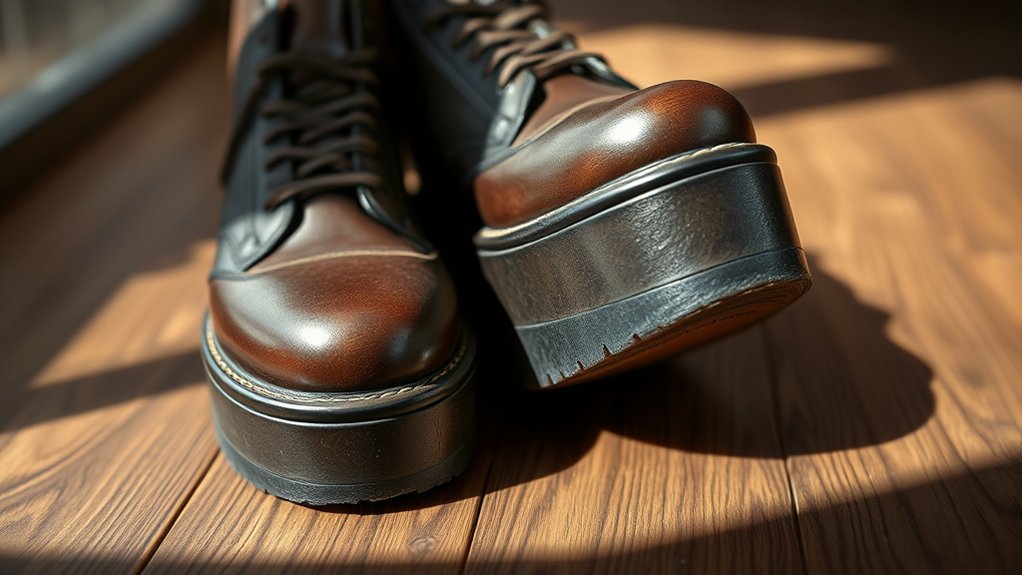
What Are Platform Shoes
Platform shoes elevate your entire foot with thick soles, adding height while distributing weight evenly to boost comfort compared to traditional heels. These shoes come in styles ranging from chunky casual sneakers to elegant stilettos, blending function and flair. Materials vary from wood and cork to eco-conscious synthetics.
By altering your silhouette and presence without drastic posture shifts, platform shoes balance height and wearability. Understanding their history, styles, and comfort features reveals why platforms remain a bold, versatile choice.
Key Takeaways
- Platform shoes have thick soles that elevate the entire foot to create added height and a unique stance.
- They provide height without the discomfort typical of high heels by distributing weight evenly.
- Styles vary from chunky sneakers and wedges to elegant stilettos, using materials like wood, cork, and synthetics.
- Platforms range in height from low (1-2 inches) to high (3+ inches), affecting comfort and daily wear suitability.
- Originating in the 1970s, platform shoes blend retro flair with modern comfort and eco-conscious materials.
What Are Platform Shoes and How They Add Height
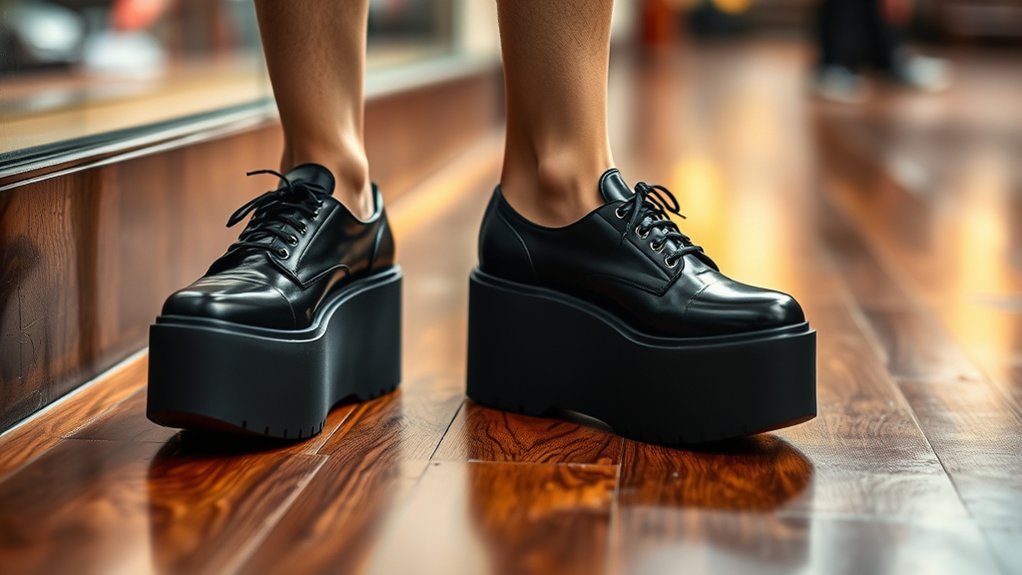
What exactly sets platform shoes apart from other types of footwear? Unlike traditional shoes, they feature thick soles that elevate your entire foot, creating a noticeable height illusion. This design doesn’t just add inches but distributes weight evenly, offering a unique stance.
While platform shoes have occasionally been dismissed as dated fashion, their cyclical comebacks prove their lasting appeal. Historically, they’ve symbolized bold style statements, contrasting with minimalist trends.
When you wear them, you embrace a blend of function and flair, standing taller without the discomfort typical of high heels. Understanding this distinction helps you appreciate why platforms remain relevant, transcending mere aesthetic to influence how height and posture are perceived in fashion contexts.
How Platform Shoes Impact Your Height and Comfort
When you wear platform shoes, you instantly gain noticeable height without the steep incline of traditional heels, which can ease pressure on your feet.
However, the level of comfort depends on factors like cushioning, sole flexibility, and arch support built into the design. Balancing these elements guarantees that the added height doesn’t come at the cost of foot fatigue or discomfort throughout the day.
Height Enhancement Benefits
How much difference can platform shoes really make to your height and comfort? When you wear platform shoes, the height impact is significant because the thick soles add inches without altering your posture drastically.
This makes them ideal for daily wear if you want a subtle boost without discomfort. The added height can enhance your silhouette, confidence, and presence in various settings.
| Feature | Height Impact (inches) | Suitability for Daily Wear |
|---|---|---|
| Low Platforms | 1-2 | High |
| Medium Platforms | 2-3 | Moderate |
| High Platforms | 3+ | Low |
Comfort and Support Factors
Why do platform shoes feel different from regular footwear? The elevated sole changes how your foot interacts with the ground, affecting comfort and support. Platforms distribute pressure more evenly, which can reduce texture fatigue caused by prolonged walking on uneven surfaces.
However, the added height alters your center of gravity, increasing the risk of ankle strain if the shoe lacks proper stability. The rigid sole common in platform shoes limits natural foot flexion, which might contribute to discomfort over time.
To minimize fatigue and strain, look for platforms with cushioned insoles and firm ankle support. Understanding these factors helps you choose platform shoes that enhance your height without compromising comfort and foot health.
A Look Back: Platform Shoes Through the Decades
You’ll notice platform shoes first soared in the 1970s, fueled by disco culture’s bold style and need for height.
Then, in the 1990s, they reemerged with a grunge and pop twist that reshaped their appeal. Today, designers blend past influences with modern aesthetics, proving platform shoes remain a dynamic fashion statement.
1970s Disco Influence
The vibrant energy of the 1970s disco scene propelled platform shoes from niche fashion statements to cultural icons. You’ll notice how the disco influence reshaped platform aesthetics, emphasizing bold heights and flashy materials that captured the era’s exuberance.
Platform shoes weren’t just footwear; they embodied the nightlife’s flamboyance and liberation, elevating wearers both literally and stylistically. The thick soles and exaggerated silhouettes complemented disco’s rhythmic beats and glitzy attire, making them a symbol of self-expression.
When you analyze this period, it’s clear that platform shoes mirrored broader social shifts, challenging traditional gender norms and embracing extravagance. By adopting these elevated styles, you connected with an era defined by dance, freedom, and vibrant creativity, cementing platform shoes as enduring icons of 1970s culture.
1990s Revival Trends
As platform shoes captured the spirit of the 1970s disco scene, their influence didn’t fade away but rather resurfaced in unexpected ways during the 2000s. You’ll notice that this revival wasn’t just a nostalgic nod; it represented an evolution rooted in platform origins while adapting to contemporary tastes.
Designers reinterpreted the exaggerated soles with sleeker shapes and innovative materials, reflecting a shift in consumer preferences. The shoelaces evolution also played a role, moving from purely functional to decorative elements that complemented the bold platform designs.
This period emphasized blending retro aesthetics with modern trends, showing how platform shoes maintained cultural relevance. By understanding these trends, you can appreciate how the 2000s revival bridged past and present, reaffirming the platform shoe’s enduring appeal.
Modern Fashion Comebacks
Fashion cycles often bring platform shoes back into the spotlight, each comeback revealing how designers reinterpret their bold silhouettes to align with contemporary sensibilities. You’ll notice that modern platform evolution blends nostalgia with innovation, incorporating lighter materials and ergonomic designs to enhance comfort and wearability.
However, these updates aren’t without manufacturing challenges. Balancing height and stability while maintaining aesthetic appeal demands precise engineering and material selection. You’ll also see eco-conscious choices influencing production, reflecting current consumer values.
When you explore today’s platform shoes, you witness a fusion of past boldness and present-day practicality, showcasing how the footwear adapts to changing tastes without losing its signature statement. Understanding this dynamic helps you appreciate platforms not just as fashion, but as evolving cultural artifacts.
Popular Platform Shoe Styles Explained
How do platform shoes vary in style and function across different designs? Understanding their platform shoes origins helps you appreciate the diversity. From chunky sneakers to elegant stilettos, each style serves distinct purposes.
For instance, wedge platforms offer stability and comfort, ideal for daily wear, while towering stilettos emphasize height and glamour, often reserved for formal occasions. Platform shoes etiquette also plays a role. You wouldn’t wear exaggeratedly high platforms in casual or professional settings due to practicality and social norms.
Meanwhile, creepers blend bold aesthetics with moderate height, appealing to alternative fashion. By analyzing these styles, you can select platform shoes that fit your lifestyle and respect the unwritten rules of where and when to wear them, balancing fashion with function effectively.
Common Materials Used in Platform Shoe Design
The choice of materials in platform shoe design directly impacts their durability, comfort, and aesthetic appeal. When selecting platform materials, you’ll find common options like wood, cork, rubber, and synthetic composites.
Wood offers sturdy support but can add weight, while cork provides a lightweight, shock-absorbing base enhancing comfort. Rubber ensures flexibility and grip, ideal for everyday wear.
Wood delivers strong support, cork adds comfort with light shock absorption, and rubber offers flexible grip for daily use.
Synthetic materials allow for versatile designs and colors but may compromise breathability. Increasingly, sustainable options like recycled rubber, organic cork, and plant-based composites are gaining traction, appealing to eco-conscious consumers.
These materials not only reduce environmental impact but often improve the shoe’s functional qualities. Understanding these platform materials helps you make informed choices balancing style, longevity, and environmental responsibility in your platform shoe selection.
What Makes Platform Shoes a Bold Fashion Choice?
Why do platform shoes consistently stand out in the world of style? It’s their ability to merge bold fashion with a nod to the past. When you wear platform shoes, you embrace a statement that defies minimalism, showcasing height and attitude simultaneously.
This bold fashion choice signals confidence, drawing eyes and sparking conversations. Moreover, platform shoes embody the retro revival trend, tapping into the 70s and 90s aesthetics that designers and fashion enthusiasts revisit.
The chunky soles and exaggerated heights evoke nostalgia while pushing modern boundaries. By selecting platform shoes, you don’t just follow trends; you engage in a dialogue between eras, blending vintage appeal with contemporary edge.
This fusion makes platform shoes a unique, daring choice that remains relevant across fashion cycles.
How to Style Platform Shoes for Every Occasion
Where can you wear platform shoes without feeling out of place? The key lies in adapting platform aesthetics to the occasion. For casual outings, pair chunky platforms with jeans or a flowy skirt to balance boldness and comfort.
At work, opt for sleek, minimal platforms that elevate your look while respecting professional decorum. Evening events call for refined designs that emphasize height psychology. Platforms add stature and confidence, enhancing your presence.
Consider proportions carefully; platform shoes draw attention downward, so streamline your outfit accordingly. By understanding how platform aesthetics interact with different settings and leveraging height psychology, you can confidently style these shoes anywhere.
This approach ensures your platform shoes complement your outfit and the event’s tone, making them a versatile addition to your wardrobe.
Tips for Choosing Comfortable and Stylish Platform Shoes
How do you find platform shoes that balance style and comfort without compromise? Start by focusing on fashion safety. Ensure the shoes provide adequate arch support and non-slip soles to prevent injuries. Pay attention to the heel height; moderate platforms reduce strain, enhancing wearability.
Material sourcing plays a crucial role, too. Opt for shoes made from breathable, high-quality materials like genuine leather or sustainable fabrics, which improve comfort and durability. Check for padded insoles and flexible soles that adapt to your foot’s natural movement.
Lastly, consider the shoe’s construction. Secure stitching and reinforced heels contribute to long-term comfort and style retention. By prioritizing these factors, you can confidently choose platform shoes that serve both aesthetic appeal and practical functionality.
Frequently Asked Questions
Are Platform Shoes Suitable for All Foot Types?
You shouldn’t assume platform shoes suit all foot morphology types; their platform comfort varies. If you have flat feet or pronation issues, you’ll need extra support, while others might find them perfectly comfortable with proper fit and cushioning.
How Do Platform Shoes Affect Walking and Balance?
Ever tried walking on a rigid board? Platform shoes can cause walking instability due to sole stiffness, making balance trickier.
You’ll need to adjust your gait carefully to avoid missteps and maintain steady movement throughout.
Can Platform Shoes Cause Long-Term Foot Problems?
Yes, wearing platform shoes regularly can cause long-term foot problems like arch strain, altered gait, and joint stress. You should balance style with comfort to avoid these issues and protect your foot health over time.
What Are the Best Brands for High-Quality Platform Shoes?
You’ll find that brands like Dr. Martens, Jeffrey Campbell, and Stella McCartney offer brand quality with a comfort fit, blending style and durability. Their thoughtful construction supports your feet while elevating your look seamlessly.
Are Platform Shoes Appropriate for Professional Settings?
Platform shoes can be appropriate for professional settings if styled conservatively, but they aren’t suitable for all foot types due to height and support variations.
Assess comfort and office dress codes before deciding to wear them daily.
Conclusion
Platform shoes are your secret weapon, lifting you both physically and stylistically like a rising tide. They add noticeable height without sacrificing comfort when chosen wisely.
Understanding their history and materials helps you appreciate their boldness in fashion. By exploring different styles and pairing them thoughtfully with your wardrobe, you can confidently step into any occasion.
Remember, selecting the right platform shoes is key to balancing flair with ease—making every stride a statement with platform shoes.