How to Clean Climbing Shoes
To clean climbing shoes, start by removing the insoles and loosening the laces to access all areas thoroughly. Use gentle, non-bleach cleaners such as mild soap or a diluted vinegar solution to avoid damaging the adhesives and materials.
Hand wash the shoes carefully, brushing off dirt without soaking them. After cleaning, air dry your climbing shoes in a ventilated, shaded area. Use shoe trees or stuff them with newspaper to help maintain their shape.
Between washes, freshen your climbing shoes using activated charcoal inserts and air them out promptly. Following these steps preserves performance and helps control odor. More detailed care tips can further extend your shoe’s lifespan.
Key Takeaways
- Remove insoles and loosen laces before cleaning to access all areas and reduce odor buildup.
- Use gentle cleaners like mild soap, baking soda, or diluted white vinegar, avoiding bleach or strong detergents.
- Air dry shoes thoroughly in a ventilated, shaded area, stuffing with newspaper or shoe trees to maintain shape.
- Freshen shoes between washes by airing out and using activated charcoal or odor-absorbing inserts.
- Regularly clean insoles, monitor for odor or material wear, and store shoes in a cool, ventilated space.
Why Cleaning Your Climbing Shoes Extends Performance and Lifespan
Regularly cleaning your climbing shoes removes dirt, sweat, and oils that degrade the rubber and fabric, preserving their grip and structural integrity. You’ll notice that climbing shoes combine contrasting materials, such as rubber soles, synthetic uppers, and sometimes leather, that each respond differently to contaminants.
If you leave grime or sweat to accumulate, the rubber’s friction properties deteriorate, reducing your climbing performance. Additionally, synthetic fabrics can trap moisture, accelerating material breakdown. Be cautious with fragrance additives in cleaning products; while they mask odors, some chemicals can weaken adhesives or degrade the fabric.
How to Get Your Climbing Shoes Ready for Cleaning
How should you prepare your climbing shoes before cleaning to guarantee the process is effective and safe? First, remove the insoles and loosen the laces or velcro straps to access all areas. This step helps reduce shoe odor and ensures thorough cleaning.
Next, inspect the material for any damage or delicate spots, considering material safety to avoid harm during cleaning.
| Step | Action |
|---|---|
| 1 | Remove insoles |
| 2 | Loosen laces/velcro |
| 3 | Check for damage |
| 4 | Brush off dirt and debris |
| 5 | Air out to reduce shoe odor |
Following these steps prepares your shoes in an optimal way for cleaning without compromising their integrity or performance.
Which Cleaning Products Are Safe for Your Climbing Shoes?
You should use gentle cleaning agents specifically designed for delicate materials to protect your climbing shoes. Avoid harsh chemicals like bleach or strong detergents, as they can degrade the rubber and fabric.
Consider natural alternatives like mild soap or baking soda for effective, safe cleaning.
Gentle Cleaning Agents
Which cleaning agents will preserve the integrity of your climbing shoes without causing damage? Opt for gentle cleaning products that effectively reduce shoe odor while maintaining material strength. Here’s what you should use:
- Mild liquid soap. Diluted with water, it breaks down dirt without harming synthetic fabrics or rubber.
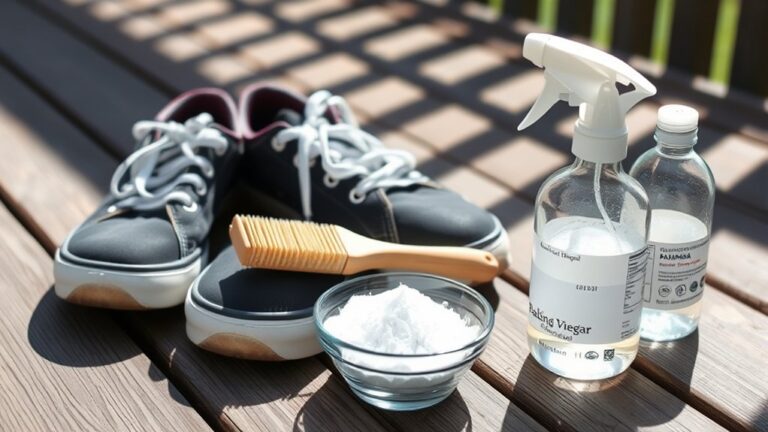
- Baking soda. Neutralizes odors naturally; sprinkle inside shoes and brush off after airing out.
- White vinegar solution. A 1:4 mix with water disinfects and deodorizes without weakening adhesives.
- Specialized shoe cleaner. Formulated for delicate materials, these maintain flexibility and grip.
Avoid aggressive detergents or bleach, as they degrade shoe components. Using these gentle cleaning agents ensures your climbing shoes stay odor-free and structurally sound for longer performance and comfort.
Avoid Harsh Chemicals
Why steer clear of harsh chemicals when cleaning your climbing shoes? These substances can degrade the synthetic materials and rubber components, significantly reducing rubber longevity. Strong detergents, bleach, and solvents break down adhesives and the rubber’s molecular structure, leading to premature wear and loss of grip.
Additionally, harsh chemicals often fail to neutralize various odors effectively; instead, they may leave behind residues that cause persistent unpleasant smells. To maintain your shoes’ structural integrity and performance, use mild, pH-neutral cleaning agents specifically designed for delicate fabrics and rubber.
Avoid products with ammonia, chlorine, or alcohol, as they compromise both material strength and odor control. Prioritizing chemical safety ensures your climbing shoes remain durable, odor-free, and ready for optimal use.
Natural Cleaning Alternatives
How can you effectively clean your climbing shoes without risking damage from harsh chemicals? Opt for natural cleaning alternatives that preserve shoe integrity and odor control. Here’s what you can use:
1. Mild soap with water
Use a gentle, biodegradable soap to avoid fabric degradation.
2. Natural enzymes
Enzyme-based cleaners break down sweat and dirt particles without harming shoe materials.
3. White vinegar solution
Dilute with water for odor neutralizing; apply sparingly to prevent weakening adhesives.
4. Baking soda paste
Remove stubborn stains and absorb moisture; brush off residue before outdoor storage.
After cleaning, ensure your shoes dry thoroughly in a ventilated area, never under direct sunlight, to maintain shape and extend lifespan. These natural methods keep your climbing shoes effective and durable.
Step-by-Step Guide to Hand Washing Climbing Shoes
First, remove any loose dirt and debris from your climbing shoes to prepare them for cleaning.
Next, select a gentle, pH-neutral cleaning solution that won’t damage the materials.
Finally, after washing, dry the shoes carefully while maintaining their shape to prevent deformation.
Preparing Shoes for Cleaning
When should you start preparing your climbing shoes for cleaning? Begin as soon as you notice buildup or odor, avoiding topic drift into unrelated focus areas like advanced maintenance. Preparing your shoes correctly ensures a thorough hand wash and preserves their integrity. Follow these steps:
- Remove insoles and loosen laces to access all areas.
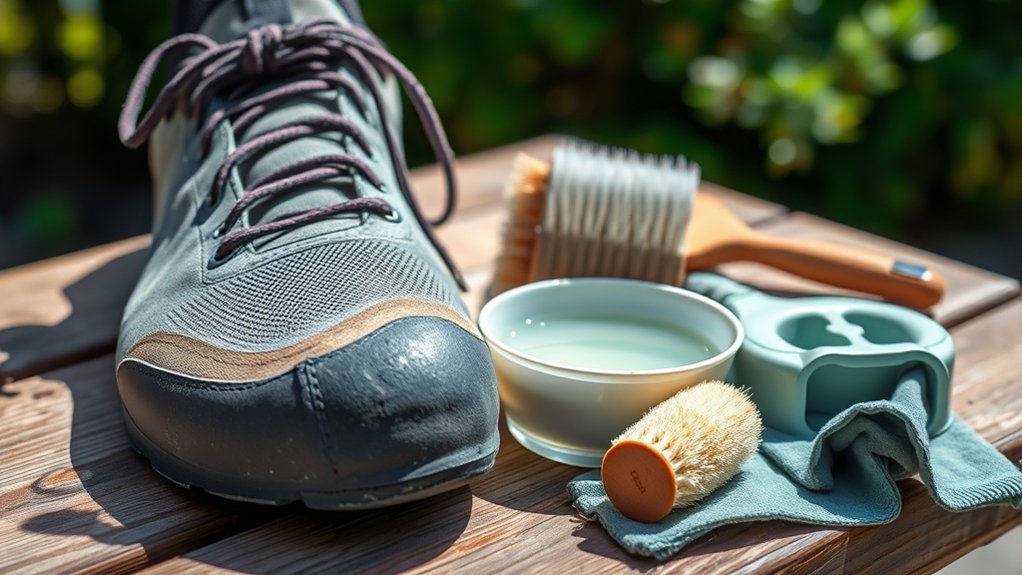
- Brush off dirt and debris using a soft brush or cloth.
- Inspect shoes for damage; addressing issues later prevents further wear.
- Fill a basin with lukewarm water, avoiding hot water that can harm materials.
This precise preparation sets the stage for effective cleaning without diverting into unrelated concerns, ensuring your shoes remain in peak condition.
Choosing Safe Cleaning Solutions
Once your climbing shoes are properly prepared, selecting the right cleaning solutions becomes the next priority to protect their materials and performance. Focus on choosing chemically safe products that won’t degrade the leather, synthetic fabrics, or rubber soles.
Avoid harsh detergents or bleach, which can weaken adhesives and cause discoloration. Instead, use mild soaps or specialized cleaners designed for delicate footwear.
For odor prevention, opt for solutions with antimicrobial properties or additives that neutralize bacteria without harsh chemicals. Dilute any cleaner according to instructions to minimize residue build-up.
Always test the solution on a small, inconspicuous area first to ensure compatibility. By carefully choosing chemically safe cleaning agents, you maintain shoe integrity while effectively removing dirt and odors.
This step sets the foundation for a thorough, damage-free hand wash.
Drying and Maintaining Shape
How do you ensure your climbing shoes dry properly without losing their shape? Proper drying requires a careful impact assessment of materials and adherence to regulatory constraints on drying methods. Follow these steps:
- Remove excess water by gently pressing with a towel. Avoid wringing to prevent deformation.
- Stuff shoes with dry newspaper or shoe trees to maintain structural integrity and absorb moisture.
- Air dry shoes in a well-ventilated area away from direct sunlight or heat sources, which can cause material breakdown.
- Periodically replace newspaper if damp, ensuring consistent moisture control and shape retention.
How to Dry and Store Your Climbing Shoes Properly
Why should you prioritize proper drying and storage for your climbing shoes? Effective drying and storage prevent material degradation, preserve fit, and enhance odor control. Understanding material science helps you avoid heat or direct sunlight, which compromises rubber elasticity and fabric integrity.
Store shoes in a cool, ventilated area to inhibit bacterial growth and odor buildup. Use shoe trees or stuff with paper to maintain shape and prevent creasing. Avoid airtight containers, which trap moisture and accelerate odor development.
| Aspect | Recommended Practice | Reason |
|---|---|---|
| Drying Method | Air dry at room temperature | Maintains rubber and fabric integrity |
| Storage Location | Cool, dry, ventilated area | Prevents bacterial growth and odor buildup |
| Shape Retention | Use shoe trees or paper stuffing | Preserves shoe shape and fit |
| Container Type | Avoid airtight containers | Allows moisture evaporation, controls odor |
Freshen Up Your Climbing Shoes Between Washes
When should you freshen up your climbing shoes between washes to maintain performance and hygiene? Ideally, you’ll want to freshen up your shoes after every session to prevent odor buildup and material degradation.
Here are quick tips to keep your shoes in top condition:
- Air Them Out: Remove shoes from your bag immediately and place them in a well-ventilated area.
- Use Shoe Deodorizers: Apply activated charcoal or specialized inserts to absorb moisture and odors.
- Wipe Down Insoles: Use a damp cloth with mild soap to clean the insoles without soaking them.
- Spot Clean Exterior: Quickly remove dirt or chalk residue with a soft brush or cloth.
These steps help you freshen up your climbing shoes efficiently, extending their lifespan and keeping them ready for your next climb.
Tips to Prevent Odor and Keep Your Climbing Shoes Fresh Longer
Where do odors in climbing shoes originate, and what practical measures can you take to minimize them? Odors primarily come from sweat and bacteria accumulating inside the shoe.
To prevent this, implement consistent cleaning schedules, including airing out shoes immediately after use and washing insoles regularly. Use antimicrobial sprays designed for footwear to inhibit bacterial growth and moisture-wicking socks to reduce sweat buildup.
Avoid storing shoes in sealed bags; instead, keep them in a well-ventilated area. Rotate between multiple pairs if possible to allow each pair adequate drying time.
These odor prevention strategies extend the freshness of your climbing shoes, reducing the frequency of deep cleaning while maintaining performance and comfort. Adhering to these practical steps ensures your climbing shoes stay fresher longer, enhancing their lifespan and your overall climbing experience.
Frequently Asked Questions
Can I Machine Wash My Climbing Shoes Instead of Hand Washing?
Machine washing climbing shoes isn’t recommended because it can damage materials and adhesives. Instead, you should clean them gently by hand.
This preserves shoe integrity and extends their lifespan, ensuring peak performance and comfort.
How Often Should I Replace Worn-Out Climbing Shoes?
You should consider climbing shoe replacement frequency every 6 to 12 months, depending on material durability and usage intensity. Studies show synthetic materials last 30% longer than leather, so monitor wear patterns closely to maintain peak performance.
Is It Safe to Use Baking Soda Inside Climbing Shoes?
Yes, baking soda safety is solid for odor removal inside climbing shoes. Sprinkle a small amount, let it sit overnight, then shake out.
Avoid overuse to prevent material degradation, ensuring effective, practical freshness maintenance.
Can Cleaning Climbing Shoes Improve Climbing Performance Immediately?
Like a Renaissance artisan refining tools, you’ll find cleaning benefits immediately enhance grip and odor control in your climbing shoes. This improves comfort and focus, which can boost your climbing performance right away with precise maintenance.
Are There Specific Brands Known for Easy-To-Clean Climbing Shoes?
Yes, brands for easy cleaning like La Sportiva and Five Ten use synthetic materials that resist dirt and moisture. You’ll find shoes with microfiber uppers and rubber soles simplify maintenance, enhancing cleanability through material choice.