Are Barefoot Shoes Good for Your Feet
Barefoot shoes can be good for your feet as they improve foot strength and posture by encouraging natural movement and muscle engagement. They offer enhanced proprioception and better alignment, which can reduce joint strain when you transition gradually.
However, barefoot shoes provide minimal support and cushioning. This might worsen existing conditions or cause discomfort if you switch too quickly.
It is important to assess your foot health carefully and consider professional advice before trying them. Understanding safe transition and maintenance is key to maximizing their benefits.
Key Takeaways
- Barefoot shoes promote natural foot movement and strengthen intrinsic foot muscles, improving overall foot health and posture.
- They enhance proprioception and balance by providing better ground feel and sensory feedback.
- Rapid or improper transition to barefoot shoes can increase injury risk, such as stress fractures or plantar fasciitis.
- Suitable candidates have strong foot musculature and neutral gait, while those with foot conditions should avoid barefoot shoes.
- Gradual adaptation combined with regular foot exercises ensures safe use and maximizes benefits for foot function.
What Are Barefoot Shoes and How Do They Work
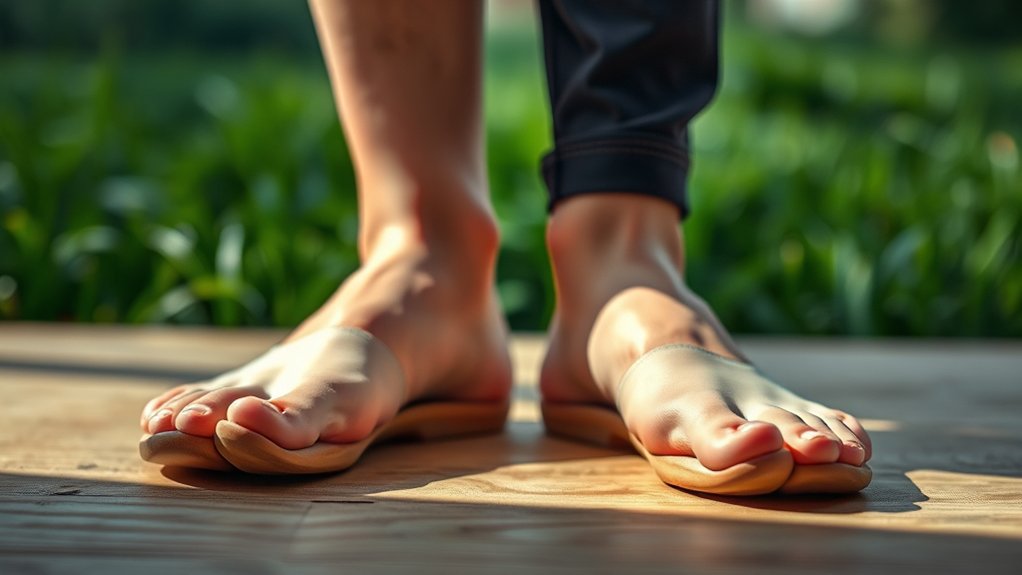
What exactly are barefoot shoes, and how do they function? Barefoot shoes employ a barefoot design that mimics the natural shape and movement of your feet. Unlike traditional footwear, they minimize interference with your foot’s biomechanics by providing minimal sole thickness and limited arch support.
This design allows your feet to engage muscles and tendons more actively, promoting natural motion patterns. Minimalist cushioning reduces shock absorption to a level that encourages sensory feedback from the ground, enhancing proprioception.
The thin sole protects against sharp objects while maintaining ground feel, crucial for balance and gait adjustment. By reducing structural constraints, barefoot shoes aim to replicate the experience of walking barefoot while offering essential protection, enabling your feet to function closer to their physiological intent.
Benefits of Barefoot Shoes for Foot Health and Posture
How do barefoot shoes contribute to improving foot health and posture? Research shows that the benefits of barefoot shoes stem from their minimalistic design, which encourages natural foot movement and strengthens intrinsic foot muscles.
By allowing your toes to splay and your foot to flex freely, these shoes promote a more anatomically correct foot posture. This improved alignment reduces strain on ligaments and joints, potentially decreasing the risk of common foot disorders like plantar fasciitis and bunions.
Allowing toes to splay and feet to flex promotes natural posture and reduces strain on ligaments and joints.
Additionally, barefoot shoes enhance proprioception, helping you maintain better balance and posture throughout the day. Clinical studies suggest that transitioning to barefoot footwear can improve gait mechanics, leading to a more efficient and stable posture.
Therefore, incorporating barefoot shoes can offer measurable benefits of barefoot wear in supporting both foot health and overall postural alignment.
Risks of Wearing Barefoot Shoes You Should Know
You should be aware that barefoot shoes can increase your risk of foot injuries, such as stress fractures or plantar fasciitis, especially if you shift too quickly.
These shoes typically offer minimal to no arch support, which may exacerbate existing foot conditions or cause discomfort.
Understanding these risks is essential before incorporating barefoot shoes into your routine.
Potential Foot Injuries
Why might wearing barefoot shoes increase your risk of foot injuries? These shoes typically offer bad cushioning, which means your feet absorb more impact with each step. This heightened stress can lead to microtraumas, increasing the likelihood of conditions such as stress fractures or plantar fasciitis.
Additionally, barefoot shoes often provide minimal sole thickness, reducing protection against sharp objects or uneven terrain. You should also be cautious of slippery hazards; the thin, flexible soles may lack adequate traction, increasing your risk of slips and falls, especially on wet or smooth surfaces.
Without the buffer of traditional shoe materials, your feet must adapt quickly, but this transition can expose you to injuries if you’re not careful or gradually conditioned to barefoot footwear.
Lack Of Arch Support
Where does your foot’s arch get support when wearing barefoot shoes? Unlike traditional footwear, barefoot shoes provide minimal to no arch support, relying on your foot’s intrinsic muscles to maintain structure.
Studies in barefoot comparison indicate that insufficient arch support can lead to overuse injuries, especially if your arches are naturally low or high. Without external support, you might experience increased strain on the plantar fascia, potentially causing conditions like plantar fasciitis.
If your feet aren’t accustomed to this change, the lack of arch support may result in discomfort or altered gait mechanics. While barefoot shoes promote natural foot movement, you should assess your arch type carefully and consider gradual adaptation or consult a specialist to mitigate risks associated with reduced arch support.
Who Should (And Shouldn’t) Wear Barefoot Shoes
Who benefits most from barefoot shoes depends on individual foot structure, gait, and existing conditions. If you have strong foot musculature, no history of plantar fasciitis, and a neutral gait, barefoot shoes can enhance proprioception and promote natural foot mechanics.
Barefoot fashion enthusiasts often appreciate these shoes for their minimalistic design and functional benefits. Additionally, if you engage in water sports, barefoot shoes offer excellent traction and quick-drying materials, making them suitable for aquatic environments.
However, if you have flat feet, severe overpronation, or chronic foot pain, barefoot shoes may exacerbate discomfort without proper support. Similarly, those with neuropathy or diabetes should avoid barefoot footwear due to increased risk of injury.
Always consult a healthcare professional before transitioning to barefoot shoes to ensure they align with your specific biomechanical needs.
How to Transition Safely to Barefoot Shoes
How quickly you transition to barefoot shoes can markedly impact your foot health and comfort. Evidence suggests a gradual transition timing, typically over 4 to 6 weeks, reduces the risk of injury by allowing your feet and lower limbs to adapt to altered biomechanics.
Begin by wearing barefoot shoes for short periods, progressively increasing duration and intensity. Pay attention to sock selection; choose thin, moisture-wicking socks that preserve natural foot movement and minimize friction. Avoid thick or overly cushioned socks, which can alter sensory feedback and reduce proprioception.
Monitor for discomfort or pain during this period, as these signs indicate the need to slow your transition. By adhering to a structured, evidence-based approach focused on gradual exposure and proper sock selection, you optimize foot adaptation and minimize potential adverse effects.
Tips for Maintaining Foot Health While Wearing Barefoot Shoes
To maintain foot health while wearing barefoot shoes, you’ll need to practice proper foot hygiene and allow a gradual transition period to prevent injury. Incorporate regular foot exercises to strengthen muscles and improve flexibility.
These steps are essential for adapting safely and minimizing strain.
Proper Foot Hygiene
Although barefoot shoes promote natural foot movement, maintaining proper foot hygiene remains essential to prevent infections and skin issues. You should wash your feet daily with mild soap and water, ensuring thorough drying between toes to reduce fungal growth.
Regularly inspect your feet for cuts, blisters, or signs of infection, addressing any abnormalities promptly. Since barefoot shoes offer less protection, keeping your nails trimmed and clean minimizes injury risk and bacterial buildup.
Change socks daily and choose moisture-wicking fabrics to control sweat, a common contributor to skin maceration. Avoid sharing footwear to reduce cross-contamination.
Incorporating these proper hygiene practices into your barefoot care routine supports skin integrity and overall foot health, ensuring you benefit fully from barefoot shoe use without compromising safety or comfort.
Gradual Transition Period
When should you begin wearing barefoot shoes exclusively? Evidence suggests you should allow a gradual transition period to prevent injury and discomfort.
Contrary to transition myths, you shouldn’t switch abruptly; your feet need time to adapt to altered biomechanics and increased muscle engagement. Start by wearing barefoot shoes for short durations, gradually increasing as your foot strength improves.
This approach counters fashion misconceptions that barefoot shoes are simply a style choice without functional consequences. A measured adaptation respects your foot’s structural needs and reduces risks such as plantar fasciitis or metatarsal stress.
Clinical studies emphasize that a slow transition optimizes foot health outcomes and enhances proprioception. By pacing your adjustment, you ensure the benefits of barefoot shoes without compromising tissue integrity or joint stability.
Regular Foot Exercises
Building foot strength through regular exercises complements the gradual adjustment to barefoot shoes. You should incorporate targeted movements like toe curls, arch lifts, and calf stretches to enhance intrinsic foot muscle function.
Research shows these exercises improve proprioception and reduce injury risk when transitioning from conventional footwear. While footwear fashion trends often prioritize appearance over function, barefoot shoes demand a functional approach to foot health.
Include short daily sessions of foot mobility drills to maintain flexibility and strength. Additionally, when vacation packing, don’t forget to bring resistance bands or a massage ball to continue your routine.
Consistent exercise supports structural adaptation, ensuring you gain maximum benefit from barefoot shoes without compromising foot integrity or comfort.
Frequently Asked Questions
Can Barefoot Shoes Be Worn in Formal or Professional Settings?
You generally can’t wear barefoot shoes in formal settings due to limited formal footwear practicality. Their design often lacks professional attire compatibility, so choose traditional shoes for polished, evidence-based professionalism and appropriate workplace presentation.
Do Barefoot Shoes Improve Athletic Performance in Specific Sports?
You’ll find barefoot footwear can enhance athletic performance in sports demanding balance, agility, and proprioception. Evidence shows improved muscle activation and foot mechanics, but benefits vary by sport and individual biomechanics, requiring careful adaptation.
How Do Barefoot Shoes Affect Running Speed and Endurance?
Imagine your feet striking the ground with barefoot biomechanics, enhancing running economy. You’ll likely experience improved speed and endurance through efficient energy use.
However, adaptation and surface type critically influence these benefits, as clinical studies indicate.
Are Barefoot Shoes Suitable for People With Diabetes?
You shouldn’t use barefoot shoes if you have diabetes risk or foot neuropathy, as reduced cushioning and protection increase injury risk.
Consult your healthcare provider to ensure safe footwear choices tailored to your condition and foot health.
What Materials Are Commonly Used in Barefoot Shoe Manufacturing?
Imagine testing barefoot shoes with recycled fabrics in durability testing labs. You’ll find materials like mesh for temperature regulation and bonding materials, such as TPU, ensure structural integrity while maintaining lightweight flexibility and breathability for optimal foot health.