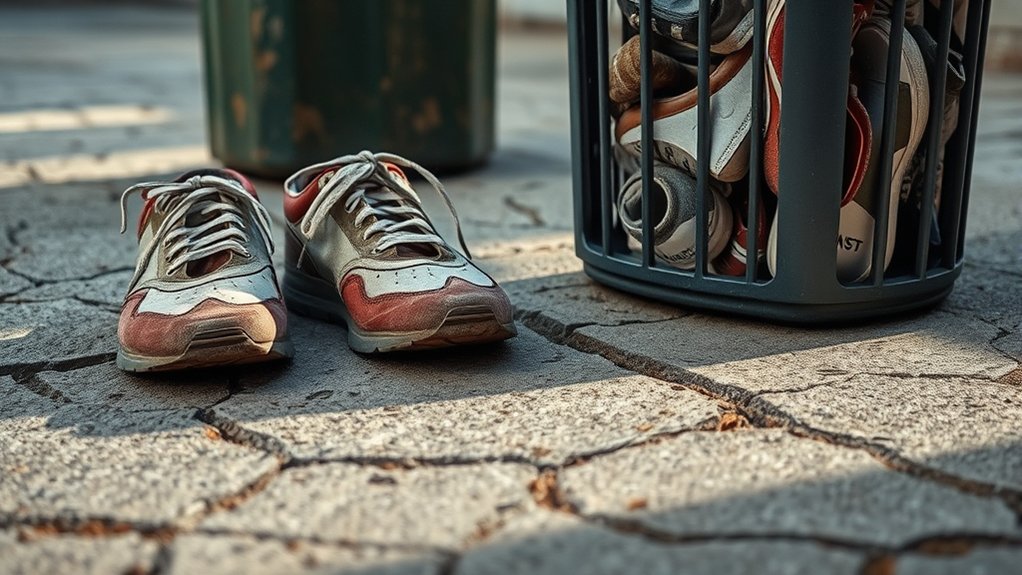
Can You Recycle Shoes
You can recycle shoes, but you’ll need specialized programs since regular recycling bins can’t handle mixed materials like rubber, fabric, and metal parts. Athletic shoes, sneakers, and sandals made from separable materials are usually accepted.
Before recycling, clean your shoes and check if local or brand take-back schemes have specific requirements. Proper disassembly helps recover materials efficiently.
If you want to understand how shoes are processed or where to donate, there’s more useful information available.
Key Takeaways
- Most shoes cannot be recycled through regular bins due to mixed materials and require specialized recycling programs.
- Shoes made of rubber, leather, canvas, and synthetic fabrics are commonly accepted for recycling when materials can be separated.
- Local collection points, brand take-back schemes, and retailer recycling bins are key options for shoe recycling.
- Preparing shoes by cleaning, removing insoles, and bundling pairs improves recycling efficiency.
- When recycling isn’t possible, repurposing or donating wearable shoes is the preferred sustainable alternative.
Can You Recycle Shoes?
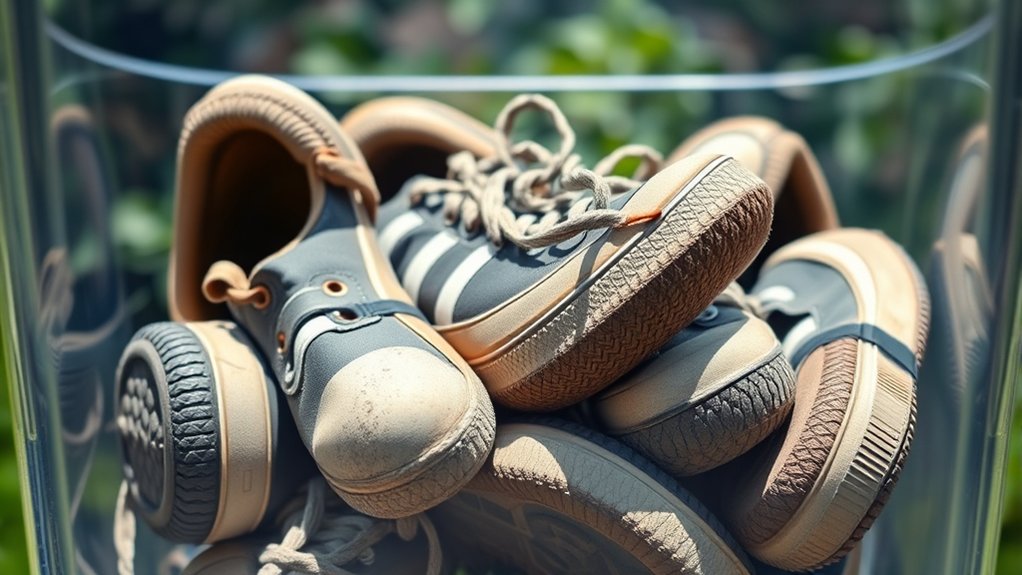
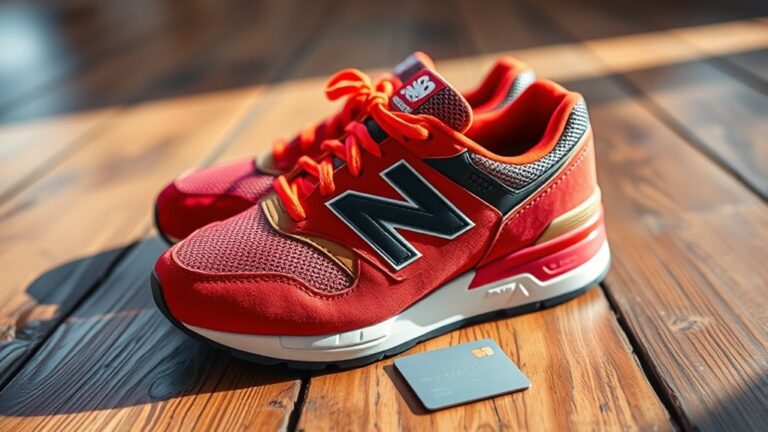
How can you recycle shoes effectively? Understanding shoe fashion and footwear trends helps you identify materials suitable for recycling. Many shoes combine leather, rubber, fabric, and synthetic components, complicating the process.
You can’t just toss shoes into regular recycling bins; specialized programs exist to handle these mixed materials. By researching local collection points or brand take-back schemes, you ensure shoes undergo proper disassembly and material recovery.
Staying informed about footwear trends, like sustainable designs, also guides your choices toward recyclable shoes. When you recycle shoes correctly, you reduce landfill waste, conserve resources, and support circular economy efforts in shoe fashion.
Your active participation in shoe recycling fosters innovation in eco-friendly materials and sustainable production methods.
Which Types of Shoes Can Be Recycled
Which types of shoes qualify for recycling depends largely on their materials and construction. Shoes made primarily of rubber, leather, canvas, and synthetic fabrics are commonly accepted in shoe recycling streams. These materials can be separated and repurposed efficiently.
However, shoes with mixed materials, such as those with excessive metal parts or glued components, pose challenges for recycling facilities. You’ll find that many recycling bins designed for shoes specifically request pairs without excessive wear or contamination.
Athletic shoes, casual sneakers, and sandals often qualify, while high heels or shoes with complex embellishments might not. Before placing shoes in recycling bins, check local guidelines to ensure the materials align with accepted shoe recycling streams, maximizing the chances your shoes are processed correctly and sustainably.
Preparing Shoes for Recycling or Donation
Knowing what types of shoes can be recycled helps you decide the best way to prepare them for recycling or donation. Start by inspecting the care labeling to determine material composition and any specific cleaning instructions.
Clean your shoes thoroughly to remove dirt and odors, as recycling centers and donation sites generally require clean items. Next, check the shoe sizing to ensure the shoes are wearable and suitable for donation; shoes in poor condition or with unusual sizing may be better suited for recycling.
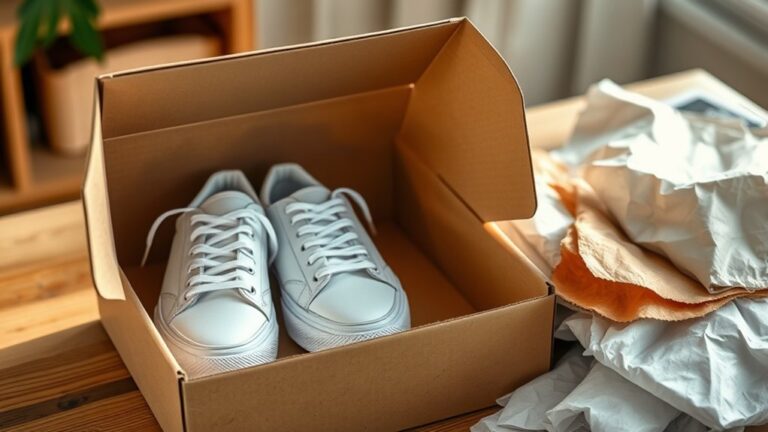
Remove insoles and laces if requested, as some programs require these parts separately. Finally, bundle shoes in pairs using a sturdy tie or place them in a breathable bag to keep them together.
Following these steps improves the efficiency and effectiveness of shoe recycling or donation programs.
Where to Donate or Recycle Shoes
Where can you take your shoes once they’re clean and ready for recycling or donation? Identifying the right destination is key to ensuring your footwear benefits others or the environment. Here are three effective options:
- Donation Partners: Organizations like Goodwill or local shelters accept gently used shoes, redistributing them to those in need.
- Footwear Reuse Programs: Programs such as Nike’s Reuse-A-Shoe collect worn-out sneakers, repurposing materials into new products.
- Retail Take-Back Initiatives: Many shoe retailers offer in-store recycling bins for shoes, facilitating convenient drop-offs.
Choosing these channels maximizes your shoes’ lifecycle impact. Confirm each program’s acceptance criteria beforehand to ensure your shoes meet their standards. This approach supports sustainability while helping communities through responsible footwear reuse programs and donation partners.
Where Do Shoes Go After Recycling?
After you hand over your shoes for recycling, they enter a process designed to break down and repurpose their materials efficiently. Recycling facilities follow strict disposal policies to sort shoes by material type. Charity guidelines ensure only wearable shoes are donated; the rest proceed to recycling streams.
These processes minimize landfill waste and maximize material recovery.
| Step | Description | Outcome |
|---|---|---|
| Collection | Shoes gathered from various sources | Sorted by condition |
| Sorting | Separate wearable from damaged | Wearables go to charities |
| Material Separation | Breakdown into rubber, fabric, metal | Materials ready for reuse |
| Processing | Materials cleaned and shredded | Raw materials regenerated |
| Repurposing | Used in new products or energy | Reduced environmental impact |
Understanding these steps clarifies how your recycled shoes contribute beyond simple disposal.
Environmental Benefits of Recycling Shoes
When you recycle shoes, you help reduce landfill waste by keeping materials out of dumps. You’ll also conserve natural resources by reusing components instead of relying on new raw materials.
This process lowers the overall carbon footprint linked to shoe production and disposal.
Reducing Landfill Waste
How much waste do you think discarded shoes contribute to landfills each year? The number is staggering, considering:
- Over 300 million pairs of shoes are discarded annually in the U.S. alone.
- Most shoes contain mixed materials, complicating recycling efforts.
- Footwear can take decades to decompose, releasing toxins into soil and water.
Conserving Natural Resources
Why does recycling shoes matter beyond reducing landfill waste? When you recycle shoes, you help conserve natural resources by minimizing the need for raw materials.
Shoe material science reveals that many shoes combine leather, rubber, and synthetic fabrics, each requiring energy-intensive extraction and processing. Recycling myths often suggest shoe components are too complex to reuse, but advances in material separation prove otherwise.
By reclaiming fibers and rubber, you reduce the demand for new resources like petroleum and leather hides. This process saves water, reduces soil degradation, and preserves ecosystems linked to raw material harvesting.
Lowering Carbon Footprint
A significant benefit of recycling shoes lies in its ability to lower your carbon footprint. When you recycle, you directly reduce the demand for new shoe manufacturing, which is a major source of factory emissions.
By diverting shoes from landfills, you help cut down on the energy-intensive processes involved in producing raw materials. Here are three ways recycling shoes lowers your carbon footprint:
- Reduces factory emissions by decreasing the need for manufacturing new shoes.
- Conserves energy by limiting raw material extraction and processing.
- Minimizes landfill waste, which can generate methane, a potent greenhouse gas.
What to Do If You Can’t Recycle Shoes
If your shoes aren’t recyclable, consider donating them if they’re still in good condition to extend their life. You can also repurpose old footwear for creative or practical uses around your home.
When disposal is necessary, make sure to follow responsible waste guidelines to minimize environmental impact.
Donate Usable Shoes
Where can you turn when shoe recycling isn’t an option? You can donate usable shoes to extend their life and reduce waste. Before donating, ensure you:
- Inspect shoes for wear and damages; only donate pairs in good condition.
- Clean and keep shoes dry to prevent mold or deterioration during storage and transport.
- Research local charities or shoe drives that accept footwear donations.
Donating usable shoes helps those in need and supports community programs. It’s a practical alternative to discarding shoes when recycling isn’t feasible. By following these steps, you maximize the impact of your donation while minimizing environmental harm.
Repurpose Old Footwear
When donating shoes isn’t possible due to their condition, repurposing old footwear offers a sustainable alternative to disposal. You can engage in repurposing footwear by transforming worn-out shoes into functional or decorative items, reducing waste and extending material life.
For example, you might convert old sneakers into planters by removing insoles and filling them with soil. Alternatively, use sturdy soles as protective pads for furniture or create key holders from shoe laces. Upcycling ideas like these minimize environmental impact and promote resourcefulness.
Dispose Responsibly
Although recycling and repurposing are ideal, you may encounter shoes that can’t be processed through these methods. When disposing of such footwear, following proper recycling etiquette is essential to minimize environmental impact and support ethical sourcing.
Here’s what you should do:
- Donate shoes in wearable condition to charities or shelters, ensuring they meet hygiene standards.
- Contact local waste management to identify if special disposal programs exist for non-recyclable shoes.
- Avoid tossing shoes into regular trash; instead, separate components if possible to facilitate safer waste handling.
Frequently Asked Questions
How Long Does the Shoe Recycling Process Take?
The shoe recycling process typically takes several weeks, depending on recycling logistics and material separation complexity. You’ll experience delays during sorting, cleaning, and processing, as different materials like rubber, fabric, and metal require specialized treatment.
Can Shoe Recycling Reduce Manufacturing Costs?
Yes, shoe recycling can reduce manufacturing costs by improving recycling economics and decreasing reliance on virgin material sourcing. You’ll save money by reusing materials, lowering raw material expenses, and streamlining production processes efficiently.
Are There Any Shoe Brands That Use Recycled Materials?
You know what they say, “Waste not, want not.” Brands like Adidas and Allbirds prioritize shoe material sourcing and circular design, reducing waste by incorporating recycled plastics and natural fibers into their innovative, eco-friendly footwear collections.
What Happens to Shoe Laces During Recycling?
When recycling shoes, the shoe lace fate depends on fiber separation processes. You’ll find laces often detached and sorted by material type, allowing fibers to be recycled separately or repurposed.
This enhances overall recycling efficiency and material recovery.
Can Recycled Shoes Be Turned Into New Footwear?
You might spot recycled materials in fresh kicks, as shoe manufacturing increasingly uses them to reduce waste. This coincidence shows recycled shoes can indeed transform into new footwear, supporting sustainability through precise material repurposing.
Conclusion
You might not realize it, but the shoes you no longer wear could be stepping into a new life through recycling or donation. Coincidentally, while you’re decluttering, you’re also helping reduce landfill waste and conserving resources.
Even if some shoes can’t be recycled, you’ve got options to minimize environmental impact. So, before tossing those old sneakers, think twice—it’s a small action with a surprisingly big effect.
Remember, learning about how you can recycle shoes not only benefits the planet but also supports sustainable practices for the future.