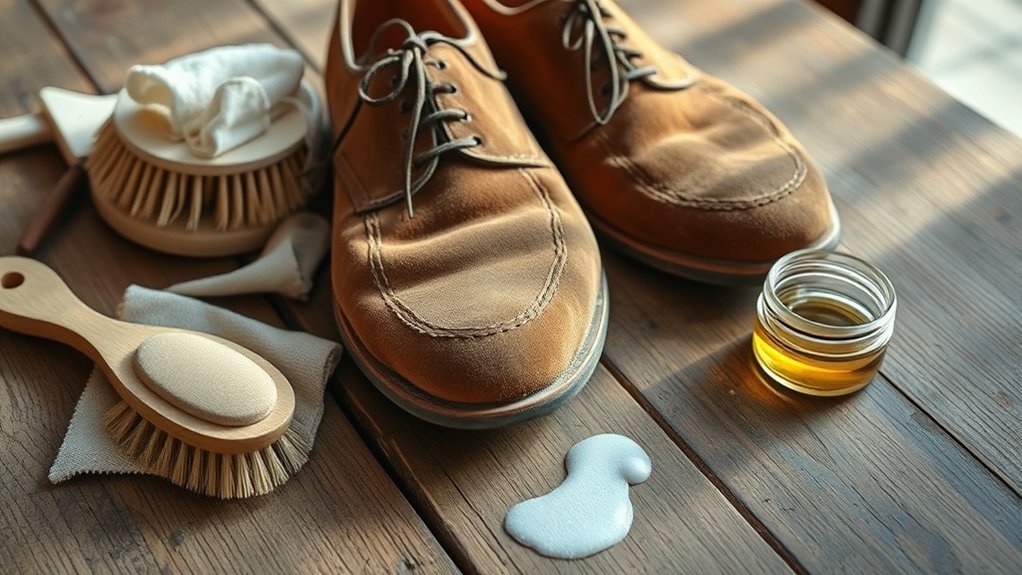
How to Refurbish Suede Shoes
To refurbish your suede shoes, first gather a soft suede brush, eraser, mild cleaner, and absorbent cloths.
Suede shoes require special care to maintain their unique texture and appearance. Inspect for stains, scuffs, or flattened nap, testing cleaners on a hidden spot.
Clean gently with minimal water, lift stains using appropriate methods like cornstarch for oil marks, and restore texture by brushing the nap uniformly.
Finish by applying protective spray and storing properly to prolong life.
Follow these steps carefully, and you’ll quickly improve your suede’s look and durability.
Key Takeaways
- Gather essential suede cleaning tools like a soft suede brush, eraser, specialized cleaner, and absorbent cloths before starting refurbishment.
- Inspect suede shoes carefully for stains, scuffs, water marks, and flattened nap to identify problem areas.
- Clean shoes gently with a soft suede brush and mild cleaner, avoiding excess water and testing on hidden spots first.
- Remove stains by blotting liquids, using suede erasers for scuffs, and applying cornstarch or powder for oil-based marks overnight.
- Restore texture by brushing nap in one direction, apply suede dye if needed, and protect with suede spray during storage.
Gather Your Suede Shoe Cleaning Tools
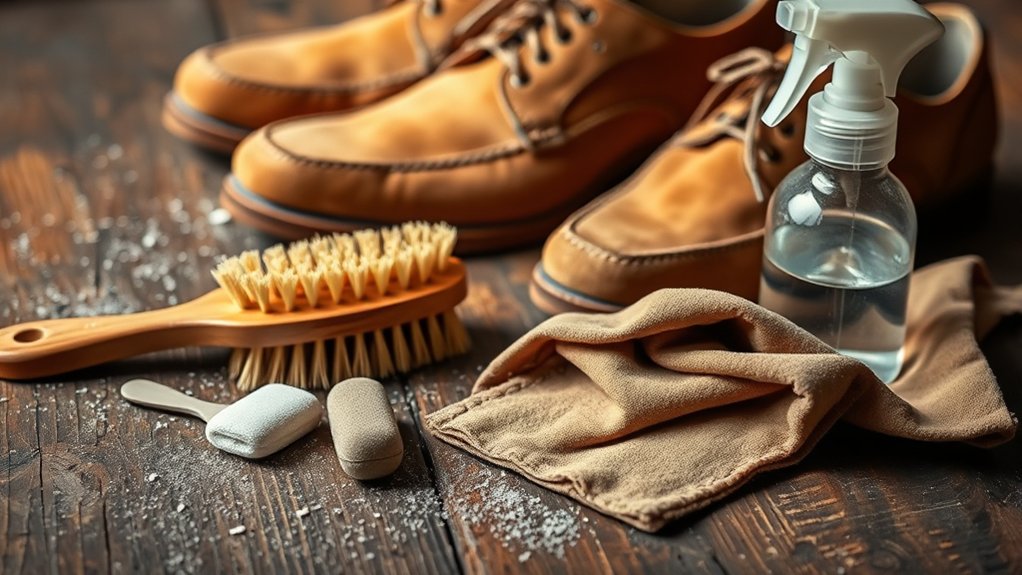
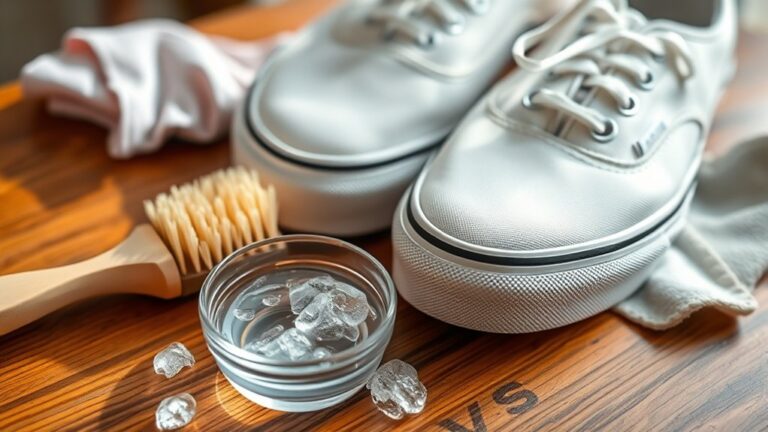
To refurbish your suede shoes effectively, you’ll need to gather specific cleaning tools designed for delicate suede material. Start with a suede brush featuring soft, natural bristles to lift dirt without damaging the nap. Include a suede eraser for targeted stain removal.
Before applying any cleaning solution, perform color testing on a hidden area to prevent discoloration. Use a specialized suede cleaner or a mild detergent diluted in water. For drying, have absorbent cloths ready and avoid direct heat sources.
Proper sneaker storage is essential after cleaning to maintain shape and prevent moisture buildup. Use shoe trees or stuff with acid-free paper. Collect these tools methodically to ensure a precise, safe refurbishment process, preserving your suede’s texture and color integrity.
Spot Common Suede Shoe Problems
How can you quickly identify the most common issues that affect suede shoes? Start by inspecting for stains, scuffs, water marks, and uneven wear. Use a soft brush to reveal hidden dirt and assess fiber damage.
Begin by checking for stains, scuffs, water marks, and use a soft brush to uncover hidden dirt.
Pay particular attention to color changes or faded areas by performing a color comparison between affected and unaffected zones. This step helps determine if discoloration requires spot repair or full restoration.
Next, check the nap direction; flattened or matted fibers can signal abrasion or moisture exposure. Also, identify any salt stains or white residue typical in winter wear.
Recognizing these problems early allows you to target repairs precisely, ensuring effective spot repair without unnecessary treatment. Accurate problem spotting is essential before moving on to cleaning and refurbishing your suede shoes.
Clean Your Suede Shoes Without Damage
You’ll want to select a brush designed specifically for suede to prevent surface damage. Use mild cleaning solutions that won’t saturate the material or alter its texture.
Always avoid excessive water, as moisture can cause stains and deform the shoe’s shape.
Choose The Right Brush
Which brush suits your suede shoes best depends on the material’s delicate texture and the type of dirt you need to remove. Opt for brushes made from sustainable materials like natural crepe rubber or boar hair for effective cleaning without damage. These options align with budget friendly tips, offering durability and eco-consciousness.
| Brush Type | Best For |
|---|---|
| Natural Crepe Rubber | Removing surface dirt, gentle on suede |
| Boar Hair | Lifting nap, restoring texture |
| Nylon | Heavy dirt, but use sparingly to avoid damage |
Choose a brush that matches your shoe’s condition and dirt type. Avoid stiff synthetic brushes that may harm the suede. Regularly clean your brush to maintain efficiency and protect your shoes during refurbishment.
Use Gentle Cleaning Solutions
After selecting the appropriate brush, the next step involves choosing cleaning solutions that won’t compromise the suede’s delicate fibers. Opt for gentle cleaning agents specifically formulated for suede or mild soaps diluted in water.
Avoid harsh chemicals or detergents, as they can damage the nap and alter color. Apply the solution sparingly using a soft cloth or sponge, targeting stained areas without saturating the material.
Test the cleaner on a hidden patch first to confirm colorfastness. Gently work the solution into the suede with minimal pressure, then allow it to air dry completely.
This method ensures effective stain removal while supporting suede preservation. By prioritizing gentle cleaning, you maintain the shoe’s texture and appearance, extending its lifespan without risking damage.
Avoid Excessive Water
How much water is too much when cleaning suede shoes? Even a small amount of sensitive water can damage the delicate velvet finish. Suede’s porous texture absorbs liquids quickly, causing stains, warping, or discoloration.
To protect your shoes, never saturate the surface. Instead, dampen a clean cloth lightly with water or a specialized suede cleaner, ensuring it’s just moist, not wet. Gently blot or rub small areas, avoiding excess moisture.
After cleaning, let the shoes air dry naturally, away from heat sources, which can harden the fibers. Using minimal water preserves the suede’s texture and prevents watermarks.
Remove Stains and Scuffs From Suede Shoes
To remove stains from your suede shoes, start by identifying the type of stain for the most effective treatment. Use a suede eraser or a soft brush to gently lift scuff marks without damaging the nap.
Applying the right technique guarantees you restore the texture and appearance efficiently.
Effective Stain Removal
Why do stains and scuffs pose such a challenge for suede shoes? Suede’s porous texture absorbs liquids and dirt quickly, making stains difficult to lift without damaging the nap. To tackle this, use specific stain removal techniques designed for suede.
Start by gently brushing the affected area with a suede brush to lift surface dirt. For liquid stains, blot immediately with a clean cloth, avoiding rubbing. Apply a suede eraser or a white pencil eraser to stubborn spots, working carefully to prevent discoloration.
For oil-based stains, sprinkle cornstarch or talcum powder, let it absorb overnight, then brush off. After cleaning, restore suede color by applying a suede dye or color restorer in light, even layers. This process preserves the shoe’s finish while maintaining its natural texture.
Treating Scuff Marks
When dealing with scuff marks on suede shoes, you’ll want to act carefully to avoid further damage to the delicate nap. Begin by gently brushing the affected area with a suede brush to lift the fibers and remove loose dirt.
For deeper scuffs, use a suede eraser or a clean pencil eraser, applying light pressure in a circular motion to perform effective scuff repair. Afterward, use a suede dye pen or color restorer designed for your shoe’s shade to address any color loss caused by the abrasion.
Apply the product sparingly and evenly, allowing it to dry completely. Finish with a protective suede spray to seal the restoration and prevent future damage while maintaining the shoe’s original texture and appearance.
Restore Suede Texture and Color
How do you bring back the original texture and vibrant color of your suede shoes after wear? First, focus on restoring suede texture by gently brushing the nap with a suede brush in one direction to lift flattened fibers. For stubborn areas, use a suede eraser to remove embedded dirt or marks.
Next, address color transfer removal by applying a small amount of white vinegar or rubbing alcohol on a clean cloth; gently dab the affected area without saturating the suede. Allow it to dry completely, then re-brush to restore texture.
If color fades persist, consider using a suede dye matching your shoe’s shade, applying evenly with a sponge or applicator. These precise steps will effectively restore suede texture and color, reviving your shoes’ original look.
Protect Your Refurbished Suede Shoes
Where should you begin to ensure your suede shoes stay looking fresh after refurbishment? Start by applying a high-quality suede protector spray. This step is crucial to protect durability and extend lifespan by repelling water and stains.
Next, store your shoes properly to maintain their shape and prevent damage.
To effectively protect your refurbished suede shoes, follow these steps:
- Apply an even coat of water and stain repellent spray; allow it to dry completely.
- Store shoes in a cool, dry place, using shoe trees to maintain shape.
- Avoid wearing suede shoes in harsh weather conditions to prevent premature wear.
Frequently Asked Questions
Can Suede Shoes Be Refurbished at Home Without Professional Help?
Yes, you can perform home restoration on suede shoes effectively. Using specialized suede brushes and color restoration products, you’ll remove stains, lift nap, and restore color precisely without professional help.
This ensures practical, quality results.
How Often Should I Refurbish My Suede Shoes?
You should refurbish your suede shoes every 3-6 months, depending on wear. Avoid topics to avoid like over-cleaning or using harsh chemicals.
Ignore unrelated concerns; focus on proper brushing and protection for durability.
Are Certain Types of Suede More Difficult to Refurbish?
Think of refurbishing suede like restoring an old painting, delicate and precise. Nubuck’s fine texture demands care, while rough suede withstands wear better.
You’ll notice suede durability and color fading vary, affecting your restoration approach.
Can I Use Regular Shoe Polish on Suede Shoes?
You shouldn’t use regular shoe polish on suede shoes, as it can damage the texture. Instead, focus on regular maintenance with a suede brush and specialized color restoration products designed specifically for suede materials.
What Are the Best Storage Practices for Suede Shoes?
You should store suede shoes in breathable storage options, like cloth bags or boxes, to prevent moisture buildup. Maintain material care by avoiding plastic bags and keeping them in a cool, dry place away from direct sunlight.
Conclusion
By gathering the right tools, spotting issues early, cleaning gently, removing stains carefully, restoring texture thoughtfully, and protecting your suede shoes consistently, you’ll extend their life and keep them looking sharp. You’ll handle scuffs with confidence, treat stains with precision, and maintain that soft, rich texture effortlessly.
Following these steps guarantees your suede shoes stay durable, vibrant, and ready for every step you take. Combining care with practical efficiency will help you enjoy your footwear longer. Proper maintenance is key to preserving their unique look.
In conclusion, refurbishing suede shoes is essential to maintain their beauty and longevity. With the right approach, you can ensure your suede shoes remain in excellent condition and continue to complement your style.