How to Unyellow Shoes
To unyellow your shoes, start by thoroughly cleaning them and removing laces and insoles to access all areas. This initial step ensures that any dirt or debris doesn’t interfere with the whitening process.
Use gentle DIY treatments like a baking soda and vinegar paste or diluted hydrogen peroxide. Apply these carefully, avoiding excess moisture during application to prevent damage.
Allow your shoes to air-dry away from direct sunlight, which can cause further yellowing. For tougher stains, consider commercial whitening gels or UV kit options designed specifically for shoe restoration.
Proper storage of your shoes is essential to prevent future yellowing. If you want to master restoration techniques and long-term care, there’s more expert advice to explore.
Key Takeaways
- Clean shoes thoroughly and remove laces and insoles before treatment to ensure full access to yellowed areas.
- Apply a baking soda and white vinegar paste or diluted hydrogen peroxide to yellowed spots for effective DIY whitening.
- Always air-dry shoes away from direct sunlight after treatment to prevent further yellowing or damage.
- Use commercial whitening products with optical brighteners or oxygen-boosting gels for stronger, targeted results.
- Store shoes in cool, dry places and consider professional cleaning for delicate or valuable pairs to maintain appearance.
How to Prepare Shoes to Unyellow Them
Before you begin the unyellowing process, you need to prepare your shoes properly to guarantee the best results. Start by cleaning them thoroughly; dirt and oils can interfere with treatments targeting discoloration.
Understanding color science helps here. Yellowing often results from oxidation and UV exposure altering the shoe’s original pigments. Material aging plays a crucial role too, as prolonged wear changes the shoe’s surface chemistry, making stains more stubborn.
Remove laces and insoles to access all affected areas. Use a soft brush or cloth to avoid damaging delicate materials.
Finally, ensure your shoes are completely dry before applying any unyellowing agents, as moisture can dilute solutions and reduce their effectiveness. Proper preparation sets the foundation for successful restoration.
DIY Methods to Unyellow Shoes at Home
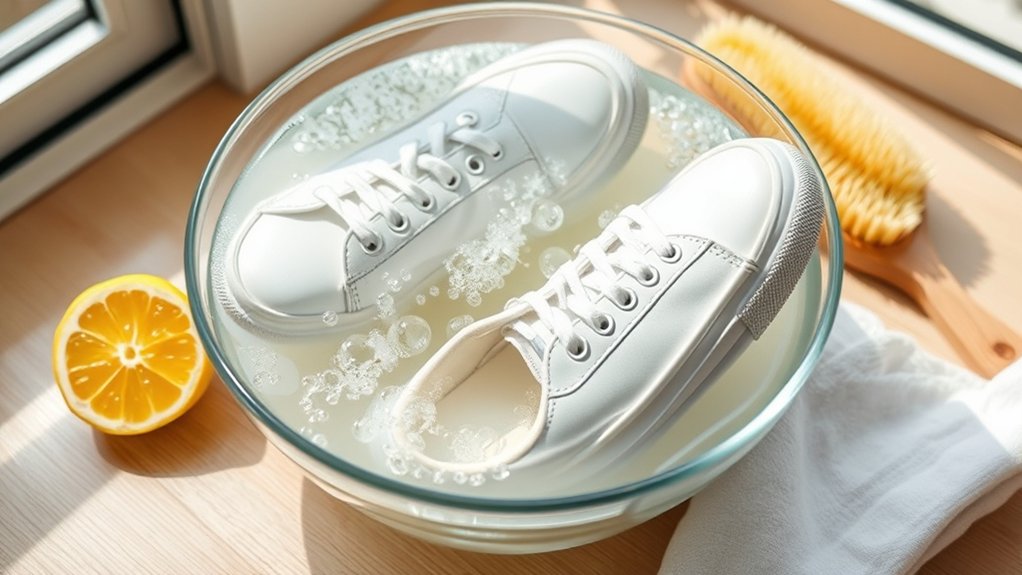
Wondering how to tackle yellowing without spending a fortune? Start with simple DIY methods that fit right into your shoe care routine. Use a paste made from baking soda and white vinegar. Apply it gently on yellowed areas, let it sit for 30 minutes, then rinse with cold water.
Another effective maintenance tip is using diluted hydrogen peroxide. Apply carefully with a cloth to avoid damage. For canvas shoes, a gentle scrub with mild detergent and warm water can lift stains while preserving fabric integrity.
Always air-dry shoes away from direct sunlight to prevent further yellowing. These practical methods not only restore your shoes but also extend their lifespan, reinforcing your overall shoe care and maintenance regimen efficiently and affordably.
Commercial Products to Unyellow Shoes
How exactly can you efficiently reverse yellowing on your shoes without the trial and error of home remedies? Commercial products offer reliable, at home options designed specifically to tackle yellowing. These formulations contain powerful ingredients like hydrogen peroxide, optical brighteners, and gentle abrasives that safely restore whiteness.
Consider these top commercial products for effective results:
- Sneaker whitening kits with UV light activation
- Specialized shoe cleaning pens for targeted application
- Oxygen-boosting whitening gels
- Non-toxic bleaching sprays safe on various materials
Using these commercial products, you get a consistent, time-saving solution that outperforms many DIY methods. Always follow instructions closely to avoid damage, and test on small areas first. Incorporating commercial products into your cleaning routine provides a practical and expert approach to reviving your shoes’ original brightness.
How to Prevent Yellowing and Keep Shoes White
While commercial products can effectively reverse yellowing, preventing discoloration in the first place saves you time and effort. To keep your shoes white, store them in a cool, dry place away from direct sunlight, which accelerates yellowing.
When cleaning, use mild, non-abrasive agents compatible with your shoe’s dye to avoid damaging the material or altering color. Pay close attention to fragrance considerations; some scented cleaners contain chemicals that can react with shoe materials, causing discoloration.
Always test cleaning products on a small, hidden area first. Additionally, apply a protective spray designed for your shoe type to create a barrier against dirt and moisture.
Why Shoes Turn Yellow
You’ll notice shoes turn yellow mainly because of oxidation, exposure to UV light, and moisture buildup. Different materials react uniquely, with some synthetic fabrics yellowing faster than natural ones.
Plus, environmental factors like heat and air pollution speed up the discoloration process.
Causes of Yellowing
Why do shoes turn yellow over time? Several factors cause this discoloration, often linked to the chemical makeup and exposure conditions. Understanding these causes helps you prevent and reverse yellowing effectively.
Oxidation of materials: Exposure to oxygen triggers chemical reactions, leading to yellow stains.
Fragrance additives: Some additives in shoe care products can react with materials, accelerating yellowing.
Sunlight exposure: UV rays break down dyes and finishes, causing color shifts.
Dye compatibility issues: Incompatible dyes and materials can degrade, resulting in yellow tints.
Material Sensitivity Factors
How do different materials react when exposed to environmental factors that cause yellowing? Understanding material sensitivity is key to preventing and reversing discoloration.
Materials like white leather and canvas have varying susceptibilities; leather’s natural oils often absorb pollutants, accelerating yellowing, while canvas’s porous nature leads to quicker dirt and stain adherence.
Additionally, synthetic materials such as polyurethane tend to yellow due to chemical breakdown triggered by light exposure. Color adherence plays a role too. Materials with dyes or coatings that bond weakly to the substrate will show yellowing more prominently and resist cleaning efforts.
When you know your shoe’s material sensitivity, you can tailor your cleaning approach effectively, choosing products and methods that respect the material’s integrity while targeting yellow stains without causing damage.
Environmental Impact Effects
When do environmental factors start impacting your shoes’ appearance? Usually, it begins the moment your shoes are exposed to elements that trigger chemical reactions. Understanding these environmental impact effects helps you prevent and reverse yellowing effectively.
Key contributors include:
- UV exposure: Sunlight breaks down materials, causing discoloration.
- Humidity: Moisture accelerates oxidation and mold growth.
- Air pollutants: Chemicals in the air react with shoe fibers, leading to yellow stains.
- Storage conditions: Poor ventilation and warmth promote material degradation.
When to Call in the Pros for Shoe Cleaning
At what point should you consider professional help for your shoe cleaning needs? When your yellowed shoes resist home remedies, it’s time to weigh the pros and cons of calling in the pros.
Professionals use specialized products and techniques that can restore shoes more effectively and safely, especially for delicate materials like suede or leather. However, cost considerations play a crucial role; professional cleaning can be pricey, so evaluate the value of your shoes before proceeding.
If your shoes hold sentimental value or are investment pieces, paying for expert care often outweighs the expense. On the other hand, for less expensive or heavily damaged shoes, DIY methods might suffice.
Ultimately, knowing when to seek professional help ensures you avoid further damage and get optimal results.
Frequently Asked Questions
Can Yellowing Affect All Types of Shoe Materials?
Yes, yellowing can affect all shoe materials, but material differences mean you must avoid cleaning pitfalls like harsh chemicals on leather or mesh. You’ll need tailored methods to preserve each type’s integrity while removing yellow stains effectively.
How Long Does Yellowing Typically Take to Appear?
You might be surprised, but yellowing appearance can start within weeks, depending on exposure to sunlight and moisture. Typically, how long it takes varies: some shoes show signs in a month, others take several months to yellow.
Are There Any Safe Methods for Delicate or Vintage Shoes?
You should use gentle cleaning methods like diluted mild soap and a soft cloth for delicate or vintage shoes. Also, follow proper storage tips. Keep them in a cool, dry place away from direct sunlight to prevent yellowing.
Can Sunlight Exposure Help Reverse Yellowing?
Sure, just bake your shoes like a pizza in sunlight! Seriously, sunlight fading can help, but don’t rely solely on it. Combine with gentle cleaning and avoid bleach caution. It damages delicate materials, ruining your precious kicks beyond repair.
Is Yellowing Reversible on Colored or Patterned Shoes?
Yellowing reversibility on colored or patterned shoes is limited, as treatments may fade or distort colors. You should test methods carefully, addressing colored shoes concerns by using gentle, targeted cleaning to preserve both vibrancy and material integrity.