Do I Need Wide Shoes
You need wide shoes if your feet feel tight, pinch, or develop redness and pressure points during wear. Proper width helps avoid discomfort, bunions, and plantar fasciitis by distributing weight evenly and supporting natural foot alignment.
Wide shoes accommodate structural differences like broad forefeet or low arches, promoting balance and reducing friction. If your toes overlap or heels feel squeezed, switching to wide shoes can prevent chronic pain and deformities.
Exploring fit, measurement, and styles will help you find the right options. Choosing the correct width ensures comfort and long-term foot health.
Key Takeaways
- Signs like toe pinching, redness, swelling, or heel squeezing indicate your shoes may be too narrow, signaling a need for wide shoes.
- Wide shoes accommodate broader feet, bunions, hammertoes, or flat arches, preventing discomfort and supporting natural foot alignment.
- Properly fitting wide shoes reduce pressure points, improve balance, and prevent chronic pain or deformities caused by tight footwear.
- Measuring foot width in the afternoon and comparing to size charts helps determine if wide shoes are necessary for comfort.
- Wide shoes distribute weight evenly, minimize foot fatigue, and support healthier foot mechanics during daily activities.
Why Wide Shoes Matter for Foot Comfort and Health
Why do wide shoes play a pivotal role in foot comfort and health? When you wear shoes that properly accommodate your foot width, you reduce pressure on sensitive areas, preventing common conditions like bunions and plantar fasciitis.
Contrary to comfort myths, wider shoes don’t compromise support or stability; instead, they distribute weight more evenly. You’ll find that well-designed wide shoes utilize materials with enhanced durability to withstand daily wear without losing structural integrity.
This ensures consistent comfort and protection over time. Ignoring the need for an appropriate width can lead to chronic pain and deformities. By choosing wide shoes, you actively preserve your foot’s natural alignment and function, promoting long-term health and reducing the risk of injury.
How to Tell If You Need Wide Shoes
You can identify the need for wide shoes by noticing signs of tightness like pinching or redness. Assess your foot shape carefully, paying attention to width and arch.
Also, check for pressure points that cause discomfort during movement or standing.
Signs of Tight Shoes
How can you recognize when your shoes are too tight? Common signs include discomfort, redness, and pressure marks, indicating your feet need a wider fit. Wearing tight shoes can lead to pain and impact your fashion pairing choices negatively.
| Symptom | Description | Impact |
|---|---|---|
| Redness | Skin irritation around toes | Indicates excessive pressure |
| Numbness | Tingling or loss of sensation | Nerve compression from tight fit |
| Blisters | Friction-induced skin damage | Caused by restricted foot movement |
If you notice any of these signs, consider switching to wide fit shoes. These provide adequate space, improving comfort and allowing better fashion pairing without compromising foot health.
Foot Shape Assessment
Experiencing discomfort or visible signs of tightness often signals the need to evaluate your foot shape for proper shoe fit. Begin by measuring the width of your foot at its widest point, ideally using a Brannock device or a reliable measuring tape.
Consider the overall contour. Wide feet typically have a broader forefoot and heel compared to standard sizing. Take note if your toes feel cramped or overlap, which indicates insufficient width.
Assessing your foot shape objectively helps counter footwear stigma that discourages selecting wider options, often perceived as less stylish. Remember, prioritizing comfort over fashion limitations is essential for foot health.
Proper foot shape assessment empowers you to choose wide shoes that accommodate your foot’s natural dimensions, reducing discomfort and preventing long-term issues.
Pressure Points Check
When do pressure points signal the need for wide shoes? You should perform a pressure points check if you notice discomfort or redness in specific areas of your feet after wearing shoes.
Utilizing foot mapping techniques helps identify high-pressure zones where the shoe may compress your foot. This assessment reveals if your current footwear lacks proper shoe ergonomics, particularly in width and arch support.
If pressure points appear on the ball of your foot, toes, or sides, it indicates your shoes may be too narrow. Adjusting to wide shoes can alleviate these symptoms by distributing weight evenly and reducing localized stress.
Regularly evaluating pressure points through foot mapping ensures your footwear supports optimal comfort and prevents long-term foot issues associated with improper shoe ergonomics.
Signs Your Shoes Are Too Narrow for Wide Feet
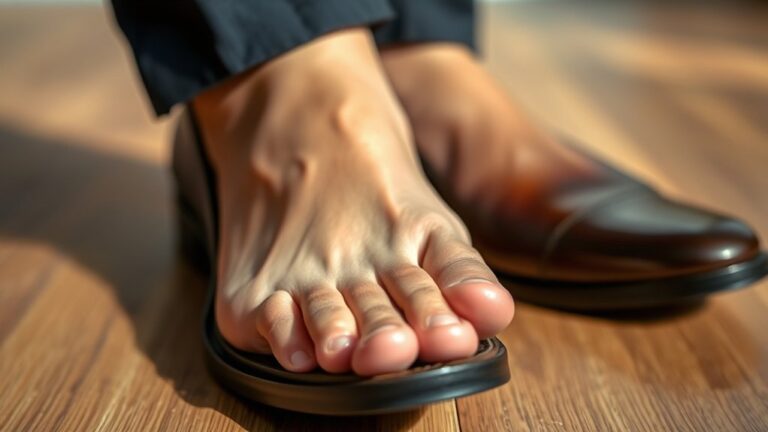
If your shoes cause toe pinching or heel squeezing, they’re likely too narrow for your wide feet. You might also notice redness and swelling after wearing them.
These signs indicate your footwear isn’t providing proper fit or support.
Toe Pinching Discomfort
How can you tell if your shoes are too narrow for your wide feet? One clear indicator is toe pinching discomfort. If you experience persistent pressure or squeezing around your toes, it signals a narrow fit that compromises toe comfort.
This tightness restricts natural toe movement, leading to pain, redness, or even blisters. You might notice your toes overlap or curl unnaturally inside the shoe. Such discomfort often worsens with prolonged wear or physical activity.
Shoes that don’t accommodate the width of your forefoot fail to distribute pressure evenly, increasing the risk of foot issues like bunions or nerve irritation. Paying attention to toe comfort is crucial; if your shoes feel constrictive at the front, it’s a strong sign you need a wider option designed specifically for wide feet.
Heel Squeezing Symptoms
Why does your heel ache or feel pinched after wearing certain shoes? Heel pain often signals that your shoes are too narrow, especially if your foot width exceeds the standard size labeling. Narrow heels squeeze the soft tissue, causing discomfort and potential skin irritation.
| Symptom | Cause | Impact on Foot Health |
|---|---|---|
| Heel pain | Excess pressure on heel | Limits mobility, causes soreness |
| Pinching sensation | Inadequate heel width | Restricts blood flow, increases discomfort |
| Pressure marks | Tight heel counter | Leads to skin irritation |
Recognizing these heel squeezing symptoms early helps you avoid long-term damage. If you experience persistent heel pain, consider switching to wide shoes tailored to your foot’s width for proper support and comfort.
Foot Redness And Swelling
Where do you notice redness and swelling after wearing your shoes? Foot redness and swelling often appear around the toes, sides, or top of the foot when shoes are too narrow. This discomfort signals restricted circulation and soft tissue irritation.
A swelling analysis can help determine if your footwear compresses your feet excessively, leading to inflammation and pain. Persistent redness combined with swelling indicates that your shoes don’t accommodate your foot’s natural width.
Opting for wide shoes styling can prevent these issues by providing adequate space, reducing pressure points, and promoting better blood flow. If you observe these symptoms, switching to properly fitted wide shoes is essential to avoid long-term complications such as blisters, calluses, or joint problems.
Address foot redness and swelling promptly for optimal foot health.
How to Measure Your Feet for the Right Shoe Width
When should you measure your feet to guarantee the best fit for wide shoes? Ideally, measure them in the afternoon or evening when your feet are at their largest due to daily swelling. Use a ruler or a Brannock device to measure both length and width precisely.
Stand on a flat surface with your weight evenly distributed. Trace your foot on paper to determine width at the widest part, typically the ball of the foot. Note that footwear marketing often emphasizes length over width, so precise measurements are essential to counteract misleading sizing influenced by fashion aesthetics.
Record both feet’s dimensions, as asymmetry is common. Compare your measurements against the brand’s size chart to select the appropriate wide width, ensuring comfort without compromising style or support.
Which Foot Shapes Benefit Most From Wide Shoes
Which foot shapes benefit most from wide shoes depends largely on the width and structure of your feet. If you have a broad forefoot, bunions, or hammertoes, wide shoes provide necessary space to reduce pressure and prevent deformities.
Flat feet or low arches also often require wider footwear to accommodate the natural expansion during walking. When selecting wide shoes, pay attention to footwear material; flexible, breathable materials like mesh or soft leather adapt better to your foot’s contours, enhancing comfort.
Additionally, lace alternatives such as Velcro straps or elastic closures can offer adjustable fitting without constriction, especially if you experience swelling. Overall, wide shoes cater best to foot shapes with increased width or structural irregularities, ensuring support and preventing discomfort.
Where to Find Wide Shoes That Fit Well
Finding wide shoes that fit well can often feel challenging, but knowing where to look makes a significant difference. Start by exploring specialty retailers that focus on wide sizing, as they offer a broader selection designed specifically for wider feet.
Online stores provide convenient access to detailed size charts and customer reviews, which support informed decisions. You should also consider visiting physical shoe stores that carry two word discussion ideas such as “comfort fit” or “roomy toe” to identify models designed for wider feet.
Brands that specialize in wide sizing often label their products clearly, simplifying your search. Remember to measure your feet accurately and compare measurements with size guides. This methodical approach ensures you find wide shoes that fit well and meet your specific needs.
How Wide Shoes Improve Daily Comfort and Support
Selecting the right wide shoes directly impacts your daily comfort and foot support. Wide footwear accommodates the natural shape of your feet, reducing pressure points and preventing areas of excessive friction.
This design helps distribute your body weight evenly, which minimizes discomfort and the risk of foot-related conditions like bunions or plantar fasciitis. By choosing wide footwear, you allow your toes to splay naturally, enhancing balance and stability during movement.
Additionally, wide shoes reduce the likelihood of swelling and improve circulation by avoiding constriction. When your feet are well-supported and uncompressed, you experience less fatigue throughout the day.
Ultimately, investing in properly fitting wide shoes promotes healthier foot mechanics and sustained daily comfort, essential for both casual activities and extended periods of standing or walking.
Style and Fit Tips for Choosing Wide Shoes
How can you guarantee wide shoes offer both comfort and style? Start by prioritizing a comfort fit that accommodates your foot’s natural shape without excessive tightness or looseness. Measure your feet accurately and select shoes labeled with the appropriate width.
Look for materials with some flexibility to enhance comfort without compromising structure. For style versatility, choose designs that complement various outfits, such as neutral colors and classic shapes. Avoid overly bulky styles that may limit your wardrobe options.
Additionally, consider adjustable features like laces or straps to fine-tune the fit. By focusing on these factors, you ensure your wide shoes meet both functional needs and aesthetic preferences, supporting your feet while maintaining a polished appearance across different settings.
Frequently Asked Questions
Can Wide Shoes Help With Bunions or Other Foot Deformities?
Yes, wide shoes can provide bunions relief by reducing pressure and friction on your toes. They also offer orthotic compatibility, allowing you to use custom inserts that further support foot deformities and improve overall comfort and alignment.
Are Wide Shoes Suitable for Athletic Activities?
About 60% of athletes experience discomfort from narrow shoes. You’ll find wide shoes enhance athletic comfort by providing adequate toe box width, reducing pressure, and improving performance during high-impact activities and prolonged training sessions.
How Do Wide Shoes Affect Shoe Durability?
Wide shoes can slightly reduce durability impact if they cause uneven wear, but proper fit minimizes this.
Material longevity depends on quality and usage, so choosing well-constructed wide shoes guarantees durability remains effective over time.
Can Children Benefit From Wearing Wide Shoes?
Consider a child developing bunions early; wearing wide shoes prevents deformities by reducing pressure.
You’ll find children benefit from this support, promoting healthy foot growth and avoiding painful conditions linked to narrow footwear.
Do Wide Shoes Cost More Than Regular Shoes?
Wide shoes typically cost slightly more than regular shoes due to specialized design and materials.
When you perform a price comparison, you’ll notice this modest increase reflects added comfort and support tailored to wider feet.