How to Deodorize Shoes
To deodorize your shoes effectively, start by removing the insoles and laces for a thorough cleaning. Brush off any dirt or debris, then clean the shoe surfaces using a mild soap or detergent without soaking them.
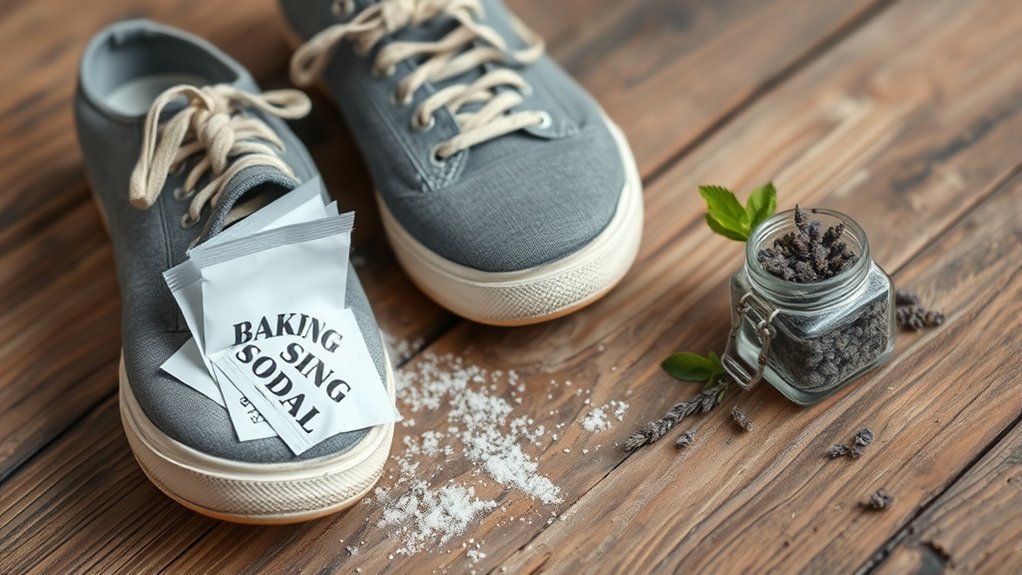
Next, sprinkle baking soda inside the shoes to absorb moisture and odors. Let the baking soda sit overnight before shaking it out.
Alternatively, you can use a mixture of vinegar and essential oils for antimicrobial effects. If the odor persists, wash the shoes carefully according to their material type.
Using moisture-absorbing inserts and keeping your shoes dry helps prevent future odors. You can explore more detailed methods and products for long-lasting freshness.
Key Takeaways
- Remove insoles and laces to access odor-prone areas and clean them separately before deodorizing the shoe interior.
- Clean exterior surfaces gently with appropriate methods for leather, canvas, or synthetics, then dry completely before deodorizing.
- Sprinkle baking soda inside shoes overnight to absorb moisture and neutralize odors, then shake out excess powder before wearing.
- Use vinegar mixed with essential oils as a spray for antimicrobial odor neutralization inside shoes.
- Employ specialized odor-control inserts, activated charcoal packets, or household items like dry tea bags and crumpled newspaper to maintain freshness.
Why Do Shoes Develop Bad Odors?
Why do shoes develop bad odors? Primarily, it’s due to the accumulation of sweat and bacteria inside the shoe. During shoe manufacturing, materials are selected to balance durability and comfort, but moisture management often remains limited.
When you wear shoes, your feet sweat, and this moisture becomes trapped in the shoe’s interior, creating an ideal environment for bacterial growth. These bacteria break down sweat, producing unpleasant odors.
Additionally, insufficient ventilation in shoe design exacerbates moisture retention, increasing odor risk. Even advanced moisture management technologies can’t fully prevent odor formation if shoes aren’t regularly aired or cleaned.
Understanding this biological and material interaction helps you appreciate why odor control requires addressing both moisture and bacteria within your footwear.
How to Prepare Your Shoes for Deodorizing
Before deodorizing your shoes, remove the insoles and laces to ensure thorough treatment.
Clean the exterior surfaces to eliminate dirt and bacteria that contribute to odor. These steps create an optimal environment for effective deodorizing.
Remove Insoles And Laces
How do you effectively prepare your shoes for deodorizing? Start by removing insoles and laces to access all odor-prone areas. This step is crucial for thorough treatment and ensures better odor elimination.
Follow these steps for proper removal and lace care:
- Gently pull out the insoles, avoiding damage to their shape or material.
- Untie and carefully remove the laces, noting their original threading pattern.
- Inspect the insoles for excessive wear or moisture and set them aside for separate cleaning.
- Place the laces in a mesh bag or container for dedicated washing or replacement.
Removing insoles and managing lace care allow you to treat both components effectively, enhancing overall shoe freshness and hygiene.
Clean Exterior Surfaces
Where do you start when preparing your shoes for deodorizing? Begin by cleaning the exterior surfaces thoroughly. Different shoe materials, such as leather, canvas, and synthetic fabrics, require specific cleaning methods to avoid damage.
Use a soft brush or cloth to remove dirt, dust, and debris that can harbor odor sources. For leather, a damp cloth with mild soap suffices, while canvas or synthetics tolerate gentle scrubbing with water and detergent. Avoid soaking shoes, as moisture can exacerbate odors and damage materials.
Pay special attention to seams and crevices where odor-causing bacteria accumulate. Cleaning exterior surfaces not only removes visible grime but also reduces external odor sources, improving deodorizing effectiveness.
After cleaning, allow your shoes to dry completely before proceeding to internal deodorizing steps to prevent mold and further odor development.
How to Use Baking Soda to Freshen Shoes
Regularly applying baking soda is one of the most effective methods to neutralize odors in shoes. Baking soda absorbs moisture and neutralizes the acidic compounds responsible for foot odor, keeping your footwear fresh.
To use baking soda effectively:
- Sprinkle a generous amount of baking soda evenly inside each shoe.
- Allow the shoes to sit overnight, giving the baking soda time to absorb odor-causing moisture.
- Shake out the excess powder before wearing the shoes again.
- Repeat this process regularly, especially after prolonged use or exposure to sweat.
This simple technique minimizes foot odor by creating an inhospitable environment for bacteria, improving shoe hygiene without harsh chemicals.
How to Deodorize Shoes With Vinegar and Essential Oils
Why choose vinegar and essential oils to deodorize shoes? Vinegar magic works by neutralizing odor-causing bacteria through its acetic acid content, effectively breaking down the compounds responsible for unpleasant smells. Essential oils add a complementary oil aroma that not only masks residual odors but also provides antimicrobial benefits, enhancing overall freshness.
To apply, mix equal parts white vinegar and water in a spray bottle, then add 5-10 drops of your preferred essential oil, such as tea tree or lavender. Lightly mist the interior of your shoes and allow them to air dry completely, ensuring the solution penetrates without saturating the material.
This method provides a safe, chemical-free alternative that targets odors at the source, maintaining shoe hygiene without compromising material integrity.
When and How to Wash Shoes for Odor
How do you know when your shoes need a thorough wash to eliminate odor? Persistent odor despite surface cleaning signals it’s time. Odor causes include bacteria buildup and sweat absorption, which penetrate shoe materials differently.
Follow these steps to wash your shoes effectively:
- Identify shoe materials. Mesh and fabric usually tolerate machine washing; leather and suede require hand cleaning.
- Remove insoles and laces to clean separately.
- Use a mild detergent and cold water to minimize material damage.
- Air dry shoes away from direct heat to prevent warping.
How to Prevent Shoe Odor Before It Starts
You can prevent shoe odor by maintaining proper shoe hygiene and choosing breathable materials. Regularly clean your shoes and allow them to dry completely after use.
Selecting shoes made from natural fabrics or mesh will help reduce moisture buildup and inhibit odor-causing bacteria.
Proper Shoe Hygiene
Although shoe odor can be persistent, maintaining proper shoe hygiene considerably reduces its development. You need to address odor causes such as moisture buildup and bacterial growth, which thrive in certain shoe materials. Proper hygiene disrupts these factors effectively.
Follow these precise steps:
- Rotate Shoes Avoid wearing the same pair daily to allow drying and prevent odor-causing bacteria proliferation.
- Clean Insoles Regularly Remove and wash insoles to eliminate trapped sweat and debris.
- Dry Shoes Thoroughly After use, air out shoes in a well-ventilated area to reduce moisture.
- Wash Shoes Periodically Depending on material, clean shoes with appropriate methods to remove accumulated dirt and bacteria.
Use Breathable Materials
Maintaining proper shoe hygiene reduces odor by controlling moisture and bacterial growth, but selecting the right materials can further prevent these issues from arising. You should opt for shoes constructed with breathable fabrics that facilitate air circulation, reducing sweat accumulation.
Materials like mesh or knit textiles allow your feet to stay dry, minimizing the environment where odor-causing bacteria thrive. Additionally, vented uppers enhance ventilation, promoting moisture evaporation effectively.
Avoid synthetic, non-porous materials that trap heat and humidity, increasing odor risks. By choosing footwear with breathable fabrics and vented uppers, you control moisture and bacterial proliferation proactively.
This approach complements regular hygiene habits and extends the freshness of your shoes, preventing odor before it starts.
How to Choose Shoe Inserts and Deodorizers That Work
Which factors determine the effectiveness of shoe inserts and deodorizers? Selecting the right products depends on specific attributes that target odor at its source. When choosing shoe inserts and odor eliminators, consider these key factors:
1. Material Composition
Opt for inserts made of activated charcoal or antimicrobial foam for superior odor absorption.
2. Fit and Thickness
Ensure inserts fit snugly without altering shoe comfort or size.
3. Odor Neutralization Technology
Look for products with proven antibacterial or enzymatic agents that break down odor-causing bacteria.
4. Longevity and Reusability
Select inserts and deodorizers that maintain effectiveness over multiple uses to ensure lasting freshness.
Simple Household Items That Freshen Shoes
Beyond specialized inserts and deodorizers, several common household items can effectively neutralize shoe odors. Baking soda, for example, absorbs moisture and neutralizes acids causing odor. Sprinkle a small amount inside shoes made from breathable shoe materials like canvas or mesh, then shake out after several hours.
Activated charcoal packets trap odor molecules and moisture, making them suitable for leather or synthetic shoes. You can also use dry tea bags, which absorb odors without damaging shoe materials.
For odor prevention, ensure shoes dry completely after use by stuffing them with crumpled newspaper to wick away moisture. These simple household items provide an affordable, accessible approach to managing shoe odor, complementing specialized products and extending the lifespan of your footwear through effective odor prevention.
Frequently Asked Questions
Can Shoe Odor Cause Health Problems?
Yes, shoe odor can indicate excessive shoe bacteria and moisture buildup, which may lead to skin infections or fungal issues.
You should address these conditions promptly to prevent potential health problems associated with prolonged exposure.
How Long Does It Take for Deodorizing Methods to Work?
You’ll notice results from deodorizing methods within hours to a day, depending on odor timing and product strength.
Conduct a fragrance trial to ensure effectiveness, as some treatments may require repeated applications for lasting odor control.
Are There Specific Shoe Materials That Retain Odors More?
Yes, synthetic materials retain odors more due to limited breathability. Leather’s porosity differences allow better air circulation, reducing odor retention.
Understanding material-specific odor retention helps you choose effective deodorizing methods tailored to your shoes.
Can Deodorizing Shoes Affect Their Durability?
You protect odor, preserve durability, and maintain material longevity by choosing gentle deodorizing methods. Avoid harsh chemicals, excessive moisture, and heat, which can degrade adhesives and fabrics, ultimately compromising your shoes’ structural integrity and lifespan.
Is It Safe to Use Commercial Shoe Deodorizers on All Shoes?
No, you shouldn’t use commercial shoe deodorizers on all shoes. Check for safe ingredients and ensure material compatibility, as harsh chemicals can damage delicate fabrics or leather, compromising your shoes’ integrity and lifespan.