How to Waterproof Shoes
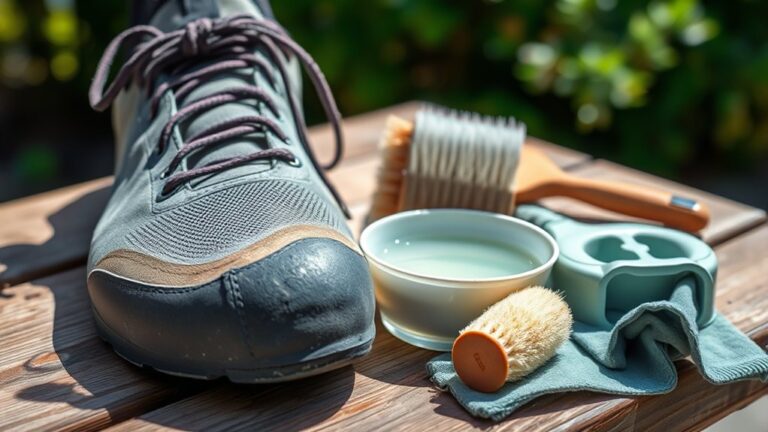
To waterproof your shoes, start by thoroughly cleaning them to remove dirt and oils. Use a mild detergent and a soft brush that is suitable for the shoe’s material. This preparation is essential for effective waterproofing.
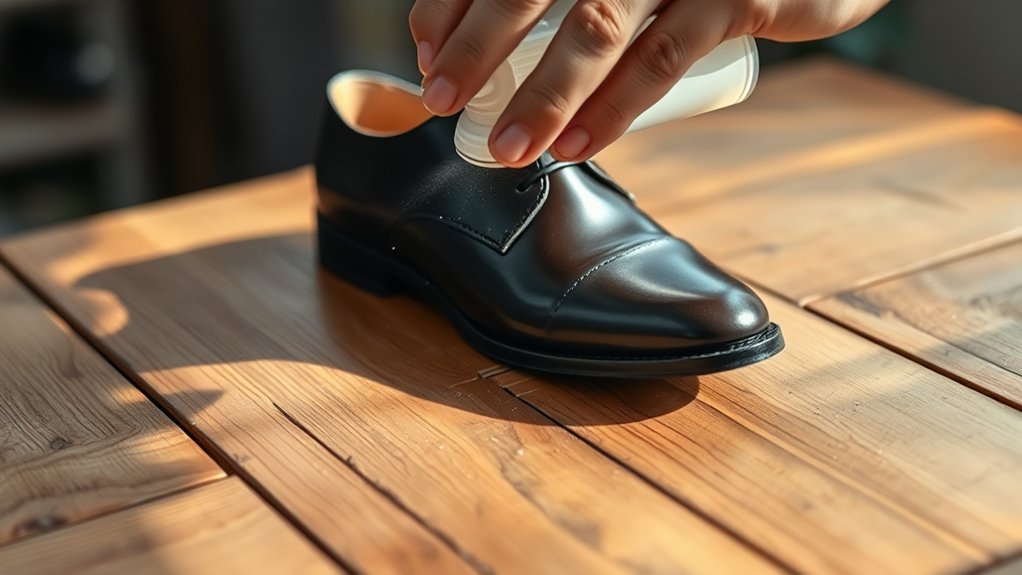
Next, choose a waterproofing product compatible with your shoe’s fabric. Silicone sprays work well for synthetic materials, while wax-based products are best for leather. Apply the product evenly over the entire surface of the shoes.
Let your shoes dry completely in a well-ventilated area, away from direct heat sources. Regularly reapply the waterproofing treatment and keep your shoes clean to maintain long-lasting protection. Proper preparation and product choice guarantee durable water resistance.
Explore detailed steps and maintenance tips next for the best results.
Key Takeaways
- Thoroughly clean shoes using appropriate methods for the material to remove dirt and oils before waterproofing.
- Choose waterproofing products compatible with shoe materials, like silicone sprays for synthetics and wax-based for leather.
- Apply waterproofing evenly with a soft cloth or brush, ensuring full coverage without over-saturating.
- Let shoes dry completely in a well-ventilated area away from direct heat after applying waterproofing treatments.
- Maintain waterproofing by cleaning gently, storing shoes properly, and reapplying treatments periodically for lasting protection.
How to Prepare Your Shoes for Waterproofing
Before applying any waterproofing treatment, you need to thoroughly clean your shoes to remove dirt, dust, and oils that can prevent the waterproofing agent from adhering properly. Begin with pre cleaning steps such as brushing off loose debris and using a mild detergent solution to spot-clean stains.
Thoroughly clean shoes to remove dirt and oils before waterproofing for better adhesion and protection.
Rinse carefully to avoid saturating the shoe, then let them dry completely. Pay attention to material compatibility during cleaning; for instance, leather requires specific cleaners to avoid damage, while synthetic fabrics tolerate gentle soap and water.
Avoid harsh chemicals that could degrade fabric fibers or finishes. Ensuring your shoes are clean and dry maximizes the effectiveness of the waterproofing product, allowing it to bond uniformly.
Proper preparation guarantees long-lasting protection and preserves the shoe’s integrity.
How to Choose the Best Waterproofing Products for Your Shoes
Once your shoes are clean and dry, selecting the right waterproofing product becomes the next step to ensure ideal protection. Start by choosing coatings compatible with your shoe material. Silicone-based sprays work well for synthetic fabrics, while wax-based products suit leather.
Assess the product’s water resistance level and breathability to maintain comfort. Evaluating guarantees is crucial; opt for products offering clear performance warranties or satisfaction guarantees, as these reflect manufacturer confidence and product reliability.
Check for certifications or third-party testing to confirm effectiveness. Avoid generic solutions that lack detailed product specifications. By carefully choosing coatings and evaluating guarantees, you can optimize your shoes’ waterproofing, extending their lifespan and maintaining functionality in wet conditions.
How to Waterproof Leather and Fabric Shoes Step-by-Step
How do you effectively waterproof leather and fabric shoes to ensure lasting protection? Begin by thoroughly cleaning your shoes to remove dirt, essential for proper leather care and fabric protection.
Next, apply a suitable waterproofing product specifically designed for each material. Use a soft cloth or brush to evenly distribute the treatment. Allow the shoes to dry completely in a well-ventilated area, away from direct heat.
- Clean shoes with a mild detergent and soft brush
- Select a waterproofing spray or wax based on material
- Apply evenly, covering all seams and surfaces
- Let shoes dry naturally for 24 hours
- Repeat treatment periodically for sustained protection
Following these steps ensures durable waterproofing and maintains the integrity of your leather and fabric shoes.
How to Maintain Your Waterproof Shoes
Applying a waterproofing treatment protects your leather and fabric shoes from moisture, but maintaining that barrier requires regular care. To ensure lasting effectiveness, clean your shoes with a soft brush or cloth to remove dirt that can compromise waterproof coatings.
Avoid harsh detergents; instead, use mild soap and water. Once dry, reapply a suitable waterproofing spray or wax designed for your shoe material to reinforce breathable protection.
Store your shoes in a cool, dry environment to prevent moisture buildup, which can degrade waterproof membranes. Regularly inspect seams and soles for damage, as these areas are critical for maintaining dryness.
Fix Common Waterproofing Problems
Why does your waterproofing sometimes fail despite proper care? Common issues like material wear, improper application, or unnoticed damage can compromise your shoe’s defense. To address this, focus on fixing leaks promptly and preventing stains that may degrade waterproof coatings.
Here’s how to tackle frequent problems:
Inspect seams and soles regularly for cracks or gaps.
Reapply waterproofing spray evenly after cleaning.
Use specialized sealants on stubborn leaks.
Avoid harsh detergents that strip waterproof layers.
Store shoes in a dry, ventilated area to prevent moisture buildup.
Frequently Asked Questions
Can Waterproofing Damage My Shoes Over Time?
Waterproofing acts like a protective shield, but if you use harsh products or apply them incorrectly, you risk damaging your shoes’ wear compatibility and reducing product longevity.
Choose suitable treatments to maintain durability and function.
Are Waterproof Sprays Safe for All Shoe Materials?
Waterproof sprays aren’t safe for all shoe materials; you should check labels because some sprays can degrade leather, suede, or mesh.
Always test a small area first to assure compatibility with your specific shoe materials.
How Often Should I Reapply Waterproofing Treatments?
You should reapply waterproofing treatments every 3-6 months, depending on product durability and exposure. Monitor application timing closely; frequent wear or harsh conditions demand quicker reapplication to maintain effective water resistance and shoe protection.
Can Waterproofing Affect Shoe Breathability?
About 70% of waterproofing treatments reduce breathability by 20-30%. You’ll need to balance waterproofing, breathability, and material compatibility carefully, ensuring your shoe’s fabric maintains airflow while protecting against moisture effectively.
Is Professional Waterproofing Service Better Than DIY Methods?
Professional waterproofing offers superior durability and uniform coverage compared to DIY limitations, which often result in inconsistent application.
If you need long-lasting protection and advanced treatments, opting for professional waterproofing is the more reliable choice.