Do Track Shoes Need Spikes
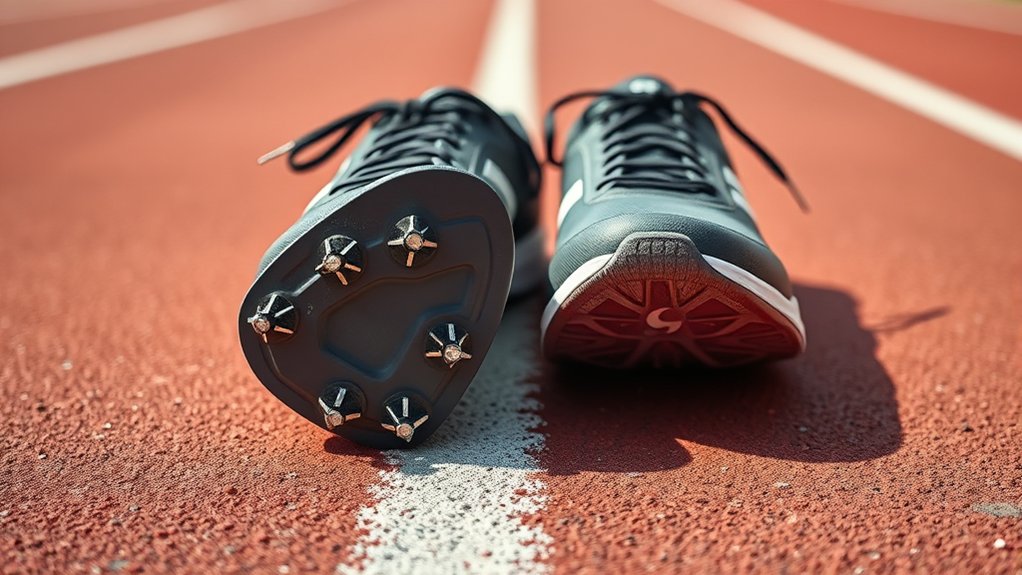
You need spikes on track shoes when running on soft, uneven, or outdoor surfaces to maximize traction and propulsion. Spikes dig into the track, improving grip, acceleration, and stability during turns. This is essential for maintaining control and enhancing performance.
On smooth, indoor, or well-maintained tracks, regular shoes often provide sufficient traction and greater comfort, especially for longer distances. Choosing the right spikes depends on the surface type and event biomechanics.
Understanding these factors helps optimize performance and shoe selection for your specific conditions. Proper spike use can make a significant difference in your running efficiency and safety.
Key Takeaways
- Track shoes need spikes primarily for improved traction and propulsion on softer or outdoor track surfaces.
- Spikes are essential on grass, dirt, wet, or uneven surfaces for stability and preventing slipping.
- Regular shoes can replace spikes on smooth, indoor, or dry, well-maintained synthetic tracks where grip is sufficient.
- Spike usage depends on event type, surface conditions, competition rules, and athlete comfort or skill level.
- Spikes provide a narrow, secure fit for performance but may sacrifice comfort compared to regular track shoes.
Do You Really Need Spikes for Track Running?
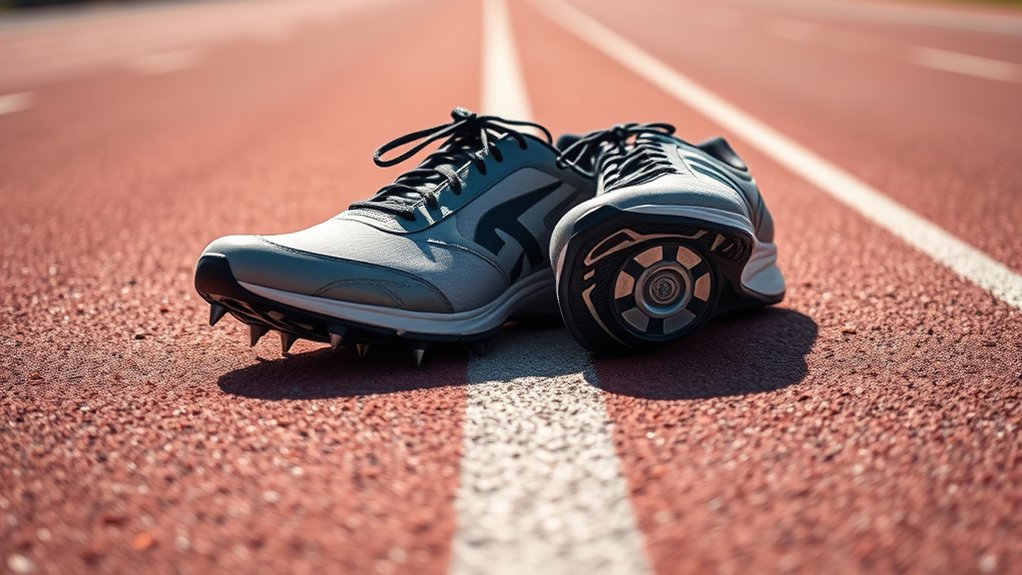
Why choose spikes for track running? The spike rationale centers on maximizing traction and propulsion on specific track surfaces. When you wear spike shoes, their construction incorporates a lightweight, stiff sole plate designed to hold removable metal spikes.
Spikes maximize traction and propulsion with a lightweight, stiff sole plate and removable metal spikes.
This configuration enhances grip, allowing you to push off with greater force and maintain stability during acceleration and turns. The shoe construction also emphasizes minimal cushioning and a snug fit to reduce energy loss and improve ground feel.
However, whether you really need spikes depends on your running style, event, and surface. For sprinters or middle-distance runners on synthetic tracks, spikes offer measurable performance benefits.
Conversely, for casual runners or those on non-standard surfaces, the spike rationale may not justify the specialized shoe construction. Your choice should align with your performance goals and track conditions.
Why Do Track Shoes Have Spikes?
Track shoes feature spikes because they greatly improve traction and force application on track surfaces. When you wear spiked shoes, the spikes dig into the track, preventing slipping and allowing you to transfer power more efficiently during sprints or distance runs.
Spike compatibility is essential; shoes are designed with specific spike plate systems to accommodate various spike lengths and types, ensuring optimal grip without compromising shoe integrity. Additionally, shoe ventilation plays a critical role, as well-ventilated uppers help regulate foot temperature and moisture, enhancing comfort during intense effort.
Without spikes, you’d risk losing traction and efficiency, especially on synthetic tracks. Overall, spikes combined with proper shoe design maximize your performance by improving grip and maintaining foot stability under dynamic conditions.
When Can You Ditch Spikes for Regular Shoes?
You can ditch spikes when running on non-technical surfaces like pavement or indoor tracks where traction demands are lower. For longer distances, regular shoes often provide better comfort and support without sacrificing performance.
Also, if your skill level or personal comfort limits effective spike use, switching to regular shoes may enhance your overall efficiency.
Surface Types and Conditions
When can you confidently swap your spikes for regular shoes? It largely depends on the surface conditioning and whether you’re training indoors or outdoors. Indoor tracks usually have smooth, synthetic surfaces with consistent grip, allowing you to forgo spikes without compromising traction.
Conversely, outdoor tracks vary. Rubberized tracks rarely require spikes unless surface wear reduces grip. On grass, dirt, or wet surfaces, spikes provide critical penetration and stability; regular shoes often slip, especially when the surface’s moisture level lowers traction.
Assess the surface texture and weather conditions carefully. If the track is dry, clean, and well-maintained, you can confidently ditch spikes. However, for uneven, loose, or wet outdoor surfaces, spikes remain essential to optimize performance and reduce injury risk. Your choice hinges on precise surface evaluation.
Event Distance Considerations
How far you plan to run considerably influences your choice between spikes and regular shoes. For sprint events up to 400 meters, spikes provide essential traction and power transfer, crucial for explosive starts and rapid acceleration.
In middle-distance races, such as 800 to 1500 meters, spikes remain beneficial but may be less critical if you prioritize comfort over milliseconds. Long-distance events often allow ditching spikes for regular shoes, as the reduced foot fatigue and increased cushioning outweigh the traction benefits spikes offer.
However, track etiquette dictates you should consider event rules and shoe branding, as some competitions regulate shoe types to maintain fairness. Ultimately, analyzing your event distance alongside these factors helps you decide when you can safely switch from spikes to regular shoes without compromising performance.
Athlete Skill and Comfort
What role does athlete skill play in deciding whether to ditch spikes for regular shoes? Your proficiency directly impacts how essential spikes are for performance. If you have advanced technique and consistent form, spikes can enhance traction and speed during competition.
However, if you’re developing skills or prioritizing training comfort, switching to regular shoes can support a comfort focus without severely compromising progress. Athlete confidence also factors in; feeling stable and secure in your footwear boosts performance, so if spikes cause discomfort or hesitation, regular shoes may be preferable.
Ultimately, you should evaluate your current skill level and comfort needs, opting for spikes when precision and speed demand it, but choosing regular shoes when cultivating technique or minimizing injury risk is paramount.
Types of Spikes for Track Surfaces and Events
Why do different track surfaces and events require specific types of spikes? Each surface demands tailored spike configurations to optimize traction and minimize wear on footwear materials. Event-specific spikes complement your :n2: running form, enhancing performance by matching force application and movement mechanics.
| Track Surface | Spike Type |
|---|---|
| Synthetic Track | Pyramid Spikes |
| Grass Field | Needle Spikes |
| Cross Country | Mixed Spikes |
| Indoor Track | Compression Tips |
Pyramid spikes work well on synthetic tracks, providing multidirectional grip. Needle spikes penetrate softer grass for stability. Mixed spikes combine features for varied terrain like cross country, while compression tips suit indoor tracks by reducing surface damage and weight.
Use the right spikes to align with surface properties and event-specific biomechanics.
Choosing the Right Spikes for Your Running Style
Selecting the right spikes hinges on understanding your unique running style and biomechanics. If you rely on explosive power and sprinting mechanics, choose spikes with a rigid plate and aggressive grip to maximize propulsion.
For mid-distance or distance running, opt for lighter spikes with moderate spike durability to balance traction and comfort over extended periods. Your foot strike pattern also influences spike choice: forefoot strikers benefit from spikes positioned at the front, while heel strikers might prefer spikes with added rear support.
Consider spike maintenance regularly; cleaning and timely replacement preserve spike durability and performance. Neglecting maintenance can degrade traction and increase injury risk. By aligning your spike selection with your biomechanics and upkeep habits, you optimize efficiency and minimize wear during training and competition.
Pros and Cons of Spikes vs. Regular Track Shoes
You’ll want to weigh the traction and grip benefits of spikes against the comfort and fit of regular track shoes. Consider how durability and cost factor into your training routine and performance goals.
Understanding these trade-offs helps you choose the best shoe for your needs.
Traction and Grip
How does traction impact your performance on the track? Traction directly influences your ability to accelerate, maintain speed, and execute tight turns. Spikes provide superior grip by penetrating the track surface, enhancing force transfer and reducing slippage.
However, traction myths often exaggerate spikes’ benefits; on certain synthetic tracks, regular shoes with advanced rubber compounds can offer adequate grip. Keep in mind that shoe regulation limits spike length and placement to ensure safety and fairness, which affects traction effectiveness.
While spikes excel on softer or outdoor tracks, regular track shoes perform reliably on harder, indoor surfaces. Understanding these nuances helps you select footwear that optimizes traction for your specific environment without overestimating spikes’ advantages or violating competition rules.
Comfort and Fit
The fit and comfort of track shoes greatly influence your performance and injury risk. When choosing between spikes and regular track shoes, consider how each affects comfort fit. Spiked shoes generally have a narrower design to secure your foot tightly, which can enhance stability but may require precise shoe sizing to avoid discomfort or pressure points.
Conversely, regular track shoes offer a roomier fit that accommodates natural foot expansion during running, improving overall comfort fit for longer sessions. However, they lack the lockdown feel spikes provide, potentially reducing your foot’s stability. You should prioritize accurate shoe sizing with spikes to prevent blisters, while regular shoes allow slightly more flexibility.
Ultimately, your choice depends on balancing the need for secure fit against sustained comfort during training or competition.
Durability and Cost
While comfort and fit directly impact performance, durability and cost play a significant role in choosing between spikes and regular track shoes. You’ll find durability concerns arise with spikes due to the added stress on the shoe’s sole and upper from the metal or ceramic spikes, which can wear out faster than regular soles.
In contrast, regular track shoes often feature more robust materials designed for longevity on varied surfaces. Regarding cost considerations, spikes tend to be more expensive upfront because of specialized construction and replaceable spikes, but their performance benefits can justify the investment if you compete frequently.
Regular track shoes generally cost less and require less maintenance, making them a budget-friendly option for casual runners or those prioritizing durability over peak performance.
Frequently Asked Questions
How Often Should Track Spikes Be Replaced?
You should consider spikes replacement every 6-12 months, depending on usage and wear. Regular track maintenance helps you monitor spike condition, ensuring optimal grip and performance during training and competition sessions.
Can Track Spikes Cause Foot Injuries?
Like a double-edged sword, track spikes can cause spike-related injuries if you ignore equipment compatibility. Using improper spikes or poor fit increases risks, so always ensure your shoes and spikes match your biomechanics and event demands precisely.
Are There Specific Spike Lengths for Beginners?
Yes, for beginner guidance, shorter spikes, usually 1/4 inch, are recommended. These spikes provide adequate grip without excessive penetration, balancing safety and performance.
Understanding spikes vs. spikes length helps you optimize traction effectively.
How Do Spikes Affect Running Shoe Durability?
Spikes improve spike longevity by reducing tread wear, as they take most ground contact. However, improper use or worn spikes can accelerate sole degradation, so you should regularly inspect and replace spikes to maintain shoe durability.
Can Spikes Be Used for Other Sports?
Yes, you can use spikes for other sports, but spikes compatibility varies by surface and activity. They provide alternative traction on soft or loose terrain, enhancing grip, but may damage hard courts or unsuitable fields.
Conclusion
When you lace up for the track, spikes act like the anchor to your speed, gripping the surface with precision and power. But don’t think you always need them—they’re tools, not crutches. On softer or less competitive days, regular track shoes can carry you just fine.
Choose spikes that match your event and running style to sharpen your edge. Ultimately, it’s about balancing grip and comfort to reveal your fastest stride.
So, do track shoes need spikes? Not always, but the right spikes can make all the difference when you want to push your limits.