How Should Hiking Shoes Fit
You should fit hiking shoes with a snug heel that prevents slipping, ample toe room to avoid blisters or bruised nails, and firm arch support matching your foot type. Proper hiking shoe fit is essential to ensure comfort and prevent injuries on the trail.
Lace them securely for stability without causing pressure points. Test fit late in the day wearing hiking socks, standing, and simulating trail movements to ensure comfort and control.
Proper fit prevents discomfort and improves trail performance. Explore further to understand sizing nuances and break-in techniques for lasting comfort.
Key Takeaways
- Hiking shoes should fit snugly with firm support, avoiding tightness or pressure points, especially when laced up.
- Ensure adequate toe room to prevent blisters and bruised nails while allowing natural toe movement.
- The heel must stay securely in place without slipping to enhance stability and prevent blisters.
- Test shoe fit late in the day with hiking socks to accommodate foot swelling and real-use conditions.
- Stand, walk, and simulate uphill/downhill movements to confirm comfort, stability, and no midfoot pinching.
How to Tell If Hiking Shoes Fit Properly
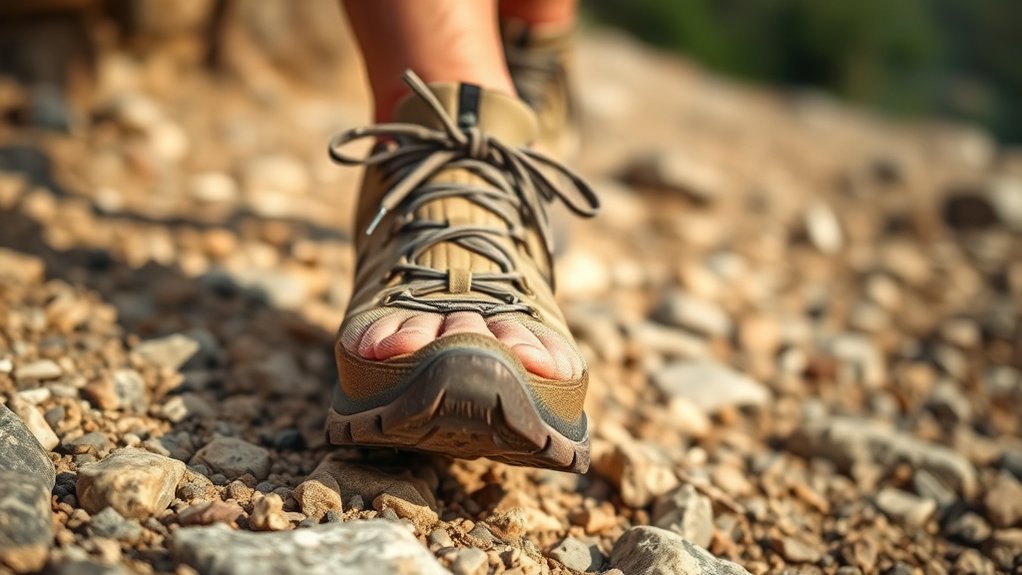
How can you be certain your hiking shoes fit properly? Start with accurate boot sizing by measuring your foot length and width using a Brannock device or similar tool.
Fit testing is essential: try on shoes at the end of the day when your feet are swollen to ensure realistic sizing. Wear the socks you plan to hike in during testing to replicate actual conditions.
Try shoes late in the day with your hiking socks to ensure the perfect fit.
When lacing up, the shoes should feel snug but not tight, providing firm support without pressure points. Stand, walk, and simulate uphill and downhill movements to assess stability and comfort.
Confirm there’s no slipping in the heel or pinching at the midfoot. Precise fit testing and correct boot sizing prevent discomfort and enhance performance on trails.
Why Proper Toe Room and Heel Fit Matter
You need proper toe room to prevent injuries like blisters and bruised nails during hikes. A secure heel fit enhances stability, reducing the risk of slipping and ankle strain.
Together, these factors improve your overall comfort and performance on the trail.
Preventing Toe Injuries
Preventing toe injuries starts with ensuring your hiking shoes provide adequate space for your toes to move without restriction while maintaining a secure heel fit. Proper toe room reduces pressure, preventing bruises and blisters, while a firm heel fit limits foot slippage that causes impact injuries.
Toe protection is essential; your footwear should shield toes from rocks and roots without cramping them.
| Concern | Impact | Emotional Response |
|---|---|---|
| Tight Toe Box | Blisters, bruises | Frustration, pain |
| Loose Heel Fit | Toe jamming, injuries | Anxiety, discomfort |
| Insufficient Toe Protection | Cuts, fractures | Fear, vulnerability |
| Excessive Toe Space | Lack of control | Unease, instability |
| Proper Fit | Comfort, injury prevention | Confidence, relief |
Enhancing Heel Stability
Why does heel stability play a critical role in hiking shoe performance? Proper heel fit prevents heel slippage, which can cause blisters and reduce control on uneven terrain.
Achieving effective heel lockdown means your heel stays firmly in place without excessive pressure, balancing security and comfort. You need adequate toe room to avoid compressing your foot, which can push your heel forward, increasing the risk of slippage.
When you ensure correct toe space, your foot naturally settles, enhancing heel lockdown. To optimize heel stability, adjust lacing techniques and consider shoes with padded heel collars or supportive heel counters.
This precise fit reduces unwanted movement, improves energy transfer, and minimizes injury risk. Ultimately, mastering heel fit and toe room directly elevates your hiking shoe’s performance and your trail confidence.
Improving Overall Comfort
Mastering heel fit and toe space not only stabilizes your foot but also markedly enhances overall comfort during hikes. Your toes need adequate room to flex and swell, preventing blisters and discomfort, while a snug heel fit ensures a comfortable grip that limits slipping.
Breathable uppers contribute by reducing moisture and heat build-up, further improving foot health. Neglecting these aspects can cause hotspots and fatigue, undermining your hiking experience.
How to Evaluate Arch Support and Cushioning
You’ll need to identify the type of arch support that matches your foot’s natural curve, whether it’s low, medium, or high. Pay close attention to how the cushioning absorbs impact and distributes pressure across your foot.
Proper evaluation guarantees your hiking shoes provide the necessary stability and comfort for long treks.
Assessing Arch Support Types
How do you determine if a hiking shoe provides the right arch support for your foot? First, identify your arch type: low, neutral, or high using a wet test or professional assessment.
Hiking shoes offer various arch support types: rigid, semi-rigid, or flexible. Rigid supports maintain foot alignment and reduce overpronation, ideal for low arches. Semi-rigid supports balance stability and flexibility, suited for neutral arches. Flexible supports accommodate high arches but offer less structural correction.
When assessing arch support, ensure it conforms to your foot’s natural curve without causing pressure points. While cushioning cushions impact, it shouldn’t compensate for poor arch support. Instead, focus on a shoe that combines appropriate arch support with adequate cushioning to maintain foot integrity and comfort over long hikes.
Cushioning Impact on Comfort
Why does cushioning matter as much as arch support in hiking shoes? Cushioning directly affects your comfort by absorbing shock and evenly distributing weight across your foot.
To evaluate cushioning effectively, focus on these aspects:
- Material density: Denser foams offer better cushioning durability, maintaining support over long hikes.
- Placement: Cushioning should align with pressure points, especially the heel and forefoot, to optimize weight distribution.
- Thickness: Adequate thickness prevents impact fatigue without compromising stability.
- Responsiveness: The material should compress and rebound efficiently, ensuring consistent comfort and reducing strain.
How to Measure Your Feet for Hiking Shoes
Accurately measuring your feet is essential to finding hiking shoes that provide optimal support and comfort. Use precise measuring methods to determine your foot length and width. Measure your feet at the end of the day when they are most swollen.
Stand on a flat surface, trace your foot on paper, and measure from heel to longest toe.
| Step | Description |
|---|---|
| Prepare | Place foot on paper, ensure weight distribution |
| Trace | Outline foot carefully with a pen |
| Measure Foot Length | Use a ruler to measure heel to longest toe |
| Measure Width | Measure the widest part of the foot |
This data ensures accurate sizing and helps avoid discomfort during hikes.
When to Size Up or Down for Hiking Shoes
Choosing the right size for hiking shoes can considerably impact your comfort and performance on the trail. Understanding when to size up or down ensures optimal shoe sizing and effective footwear upfit. Consider these factors:
- Foot swelling: Size up if your feet swell during hikes to avoid pressure points.
- Sock thickness: Size up when using thick or multiple socks for better fit and comfort.
- Heel slippage: Size down if you experience heel lift to improve stability and reduce blisters.
- Foot width: Size up if your feet are wider than average to prevent pinching and improve circulation.
Balancing these elements helps you achieve a precise fit, enhancing support and reducing injury risk during extended hikes.
How Different Hiking Shoe Types Affect Fit
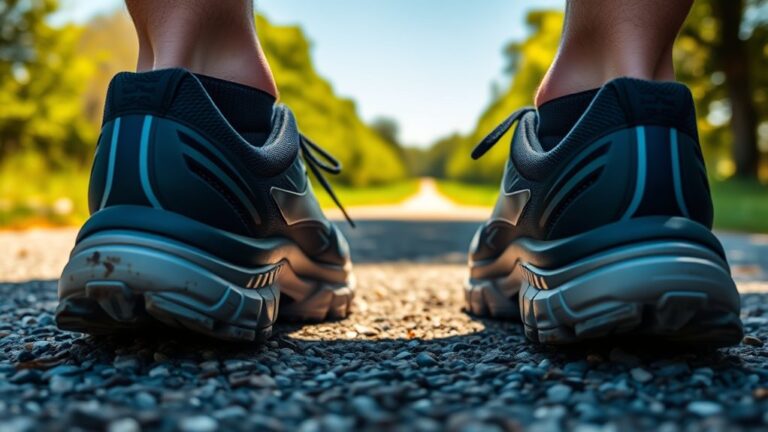
How does the type of hiking shoe you select influence its fit? Different hiking shoe types, such as trail runners, hiking shoes, and boots, vary in structure, impacting fit significantly.
Trail runners typically use lightweight shoe materials and have flexible soles with aggressive tread patterns. They offer a snug fit ideal for speed and agility.
Hiking shoes provide a balance, using sturdier materials and moderately rigid soles. They require a slightly roomier fit to accommodate foot swelling on longer hikes.
Hiking boots use heavy-duty shoe materials and deep, multidirectional tread patterns for maximum traction and support. They demand a more precise fit to prevent heel slippage and blisters.
Understanding these distinctions helps you choose a shoe type that matches your foot shape and trail demands, ensuring optimal comfort and performance.
How to Break in Your Hiking Shoes for Comfort
Once you’ve selected the right type of hiking shoe for your needs, ensuring they fit comfortably from the start is key to preventing discomfort on the trail. Proper break in rituals address shoe material interactions and enhance fit. Follow these steps:
Selecting the right hiking shoe and breaking them in properly ensures comfort and prevents trail discomfort.
- Wear your shoes indoors for short periods to allow materials like leather or synthetic fabrics to begin softening.
- Gradually increase duration, monitoring pressure points to avoid blisters.
- Use moisture-wicking socks to reduce friction and aid material flexibility.
- Take short hikes on varied terrain, letting the shoe mold to your foot’s unique shape.
These break in rituals optimize shoe conformity, improving comfort and support while preserving durability. Skipping this phase risks hotspots, compromising your hiking experience.
Frequently Asked Questions
How Do Hiking Shoes Perform in Wet Conditions?
Hiking shoes perform well in wet conditions by using durable materials with high waterproof value, offering effective wet conditions management. They provide ankle protection and require regular cleaning methods to maintain performance and prolong their lifespan.
What Materials Are Best for Hiking Shoe Durability?
You might think lightweight means less durability, but selecting hiking shoes with full-grain leather or synthetic mesh enhances durability materials, boosting hiking shoe longevity. These materials resist abrasion and moisture, ensuring reliable performance on rugged trails.
Can Hiking Shoes Prevent Ankle Injuries?
Hiking shoes with advanced footwear cushioning, ankle protection, and traction stability reduce injury risk. Their tread design enhances grip on uneven terrain, supporting your ankles and preventing twists or sprains during rigorous outdoor activities.
How to Clean and Maintain Hiking Shoes?
Use soft brushes for cleaning, focus on laces and fit during maintenance routines, and apply waterproofing options regularly. Dry shoes naturally and deodorize with baking soda. Monitor sole longevity by inspecting wear to extend your hiking shoes’ lifespan effectively.
Are Waterproof Hiking Shoes Worth the Extra Cost?
Studies show 70% of hikers prefer waterproof shoes for wet conditions. You’ll find waterproof vs non waterproof models differ in cost benefit; waterproof shoes cost more but enhance comfort and durability, making them worth the investment.
Conclusion
When your hiking shoes fit just right—ample toe room, snug heel, and solid arch support—they become your trail’s silent partner. Imagine stepping onto uneven ground, your feet cushioned yet secure, each stride confident and pain-free.
Proper fit isn’t coincidence; it’s precision. Measure carefully, consider shoe type, and break them in patiently. This ensures your shoes won’t just fit—they’ll perform.
Turning every hike into a seamless, comfortable journey through nature’s rugged terrain depends on how your hiking shoes fit.