How to Check Foot Size for Shoes
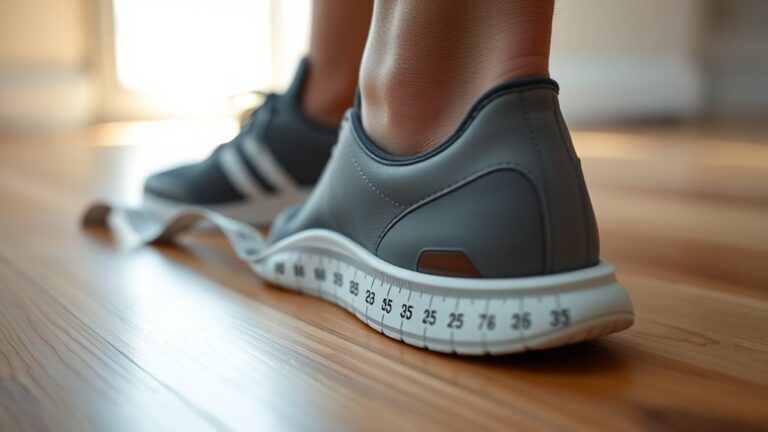
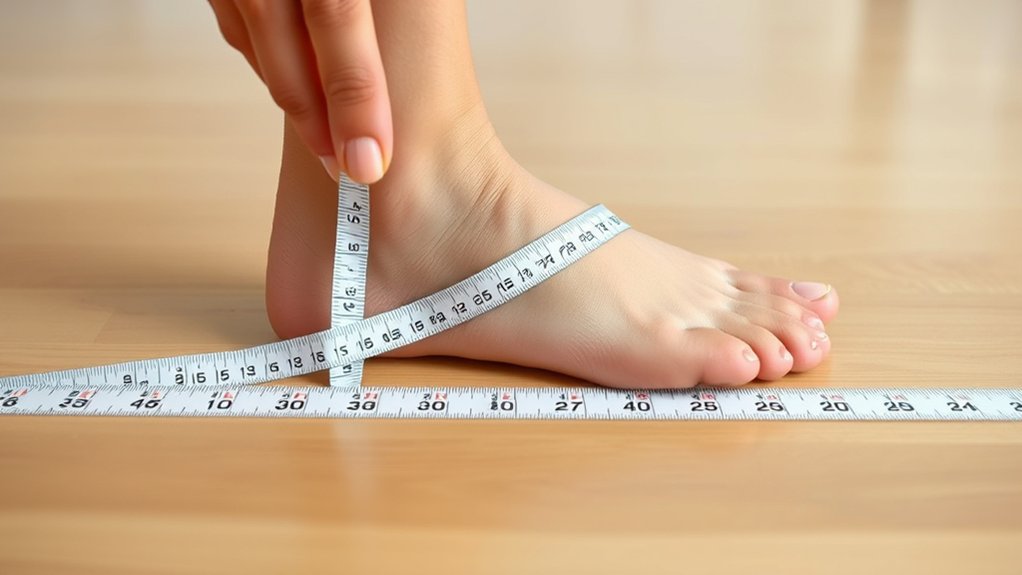
To check your foot size for shoes, start by standing on a flat surface and tracing your foot while bearing weight evenly. This ensures an accurate measurement that reflects how your foot will fit inside the shoe. Measure both the length from your heel to the longest toe and the width at the widest point.
It’s best to do this with the socks you plan to wear with the shoes. Avoid measuring in the morning, as feet tend to be smaller then. Use your measurements along with a reliable size chart, and keep in mind that sizes can vary between brands.
Additionally, learn how to choose the right width to ensure comfort. Consider how your feet might change over time to maintain a good fit in the long run.
Key Takeaways
- Measure feet at the end of the day while standing with weight evenly distributed for accurate foot length and width.
- Trace your foot on paper wearing the socks you plan to use with the shoes for realistic sizing.
- Measure both feet separately and use the larger measurement to select shoe size.
- Use a reliable sizing chart to convert foot measurements to regional shoe sizes, considering brand-specific guides.
- Regularly re-measure feet as size and shape can change over time due to age or health factors.
How to Measure Your Feet Accurately at Home
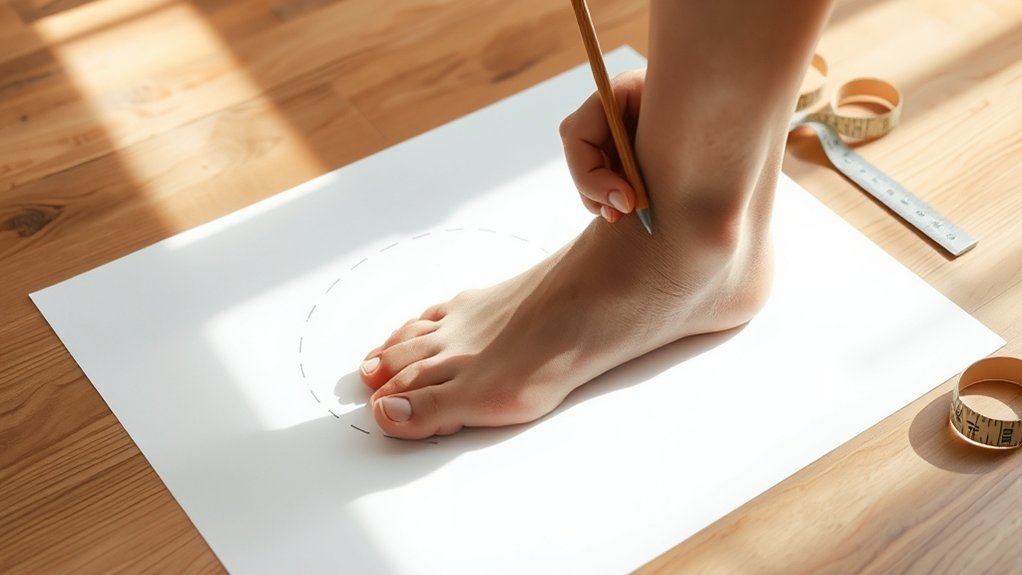
How can you ensure your shoe size is accurate without stepping into a store? Start by measuring your feet at home with a ruler or measuring tape on a flat surface. Trace your foot on paper while standing, ensuring your weight is evenly distributed.
Avoid common measuring pitfalls like measuring in the morning when feet are smaller. Always measure both feet, as they often differ in size. When deciding between sockless vs socks, measure with the type of sock you plan to wear with the shoes, since socks can add thickness and affect fit.
Record the length from heel to longest toe and the width at the widest part. This precise method helps you avoid inaccurate sizing and ensures better comfort and fit when purchasing shoes online.
How to Convert Foot Measurements to Shoe Sizes
Once you’ve measured your feet accurately, the next step is converting those measurements into the correct shoe size. Start by using a reliable footwear sizing chart that corresponds to your region, such as US, UK, or EU standards, since each system uses different units.
Measure your foot length in centimeters or inches, then match it to the chart to find your size. Keep in mind that brand differences can affect fit even when the size number is consistent.
To account for this, consult the specific brand’s sizing guide whenever possible. Also, consider your foot width, as many brands offer varying widths.
Why Shoe Sizes Differ Between Brands
Why do shoe sizes vary so much between brands? You’ll notice differences because each brand follows its own sizing standards, affecting brand consistency.
Shoe sizes vary widely because each brand uses unique sizing standards, impacting overall fit consistency.
Manufacturers may use varying last shapes and measurement systems, which leads to inconsistent sizing across brands. Additionally, the materials used in shoes influence fit.
For example, shoes made from leather or knit fabrics allow material stretch, adapting to your foot over time, while synthetic or rigid materials don’t stretch as much, impacting how a size feels.
These factors mean that even if you know your foot measurement, you might need to try multiple brands to find your ideal fit. Understanding that brand consistency and material stretch affect sizing will help you navigate these differences more effectively.
Choosing the Right Shoe Size, Width, and Fit
Where should you start when selecting the right shoe size, width, and fit? Begin by accurately measuring your foot length and width, preferably at the end of the day when your feet are slightly swollen.
Understand that seasonal sizing can affect fit, as feet may expand in warmer months. Choose footwear that accommodates these fluctuations to maintain comfort.
Pay attention to width options, narrow, regular, or wide, since a proper width ensures stability and prevents discomfort. While focusing on fit, don’t overlook footwear aesthetics; the right shoe should complement your style without compromising comfort.
Always try shoes on with the socks you intend to wear, and walk around to assess fit. Prioritizing accurate sizing and fit leads to better support, durability, and overall satisfaction with your footwear choices.
Dealing With Foot Size Changes Over Time
Accurately measuring your foot size is a key starting point, but it’s important to recognize that your feet can change over time. Factors such as foot aging often lead to increased length, width, or arch flattening.
To accommodate these changes, you should regularly measure your feet, especially if you notice discomfort or fit issues. If you use orthotics, keep in mind that orthotics adjustments may be necessary as your foot shape evolves.
Consulting a podiatrist can help you address these changes effectively, ensuring your footwear continues to support your feet properly. Staying proactive about foot size changes will help you maintain comfort, prevent injury, and extend the life of your shoes.
Frequently Asked Questions
What Materials Are Best for Comfortable Shoe Insoles?
You’ll find the best materials for comfortable insoles include memory foam, gel, and latex, as they provide cushioning, support, and shock absorption. These materials help keep your feet comfortable throughout the day.
How Often Should I Replace My Shoes for Foot Health?
You should replace your shoes every 300-500 miles because worn-out shoes increase injury risk by 40%.
Regularly updating footwear ensures proper support, minimizing foot health impact and preventing discomfort or long-term damage effectively.
Can Foot Size Vary Between Left and Right Foot?
Yes, you’ll often notice left right size variance due to asymmetrical foot measurements. It’s common for one foot to be slightly larger or wider, so always measure both feet to ensure proper shoe fit and comfort.
Are There Specific Shoes for People With Flat Feet?
Imagine walking on soft sand. Shoes for flat feet provide extra arch support, easing discomfort.
In flat feet discussion, you’ll find options with wider soles, addressing shoe width discussion to enhance stability and comfort throughout your day.
How to Care for Shoes to Maintain Their Shape?
You should store shoes with shoe trees to maintain shape, clean them regularly, and avoid exposure to moisture. Proper shoe care prevents deformation and extends their lifespan, keeping your footwear looking professional and well-maintained.
Conclusion
By measuring your feet accurately at home, you ensure a comfortable fit every time you buy shoes. Remember, shoe sizes can vary between brands, so always check their specific sizing charts. Interestingly, studies show that over 60% of people wear the wrong shoe size, which can lead to discomfort or foot problems.
By understanding your true foot size and width, you’ll make better choices and keep your feet healthy as they change over time. Knowing how to check foot size for shoes is key to finding the perfect fit and avoiding common issues caused by ill-fitting footwear.