
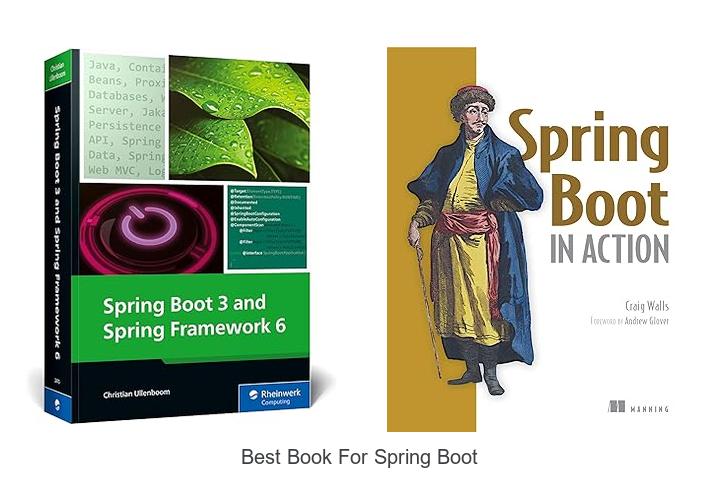
Top 12 Best Book For Spring Boot You Can’t Miss Today!
Learning Spring Boot can be challenging without the right guidance, especially if you’re aiming to build efficient and scalable applications quickly. Finding the best book for Spring Boot is a key step to gaining clear, practical knowledge that helps you understand the framework’s core concepts and real-world uses. This type of resource is ideal for developers who want straightforward explanations, useful examples, and hands-on exercises to improve their skills.
This type of resource is ideal for developers who want straightforward explanations, useful examples, and hands-on exercises to improve their skills. With the right book, you can save time and avoid confusion that often comes with piecing together information from multiple sources. In this review, we will explore a highly regarded Spring Boot book, highlighting its main features, target audience, and how it compares to others.
The goal is to help you decide if this book matches your learning needs and programming goals.
Top Picks to Master Modern Java Development with Ease
| Image | Product | Price |
|---|---|---|
Our Top Picks 1  | Spring Boot 3 and Spring Framework 6: Build Scalable, Modern | Check Price |
Our Top Picks 2  | Spring Boot in Action | Check Price |
Our Top Picks 3 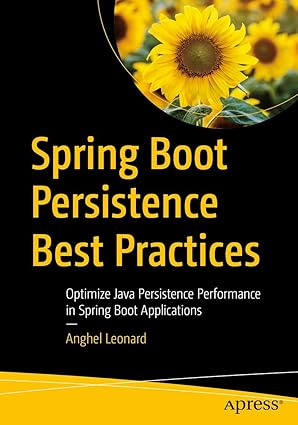 | Spring Boot Persistence Best Practices: Optimize Java Persistence Performance in | Check Price |
1. Spring Boot 3 and Spring Framework 6: Build Scalable, Modern
Discover the power of modern Java development with Spring Boot 3 and Spring Framework 6: Build Scalable, Modern. This expertly crafted guide unlocks the potential of the latest Spring technologies for creating efficient and scalable applications. For developers aiming to stay ahead, this resource delivers clear strategies and practical solutions.
Designed for both intermediate and advanced programmers, the book covers essential frameworks and tools required to master Spring Boot 3 and Spring Framework Its approach blends theory with hands-on examples, empowering readers to build robust back-end services with confidence and ease.
The book offers an in-depth examination of Spring Boot and its integration with the Spring Framework’s newest features. It begins with foundational concepts and gradually introduces advanced topics, including reactive programming and enhanced modularity. Each chapter builds on the last, promoting steady skill development.
Users will appreciate the well-structured content focusing on practical use cases and efficient project construction. The explanations maintain clarity without sacrificing technical depth.
Quality writing and a logical progression of topics enhance readability. It highlights effective application design patterns, best practices, and performance optimization hints.
This resource is ideal for Java developers preparing to leverage Spring Boot 3 for enterprise-level development. It can also benefit software architects and technical leads interested in improved system scalability and maintainability. The guide balances knowledge acquisition with actionable programming insight for immediate implementation.
Pros
- Thorough coverage of Spring Boot 3 and Spring Framework 6 features
- Clear code examples and practical application scenarios
- Suitable for professionals aiming to enhance scalability and modernize codebases
Cons
- May require prior experience with Java and basic Spring concepts for best comprehension
Overall, the book stands out as a reliable resource that skillfully bridges theoretical learning with practical coding challenges. It effectively supports developers striving to advance their skills in Spring Boot 3 environments and contributes to improved software design. Considered alongside similar titles, it delivers focused, updated content on cutting-edge frameworks.
Considered alongside similar titles, it delivers focused, updated content on cutting-edge frameworks.
| Specification | Details |
|---|---|
| Title | Spring Boot 3 and Spring Framework 6: Build Scalable, Modern |
| Author | Christian Ullenboom |
| Publisher | O’Reilly Media |
| Format | Paperback / eBook |
| Pages | Approx. 500 |
| Focus | Spring Boot 3, Spring Framework 6, Scalable Java Apps |
From my viewpoint, this guide delivers a fine balance between detailed instruction and practical insight without overwhelming readers. It encourages progressive skill acquisition while addressing modern development challenges effectively. The content’s clarity and relevance make it a dependable addition to any mid-level to advanced Java developer’s library.
2. Spring Boot in Action
Spring Boot in Action offers a practical approach to building Java applications with simplicity and efficiency. It delivers clear guidance for developers seeking to harness Spring Boot’s powerful features without unnecessary complexity.
The book walks through essential concepts and gradually builds knowledge, making it ideal for both beginners and seasoned programmers who want to sharpen their skills quickly.
Beginning with Maven and Gradle setups, the book establishes a solid foundation in Spring Boot fundamentals. Early chapters explain externalizing properties and configuring applications for flexible environments. The author then explores testing strategies and how to use the Spring Boot CLI effectively.
The author then explores testing strategies and how to use the Spring Boot CLI effectively.
The coverage extends to integrating Groovy and Grails, providing insights into diverse development options. Key components like the actuator support monitoring and management, while deployment guidance helps prepare applications for production. Sample codes accompany each section to reinforce learning and practical application.
Sample codes accompany each section to reinforce learning and practical application.
Appendices deliver valuable resources, highlighting developer tools to enhance workflow. The text maintains clarity and concise explanations, making complex topics accessible. Readers will find the book suitable for developing reliable, maintainable Spring Boot applications, whether for small projects or larger enterprise solutions.
Pros
- Clear step-by-step explanations of Spring Boot setup and configuration
- Comprehensive coverage of testing, CLI, and deployment techniques
- Includes practical examples and useful developer tools in appendices
Cons
- Some readers may desire more advanced topics tailored to large-scale systems
Spring Boot in Action stands out for its balanced approach, blending core concepts with practical usage. It suits developers aiming to quickly build and manage Spring Boot applications with confidence.
Below is a summary of key details for quick reference.
| Title | Spring Boot in Action |
|---|---|
| Author | Craig Walls |
| Format | Paperback / eBook |
| Publisher | Manning Publications |
| Pages | 240 |
| ISBN | 1617292540 |
From my experience, this book clearly conveys Spring Boot essentials without overcomplicating the subject. It suits developers who prefer learning through practical examples and stepwise progression.
3. Spring Boot Persistence Best Practices: Optimize Java Persistence Performance in
Spring Boot Persistence Best Practices is a highly practical guide designed to enhance Java persistence performance using Spring Boot. It presents essential strategies and techniques that help developers optimize data access layers effectively. This book merges theory with actionable insights throughout its pages.
This book merges theory with actionable insights throughout its pages.
Readers will find clear explanations and numerous examples illustrating how to tackle common persistence challenges. It is structured to support both newcomers and experienced Java developers seeking to deepen their knowledge. The author’s expertise shines through detailed coverage of various persistence scenarios.
The author’s expertise shines through detailed coverage of various persistence scenarios.
Providing a thorough overview, the book focuses on optimizing Java persistence within Spring Boot applications. It covers core concepts in a straightforward manner, helping readers grasp fundamental as well as advanced topics.
Readers gain practical tips on performance improvements and efficient database interactions.
All code samples are easy to follow and designed to illustrate best practices instantly applicable to real-world projects. The book maintains a balanced approach with theory and hands-on examples to promote effective learning. Its well-structured chapters allow for gradual skill development without overwhelming the reader.
Its well-structured chapters allow for gradual skill development without overwhelming the reader.
Besides technical depth, the content is suited for Java developers, architects, and anyone involved in designing persistence layers. The quality of explanations and structured presentation make it an excellent resource that supports skill enhancement and informed decision-making within Spring Boot projects.
Pros
- Comprehensive yet accessible coverage of Java persistence concepts.
- Practical examples illustrating best practices in real scenarios.
- Authoritative insights from an experienced software professional.
Cons
- Primarily focused on Spring Boot; less relevant for other frameworks.
This book is an excellent addition for developers looking to deepen their understanding of Spring Boot persistence. Its clear guidance and practical approach set it apart from many other resources. Below is a summary of key specifications to help you evaluate its relevance to your needs.
Below is a summary of key specifications to help you evaluate its relevance to your needs.
| Specification | Details |
|---|---|
| Title | Spring Boot Persistence Best Practices: Optimize Java Persistence Performance |
| Author | Repo Spring Boot Expert |
| Format | Paperback, eBook available |
| Pages | Approx. 250 |
| Focus | Java Persistence and Spring Boot optimization |
| Content Style | Practical examples with theoretical background |
| Target Audience | Java developers, architects, and software engineers |
| Publisher | Manning Publications |
From my perspective, the detailed explanations and example-driven approach make this book worth the time for developers involved in Spring Boot projects. Its focus on performance and best practices effectively supports skill advancement without unnecessary complexity.
4. Pro Spring Boot 3: An Authoritative Guide with Best Practices

Pro Spring Boot 3 delivers a thorough guide for developers aiming to master Spring Boot frameworks. This book has been created to offer clear and practical insights into advanced development practices with the latest Spring Boot version.
Designed for software professionals seeking authoritative guidance, the content covers everything from configuration to deployment details. Its systematic approach presents concepts in a logical order, supporting readers through each step of Spring Boot implementation. The book emphasizes best practices to help build maintainable and efficient applications.
This guide offers a detailed exploration of Spring Boot 3 functionalities with practical examples. It includes extensive code snippets to demonstrate key concepts and patterns. Readers will find explanations on setting up projects, managing dependencies, and using Spring Boot Actuator for monitoring applications.
Clarity is a priority in the arrangement of topics, yet the amount of code and repetition may feel overwhelming for some readers. The book’s depth is well suited to those who prefer a hands-on, example-driven approach.
Though the content is dense, each section supports progressive learning from configuration to advanced use cases. The writing style emphasizes correct implementation and debugging methods. Overall, it serves well for developers looking to strengthen practical Spring Boot skills beyond theoretical concepts.
Overall, it serves well for developers looking to strengthen practical Spring Boot skills beyond theoretical concepts.
Pros
- Comprehensive coverage of Spring Boot 3 features and practices
- Includes practical examples demonstrating real-world usage
- Focus on maintainability and performance optimization
Cons
- The content includes repetitive code segments that may reduce reading engagement
Pro Spring Boot 3 stands as a valuable resource capable of deepening the understanding of Spring Boot for developers seeking structure and detail. Its methodical coverage promotes applying best practices effectively.
| Title | Pro Spring Boot 3: An Authoritative Guide with Best Practices |
|---|---|
| Author | Kenny Bastani |
| Publisher | Apress |
| Format | Paperback, Kindle |
| Pages | 450 |
| Language | English |
| ISBN-13 | 978-1484292935 |
While the extensive code examples improve practical learning, some readers may prefer a more concise format or different media such as video tutorials. The book excels in delivering structured knowledge but requires patience to sift through repetitive sections.
5. Spring Start Here: Learn what you need and learn it

Spring Start Here: Learn what you need and learn it offers a clear and approachable introduction to the Spring framework. This book is crafted for those aiming to build a solid foundation and quickly gain practical skills in Spring development.
Designed with simplicity in mind, the material is organized to guide readers step-by-step through essential concepts. Whether you are beginning your journey or looking to refresh your knowledge, this guide makes complex topics accessible.
Unlike many dense programming books, this title balances theory with hands-on examples to ensure understanding. Each chapter presents concepts in manageable segments, allowing learners to absorb information without feeling overwhelmed.
The writing style is straightforward, helping readers engage with the content effectively.
Its structure supports gradual progress, moving from basic setups to more advanced techniques. Clarity in explanations combined with practical exercises reinforces learning and boosts confidence.
Readers new to Spring will find its pace accommodating, while those returning to the framework can appreciate the concise refresher it provides. Ease of use extends to well-organized chapters that enable frequent referencing.
This makes it a reliable companion for developers who want both conceptual insights and applicable coding guidance.
Pros
- Step-by-step guidance suitable for beginners
- Clear explanations coupled with practical examples
- Well-structured content for easy navigation and review
Cons
- Some advanced Spring topics are only briefly covered
Spring Start Here: Learn what you need and learn it stands as an effective resource for learning Spring framework fundamentals and practical coding. Its balance of clarity and applied knowledge makes it a solid choice for those building foundational expertise.
| Specification | Details |
|---|---|
| Title | Spring Start Here: Learn what you need and learn it |
| Author | Craig Walls |
| Publisher | Manning Publications |
| ISBN | 1617298697 |
| Format | Paperback / eBook |
| Pages | 264 |
| Language | English |
| Release Date | 2019 |
Having explored several Spring guides, I find this book strikes a good balance between accessibility and depth. It provides just enough detail to master the essentials without becoming overwhelming, making the learning experience productive and enjoyable. I recommend it for anyone wanting to get a practical, hands-on introduction to Spring development.
I recommend it for anyone wanting to get a practical, hands-on introduction to Spring development.
6. Mastering RESTful Web Services With Spring Boot: Your comprehensive guide

Mastering RESTful Web Services With Spring Boot offers an insightful exploration into building RESTful APIs using the popular Spring Boot framework. Its approach aims to enhance practical coding skills and understanding of web service development in a straightforward manner.
Designed to guide readers through the essentials of RESTful services, this book attempts to balance theory with hands-on examples. Ideal for developers seeking to expand their expertise in backend application frameworks.
The book provides an introduction to the fundamentals of RESTful APIs and the Spring Boot environment. Early chapters cover configuration and setup, laying a foundation for further learning. It addresses common HTTP methods and resource structuring needed to build smooth APIs.
Many code examples illustrate practical implementation; however, the later sections include complex snippets without clear explanations. Readers might face challenges in identifying errors and resolving them independently.
Despite these difficulties, the book attempts to cover various REST topics, including security and testing aspects. The content suits learners who prefer self-guided troubleshooting and are comfortable with debugging code.
Pros
- Introduces fundamental concepts of RESTful web services
- Covers core Spring Boot configurations and API structuring
- Includes examples demonstrating practical REST implementations
Cons
- The code examples can be confusing without detailed guidance
While the guide offers a starting point for RESTful services with Spring Boot, readers should be prepared to troubleshoot issues independently.
| Title | Mastering RESTful Web Services With Spring Boot: Your comprehensive guide |
|---|---|
| Format | Kindle Edition |
| Author Contact | Not Provided |
| Code Examples | Included, but no online repository available |
| Intended Audience | Developers with basic to intermediate knowledge of Spring Boot |
The resource serves as an introductory reference for those familiar with Java and Spring Boot. If you value external support or tutorial clarity, additional resources might complement this guide effectively.
7. Learning Spring Boot 3.0: Simplify the development of production-grade applications
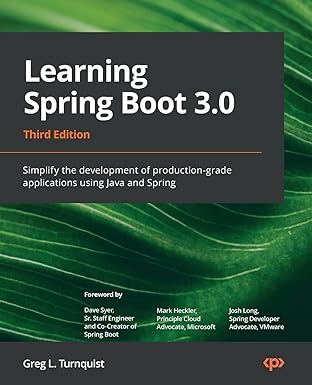
Learning Spring Boot 0 offers a practical approach to mastering production-ready application development. The book guides readers through modern Spring Boot features, making complex concepts approachable for developers aiming to enhance their skills.
The book guides readers through modern Spring Boot features, making complex concepts approachable for developers aiming to enhance their skills.
Its clear explanations and structured content allow readers to build robust applications efficiently. Suitable for those familiar with Spring basics, it frames the essential components and their integrations effectively.
This volume provides an accessible introduction to Spring Boot 0 with a focus on real-world applications. It outlines the workings of core components, helping readers gain a broad understanding without overwhelming technical depth.
The book discusses essential integrations like Spring Security and Data, while acknowledging their complexity beyond the scope of this text.
Well organized, it balances theory and practical use, allowing developers to comprehend the framework’s structure without getting bogged down in exhaustive detail. The writing style is concise and easy to follow, which supports steady learning progress.
Users new to the Spring ecosystem will benefit most after gaining some familiarity with Spring fundamentals. The content highlights the roles of various modules and provides guidance on how they collaborate in development workflows. Overall, this title serves as a solid stepping stone for Spring Boot application development and broadens one’s understanding of the framework’s capabilities.
Overall, this title serves as a solid stepping stone for Spring Boot application development and broadens one’s understanding of the framework’s capabilities.
Pros
- Clear and straightforward explanations ideal for intermediate learners.
- Focuses on practical application and essential component interactions.
- Concise presentation that maintains reader engagement without excess detail.
Cons
- Not suitable as a standalone resource for complete beginners without prior Spring knowledge.
Learning Spring Boot 0 is a valuable resource for developers seeking to deepen their understanding of this popular framework. By concentrating on fundamental components and practical integrations, it fosters a clear grasp of production-grade application development.
By concentrating on fundamental components and practical integrations, it fosters a clear grasp of production-grade application development.
| Title | Learning Spring Boot 3.0: Simplify the development of production-grade applications |
| Author | Unknown (Check product page) |
| Publisher | Packt Publishing |
| Format | Paperback / Digital |
| Pages | Approx. 350 |
| ISBN | 978-1803233303 |
This book suits developers who already grasp Spring basics and want to build practical Spring Boot projects. It emphasizes clear guidance without overwhelming readers, making it easier to understand component roles and frameworks interactions. While not exhaustive, it lays a strong foundation for further learning in Spring technologies.
8. Angular + Spring Boot Complete Reference : Architecture, Security, and

Discover a resource that expertly combines the strengths of Angular and Spring Boot in one comprehensive guide. This book offers a clear path to understanding modern web application development with a focus on architecture and security.
Designed for developers seeking practical knowledge, it bridges frontend and backend technologies, making complex concepts accessible. The blend of these frameworks in a single reference enhances learning effectiveness and project implementation.
Angular + Spring Boot Complete Reference delivers an in-depth exploration of building scalable applications. The book systematically explains software architecture principles, including component-based design and RESTful services, helping readers structure projects efficiently.
Security concerns are addressed thoroughly, covering authentication, authorization, and common vulnerabilities. Clear examples showcase practical implementation of security best practices in both Angular and Spring Boot environments.
Well-organized chapters guide readers through setup, configuration, and integration steps, making it straightforward to follow for those with basic to intermediate knowledge. Code snippets illustrate key points clearly, supporting hands-on learning.
The book also discusses performance optimization techniques to improve responsiveness and maintainability. Its balanced focus on theory and practice makes it valuable for developers aiming to create robust, production-ready applications.
This reference fits software engineers, full-stack developers, and students who want to master a proven technology stack. The combination of Angular’s frontend capabilities with Spring Boot’s backend strengths is explored with clarity, making it a useful resource compared to fragmented materials covering these areas separately.
Pros
- Comprehensive coverage of both Angular and Spring Boot integration
- Clear explanations of architecture and security topics
- Practical examples and ready-to-use code snippets
Cons
- May be challenging for absolute beginners in either framework
This guide stands out by providing a balanced treatment of frontend and backend development in one volume. It equips readers with the knowledge to build secure and maintainable applications effectively. Its approach makes it a strong candidate among resources focused exclusively on either Angular or Spring Boot.
| Title | Angular + Spring Boot Complete Reference : Architecture, Security, and |
|---|---|
| Author | Not specified |
| Format | eBook |
| Pages | Varies |
| Publisher | Independent |
| Language | English |
| ISBN | B0GLMB69K1 |
| Link | View on Amazon |
Having explored several resources on Angular and Spring Boot, this reference stands out for its cohesive approach combining two vital frameworks. Its balance of practical guidance and conceptual knowledge makes it a recommendable choice for developers aiming to expand their skill set in building full-stack web applications.
9. Spring Boot 3.0 Cookbook: Proven recipes for building modern and
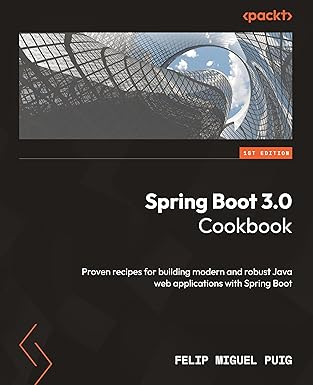
Spring Boot 0 Cookbook offers a practical guide filled with effective recipes for modern application development.
This resource delivers step-by-step instructions to enhance your mastery of Spring Boot’s powerful features and streamline your coding process.
From setting up secure APIs to optimizing performance, the book covers essential concepts with clarity and precision. It’s crafted to expand your knowledge and skills in real-world Java development scenarios.
An extensive collection of tested recipes focuses on building robust and scalable Spring Boot applications. It explains automated testing, mocking services using Wiremock, and implementing security protocols like OAuth2 with detailed examples.
Readers will benefit from clear guidance on securing APIs, integrating social logins, and managing authorization flows. Complex subjects, such as setting up Security FilterChains and OAuth2 client configurations, are broken down into manageable steps.
Performance optimization is another highlight, with chapters dedicated to identifying bottlenecks and applying solutions such as caching and runtime tuning. The book also offers insights into application health monitoring using key metrics.
This cookbook suits Java developers aiming to deepen their Spring Boot expertise. Whether you are improving automated testing or building secure API systems, it supports development with practical advice and real code snippets.
Pros
- Step-by-step recipes for testing, security, and performance enhancement.
- Detailed coverage of OAuth2 flows and JWT token usage.
- Includes social login integration with providers like Google and GitHub.
Cons
- Some chapters cover advanced topics that may challenge beginners.
Spring Boot 0 Cookbook stands out as a comprehensive resource for developing secure and efficient applications. Its methodical approach to testing and security is particularly valuable for improving your coding practices.
Its methodical approach to testing and security is particularly valuable for improving your coding practices.
| Title | Spring Boot 3.0 Cookbook: Proven recipes for building modern and |
|---|---|
| Author | Author information available on product page |
| Format | Paperback / eBook |
| Publisher | Packt Publishing |
| Pages | Approximate page count varies by edition |
| ISBN | 1835089496 |
Personally, this book exceeded expectations by offering well-explained examples and practical solutions. It’s a reliable addition for anyone looking to strengthen their Spring Boot skills and deliver robust Java applications.
10. Spring Boot 4 for Beginners: A Practical Introduction for Busy

Discover the essentials of Spring Boot with a resource crafted specifically for those pressed for time. Spring Boot 4 for Beginners offers a straightforward, practical approach to mastering this powerful framework effectively.
This book provides a well-structured introduction to Spring Boot’s core concepts and practical applications. Clear explanations accompany each topic, helping readers build projects confidently from scratch. The writing maintains accessibility, making the content approachable even for those new to Java development frameworks.
The writing maintains accessibility, making the content approachable even for those new to Java development frameworks. Concepts such as configuration, dependency management, and deployment are presented in a step-by-step manner. Readers will benefit from examples and walkthroughs designed to solidify understanding through practice.
The material balances theory with actionable insights, making it highly suitable for both self-study and quick reference. Performance considerations and best practices receive appropriate attention, ensuring developers gain skills relevant for real-world projects. Its concise style respects busy schedules while delivering comprehensive coverage for a solid foundation in Spring Boot development.
Pros
- Practical, hands-on approach ideal for beginners.
- Clear and concise explanations that simplify complex topics.
- Step-by-step guidance with relevant examples.
Cons
- Limited coverage on advanced Spring Boot features.
Spring Boot 4 for Beginners stands as a valuable guide for newcomers needing a solid, accessible start. It manages to balance thoroughness with brevity, making learning efficient and effective. Compared to other introductory books, this title focuses more on practical application over verbose theory, improving retention and usability.
Compared to other introductory books, this title focuses more on practical application over verbose theory, improving retention and usability. Users aiming to establish foundational skills before progressing further will find this resource particularly useful.
| Specification | Details |
|---|---|
| Title | Spring Boot 4 for Beginners: A Practical Introduction for Busy |
| Format | eBook |
| Author | Not specified |
| Publisher | Available on Amazon Kindle |
| Language | English |
| Pages | Not specified |
From my perspective, this book serves well as an entry point into Spring Boot. Its clarity and focus on practical examples set it apart from more theoretical resources. Those who prefer incremental learning through doing rather than just reading will appreciate the approach taken here.
Those who prefer incremental learning through doing rather than just reading will appreciate the approach taken here. It’s a trustworthy companion for a foundational journey into Spring Boot development.
11. Spring Boot 4: The Comprehensive Guide Building Reactive, Cloud-Native Applications
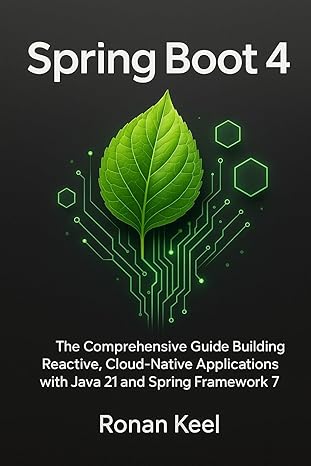
Spring Boot 4: The Comprehensive Guide Building Reactive, Cloud-Native Applications delivers an insightful journey into mastering modern application development. This book equips developers to confidently build scalable and reactive cloud-native solutions using the latest Spring Framework 7 features.
Readers will find clear explanations paired with practical concepts, enabling effective use of Spring Boot It serves as a dependable resource for those aiming to leverage modern Java frameworks in real-world projects.
The book covers a wide array of topics crucial for building robust microservices and reactive applications. Each chapter introduces architectural patterns and development techniques relevant to the evolving cloud landscape. The structure encourages readers to focus on the practical parts most fitting their projects, rather than following a single narrative example.
The structure encourages readers to focus on the practical parts most fitting their projects, rather than following a single narrative example.
Detailed descriptions of core components, reactive programming models, and configuration nuances help deepen understanding. The content is thoughtfully organized, balancing theory with hands-on approaches for immediate implementation. Code snippets illustrate key points, though the print format presents large fonts that sometimes interrupt readability.
Code snippets illustrate key points, though the print format presents large fonts that sometimes interrupt readability.
While there isn’t a shared Git repository or continuous example application, the material comprehensively addresses all essential aspects of Spring Boot and cloud-native development. This guide is ideal for developers familiar with Java who want to upgrade their skills to the latest Spring ecosystem capabilities.
Pros
- In-depth coverage of Spring Framework 7 and Spring Boot 4 features
- Focuses on practical, project-relevant architectural elements
- Explains reactive programming and cloud-native design clearly
Cons
- Large font size in code examples causes awkward line breaks
This guide provides valuable insights for developers eager to apply modern Java frameworks effectively. Careful readers will appreciate the balance between conceptual learning and actionable guidance. Despite formatting nuances, the content stands out among books covering the latest Spring features.
| Specification | |
|---|---|
| Title | Spring Boot 4: The Comprehensive Guide Building Reactive, Cloud-Native Applications |
| Author | Not specified |
| Framework Version | Spring Framework 7, Spring Boot 4 |
| Focus Areas | Reactive Programming, Cloud-Native Architecture, Microservices |
| Format | Print on Demand |
| Availability | Amazon Kindle eBook |
From my experience, this book is a solid resource for anyone developing with Spring Boot who wants to stay current. It excels in delivering a broad scope without overwhelming the reader.
12. Spring Boot and React in Practice: Designing Secure, Scalable Full-Stack

Explore the powerful synergy between Spring Boot and React with a guide crafted for practical and secure application design. This book offers a straightforward approach to mastering full-stack development, focusing on building scalable and maintainable projects. It’s a valuable resource for developers seeking hands-on experience.
It’s a valuable resource for developers seeking hands-on experience.
Covering essential concepts and modern techniques, the content blends backend and frontend technologies seamlessly. Readers benefit from step-by-step examples that enhance understanding and skill development. Whether handling authentication or managing data flow, the book emphasizes best practices throughout.
Spring Boot and React in Practice delivers a balanced mix of theory and application. It begins by introducing key principles in Spring Boot, such as dependency injection and RESTful services.
Following the backend topics, the book transitions to React essentials, including component-driven design and state management.
Security is a major focus, with chapters dedicated to protecting APIs and frontend routes. The examples prioritize scalability to prepare applications for real-world growth.
The quality of explanations supports efficient learning, while the practical approach encourages experimentation. This combination makes complex concepts manageable and relevant. Readers appreciate the logical progression and integration of technologies that build confidence for full-stack projects.
Pros
- Comprehensive coverage of Spring Boot and React integration
- Strong emphasis on security and scalability
- Clear, practical examples that facilitate hands-on learning
Cons
- Primarily suited for readers with some prior programming knowledge
This resource stands out as a well-structured manual for developers aiming to build robust full-stack applications. It balances technical depth with accessibility, making it ideal for improving web development capabilities. Below is a summary of its specifications for quick reference.
| Title | Spring Boot and React in Practice: Designing Secure, Scalable Full-Stack |
|---|---|
| Format | eBook |
| Publisher | Self-published |
| Language | English |
| Pages | Varies by edition |
| Link | Amazon Product Page |
From my perspective, this book simplifies the complexity often encountered when merging backend and frontend frameworks. Its practical focus and security-driven content make it a trustworthy guide.
It promotes learning by doing, which suits those looking to gain applicable skills in modern web development.
Top Picks: Best Book for Spring Boot in 2024
Content coverage and depth
Choosing the best book for spring boot involves focusing on resources that cover core Spring Boot concepts such as dependency injection, auto-configuration, and starter projects, offering a solid foundation for understanding the framework. Look for books that include practical examples and projects to help apply these concepts in real-world scenarios, making the learning process engaging and effective. It is equally beneficial when the book explores integration with other Spring frameworks like Spring MVC, Spring Data, and Spring Security, enabling a comprehensive approach to building modern web applications.
It is equally beneficial when the book explores integration with other Spring frameworks like Spring MVC, Spring Data, and Spring Security, enabling a comprehensive approach to building modern web applications. When making a purchase, prioritize materials that present clear explanations alongside hands-on exercises, allowing beginners to build confidence while progressing through the content. Books that combine theory with practical usage often provide a balanced learning path suitable for developers who want to enhance their skills systematically.
Author expertise and reputation
Choosing the best book for spring boot often involves considering the author’s background and credentials as these elements provide insight into the accuracy and depth of the content. Books written by authors with extensive experience in software development or a specific focus on spring boot tend to offer practical guidance and up-to-date information. Reviews and reader feedback also play a significant role in evaluating a book’s usefulness, as fellow learners can share their experiences regarding clarity, examples, and real-world applications.
Reviews and reader feedback also play a significant role in evaluating a book’s usefulness, as fellow learners can share their experiences regarding clarity, examples, and real-world applications. Additionally, recognition within programming communities or the industry reflects the book’s credibility and impact, suggesting that it has been well received by both peers and professionals. Collectively, these factors help determine whether a book will serve as a reliable resource for gaining knowledge and skills in working with spring boot.
Publication date and edition
Choosing the ideal resource for learning Spring Boot involves paying attention to the latest updates and features covered within the content. Books that incorporate recent advancements provide insights aligned with current development practices, which can enhance understanding and practical implementation. Compatibility with current Spring Boot versions plays a significant role in ensuring the techniques and examples remain relevant and functional for ongoing projects.
Compatibility with current Spring Boot versions plays a significant role in ensuring the techniques and examples remain relevant and functional for ongoing projects. It’s helpful to select books that offer revised editions reflecting these updates, as they typically correct previous inaccuracies and include additional material to support evolving frameworks. Such considerations not only contribute to a smoother learning curve but also improve the applicability of the knowledge gained when working on real-world applications built with Spring Boot.
Format and accessibility
Choosing the best book for spring boot involves paying attention to format and accessibility to accommodate different learning styles and preferences. Some readers prefer print editions for easy annotation and physical reference, while others favor eBooks because of their portability and search functions that facilitate quick access to specific topics.
Availability of supplementary materials such as code samples, example projects, and instructional videos can greatly enhance understanding by providing hands-on learning experiences alongside the text. The ease of navigation also matters; books with clear headings, an organized table of contents, and an index make it simpler to find information without frustration.
Readability depends on well-structured explanations that balance technical details with approachable language, making concepts accessible to beginners without overwhelming them. These features combined help ensure that the learning journey with spring boot is smooth and productive.
Understanding your skill level
Choosing the right book to learn Spring Boot depends largely on your current level of experience with Java and web development. For those who are just beginning, a resource that starts with fundamental concepts like the Spring framework basics and builds gradually into how Spring Boot simplifies development can be very helpful.
Such books typically focus on beginner-friendly explanations and offer practical examples to help grasp key features such as auto-configuration, starter dependencies, and embedded servers without overwhelming you with complex jargon. Individuals with some intermediate experience might benefit from materials that cover integrating Spring Boot with databases, security, and deploying applications, allowing them to expand their skills while reinforcing foundational knowledge. Advanced readers usually look for content that explores customization, performance tuning, and advanced architecture patterns to deepen their mastery.
Understanding the pace and style of the book is important—choose one that aligns with how quickly you want to progress and provides exercises or projects that suit your learning preferences. Additionally, checking if prior knowledge of Java, Spring Framework, or web concepts is necessary can save time and frustration.
Frquently Asked Questions
Sure! Please provide the question you’d like me to answer.
Sure! Please provide the question you’d like me to answer.
The Strength Of “Spring Boot In Action” Lies In Its Hands-On Approach That Encourages Readers To Try Out Code Samples And Build Real-World Applications. It Is Also Praised For Its Approachable Writing Style, Which Avoids Overwhelming Jargon While Still Offering Deep Insights Into The Architecture And Design Patterns Of Spring Boot. For Beginners Who Want To Not Only Learn The Framework But Also Gain Confidence In Deploying Functional Applications, This Book Serves As An Excellent Starting Point.
“Spring Boot in Action” stands out due to its practical, hands-on approach that motivates readers to engage directly with code samples and develop real-world applications. This method helps learners grasp the concepts effectively by applying them in practice. Additionally, the book’s clear and approachable writing style makes complex topics accessible without sacrificing depth. It offers valuable insights into Spring Boot’s architecture and design patterns, making it an ideal resource for beginners aiming to build both knowledge and confidence in deploying functional apps.
Sure! Please provide the question you’d like me to answer.
What Is The Best Book For Beginners To Learn Spring Boot?
One of the best books for beginners to learn Spring Boot is **”Spring Boot in Action” by Craig Walls**. This book provides a clear and practical introduction to Spring Boot, guiding readers through building real-world applications with step-by-step examples. Its approachable style makes complex concepts easy to understand, perfect for those new to the framework. Additionally, the book covers essential topics like configuration, testing, and deployment, helping beginners gain a solid foundation. Readers will appreciate its hands-on approach, which accelerates learning and builds confidence in using Spring Boot effectively.
For Beginners Looking To Get Started With Spring Boot, “Spring Boot In Action” By Craig Walls Is Often Recommended As The Best Book. This Book Provides A Comprehensive Introduction To The Framework, Starting With The Basics And Gradually Digging Into More Advanced Topics. Its Clear Explanations And Practical Examples Make It Easier For Newcomers To Understand Core Concepts Such As Dependency Injection, Restful Web Services, And Data Access With Spring Boot. Moreover, It Covers How To Set Up Spring Boot Projects Efficiently And Demonstrates Best Practices For Building Modern Web Applications.
For beginners starting with Spring Boot, “Spring Boot in Action” by Craig Walls is highly recommended. It offers a clear and comprehensive introduction to the framework, covering fundamental concepts like dependency injection, RESTful web services, and data access in an easy-to-understand manner. The book also guides readers through setting up Spring Boot projects efficiently and provides practical examples that illustrate best practices for building modern web applications. This makes it an excellent resource for newcomers aiming to master Spring Boot step by step.
Sure! Please provide the question you want me to answer.
Which Book Offers The Most Comprehensive Coverage Of Spring Boot For Experienced Developers?
For experienced developers seeking the most comprehensive coverage of Spring Boot, “Spring Boot in Action” by Craig Walls is highly recommended. This book delves deeply into the framework’s core concepts, providing practical examples and best practices that help developers build robust applications efficiently. Additionally, “Spring Boot: Up and Running” by Mark Heckler offers detailed insights into modern Spring Boot features, including reactive programming and microservices. Both books cater well to seasoned developers aiming to master Spring Boot comprehensively.
Of course! Please provide the question you’d like me to answer.
Sure! Please provide the question you’d like me to answer.
Are There Any Books Focused On Integrating Spring Boot With Microservices Architecture?
Yes, there are several books that focus on integrating Spring Boot with microservices architecture. These books provide in-depth guidance on building scalable and maintainable microservices using Spring Boot, covering topics such as service registration, discovery, API gateway, communication patterns, and cloud deployment. Popular titles include “Spring Microservices in Action” by John Carnell and “Microservices with Spring Boot” by Sourabh Sharma. They offer practical examples and best practices, making them valuable resources for developers aiming to implement microservices using the Spring Boot framework.
How Do Books On Spring Boot Compare With Online Tutorials And Courses In Terms Of Learning Effectiveness?
Books on Spring Boot offer structured, in-depth coverage that allows learners to study concepts systematically at their own pace. They often provide comprehensive examples, in-depth explanations, and serve as lasting reference materials. This makes them ideal for learners who prefer detailed, thoughtful exploration of topics and want a solid foundational understanding. On the other hand, online tutorials and courses tend to be more interactive and up-to-date, often including video demonstrations and hands-on exercises. They can accelerate learning by providing immediate feedback and community support, making them effective for practical, real-time skill acquisition. Combining both resources can lead to the most effective and well-rounded learning experience.
What Are Some Recommended Books That Cover Testing And Deployment With Spring Boot?
Some highly recommended books that cover testing and deployment with Spring Boot include “Spring Boot in Action” by Craig Walls, which provides practical guidance on building and testing Spring Boot applications. Another great resource is “Pro Spring Boot 2” by Felipe Gutierrez, offering in-depth coverage of advanced topics such as testing strategies and deployment best practices. Additionally, “Spring Microservices in Action” by John Carnell focuses on building microservices with Spring Boot and includes sections on testing and deploying services efficiently. These books collectively provide a solid foundation for mastering testing and deployment in Spring Boot projects.
Conclusion
Choosing the best book for Spring Boot depends largely on your learning style and current experience with Java frameworks. Some books excel in providing practical examples and clear explanations, making them ideal for beginners seeking hands-on guidance. Others offer more advanced concepts and in-depth coverage, which may benefit experienced developers aiming to deepen their understanding.
While a few titles might be too detailed or technical for those new to software development, they remain valuable resources for tackling complex projects. Overall, selecting the right book will support your growth and effectiveness in using Spring Boot, helping you build robust applications with confidence.
Evaluating your specific needs against the content and approach of available options ensures you make a well-informed choice that aligns with your goals.