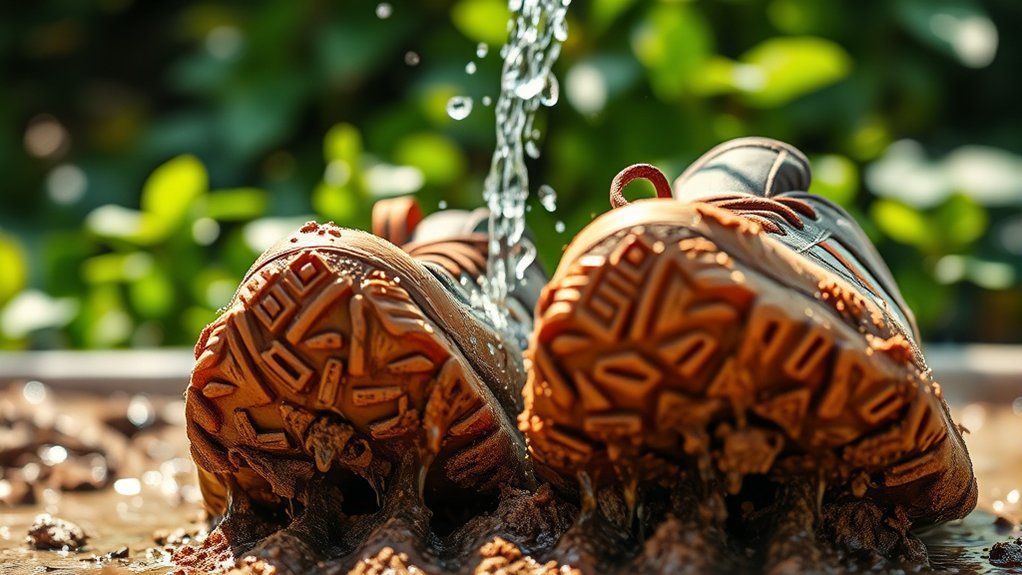
How to Clean Muddy Shoes
To clean muddy shoes, start by letting the mud dry completely to avoid smearing.
Gently tap and brush off loose dirt, using a soft brush for delicate fabrics or a stiffer one for soles.
Use warm, soapy water and a cloth or toothbrush to carefully treat stubborn spots.
Avoid soaking leather shoes and always air dry them with removed laces and insoles.
Protect your hands with gloves and work methodically to preserve the shoe materials.
There’s more to learn about tackling tough stains and proper shoe care.
Key Takeaways
- Let mud dry completely before removal, then gently tap and brush off loose dirt using appropriate brushes for the shoe material.
- Use a mild soap solution and a soft cloth or toothbrush to clean remaining stains, avoiding excessive water and harsh scrubbing.
- Treat stubborn stains with baking soda paste, diluted white vinegar, or rubbing alcohol on fabric, avoiding alcohol on leather.
- Remove insoles and laces, stuff shoes with newspaper, and air dry in a ventilated area away from direct heat or humidity.
- Wear protective gloves and old clothes during cleaning to prevent skin irritation and clothing stains.
How to Clean Muddy Shoes Quickly: The Basics
How do you tackle muddy shoes without wasting time? Start by allowing the mud to dry completely. This quick release method prevents smearing and makes removal easier.
Once dry, gently tap the shoes together to knock off loose dirt. Next, use a soft brush to dislodge remaining debris, focusing on seams and soles where mud clings.
Gently tap shoes to remove loose dirt, then brush seams and soles to clear stubborn mud.
This approach not only speeds up cleaning but also aids stain prevention by removing particles before they settle deeper. Avoid rushing with water too soon; it can embed stains further.
Instead, target problem spots with a damp cloth or sponge after brushing. By following these basics, you’ll efficiently clean muddy shoes while minimizing damage, ensuring they look better faster and last longer.
Tools You’ll Need to Clean Muddy Shoes
To clean your muddy shoes effectively, you’ll need a few essential supplies like a stiff brush, mild detergent, and a microfiber cloth.
Don’t forget to protect yourself with gloves and old clothes to avoid stains and irritation. Having the right tools on hand makes the process faster and ensures a thorough clean every time.
Essential Cleaning Supplies
Gathering the right tools is essential for effectively cleaning muddy shoes without causing damage. Start with a soft-bristle brush to gently remove dried mud and debris. A mild detergent or specialized shoe cleaner works best; harsh chemicals can degrade materials.
Have a bowl of lukewarm water handy to rinse your brush and wipe away grime. Microfiber cloths are perfect for drying and buffing your shoes. Don’t forget an old toothbrush for tight spots and seams.
For leather or suede, include appropriate conditioners as part of your care tips to maintain texture and flexibility. Store your cleaning supplies in a dedicated container. Using smart storage hacks like labeled compartments ensures everything’s ready when you need it, streamlining your shoe maintenance routine and prolonging their lifespan.
Protective Gear Choices
Why should you consider protective gear when cleaning muddy shoes? Protective gear isn’t just about keeping clean; it addresses key safety considerations. Mud and cleaning agents can irritate your skin or cause allergic reactions.
Wearing gloves and old clothes safeguards you from these risks and prevents accidental staining.
Here’s a practical guide to essential protective gear:
| Protective Gear | Purpose |
|---|---|
| Rubber Gloves | Protects hands from harsh chemicals and mud |
| Apron or Old Clothes | Shields your clothing from stains and moisture |
| Safety Glasses | Prevents splashes reaching your eyes |
How to Remove Dry Mud Without Damaging Your Shoes
Start by letting the dry mud fully harden, then gently loosen it using a soft brush or a cloth to avoid scratching your shoes. Choose tools that match your shoe’s material, like a suede brush for delicate fabrics or a stiff brush for tougher soles.
Always protect the shoe’s surface by working carefully and avoiding excessive force that could damage the finish.
Gentle Dry Mud Removal
A stiff-bristled brush is your best tool for removing dry mud without harming your shoes. When practicing gentle mudcare, it’s essential to avoid aggressive scrubbing that can damage delicate materials. Start by tapping off loose clumps of dry mud, then carefully brush away remaining particles.
Follow these steps for effective dry mud removal:
- Use short, controlled strokes to prevent surface abrasion
- Work from the sole upward, focusing on seams and crevices
- Avoid wetting the shoes before removing dry mud to prevent mud setting deeper
- Inspect frequently to adjust pressure and avoid damage
This method preserves the shoe’s integrity while efficiently clearing dry mud, setting the stage for deeper cleaning if needed.
Suitable Cleaning Tools
Which tools will help you remove dry mud efficiently without risking damage to your shoes? Start with a soft-bristled brush, like a toothbrush or a suede brush for delicate materials. These gently dislodge stubborn mud without scratching.
A plastic scraper or an old credit card works well to lift thick clumps, but use it carefully to avoid gouging the surface. Always wear protective gear, such as gloves, to keep your hands clean and avoid smearing mud onto clean areas.
For tight seams, a toothpick or cotton swab helps extract residual dirt. Avoid metal tools, which can cause lasting damage. By choosing the right tools and handling them thoughtfully, you’ll clear dry mud effectively, preserving your shoes’ appearance and longevity.
Protecting Shoe Material
Once you’ve gathered the right tools to remove dry mud, focus on protecting your shoe’s material throughout the cleaning process. Preserving material longevity requires careful handling and the use of appropriate products.
Start by gently brushing off loose mud with a soft-bristled brush to avoid abrasion. Use a damp cloth sparingly, ensuring not to saturate delicate fabrics. Apply a specialized protective coating after cleaning to shield the surface from future stains and moisture.
Avoid harsh chemicals or excessive scrubbing that can degrade the material fibers. Follow these key steps to maintain your shoes’ integrity:
- Use soft brushes and cloths to prevent surface damage
- Limit water exposure on sensitive materials
- Apply a protective coating post-cleaning
- Avoid abrasive or chemical cleaners that shorten material longevity
This approach safeguards your shoes while effectively removing dry mud.
How to Wash Muddy Shoes Step-by-Step (By Material)
Cleaning muddy shoes effectively requires tailoring your approach to the material they’re made from. For leather shoes, start by brushing off dried mud with a soft brush. Use a damp cloth and mild soap to gently clean stains. Avoid soaking the leather to maintain its integrity.
For fabric shoes, remove loose dirt, then create a solution of warm water and gentle detergent. Use a soft brush to scrub the fabric carefully, focusing on stubborn mud spots, but don’t oversaturate. Fabric care is crucial to prevent damage.
Synthetic shoes can handle a bit more water; scrub them with soap and water using a soft brush. Always remove laces and insoles before washing to clean thoroughly. Tailoring your method ensures effective cleaning without harming your shoes.
How to Dry Muddy Shoes Properly After Cleaning
Properly drying your muddy shoes after washing is essential to preserving their shape and material quality. Avoid direct heat sources like radiators or sunlight, which can warp or fade your shoes. Instead, follow these expert tips for effective drying:
Stuff your shoes with crumpled newspaper to absorb moisture and maintain shape. Remove insoles and laces to speed up drying and prevent odors.
Place shoes in a well-ventilated area, avoiding damp or humid spots to reduce mold risk. Use a fan for gentle airflow if indoor humidity is high, aiding faster drying and mud stain prevention.
Once dry, store your shoes in a dry, cool place suitable for wet weather storage to keep them ready for your next adventure without damage.
How to Protect Your Shoes From Mud Damage
How can you keep your shoes looking great and extend their lifespan despite frequent encounters with mud? Start by applying a water and stain repellent spray designed for your shoe material. This is one of the most effective mud protection ideas, creating a barrier that prevents mud from soaking in.
Next, consider using shoe covers or gaiters when you expect muddy conditions. They shield your shoes from direct contact. Regularly clean your shoes to avoid mud buildup, which can degrade materials over time.
Store your shoes in a cool, dry place to prevent moisture-related damage. Finally, rotate your footwear to allow each pair time to dry and recover. These mud damage prevention strategies maintain both appearance and structural integrity, ensuring your shoes last longer and stay cleaner.
Quick Fixes for Stubborn Mud Stains on Shoes
When mud dries and hardens on your shoes, tackling those stubborn stains quickly can prevent permanent damage. You’ll want to act fast with proven quick fixes that restore your shoes without harsh treatments.
Start by gently scraping off excess dried mud with a soft brush or plastic scraper. Next, create a mild cleaning solution with warm water and a few drops of dish soap. Use a soft cloth or an old toothbrush to work the solution into the stain gently.
Gently scrape dried mud, then clean stains with warm, soapy water using a soft brush or cloth.
For stubborn stains, try these quick fixes:
- Apply a paste of baking soda and water, let it sit 15 minutes, then brush off
- Use white vinegar diluted with water for tough spots
- Dab with rubbing alcohol on fabric shoes, avoiding leather
- Rinse and air dry completely after treatment
These steps help you efficiently remove stubborn stains without damaging your shoes.
Frequently Asked Questions
Can I Use a Washing Machine to Clean Muddy Shoes?
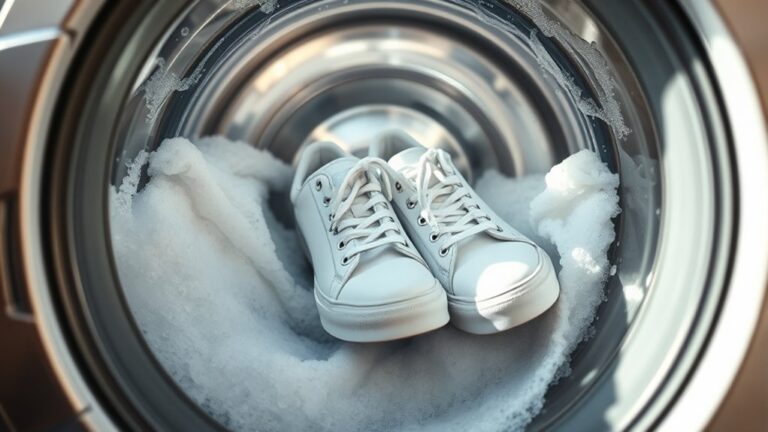
You might think machine washing is an easy fix, but it can damage your shoes if not done right. Always remove excess mud first, use a gentle cycle, and dry properly to guarantee odor prevention and shoe longevity.
How Often Should I Clean My Shoes After Muddy Outings?
You should clean your shoes after every muddy outing to maintain proper cleaning frequency and prevent odor buildup. Promptly removing mud keeps materials intact and stops bacteria growth, ensuring your shoes stay fresh and last longer.
Are There Eco-Friendly Products to Clean Muddy Shoes?
Think of eco-friendly products as gentle gardeners tending your shoes. You’ll find mud-specific cleaners made from biodegradable ingredients that target grime without harming the earth. This lets you clean thoroughly while staying green and responsible.
Can Cleaning Muddy Shoes Affect Their Warranty?
Yes, cleaning muddy shoes improperly can void your warranty. Always follow the manufacturer’s care tips to avoid damage.
Use recommended cleaning methods and products to keep your warranty intact and ensure your shoes last longer.
What Should I Do if My Shoes Develop an Odor After Cleaning?
If your shoes whisper secrets of shoe odor after cleaning, fight back with baking soda or activated charcoal inside overnight. This practical remedy banishes the post cleaning smell, restoring freshness and confidence with expert precision.