How to Get Gasoline Smell off Shoes
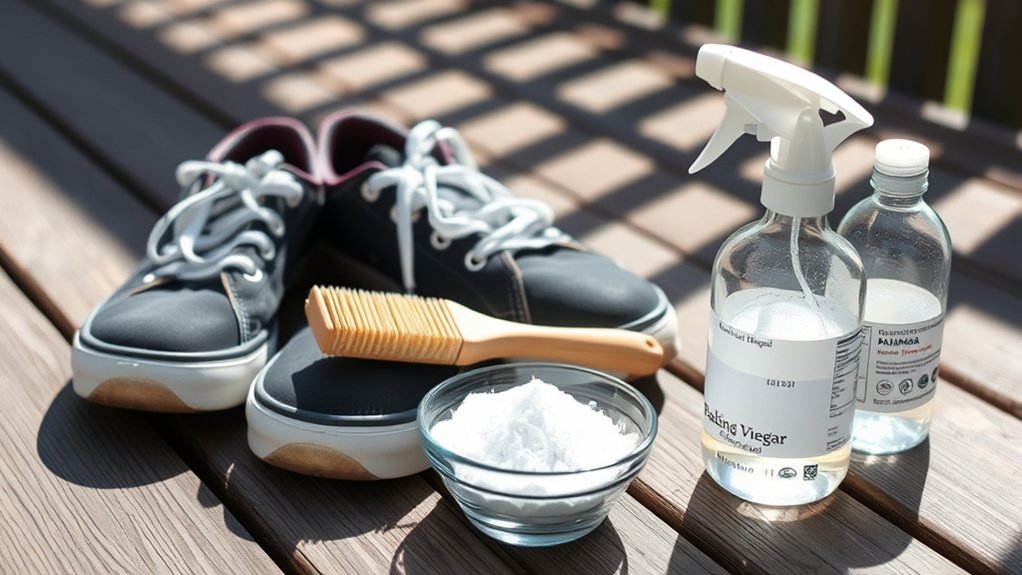
To get gasoline smell off your shoes, start by sprinkling baking soda inside and on the surface.
Let it absorb odors for 24 hours before shaking or vacuuming it out.
You can also lightly spray a vinegar-water mix to neutralize smells.
Be sure to test spots first to avoid any damage.
Activated charcoal in breathable pouches can trap fumes overnight.
Always dry shoes thoroughly and use these methods carefully to protect materials.
If odors linger, exploring deeper cleaning and prevention strategies can help.
Key Takeaways
- Sprinkle baking soda inside shoes and leave for 24 hours to absorb gasoline odor, then shake out or vacuum thoroughly.
- Lightly spray diluted white vinegar on shoes, air dry in a ventilated area, and test on a small spot first.
- Place activated charcoal in breathable pouches inside shoes overnight to trap volatile gasoline compounds.
- Use commercial gasoline odor removers with enzymes if homemade methods fail, following safety instructions and checking material compatibility.
- Maintain freshness by storing shoes ventilated, rotating wear, cleaning regularly, and using odor-absorbing inserts like baking soda or charcoal.
Why Gasoline Smells Linger on Shoes?
Why does gasoline smell linger so stubbornly on your shoes? Gasoline chemistry reveals that it contains volatile organic compounds (VOCs) like benzene, toluene, and xylene, which evaporate slowly. When gasoline contacts your shoes, it interacts with the shoe material, whether leather, fabric, or synthetics, absorbing into microscopic pores.
These shoe material interactions make gasoline molecules cling tightly, preventing quick evaporation. Additionally, some materials trap these compounds deeper inside, prolonging the odor. Because gasoline’s chemical components are hydrophobic, water alone often can’t dislodge them effectively.
This persistence poses not only an unpleasant smell but also a potential health risk due to prolonged VOC exposure. Understanding these interactions highlights why prompt and appropriate cleaning methods are essential to mitigate both odor and toxicity on your contaminated footwear.
Quick Household Fixes to Neutralize Gasoline Smell
You can use common household items to reduce gasoline odor on your shoes effectively. Baking soda absorbs residual fumes, vinegar neutralizes odors through its acidic properties, and activated charcoal traps volatile compounds.
Apply these methods carefully to avoid damaging your footwear while ensuring safety.
Baking Soda Absorption Method
How does baking soda effectively neutralize gasoline odors on shoes? Baking soda acts as a mild alkaline compound that absorbs and neutralizes acidic and volatile compounds responsible for gasoline’s strong smell.
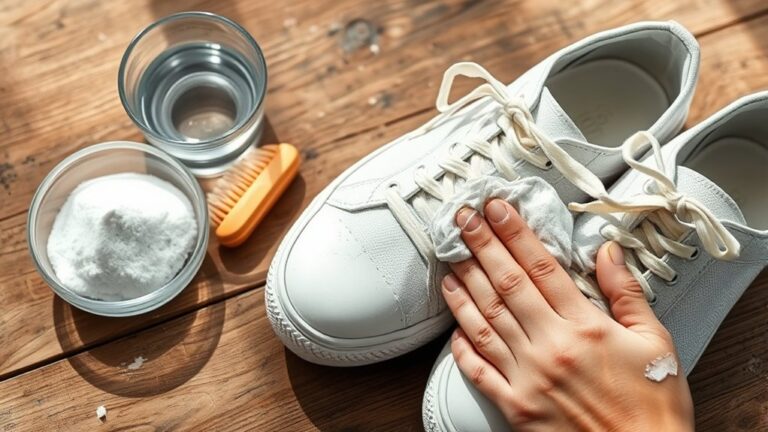
To use this method, sprinkle a generous layer of baking soda inside and on the surface of your shoes. Leave it undisturbed for at least 24 hours to maximize odor absorption.
Afterward, shake out or vacuum the baking soda thoroughly. This process reduces odor molecules by trapping them in the powder, minimizing their volatility and scent emission.
Avoid inhaling the powder during application, and ensure your shoes are dry before starting, as moisture can reduce baking soda’s effectiveness. This method provides a safe, non-toxic approach to deodorizing gasoline-contaminated footwear efficiently.
Vinegar Odor Neutralizer
Baking soda’s ability to absorb and neutralize odors offers an effective starting point, but vinegar provides another reliable option for tackling gasoline smells on shoes. Vinegar’s acetic acid reacts with volatile compounds responsible for the gasoline odor, breaking them down chemically.
To use this DIY deodorizer, dilute white vinegar with equal parts water and lightly spray the affected shoes, avoiding saturation that could damage some materials. Allow them to air dry in a well-ventilated area.
Keep in mind that vinegar odor is initially strong but dissipates as it evaporates, leaving neutralized smells behind. Always test this method on a small, inconspicuous area first to prevent discoloration.
Activated Charcoal Treatment
Why does activated charcoal work so well to neutralize gasoline odors in shoes? Activated charcoal has a porous structure that excels in odor absorption. It traps gasoline molecules effectively, reducing the smell without using harsh chemicals.
To use activated charcoal, place it inside your shoes in breathable pouches and leave them overnight. Ensure the charcoal is kept dry to maintain its effectiveness.
| Step | Action | Precaution |
|---|---|---|
| 1 | Place activated charcoal | Use pouches to avoid mess |
| 2 | Insert in shoes | Avoid direct contact with skin |
| 3 | Leave overnight | Keep shoes in a ventilated area |
| 4 | Remove charcoal | Dispose or recharge charcoal |
| 5 | Repeat if odor persists | Do not ingest activated charcoal |
Activated charcoal is a safe, efficient method for odor absorption.
Preparing Shoes to Remove Gasoline Smell
Where should you begin when preparing shoes to eliminate gasoline odors? First, ensure the shoe fit allows for thorough internal inspection. Loosen laces and remove insoles to access sole padding, which often absorbs gasoline. Handle these components with gloves to prevent skin irritation.
Inspect the sole padding for saturation; if heavily contaminated, consider replacing it to avoid persistent odor. Next, ventilate the shoes by placing them in a well-ventilated area away from direct sunlight to prevent material degradation.
Avoid sealing shoes in plastic bags, as trapped fumes can intensify odor and pose health risks. This preparatory step is crucial for effective deodorization, ensuring that subsequent treatments penetrate all contaminated areas, including the sole padding and inner surfaces, optimizing odor removal without compromising shoe integrity.
Cleaning Gasoline Off Different Shoe Materials
You’ll need to approach cleaning leather and fabric shoes differently to avoid damage. For leather, use a gentle cleaner and avoid soaking, as excess moisture can weaken the material.
Fabric shoes can tolerate more thorough washing, but make sure to use appropriate detergents and dry them carefully to prevent odor retention.
Cleaning Leather Shoes
How should you approach removing gasoline odors from leather shoes without damaging their delicate surface? Cleaning leather requires a careful balance between effective odor removal and preserving the material’s integrity. Start by ventilating your shoes in a well-ventilated area to dissipate fumes safely.
Use a soft cloth lightly dampened with a mixture of equal parts water and white vinegar to gently blot the affected areas. Avoid saturating the leather. For thorough cleaning, apply a specialized leather cleaner designed for shoe maintenance. After cleaning, condition the leather to restore moisture and prevent cracking.
- Ventilate shoes outdoors, away from direct sunlight
- Blot stains with diluted vinegar solution, avoiding excess moisture
- Use leather-specific cleaning products for deeper treatment
- Apply leather conditioner to maintain flexibility and appearance
This method effectively neutralizes gasoline odors while safeguarding your leather shoes.
Washing Fabric Footwear
Although fabric footwear tends to absorb gasoline more readily than leather, you can effectively eliminate odors and residues by acting quickly and using appropriate cleaning agents. Start by blotting excess gasoline with paper towels. Avoid rubbing, which spreads the stain.
For washing fabric, use a mixture of mild detergent and warm water, applying it gently with a soft brush. Rinse thoroughly to remove all detergent, as residues can trap odors.
Contrary to odor myths, simply airing out fabric shoes won’t neutralize gasoline’s volatile compounds. Instead, wash promptly and consider adding white vinegar or baking soda during the cleaning process to break down odor molecules.
Always dry your shoes in a well-ventilated area away from direct heat to prevent fabric damage and ensure safety by avoiding ignition sources during cleaning.
How to Dry and Air Out Shoes Properly
Where should you begin when drying and airing out shoes contaminated with gasoline? Start by placing them in a well-ventilated area that promotes optimal air circulation to accelerate drying and minimize odor retention. Ensure you avoid enclosed spaces where fumes can concentrate, posing health risks.
Begin by placing gasoline-contaminated shoes in a well-ventilated area to speed drying and reduce harmful fumes.
To dry and air out your shoes properly:
- Remove insoles and loosen laces for better airflow
- Position shoes upright on a rack or open surface
- Avoid direct sunlight, which can damage shoe materials
- Use a fan to enhance air circulation without heating
This method facilitates evaporation of volatile compounds, thereby supporting effective odor prevention and reducing residual gasoline smell. Always prioritize safety by working in spaces with adequate ventilation.
When to Use Commercial Gasoline Odor Removers
When should you consider using commercial gasoline odor removers for your shoes? Opt for these products when homemade methods or gasoline alternatives fail to eliminate persistent odors. Commercial removers contain specialized enzymes or chemicals designed to neutralize volatile compounds responsible for the gasoline smell.
Before application, review safety considerations carefully. Use in well-ventilated areas and wear gloves to avoid skin irritation. Ensure the product is compatible with your shoe material to prevent damage.
Avoid mixing these removers with other cleaning agents, as chemical reactions may occur. If you have sensitive skin or respiratory issues, consult product warnings or seek alternatives. Using commercial gasoline odor removers is effective but requires caution to protect your health and preserve your shoes’ integrity.
How to Keep Shoes Smelling Fresh Long-Term
Why does your shoe’s freshness fade over time, and how can you prevent that? Gasoline odor lingers due to residual hydrocarbons and moisture, which promote bacterial growth. To maintain long-term freshness, establish consistent care routines focused on odor prevention.
Follow these scientifically-backed steps:
- Store shoes in well-ventilated areas to reduce moisture accumulation.
- Use activated charcoal or baking soda inserts to absorb odors and moisture.
- Clean shoes regularly with mild detergents and allow thorough drying to inhibit bacterial proliferation.
- Rotate footwear to minimize continuous wear and allow adequate airing time.
Implementing these measures disrupts the environment bacteria need, preventing odor redevelopment. Staying vigilant with odor prevention care routines ensures your shoes remain fresh and safe from gasoline smell recurrence.
Frequently Asked Questions
Can Gasoline Fumes Cause Health Problems When Absorbed by Shoes?
Though not from the Victorian era, you should know gasoline hazards remain serious; shoes’ odor absorption can expose you to harmful fumes, risking respiratory and neurological issues.
Always handle contaminated footwear with caution to minimize health risks.
Is It Safe to Wear Shoes That Still Smell Like Gasoline?
You shouldn’t wear shoes that still smell like gasoline due to gasoline safety risks. Inhaling fumes or skin contact can cause health issues. Prioritize odor remediation thoroughly before using them again to ensure safe, toxin-free footwear.
How Long Does It Take for Gasoline Smell to Naturally Dissipate From Shoes?
Like a telegram from the past, gasoline coupling causes odor persistence that can last 3 to 7 days in your shoes.
You shouldn’t rush; ventilation and absorption techniques help speed up this natural dissipation process safely.
Can Gasoline Smell Transfer From Shoes to Car Interiors?
Yes, gasoline odor can transfer from shoe contamination to car interiors. You should avoid bringing contaminated shoes inside, as volatile compounds cause persistent smells and potential health risks.
Clean shoes thoroughly before entering your vehicle.
Are There Any Homemade Sprays to Prevent Gasoline Odor on Shoes?
Yes, you can create homemade sprays using vinegar or baking soda mixed with water to neutralize gasoline odor on shoes. Always test on a small area first, and avoid excessive moisture to prevent material damage.