When Do Babies Start Wearing Shoes
You should start putting shoes on your baby once they’re walking confidently outdoors and exploring varied surfaces. When do babies start wearing shoes? The answer is typically when they begin steady, independent steps outside.
Before that, soft socks or barefoot time indoors help their feet develop naturally. Choose lightweight, flexible shoes that mimic barefoot movement, protecting against hazards without restricting growth.
Watch for steady balance and independent steps as signs they’re ready. Taking this patient approach supports healthy foot development and safe exploration.
Keep going to discover how to find the perfect first shoes and fit.
Key Takeaways
- Babies typically start wearing shoes once they walk confidently outdoors, ensuring natural foot development beforehand.
- Soft socks or barefoot time indoors support sensory feedback and muscle strength before shoe introduction.
- Early shoes should be soft-soled, flexible, lightweight, and breathable to mimic barefoot movement and protect feet.
- Transition to shoes occurs when outdoor exploration increases or walking on rough surfaces begins for safety and comfort.
- Proper shoe fit with roomy toe boxes and adjustable closures is essential due to rapid foot growth.
When Should Babies Start Wearing Shoes?
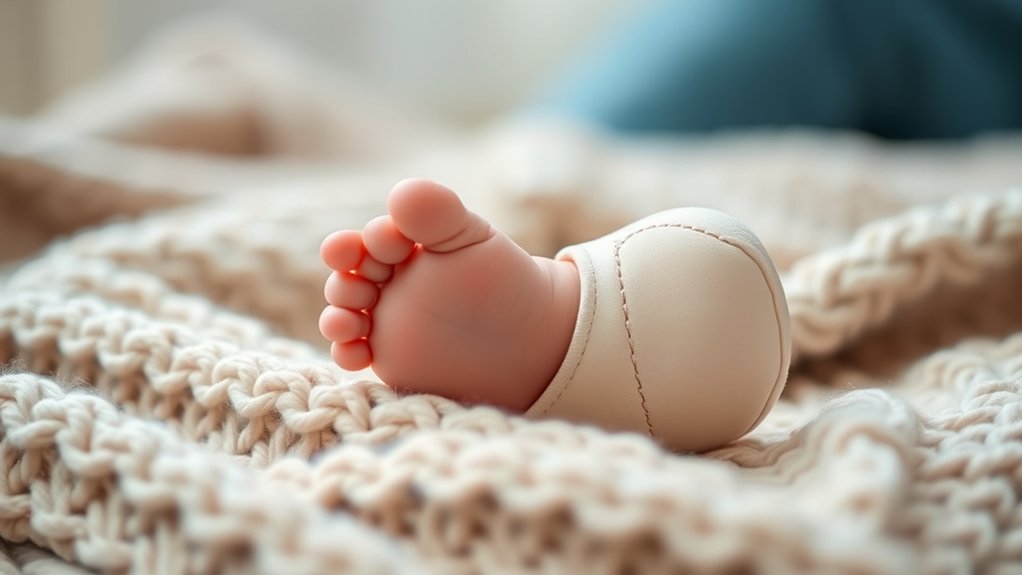
When should you start putting shoes on your baby? Generally, it’s best to wait until your little one is walking confidently outdoors before introducing toddler footwear. Before that, soft socks or barefoot time indoors allow feet to develop naturally without restriction.
Practicing proper sock etiquette is important. Choose breathable, well-fitting socks to prevent irritation or slipping inside shoes. Shoes mainly protect against environmental hazards rather than provide support for early foot development.
When you do introduce shoes, pick flexible, lightweight options that mimic barefoot movement. Remember, your baby’s feet grow rapidly, so regularly check fit and comfort. Prioritizing natural movement with appropriate sock etiquette and carefully timed toddler footwear helps promote healthy foot development while keeping your baby comfortable and safe.
Signs Your Baby Is Ready to Wear Shoes Outside
How can you tell if your baby is ready to wear shoes outside? Look for signs like steady balance when standing or walking, as shoes protect their feet on rough surfaces.
If your baby starts cruising along furniture or takes independent steps, it’s a good cue. Also, check if their feet have outgrown socks or soft booties. Then it’s time for supportive footwear.
When choosing shoes, keep twins fashion in mind; matching or coordinating styles can be fun while ensuring comfort. Stay updated on boot trends designed for toddlers, which often feature flexible soles and breathable materials to support healthy foot development.
Why Waiting Until Walking Matters for Baby Shoes
Why should you wait until your baby starts walking before introducing shoes? Waiting allows your baby’s feet to develop naturally and adapt to new movements without restriction. Shoes too early might interfere with their delicate foot muscles and balance.
Plus, soft surfaces and bare feet help your baby learn to walk confidently.
Consider how waiting fits into your care routines and feeding schedules, keeping your baby comfortable and supported as they grow.
Here are key reasons to wait:
- Supports natural foot development and muscle strength
- Enhances balance and coordination without obstacles
- Prevents discomfort or improper fit before walking starts
- Simplifies care routines, focusing on feeding schedules and mobility
Patience here ensures your baby’s first steps are healthy and happy.
Which First Baby Shoes Are Best: Soft Soles or Hard Soles?
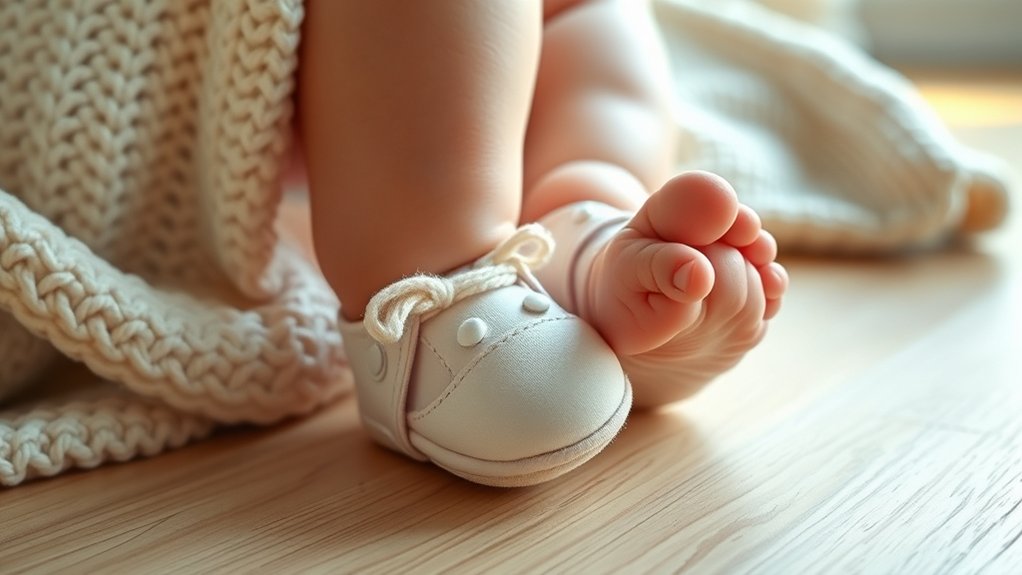
Which type of first shoes will best support your baby’s early steps: soft soles or hard soles? Soft soles are often recommended because they mimic barefoot walking, allowing your baby to feel the ground and develop balance and coordination naturally. They’re flexible, lightweight, and provide protection without restricting foot movement.
On the other hand, hard soles offer more support and protection on rough or uneven surfaces, which can be helpful for outdoor walking. However, they may limit the natural foot flexion essential for muscle development.
Research suggests that soft soles encourage sensory feedback and healthy foot growth, making them ideal for infants just starting to walk indoors. Ultimately, choosing between soft soles and hard soles depends on your baby’s walking environment and comfort, but soft soles generally support early foot development best.
How to Choose the Right Baby Shoes for Your Little One
When selecting baby shoes, what key factors should you consider to ensure comfort and proper foot development? Choosing the right shoes means focusing on fit and flexibility. Babies’ feet grow fast, so accurate shoe sizing is crucial to avoid restricting movement or causing discomfort.
You’ll also want breathable materials that mimic the feel of sock alternatives like soft cotton, allowing natural foot movement. Here’s what to look for:
- Shoes with flexible, non-slip soles that support walking without rigidity
- Lightweight construction to prevent fatigue
- Adjustable closures for a secure but gentle fit
- Roomy toe boxes to let tiny toes wiggle freely
Tips for Fitting Baby Shoes Safely and Comfortably
To fit your baby’s shoes safely and comfortably, start by measuring their feet regularly to ensure the right size.
Look for shoes made from flexible materials that allow natural movement and breathability. These steps help protect your baby’s developing feet while keeping them cozy and supported.
Measuring Baby’s Feet
How can you guarantee your baby’s shoes fit just right? Accurate foot measurement is key. Measure your baby’s feet while they’re standing, as this better reflects the foot’s natural shape and size.
Don’t forget to consider the sock materials your baby will wear with the shoes since thicker socks need extra space.
Keep these tips in mind:
- Use a soft tape measure or printable foot ruler to ensure accuracy.
- Measure both feet; fit the larger foot to avoid discomfort.
- Measure length and width to accommodate growth and prevent tightness.
- Check measurements regularly since babies’ feet grow quickly.
Choosing Flexible Materials
Accurately measuring your baby’s feet sets the foundation for choosing shoes that support healthy development. When picking shoes, opt for flexible materials that mimic自然 foot movement, such as soft leather or breathable fabric rather than stiff synthetics. These materials allow your baby’s feet to bend and flex, essential as they explore their “bear cave” of toes and arches.
Shoes that are too rigid can hinder muscle growth and cause discomfort, especially during those early steps by the “moonlight river” of nighttime strolls. Flexible soles also provide better grip and balance, crucial for safety. Remember, your goal is to protect without restricting.
Prioritize shoes that fit snugly but allow toes to wiggle freely, ensuring comfort and encouraging natural foot strength as your little one grows.
Why Baby Shoes Matter for Foot Development and Balance
You want to choose baby shoes that protect your little one’s delicate foot structure without restricting natural movement. Proper shoes also support early balance skills as your baby learns to stand and walk.
Finding the right fit encourages healthy foot development and confidence with every step.
Protecting Delicate Foot Structure
Often, parents underestimate the importance of choosing the right baby shoes to protect their child’s delicate foot structure. While shoe fashion and brand trends might catch your eye, the priority should be on support and comfort.
Baby feet are soft and developing, so improper shoes can hinder bone growth and cause discomfort.
To protect your baby’s feet, look for shoes that:
- Have flexible soles to allow natural movement
- Provide a snug but not tight fit
- Use breathable materials to prevent irritation
- Feature non-slip soles for safe walking
Supporting Early Balance Skills
How can the right shoes support your baby’s early balance and foot development? Proper footwear provides stability, aiding muscle strength and coordination. Avoid shoes with rigid insoles, as the insoles controversy highlights. Soft, flexible soles promote natural foot movement and reduce discomfort.
Also, consider sock compatibility. Shoes should fit well over socks without causing tightness or slipping, ensuring comfort and better balance.
| Feature | Benefit | Tip |
|---|---|---|
| Flexible soles | Encourages natural foot flex | Choose soft, bendable shoes |
| Lightweight design | Reduces fatigue | Opt for minimal weight |
| Breathable material | Prevents overheating | Look for mesh or fabric uppers |
| Proper fit | Supports steady steps | Measure feet regularly |
Choosing wisely supports your baby’s balance and healthy foot growth.
Encouraging Natural Foot Movement
Selecting the right shoes goes beyond just fit and comfort. It plays an essential role in encouraging your baby’s natural foot movement. Proper footwear supports foot development and balance, helping your little one explore confidently.
When choosing shoes, consider how they impact stroller ergonomics and ease during diaper changing, ensuring minimal restriction.
To encourage natural foot movement, focus on:
- Flexible soles that mimic barefoot walking
- Lightweight materials to avoid added pressure
- Secure but gentle fastenings for quick diaper changes
- Breathable fabrics promoting healthy skin and comfort
When and Why to Transition From Socks to Baby Shoes
When should you switch your baby from socks to shoes? It’s best to wait until your little one hits key barefoot milestones, like standing steadily and taking confident steps. Socks alone are great for early development, promoting natural foot movement and sensory feedback.
As your baby begins exploring outdoors or walking on rough surfaces, it’s time for sock transitions to supportive, flexible baby shoes. Shoes protect delicate feet from injury and cold but should still allow natural motion.
Look for lightweight shoes with breathable materials and flexible soles to mimic barefoot benefits. Remember, the goal isn’t to rush shoe-wearing but to support your baby’s growing independence safely and comfortably as they transition from socks to shoes.
Frequently Asked Questions
Can Babies Wear Shoes Indoors Before Walking?
You can let your baby wear indoor footwear before walking, but it’s best to keep them barefoot to support natural foot development. Early walking implications suggest shoes might hinder balance and muscle strength indoors.
How Do Baby Shoes Affect Crawling?
Baby shoes can slightly alter your baby’s gait during crawling, but soft, flexible shoes support natural feet development. Choose lightweight options that protect without restricting movement to help your baby explore safely and comfortably.
Are There Seasonal Shoes for Babies?
Yes, you’ll find seasonal boots for colder months and breathable slip-ons for warmer days, helping keep your baby comfortable and protected. Choosing shoes based on season supports healthy foot development and prevents overheating or cold exposure.
Can Shoes Prevent Babies From Slipping?
Like a lighthouse guiding ships, shoes with good grip aid slip prevention for babies, especially indoors. You’ll want soft, flexible soles designed for traction to help your little one explore safely without risking slips or falls.
How Often Should Baby Shoes Be Replaced?
You should replace baby shoes every 6-8 weeks, or when shoe sizing feels tight. Check sole materials for wear. Worn soles reduce support and grip.
Keeping shoes well-fitted supports healthy foot development and prevents discomfort.
Conclusion
You’ll know it’s time for baby shoes when your little one starts exploring outside confidently. For example, imagine Emma, who began wearing soft-soled shoes at 11 months once she took her first steps outdoors.
Choosing the right shoes supports natural foot development and balance, so wait until walking starts. Remember, comfortable, well-fitted shoes help your baby move safely and happily.
When considering when do babies start wearing shoes, keep in mind that proper timing and shoe choice are key to healthy foot growth and confident steps.