How to Make Shoes Non Slip
To make your shoes non-slip, focus on enhancing sole friction by adding textured materials like hot glue dots or abrasion from sandpaper to increase grip. You can also apply specialized non-slip sprays or attach durable rubber or silicone traction pads for consistent slip resistance.
Regularly check soles for wear and store shoes in dry, cool places to preserve traction. For critical needs, professional treatments optimize grip precisely.
Explore advanced methods and maintenance tips to keep your footing secure in diverse conditions.
Key Takeaways
- Add textured hot glue dots or tightly wrap rubber bands around shoe soles to create micro-grips and improve traction at home.
- Roughen shoe soles gently with sandpaper to increase surface roughness and reduce slipping on smooth floors.
- Apply non-slip grip pads or traction tapes made of durable rubber or silicone, ensuring clean soles and proper placement for adhesion.
- Use non-slip sprays or professional grip treatments evenly on soles, following safety precautions and manufacturer instructions.
- Store shoes in cool, dry places with sole protectors or inserts to maintain tread patterns and long-lasting slip resistance.
Why Shoes Slip and How Grip Works
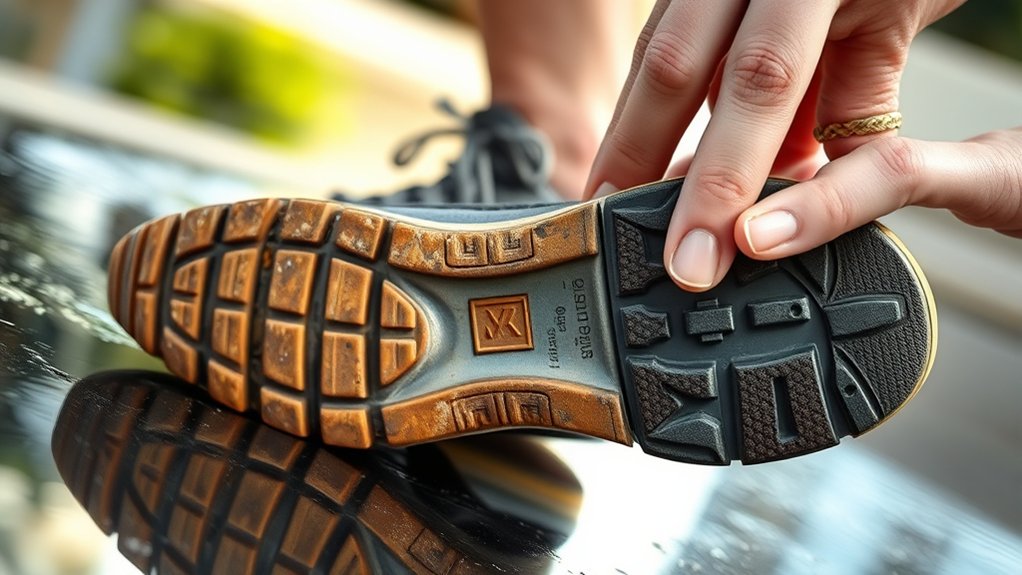
Why do shoes slip despite their design? Understanding why slip occurs is key. Shoes slip when the friction between the sole and the ground isn’t sufficient to counteract forces from movement and surface conditions.
Grip mechanics involve the interaction of sole material, tread pattern, and surface texture. If the sole’s material hardness or tread depth isn’t optimized for the surface, the grip fails, causing slippage.
Effective grip depends on sole material, tread design, and matching surface texture to prevent slipping.
Additionally, contaminants like water or oil reduce friction, disrupting grip mechanics further. When you walk or run, the pressure and angle of contact influence how effectively the sole grips the surface.
If the shoe’s design doesn’t account for these variables, grip weakens, and slipping becomes inevitable. You need to understand these principles to engineer non-slip footwear effectively.
How to Check If Your Shoes Are Slippery
How can you accurately determine if your shoes are prone to slipping? Start by performing a controlled rubber outsole testing. Place your shoes on a smooth, wet surface that simulates slippery sidewalks.
Apply downward pressure and attempt slow, deliberate movements forward and sideways. If your shoes slide or lose traction easily, they fail the grip test. Pay close attention to the rubber outsole’s tread pattern and material; worn or smooth soles increase slip risk.
Additionally, inspect the shoe’s response on various surfaces, such as ceramic tiles or polished concrete, to mimic real-world conditions. Using a portable slip meter or coefficient of friction tester can provide quantitative data, confirming slipperiness levels.
Easy DIY Ways to Add Non-Slip Grip at Home
Although commercial solutions exist, you can effectively enhance your shoes’ traction using simple materials found at home. Leveraging recent patent trends, many DIY methods replicate market pricing efficiency while delivering reliable grip improvements.
For a quick fix, you’ll want to select the right materials and techniques based on shoe type and surface interaction.
| Material | Application Method |
|---|---|
| Hot glue | Apply dots on outsole, let dry |
| Sandpaper | Roughen sole surface gently |
| Rubber bands | Wrap tightly around heel area |
Each method modifies friction coefficients differently. Hot glue adds textured micro-grips; sandpaper increases surface roughness; rubber bands provide elastic traction.
Using Non-Slip Grip Pads and Traction Tapes
You’ll want to select non-slip grip pads and traction tapes made from durable, abrasion-resistant materials like rubber or silicone for optimal traction. Applying them requires thorough surface cleaning and precise placement to ensure maximum adhesion and coverage.
Follow manufacturer guidelines carefully to maintain shoe flexibility while enhancing slip resistance.
Choosing The Right Material
Where should you start when aiming to enhance shoe traction? You need to focus on selecting the right material, balancing material science advances with current fashion trends. The right choice ensures durability, grip, and style coherence.
Consider these factors:
- Surface Compatibility: Choose materials with micro-textures or polymers proven to optimize friction on typical surfaces you encounter.
- Durability and Flexibility: Opt for compounds that resist wear yet maintain pliability, ensuring long-term performance without compromising comfort.
- Aesthetic Integration: Select grip pads or tapes that complement shoe design, aligning with fashion trends without sacrificing functionality.
Proper Application Techniques
How exactly do you guarantee non-slip grip pads and traction tapes perform at their best? Start by thoroughly cleaning the shoe sole with isopropyl alcohol to remove dirt, oils, and residues. Ensure the surface is completely dry before application to maximize adhesive strength.
When placing grip pads or traction tapes, align them strategically on high-impact zones like the ball and heel areas to optimize traction without compromising a comfort fit. Press firmly for at least 30 seconds to activate the adhesive bond.
Avoid stretching the tape during application, as this can cause premature lifting. Regular shoe care, including inspecting and replacing worn pads, sustains non-slip performance.
How to Apply Non-Slip Shoe Sprays and Coatings Safely
When applying non-slip shoe sprays and coatings, which safety measures should you prioritize to ensure effectiveness and prevent accidents? First, avoid mixing this task with an irrelevant topic or unrelated concept like general shoe cleaning; focus solely on the application process.
Follow these three critical steps:
- Work in a well-ventilated area to prevent inhaling fumes and ensure quick drying.
- Wear protective gloves and a mask to avoid skin contact and respiratory irritation.
- Apply the spray or coating evenly, maintaining a consistent distance to prevent pooling or uneven grip.
When to Consider Professional Shoe Grip Treatments
Why should you consider professional shoe grip treatments instead of DIY methods? When slip prevention is critical, such as in industrial or athletic environments, professionals apply advanced materials and techniques that optimize sole adhesion beyond what DIY sprays or coatings achieve.
They leverage grip psychology, understanding how pressure distribution and surface texture affect your stability, tailoring treatments to your specific use case. If your shoes encounter variable surfaces or extreme conditions, professional treatments provide durable, scientifically engineered traction layers that resist wear and maintain performance.
You should also opt for professional services when standard non-slip products fail or when precision-engineered grip patterns are necessary. In these scenarios, professional interventions ensure a higher safety margin and lasting effectiveness, making them a prudent investment for serious slip prevention.
How to Maintain and Improve Your Shoes’ Non-Slip Traction
You’ll want to clean your soles regularly to remove debris that reduces grip. Applying traction enhancers can restore and boost slip resistance on worn surfaces.
Also, store your shoes in a cool, dry place to preserve their material integrity and traction performance.
Clean Soles Regularly
How often do you inspect the soles of your shoes for debris and buildup? Regular shoe cleaning is essential to maintain optimal indoor grip and prevent slippery surfaces. Dirt and grime fill tread patterns, reducing friction and compromising safety.
To keep your soles effective, follow these steps:
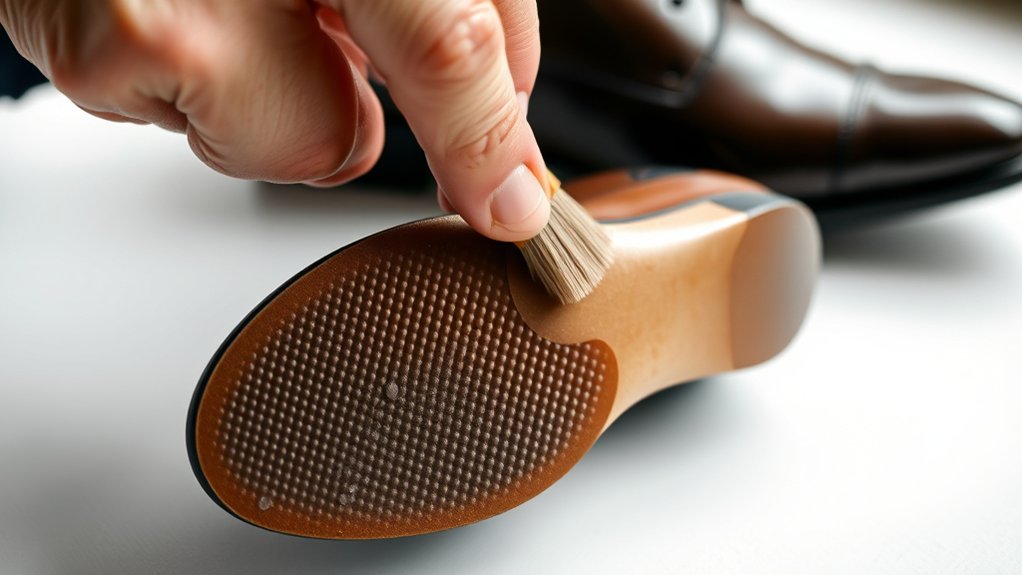
- Remove loose debris with a stiff brush, focusing on grooves and textured areas.
- Use a mild detergent solution and a soft brush to scrub away stubborn residue without damaging the sole material.
- Rinse thoroughly and air-dry completely to avoid moisture buildup, which can weaken traction.
Apply Traction Enhancers
When should you consider applying traction enhancers to your shoes? You should do so when slip prevention becomes critical, especially after observing reduced grip during traction testing or when surfaces are consistently slippery.
Traction enhancers, such as specialized sprays, adhesive pads, or grip tapes, improve sole friction by increasing surface roughness or adding micro-textures. Before application, ensure your soles are clean and dry for optimal adhesion.
Apply enhancers evenly, targeting high-wear areas identified through traction testing data. Regularly reassess your shoes’ performance to determine if reapplication is necessary.
Using these innovative products extends your shoes’ slip resistance capabilities, enhancing safety in diverse environments. By integrating traction enhancers into your maintenance routine, you proactively address slip hazards, ensuring reliable non-slip traction under various conditions.
Store Shoes Properly
Where should you store your shoes to preserve their non-slip properties? Proper store care and innovative packaging methods are crucial to maintaining effective traction. Follow these steps to ensure your shoes retain their grip:
- Keep shoes in a cool, dry environment. Excess humidity or heat degrades sole materials, reducing their non-slip efficiency.
- Use breathable shoe bags or boxes. Avoid plastic wrapping, which traps moisture and accelerates sole deterioration.
- Store shoes with sole protectors or inserts. These minimize wear and maintain tread patterns critical for traction.
Choosing Shoes With Built-In Non-Slip Soles
Why settle for aftermarket solutions when you can start with shoes engineered for slip resistance? Choosing shoes with built-in non-slip soles means selecting footwear designed with advanced tread patterns and specialized rubber compounds that optimize grip on various surfaces.
Opt for shoes with built-in non-slip soles for superior grip and safety on any surface.
Unlike unrelated topics like random trivia, this decision directly impacts your safety and performance. Look for soles featuring multidirectional grooves and high-friction materials, which provide superior traction.
Additionally, some soles incorporate micro-textures that channel liquids away, enhancing slip resistance. When you invest in shoes designed from the ground up for non-slip functionality, you avoid the inconsistencies and wear issues common with add-on products.
This approach ensures reliable stability, reduces fall risk, and integrates seamlessly with your footwear’s overall design for lasting protection.
Frequently Asked Questions
Can Non-Slip Treatments Damage Shoe Materials?
Yes, non-slip treatments can damage shoe materials if you ignore material compatibility. To ensure non slip durability, you must select treatments tailored to your shoe’s specific material, preventing degradation while enhancing grip effectively.
How Long Do Non-Slip Sprays Typically Last?
Non-slip sprays typically last between 2 to 6 weeks, depending on non slip longevity and material compatibility. You’ll find that porous materials reduce effectiveness faster, so regular reapplication ensures sustained grip and safety in varied conditions.
Are Non-Slip Soles Effective on All Surfaces?
Non-slip soles aren’t effective on all surfaces due to varying surface traction and material compatibility. You’ll need to match sole materials specifically to surface types for peak grip and prevent slippage in diverse environments.
Can Children’s Shoes Be Treated With Non-Slip Products?
You can treat children’s shoes with non-slip products, but you must consider footwear chemistry to ensure child safety. Use formulations designed specifically for kids’ materials, avoiding toxic chemicals while enhancing traction on diverse surfaces effectively.
Do Non-Slip Treatments Affect Shoe Flexibility?
Non-slip treatments generally maintain non slip compatibility without compromising shoe flexibility when applied correctly. Advanced formulations bond with soles, enhancing grip while preserving material elasticity.
This ensures your shoes stay flexible and safe under various conditions.
Conclusion
Now that you know how to transform slippery shoes into reliable grip machines, don’t let slick soles trip you up. By combining DIY fixes, professional treatments, and smart shoe choices, you’ll anchor yourself firmly on any surface.
Think of your shoes as a ship’s anchor—without proper grip, you’re adrift. Keep your traction sharp, apply solutions carefully, and step confidently into safer, slip-free terrain every time.
With these tips, making shoes non slip becomes an easy and effective way to enhance your safety and comfort wherever you go.