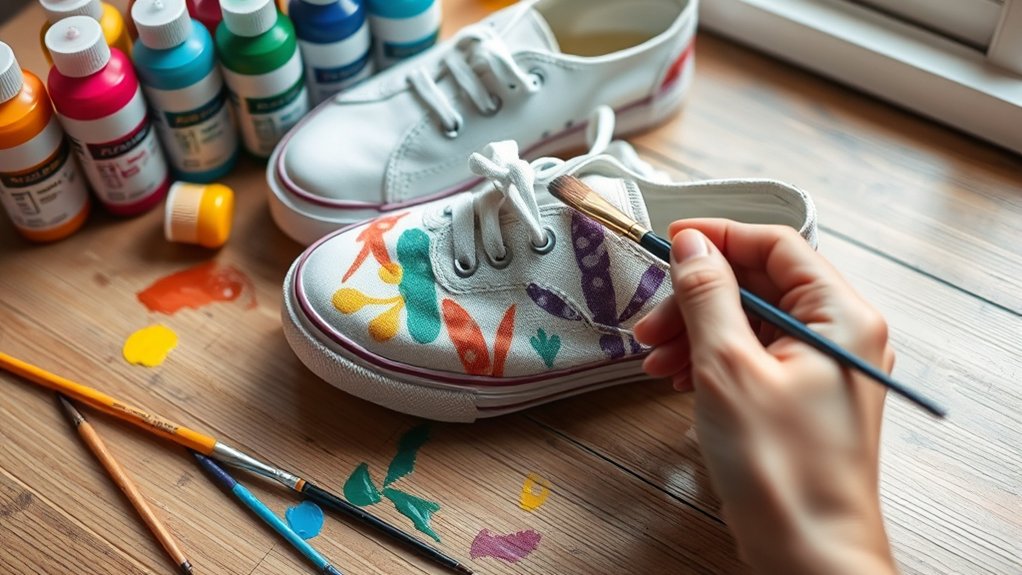
How to Paint Shoes
To paint your shoes, start by cleaning them thoroughly and lightly sanding any glossy areas.
Painting shoes requires careful preparation to ensure the paint adheres well and lasts long.
Use painter’s tape to protect parts you don’t want painted.
Choose flexible acrylic or fabric paints depending on your shoe material—leather needs leather-specific paints, while fabric works best with fabric dyes or acrylic fabric paints.
Apply thin, even layers, letting each dry completely before adding the next.
Finish with a clear, flexible sealant to preserve your design.
With proper preparation and technique, you’ll achieve lasting, vibrant results.
You can find tips on custom designs, sealing, and fixing common issues next.
Key Takeaways
- Clean and dry shoes thoroughly, then lightly sand glossy surfaces for better paint adhesion.
- Choose paint types based on shoe material: flexible acrylic or leather-specific paints for leather, fabric dyes or acrylic fabric paints for fabric.
- Apply thin, even layers of paint, allowing each coat to dry fully before adding the next to avoid streaks and cracking.
- Protect non-painted areas with painter’s tape and use a palette for mixing custom colors.
- Seal painted shoes with a clear, flexible topcoat, applying thin layers and allowing 24–48 hours to cure in a ventilated space.
Materials Needed for Painting Shoes
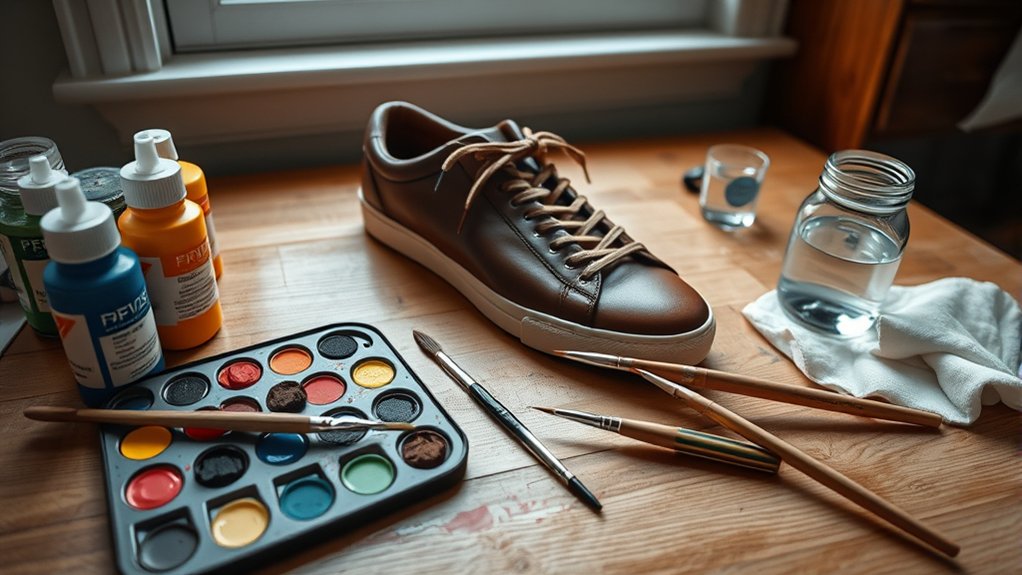
What exactly do you need to get started painting shoes? First, gather a selection of paints suited for fabric or leather, depending on your shoe material.
Next, choose budget-friendly brushes with fine tips for detailed work and broader ones for larger areas. This variety helps you achieve clean lines and smooth coverage. Don’t forget a palette to mix creative color combos, allowing you to customize shades perfectly.
You’ll also need painter’s tape to protect areas you want to keep paint-free, and a sealant to preserve your design. Lastly, prepare your workspace with old newspapers or a drop cloth to avoid messes.
With these materials, you’re set to transform any pair of shoes into a vibrant, personalized masterpiece.
Best Paint Types for Different Shoe Materials
When painting leather shoes, you’ll want to use flexible acrylic or leather-specific paints that won’t crack as the material bends.
For fabric shoes, fabric paints or acrylics mixed with a fabric medium provide the best adhesion and durability. Choosing the right paint guarantees your design stays vibrant and lasts through regular wear.
Paint Options For Leather
Choosing the right paint for leather shoes is essential to achieve a durable and vibrant finish. Acrylic leather paints are your best bet. They offer excellent dye compatibility, adhere well, and flex with the leather without cracking.
Before painting, clean and condition the leather to maintain proper leather care, ensuring the paint bonds effectively. Avoid oil-based paints; they often sit on top and chip quickly.
Water-based acrylics also allow you to build layers without compromising the leather’s breathability. For deep colors, consider leather dyes specifically formulated for leather care, but note these penetrate rather than coat, altering the shoe’s texture.
Ultimately, opt for paints designed for leather to balance durability, flexibility, and color retention, giving your shoes a professional and long-lasting finish.
Suitable Paints For Fabric
How do you guarantee vibrant, lasting results when painting fabric shoes? Choosing the right paint is crucial. Fabric dyes penetrate fibers, offering deep, permanent color ideal for natural materials like cotton or canvas.
They bond well but require heat setting to fix the color. Use an iron or heat press on heat set fabrics for durability. Alternatively, acrylic fabric paints provide excellent coverage and flexibility, resisting cracking when the shoe loves to flex.
They’re suitable for synthetic blends but may need a fabric medium to maintain softness. Avoid standard acrylic paints as they can flake or peel on fabric. Always prep the shoe by cleaning thoroughly and lightly sanding if needed.
Proper selection and application ensure your painted fabric shoes stay vibrant and withstand daily wear.
How to Prepare Your Shoes for Painting
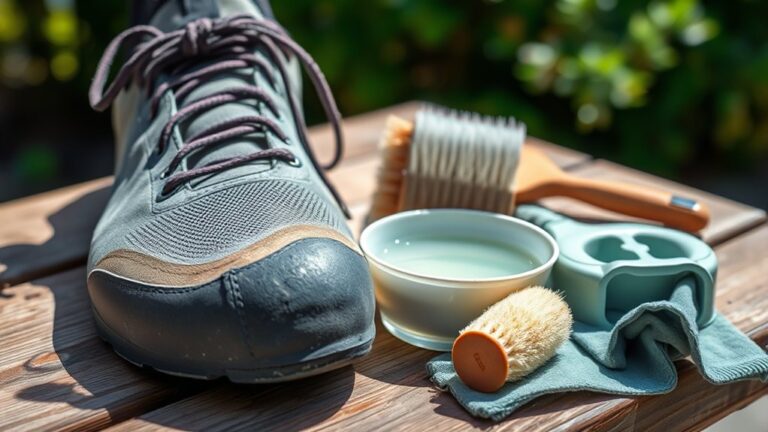
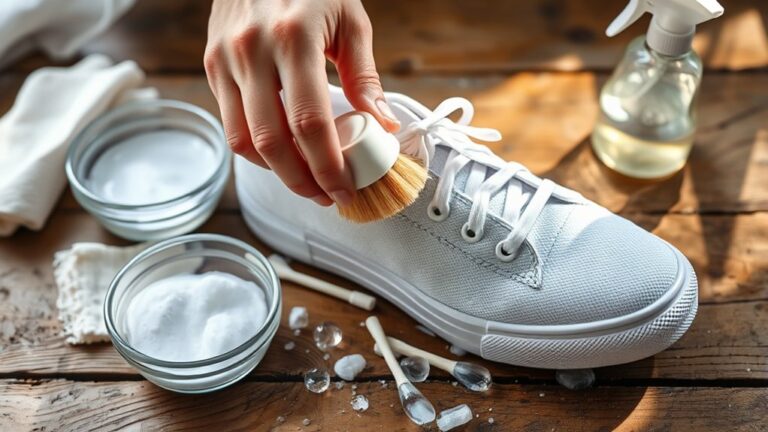
Why is proper preparation essential before painting your shoes? It guarantees your paint adheres evenly and lasts longer. Start by thoroughly cleaning your shoes to remove dirt, oils, and any surface coatings. Use a mild soap and water, then let them dry completely.
If your shoes have a glossy finish, lightly sand them with fine-grit sandpaper to create a texture for better paint grip. Protect areas you don’t want painted with painter’s tape.
When setting up your workspace, prepare your brushes carefully. Wash them before use to remove residues that might affect color mixing or paint application. Proper preparation saves you frustration and enhances your final result, making your custom-painted shoes look professional and vibrant.
Basic Techniques for Painting Your Shoes at Home
Mastering basic painting techniques will ensure your shoes look polished and professional. Start by applying thin, even layers using a soft brush or sponge, allowing each coat to dry thoroughly to avoid clumping.
Maintain consistent brush strokes in one direction for a smooth finish. When mixing colors, use a palette to blend shades carefully, testing on a scrap surface to achieve your desired hue.
Remember, precise color mixing enhances the vibrancy and uniformity of your paint job. Prioritize shoe care by cleaning and conditioning the material before painting, which improves paint adhesion and longevity.
Lastly, seal your work with a clear, flexible topcoat to protect the paint from cracking and wear. Following these steps guarantees a durable, attractive result that refreshes your shoes beautifully.
How to Add Custom Designs and Details
Once you’ve laid down a smooth, even base coat, you can start bringing your shoes to life with custom designs and intricate details. Focus on precision and layering to achieve a professional look. Here’s how to proceed:
- Use custom brushwork to add fine lines and shapes, allowing you to create sharp, controlled patterns that enhance your design.
- Employ color blocking by painting bold, solid sections of contrasting colors. This technique adds depth and visual interest while maintaining clean edges.
- Incorporate small details like dots, stripes, or geometric shapes with a fine-tipped brush to elevate your artwork’s complexity.
How to Seal and Protect Your Painted Shoes
To keep your painted shoes looking fresh, you’ll need to choose a sealant that offers strong protection without altering the colors. Apply it evenly using a light, steady hand to avoid streaks or buildup, ensuring full coverage on all painted areas.
Finally, let your shoes dry and cure completely in a well-ventilated space to lock in durability and prevent smudging.
Choosing the Right Sealant
How do you guarantee your beautifully painted shoes stay vibrant and protected over time? Choosing the right shoe sealant is essential. A quality sealant shields your artwork from moisture, dirt, and wear.
When selecting a waterproof sealant, consider these key factors:
- Material compatibility: Ensure the sealant bonds well with your shoe’s surface, whether leather, canvas, or synthetic.
- Finish type: Decide if you want a matte, satin, or glossy finish to complement your design.
- Durability and flexibility: Pick a sealant that flexes with the shoe to prevent cracking while providing long-lasting protection.
Application Techniques for Protection
Applying a sealant correctly guarantees your painted shoes maintain their vibrancy and durability through daily wear. Begin by choosing a spray sealant to apply thin, even coats, preventing streaks that could dull your artwork.
Hold the spray can about 6-8 inches away, moving steadily to avoid pooling. If using a brush-on sealant, apply with a soft, synthetic brush in light layers, following the shoe’s contours to protect the paint while preserving texture.
Let each coat dry before applying the next to build a strong barrier. Proper sealing complements color theory by locking in hues and preventing fading from UV exposure.
Consistent shoe care, including gentle cleaning and avoiding harsh conditions, extends the protective seal, ensuring your customized shoes look fresh and vibrant longer.
Drying and Curing Tips
Once you’ve sealed your shoes with care, allowing the paint to dry and cure properly becomes the next priority to ensure lasting protection. Proper drying times prevent smudging and ensure the sealer bonds effectively. Here’s how to optimize this phase:
- Choose a well-ventilated space. Good airflow accelerates drying and helps with odor mitigation, especially if you used strong sealants.
- Avoid direct sunlight and heat sources. These can cause uneven drying or cracking in the paint layer, compromising durability.
- Allow a minimum of 24-48 hours for curing. Even if the surface feels dry, deeper layers need time to fully harden for maximum protection.
How to Fix Common Shoe Painting Mistakes
Although painting shoes can be a rewarding project, mistakes like uneven coverage, paint cracking, or smudges often happen. To fix unrelated paint streaks, gently sand the affected area with fine-grit sandpaper until smooth, then wipe clean before repainting with thin, even coats.
If you notice mismatched colorways, carefully repaint the mismatched sections using a small brush, blending edges for a seamless transition. For paint cracking, remove the cracked paint by lightly sanding and clean the surface thoroughly.
Apply a flexible leather or fabric primer before repainting to prevent future cracking. Always allow each layer to dry fully before adding another. Taking these precise steps ensures your shoe paint job looks professional and lasts longer.
Frequently Asked Questions
How Long Does Shoe Paint Typically Last Before Fading?
You can expect shoe paint to last about 6 to 12 months before noticeable color fading occurs, depending on wear durability factors like daily use, exposure to elements, and the quality of paint and sealant you applied.
Can Painted Shoes Be Worn in the Rain?
Don’t let your painted shoes drown in the rain without rain protection. Always check material compatibility first. Waterproof sprays can shield your artwork, but heavy downpours risk peeling. Treat them gently to keep colors vibrant and intact.
Is It Safe to Paint Shoes for Children?
Yes, it’s safe to paint shoes for children if you use non-toxic, safe materials and ensure child supervision throughout. This prevents accidental ingestion or skin irritation while allowing them to enjoy creativity safely and responsibly.
How Do Painted Shoes Affect Shoe Comfort and Flexibility?
You won’t feel like you’re walking on bricks, but painted shoes can reduce shoe comfort and material flexibility slightly. Using thin, flexible paint layers helps maintain softness and bendability, preserving your shoes’ natural feel and comfort.
Can I Paint Shoes With Special Features Like LED Lights?
You can paint shoes with LED elements, but you must avoid covering lights or wiring. Protect battery safety by using thin, flexible paints and ensuring ventilation to prevent overheating or damage to electrical components during and after painting.
Conclusion
Now that you know how to paint your shoes, you can confidently transform any pair into a unique statement piece. Remember, preparation and the right paint are key to lasting results. Don’t worry about mistakes—they’re part of the process and easily fixed with patience.
By sealing your design properly, you’ll protect your artwork and enjoy your personalized shoes longer. So, get creative, take your time, and watch your shoes come to life with your own touch!
With these tips, you’re well on your way to mastering how to paint shoes and creating one-of-a-kind footwear that truly stands out.