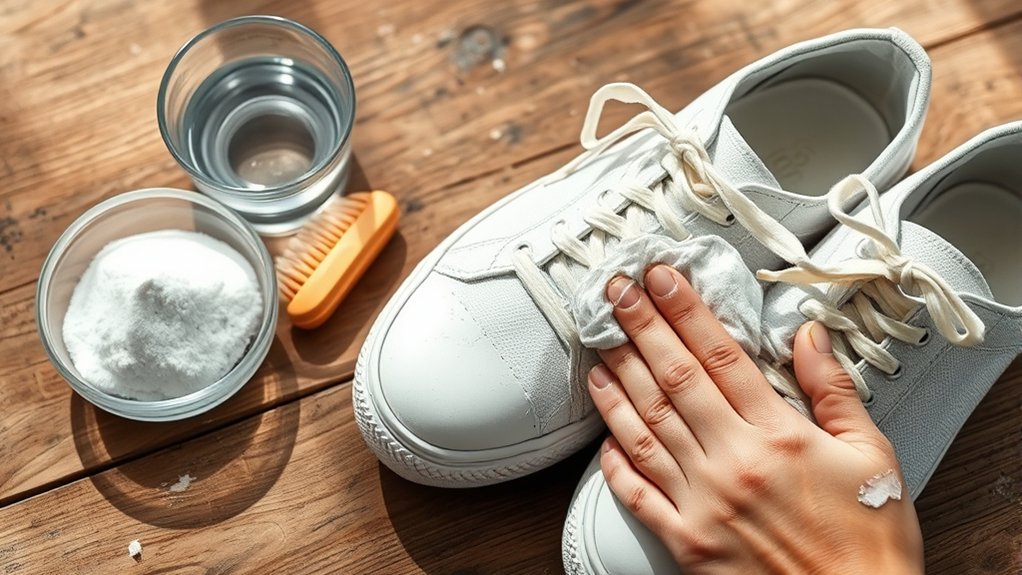
How to Make Tennis Shoes White Again
To make your tennis shoes white again, start by removing the laces and insoles. Next, brush off any loose dirt to prepare them for cleaning.
Use a mixture of mild detergent and warm water, or household ingredients like baking soda, white vinegar, and hydrogen peroxide to brighten them safely. Gently scrub the shoes and rinse thoroughly.
Allow the shoes to air dry away from direct sunlight to prevent discoloration. For tough stains, try applying a baking soda paste or using a magic eraser.
Following these steps ensures effective whitening, and there are also advanced tips and methods you can explore for lasting brightness.
Key Takeaways
- Remove laces and insoles, brush off dirt, and test whitening agents on a hidden area before cleaning.
- Use household ingredients like baking soda, white vinegar, hydrogen peroxide, or lemon juice for gentle whitening.
- Clean shoes with a mild detergent and warm water mixture, then rinse and air dry away from sunlight.
- Treat tough stains with a baking soda paste, magic eraser, or rubbing alcohol depending on stain type.
- For machine washing, use a gentle cycle with cold water, place shoes in a mesh bag, and air dry afterward.
How To Prepare Your Tennis Shoes For Whitening
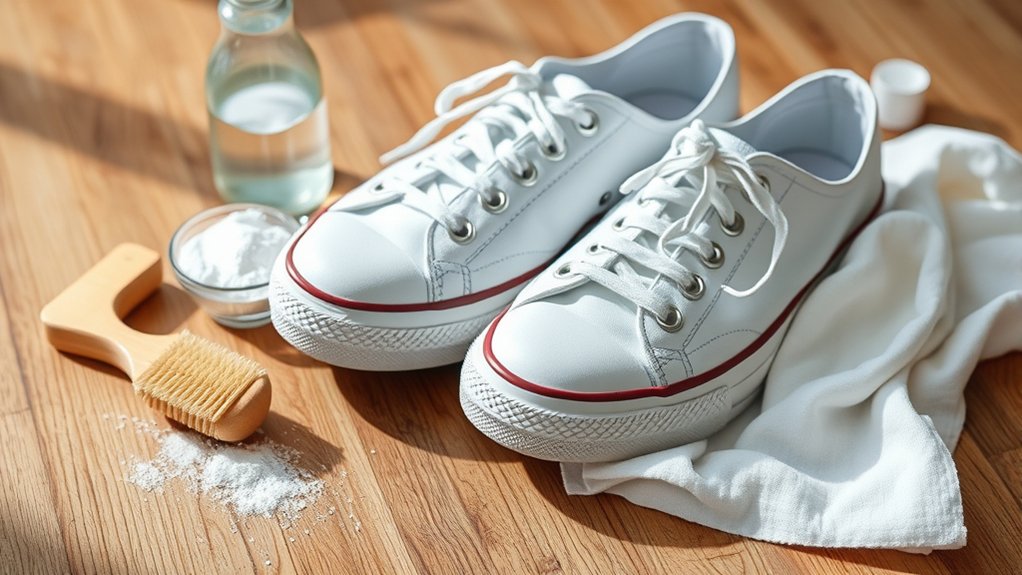
Before you begin whitening your tennis shoes, how should you properly prepare them to guarantee the best results? Start by removing the laces and insoles to clean them separately and avoid uneven treatment.
Remove laces and insoles first to clean separately and ensure even whitening results.
Next, brush off any loose dirt or debris using a soft brush or cloth. Understanding your shoes’ material variants is crucial. Leather, canvas, and synthetic fabrics each require specific care tips to prevent damage.
For example, leather needs gentle cleaning solutions, while canvas tolerates more vigorous scrubbing. Always test any whitening agent on a small, hidden area first.
Finally, ensure your shoes are completely dry before applying any whitening products to maximize effectiveness and avoid trapping moisture, which could cause discoloration or mold growth. Proper preparation sets the foundation for a successful whitening process.
Household Ingredients That Whiten Tennis Shoes
How exactly can common household ingredients restore your tennis shoes’ brightness without harsh chemicals? You can effectively tackle both stain removal and sole whitening using simple, everyday items. These ingredients are gentle yet powerful, making them ideal for maintaining your shoes’ appearance without damage.
Consider the following:
- Baking Soda: Acts as a mild abrasive and natural whitener, perfect for scrubbing away stains.
- White Vinegar: Breaks down dirt and grime, enhancing stain removal.
- Hydrogen Peroxide: Works as a bleaching agent, brightening soles and fabric.
- Lemon Juice: Contains natural acids that help lighten yellowing and discoloration.
How To Clean White Tennis Shoes Step-By-Step
Now that you know which household ingredients can brighten and whiten your tennis shoes, it’s time to put them into action with a clear cleaning process. First, remove the laces and loosen any dirt by brushing off debris with a soft brush. This idea1 preps the shoes for deeper cleaning.
Next, create a mixture of mild detergent and warm water, then use a clean cloth or sponge to gently scrub the fabric, focusing on evenly distributing the solution. Rinse with a damp cloth to avoid residue.
For drying, stuff the shoes with paper towels to maintain shape and air dry away from direct sunlight. This idea2 prevents yellowing. Following these steps ensures your white tennis shoes look refreshed and clean without damage.
How To Remove Tough Stains And Scuffs From White Tennis Shoes
Wondering how to tackle those stubborn stains and scuffs that regular cleaning can’t remove from your white tennis shoes? Effective stain removal and scuff repair require targeted techniques. Start by identifying the stain type, such as oil, dirt, or ink, to choose the right treatment.
Use a soft brush and a mixture of baking soda and water to gently scrub tough spots. For scuff marks, a magic eraser or a white pencil eraser can work wonders without damaging the shoe surface. Always test any product on a small area first to avoid discoloration.
Here’s a quick guide:
- Apply a paste of baking soda and water for deep stain removal
- Use a magic eraser for precise scuff repair
- Treat ink stains with rubbing alcohol carefully
- Rinse and air dry thoroughly to finish
These steps keep your tennis shoes looking fresh and white.
How To Whiten Tennis Shoes Using A Washing Machine
Before tossing your tennis shoes into the washing machine, make sure to remove the laces and insoles and brush off any loose dirt. Select a gentle cycle with cold water to protect the fabric and maintain the shoe’s shape.
Using a small amount of mild detergent will help brighten your shoes without causing damage.
Preparing Shoes Properly
How should you prepare your tennis shoes to guarantee the washing machine effectively whitens them without causing damage? Proper prepping shoes is essential to preserve their integrity and maximize whitening basics.
Start by removing laces and insoles; these parts need separate cleaning to avoid tangling and ensure thorough whitening. Next, brush off loose dirt and debris with a soft brush to prevent clogging the machine.
Place your shoes inside a mesh laundry bag to protect them during the wash cycle. Finally, add towels to balance the load, which reduces impact and maintains the shape of your shoes.
Choosing The Right Settings
Which washing machine settings will best whiten your tennis shoes without causing damage? Start by choosing materials compatible with machine washing; canvas or synthetic fabrics handle the process well, while leather or suede require alternative methods.
Select a gentle or delicate cycle to minimize wear and tear. Set the water temperature to warm. Hot water can loosen stains but may shrink or warp shoes, while cold water might be less effective at whitening.
Avoid harsh spin cycles; a slower spin reduces the risk of deformation. Use a mild detergent designed for whites to enhance brightness without damaging fabric. By carefully choosing these settings, you ensure your tennis shoes come out cleaner and whiter, maintaining their shape and extending their lifespan.
Tips To Keep Your White Tennis Shoes Looking Bright Longer
Why do white tennis shoes lose their brightness so quickly? Dirt, exposure to sunlight, and regular wear gradually dull their crisp look. To maintain that fresh color and ensure long term care, you need a consistent routine.
Here are practical tips to keep your white tennis shoes looking bright longer:
- Clean them regularly with a gentle brush and mild detergent to prevent dirt buildup.
- Store shoes in a cool, shaded area to avoid yellowing from UV rays.
- Use a protective spray designed for sneakers to repel stains and moisture.
- Rotate your shoes to reduce excessive wear and allow them to air out.
When Should You Try Commercial Shoe Whitening Products?
Even with regular cleaning and careful maintenance, white tennis shoes will eventually show signs of wear and discoloration that home methods can’t fully address. That’s when you should consider commercial whitening products. These products are designed to tackle stubborn stains and yellowing that basic cleaning can’t remove.
If your shoes have persistent grime, deep scuffs, or uneven discoloration, commercial whitening can restore their brightness efficiently. Before using them, review product instructions carefully to avoid damage.
Additionally, consult two word discussion ideas like “product reviews” or “usage tips” to select the best option for your shoe material. Remember, commercial whitening isn’t a substitute for regular care but a targeted solution when your shoes need that extra boost to look fresh and white again.
Frequently Asked Questions
Can Whitening Tennis Shoes Damage Their Material or Structure?
Yes, whitening tennis shoes can damage their material or structure if you’re not careful. You should consider the concerned materials and choose products with spectrum safety to avoid discoloration, weakening, or fabric breakdown during cleaning.
Are There Specific Brands of Whitening Products Recommended for Tennis Shoes?
You should choose brand specific whitening products designed for sneakers, like Crep Protect or Jason Markk, because they use shoe safe detergents that protect materials while effectively brightening your tennis shoes without causing damage.
How Often Should I Whiten My Tennis Shoes for Best Results?
You should adjust whitening frequency based on wear and dirt buildup, typically every 2-4 weeks. Always prioritize material safety by testing products on a small area first to prevent damage and maintain your tennis shoes’ quality.
Can Tinted or Colored Tennis Shoes Be Whitened Effectively?
You can’t effectively whiten colored shoes without risking damage or discoloration. Whitening impact is limited on tinted materials, so it’s best to use specialized cleaners designed for colored shoes.
These cleaners help maintain the original look safely and practically.
Is It Safe to Whiten Tennis Shoes With Sensitive Skin?
Worried about sensitive skin safety? You should check whitening product ingredients carefully, avoid harsh chemicals, and wear gloves.
Opt for gentle, hypoallergenic formulas to protect your skin while effectively whitening your tennis shoes without irritation or harm.
Conclusion
Now that you’ve prepared, polished, and perfected your tennis shoes, you can confidently conquer dirt and dullness. By consistently cleaning, carefully combating stains, and cautiously choosing whitening methods, you’ll keep your kicks crisp and captivating.
Remember, routine restoration reinforces radiance, while smart stain strategies stave off stubborn spots. With these simple steps, your white tennis shoes will stay sparkling, sharp, and striking.
This ensures you always step out with style and spotless success, making it easier than ever to make tennis shoes white again.