Do Dogs Need Snow Shoes
You should consider snow shoes for dogs if your dog’s paws get cracked, irritated, or show signs of discomfort from cold, ice, or salt. Dogs with thin fur or sensitive skin especially benefit from the added protection that snow shoes provide. Snow shoes offer insulation, traction, and help prevent injury during winter walks.
If your dog resists boots, alternatives like protective paw coatings can help. Understanding when and how to use snow shoes guarantees your dog stays safe and comfortable in harsh conditions. Ready to explore how to pick the right pair?
Key Takeaways
- Dogs with thin fur, sensitive skin, or paw injuries benefit from snow shoes to protect against cold, ice, salt, and frostbite.
- Signs dogs need snow shoes include paw redness, cracking, limping, licking, chewing, or reluctance to walk on snow and ice.
- Properly fitted snow shoes should be snug, waterproof, insulated, breathable, and have secure closures and non-slip soles.
- Gradual introduction and positive reinforcement help dogs adjust comfortably to wearing snow shoes during winter walks.
- Alternatives like protective paw coatings and indoor anti-slip mats offer comfort for dogs resistant to boots.
When Do Dogs Need Snow Shoes for Winter Protection?
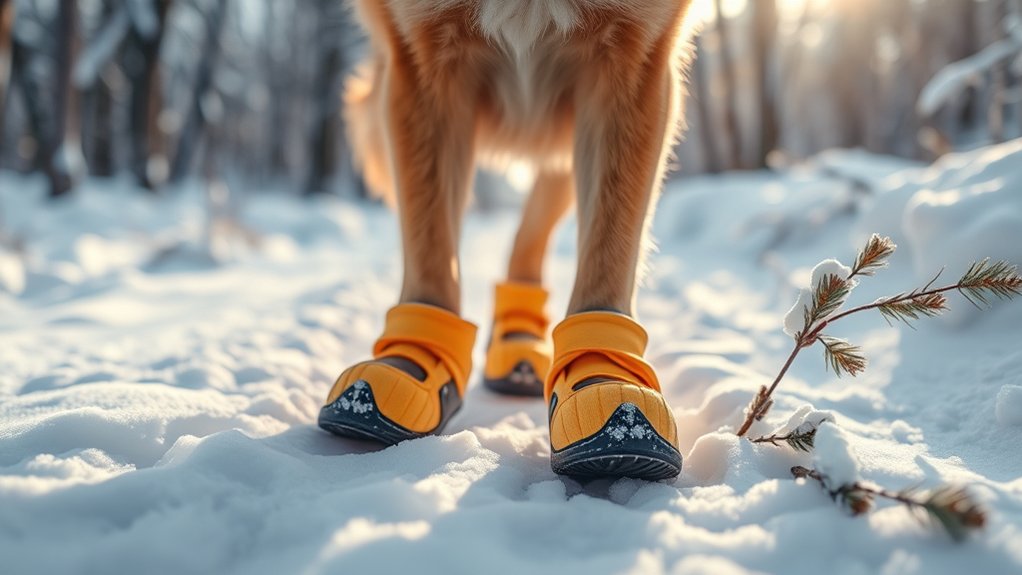
When should you consider putting snow shoes on your dog to protect them during winter? You’ll want to assess your dog’s cold weather paw health first. If your dog spends a lot of time outside in snow, ice, or salted sidewalks, their paws can become cracked, irritated, or even frostbitten.
Dogs with thin fur, sensitive skin, or existing paw injuries may have increased winter footwear needs. Snow shoes can offer a protective barrier against harsh elements, preventing discomfort and injury.
Additionally, if you notice your dog lifting paws frequently or licking them excessively after walks, it’s a clear sign their paws are struggling. Addressing these issues early helps maintain your dog’s comfort and mobility throughout the cold season.
Picking the Right Snow Shoes for Your Dog
How do you choose the right snow shoes to keep your dog comfortable and protected? Start by measuring your dog’s paws accurately, as the boot fit criteria are essential for effective paw protection. The boots should fit snugly without being too tight, allowing room for movement while preventing snow and ice from entering.
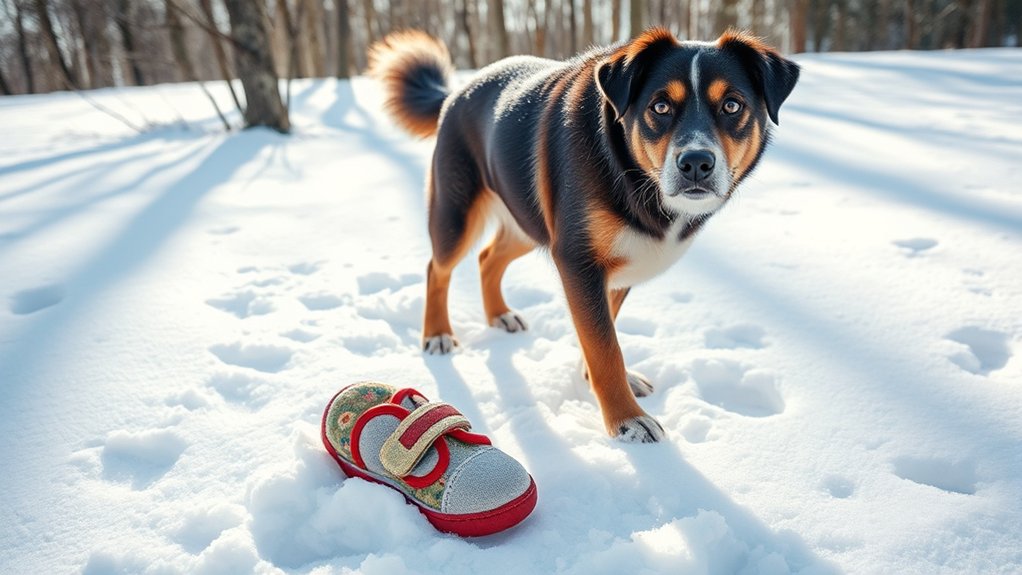
Look for durable, waterproof materials with non-slip soles to ensure traction on icy surfaces. Adjustable closures, like Velcro straps, help secure the boots without causing discomfort.
Consider your dog’s activity level and the typical weather conditions to select boots with appropriate insulation and breathability. Remember, well-fitting snow shoes not only protect paws from cold and salt but also prevent injuries, making winter walks safer and more enjoyable for your furry friend.
Signs Your Dog Needs Snow Shoes for Paw Protection
Why should you consider snow shoes for your dog’s paws? If your dog shows signs of dog paw irritation like redness, cracking, or limping after walks in the cold, snow shoes can help prevent further damage.
Winter weather hazards such as ice, salt, and frozen ground can be harsh on sensitive paw pads. You might notice your dog licking or chewing their paws excessively, which signals discomfort.
Additionally, if your dog seems reluctant to walk on snowy or icy surfaces, it’s a clear sign their paws need protection. Snow shoes create a barrier against these hazards, reducing the risk of cuts, frostbite, and irritation.
Paying attention to these signs helps you keep your dog comfortable and safe throughout winter.
Alternatives to Snow Shoes for Protecting Your Dog’s Paws
Wondering if there are other ways to protect your dog’s paws besides snow shoes? You can try applying a protective paw coating, which forms a barrier against ice, salt, and cold surfaces without the bulk of boots.
These coatings are easy to apply and provide a natural shield that helps prevent cracking and irritation. Additionally, consider using indoor anti slip mats to keep your dog secure when coming inside with wet, snowy paws.
These mats reduce slipping risks and keep your floors safer. Both options offer practical and comfortable alternatives, especially for dogs that resist wearing snow shoes.
Tips to Help Your Dog Get Comfortable Wearing Snow Shoes
Adjusting to snow shoes can be challenging for many dogs, but with patience and positive reinforcement, you can make the process smoother. Start by introducing the snow shoes gradually, letting your dog sniff and explore them first. Use treats and praise to create a positive association.
Next, try putting the snow shoes on for short periods indoors, focusing on comfort and fit. Watch for signs of discomfort and adjust as needed. Practice walking indoors before venturing outside to help your dog get used to the new sensation.
Remember to keep communication open. Two word discussion ideas like “Good job” or “Stay calm” help reinforce calm behavior. With consistent, gentle encouragement, your dog will become more confident and comfortable wearing snow shoes during winter walks.
Frequently Asked Questions
Can Snow Shoes Improve My Dog’s Traction on Ice?
Yes, snow shoes can improve your dog’s traction on ice, enhancing ice safety by preventing slips and injuries. You’ll help your dog stay secure and comfortable during winter walks, making outdoor adventures safer for both of you.
Are Snow Shoes Safe for Dogs With Sensitive Skin?
Like walking on clouds, snow shoes can be safe for dogs with skin sensitivities if you choose soft, breathable fabrics. You’ll want to avoid harsh materials that cause fabric irritation and check frequently to keep your pup comfortable.
How Do I Clean and Maintain Dog Snow Shoes?
You should establish a cleaning routine by rinsing dog snow shoes after each use and air-drying them. Check for wear regularly to guarantee material durability, helping your dog’s paws stay protected and comfortable in harsh conditions.
Can Snow Shoes Prevent Frostbite in Dogs?
Yes, snow shoes help with frostbite prevention by shielding your dog’s paws from ice and cold surfaces.
Plus, they provide traction benefits, reducing slips and injuries. Always ensure a proper fit for maximum protection and comfort.
Do All Dog Breeds Tolerate Snow Shoes Equally Well?
You can’t fit a square peg in a round hole, just like snow shoes don’t suit every dog. Due to diversity in breeds and paw pad sensitivity, some dogs tolerate them well, while others find them uncomfortable or restrictive.
Conclusion
When winter’s icy breath chills your pup’s paws, snow shoes become their sturdy shield, guarding against frostbite and harsh terrain. Choosing the right fit is like finding a trusted companion for their adventures. If you spot discomfort or cracking, don’t hesitate to gear up.
Remember, alternatives exist, but snow shoes offer unmatched protection. With patience and care, you’ll help your furry friend dance through snowy trails comfortably, turning cold challenges into joyful journeys. In the end, dogs truly benefit from snow shoes to keep their paws safe and warm.