Are Barefoot Shoes Good for Plantar Fasciitis
You can use barefoot shoes to help manage plantar fasciitis, as they promote natural foot mechanics and reduce heel impact, which may ease pain. Barefoot shoes encourage a more natural gait, potentially benefiting those with this condition. However, they offer minimal cushioning, which might not suit everyone.
A gradual shift to barefoot shoes is essential to avoid worsening symptoms. If you have plantar fasciitis, monitor your response carefully and consult a professional before fully switching. Understanding how these shoes affect your condition and proper adaptation can help you make an informed decision about their role in your recovery.
Key Takeaways
- Barefoot shoes promote natural foot mechanics and muscle activation, potentially reducing plantar fasciitis pain by supporting the arch and decreasing heel impact.
- Transitioning to barefoot shoes requires gradual adaptation to avoid aggravating plantar fascia inflammation or symptoms.
- Minimal cushioning in barefoot shoes may increase strain and discomfort if used improperly or without caution.
- Proper sizing and monitoring symptoms are essential to prevent increased pain or instability when using barefoot shoes for plantar fasciitis.
- Professional consultation and considering alternatives like orthotics or physical therapy are recommended before fully switching to barefoot shoes.
What Exactly Are Barefoot Shoes and How Do They Affect Plantar Fasciitis?
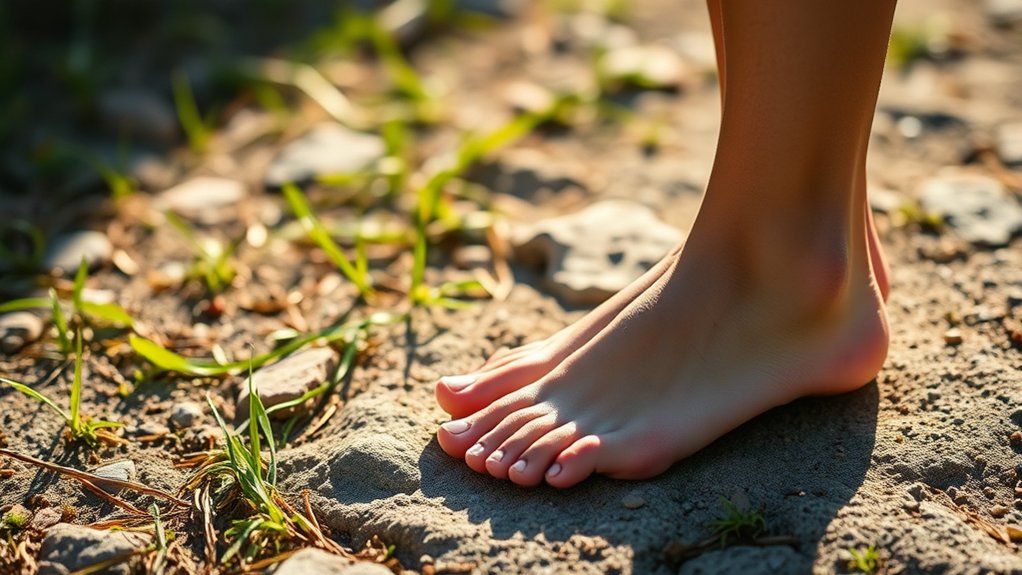
What makes barefoot shoes distinct, and how do they influence plantar fasciitis? Barefoot shoes prioritize minimalism, offering a thin, flexible sole and lightweight shoe material that closely mimics barefoot walking. This design promotes barefoot benefits such as improved foot muscle activation, enhanced proprioception, and a more natural gait.
When managing plantar fasciitis, these shoes can reduce excessive heel strike impact and encourage proper foot mechanics, potentially alleviating strain on the plantar fascia. However, transitioning too quickly may exacerbate symptoms due to increased demands on foot structures.
Therefore, you should introduce barefoot shoes gradually, allowing adaptation to their unique shoe material and barefoot benefits. In summary, barefoot shoes provide a biomechanically favorable environment that can support plantar fasciitis management when used appropriately.
How Does Plantar Fasciitis Impact Your Feet?
When you have plantar fasciitis, the inflammation of the plantar fascia causes sharp heel pain that often worsens with activity. This pain can limit your foot’s mobility and affect your daily movements.
Understanding these effects is essential for managing the condition effectively.
Plantar Fascia Inflammation Effects
How exactly does plantar fasciitis affect your feet? This condition causes inflammation of the plantar fascia, a thick band of tissue supporting your foot’s arch. You might expect barefoot misconceptions or minimalist myths to simplify recovery, but the inflammation impacts your foot in specific ways:
- Pain and Tenderness: You’ll feel sharp pain near the heel, especially after periods of rest or first steps in the morning.
- Swelling and Stiffness: The inflamed fascia restricts normal foot flexibility, causing stiffness that can limit daily activities.
- Altered Gait Mechanics: To avoid pain, you’ll unconsciously change your walking pattern, potentially leading to further strain or injury.
Understanding these effects helps you evaluate whether barefoot shoes support or hinder your plantar fascia’s recovery.
Foot Pain And Mobility
Why does plantar fasciitis cause significant foot pain and limit mobility? The condition inflames the plantar fascia, a thick band of tissue supporting your foot’s arch. This inflammation results in sharp heel pain, especially during initial steps after rest, directly impairing your ability to walk or stand comfortably.
As a result, your gait changes, potentially causing further strain on other joints. When managing plantar fasciitis, practicing proper barefoot etiquette, such as avoiding prolonged barefoot walking on hard surfaces, can prevent exacerbation. Additionally, selecting shoes with appropriate support and considering shoe color coordination ensures you maintain both foot health and style.
These measures collectively help reduce discomfort and improve mobility, enabling you to resume daily activities with less pain and better stability.
Can Barefoot Shoes Relieve Plantar Fasciitis Pain?
Can barefoot shoes effectively relieve plantar fasciitis pain? You may find relief by addressing underlying biomechanical issues, but barefoot skepticism is warranted due to minimalist tradeoffs. Barefoot shoes alter foot mechanics, which can help or hinder pain depending on your condition.
Consider these key factors:
Key factors to consider when using barefoot shoes for plantar fasciitis relief.
- Improved foot muscle engagement: Barefoot shoes encourage natural foot motion, potentially strengthening muscles supporting the arch.
- Reduced heel impact: Minimal cushioning shifts heel strike patterns, possibly decreasing plantar fascia stress.
- Adaptation period: Your tissues need time to adjust; sudden changes can exacerbate pain.
While barefoot shoes might relieve symptoms by promoting natural gait and muscle activation, they require cautious introduction to avoid aggravating plantar fasciitis. Always monitor your response and consult a healthcare professional before switching footwear.
Are Barefoot Shoes Risky If You Have Plantar Fasciitis?
Although barefoot shoes offer potential benefits, they carry risks if you have plantar fasciitis. The minimal cushioning and support these shoes provide can increase strain on your plantar fascia, potentially worsening pain or injury.
Barefoot safety becomes critical, as your feet have less protection against uneven surfaces, increasing the risk of cuts, bruises, or altered gait patterns that may exacerbate symptoms. Additionally, sock choices matter; selecting socks with adequate padding and moisture control can help reduce friction and prevent blisters, which are more likely due to the shoe’s thin sole.
If you experience increased discomfort or instability while wearing barefoot shoes, it’s important to reconsider their use and consult a healthcare professional to tailor an appropriate footwear strategy for your condition.
How to Transition to Barefoot Shoes Without Worsening Plantar Fasciitis
When transitioning to barefoot shoes with plantar fasciitis, you need to proceed gradually to prevent aggravating your condition. Address common transition challenges by carefully managing your foot’s adaptation to minimal support. Follow these steps:
- Start Slowly: Wear barefoot shoes for short periods, such as 30 minutes daily, increasing duration weekly to allow your plantar fascia to strengthen without overload.
- Check Shoe Sizing: Ensure proper shoe sizing; barefoot shoes should fit snugly without compressing, as incorrect sizing can exacerbate pain and hinder transition.
- Monitor Symptoms: Track pain levels and foot fatigue. If symptoms worsen, reduce wear time or consult a healthcare professional before continuing.
Best Alternatives for Plantar Fasciitis Relief
If barefoot shoes don’t provide the relief you need, exploring other options can help manage plantar fasciitis more effectively. You should consider alternatives offering brief comfort and evaluate cost considerations to select the best fit for your condition.
Supportive orthotics, night splints, and physical therapy often deliver targeted relief. Here’s a comparison to guide your choice:
| Alternative | Brief Comfort | Cost Considerations |
|---|---|---|
| Orthotic Inserts | Moderate, immediate | Moderate, reusable |
| Night Splints | High during use | Low to moderate |
| Physical Therapy | Progressive, lasting | High, session-based |
| Compression Socks | Mild, temporary | Low |
| Anti-inflammatory Meds | Variable | Low to moderate |
Evaluate these based on your symptoms and budget to optimize plantar fasciitis management.
Frequently Asked Questions
Can Barefoot Shoes Improve Overall Foot Strength?
Yes, barefoot shoes can improve your foot strength by promoting natural movement. Their minimalist shoe design encourages muscle activation and enhances proprioception, which collectively supports stronger, more resilient feet over time when used consistently and correctly.
Are Barefoot Shoes Suitable for Running With Plantar Fasciitis?
Barefoot running can be a double-edged sword for plantar fascia issues. If you shift gradually, you’ll strengthen foot muscles, but rushing may worsen pain.
Always consult a specialist to tailor barefoot running safely to your condition.
How Do Barefoot Shoes Compare in Price to Traditional Footwear?
You’ll find barefoot shoes often have a higher barefoot cost compared to traditional footwear, impacting your budget comparison. Their specialized design and materials justify the price, though budget options exist, so evaluate your needs carefully before purchasing.
Can Barefoot Shoes Be Worn All Day at Work?
You can wear barefoot shoes all day at work if you prioritize barefoot comfort and your workplace footwear allows it. Gradually increase wear time to adapt, ensuring your feet receive proper support and avoid discomfort or strain.
Do Barefoot Shoes Help Prevent Other Foot Injuries?
Barefoot benefits bolster balanced biomechanics, boosting injury prevention by strengthening foot muscles and improving proprioception. You’ll reduce risks like sprains or stress fractures by promoting natural movement, but transition cautiously to avoid overuse injuries during adaptation.
Conclusion
You might think slipping into barefoot shoes will instantly soothe your plantar fasciitis, like a gentle hug for your aching feet. But ironically, those minimal soles can feel more like walking on a bed of nails if you’re not careful. Transition slowly, or you risk turning relief into more pain.
If barefoot shoes seem too harsh, consider tried-and-true alternatives that offer support without the surprise of barefoot shock therapy. Finding the right balance is key to managing discomfort.
In conclusion, while barefoot shoes can offer benefits, they may not be ideal for everyone dealing with plantar fasciitis. Choose footwear thoughtfully to support your healing journey. Barefoot shoes and plantar fasciitis require careful consideration to avoid aggravating your condition.