Can Suede Shoes Get Wet
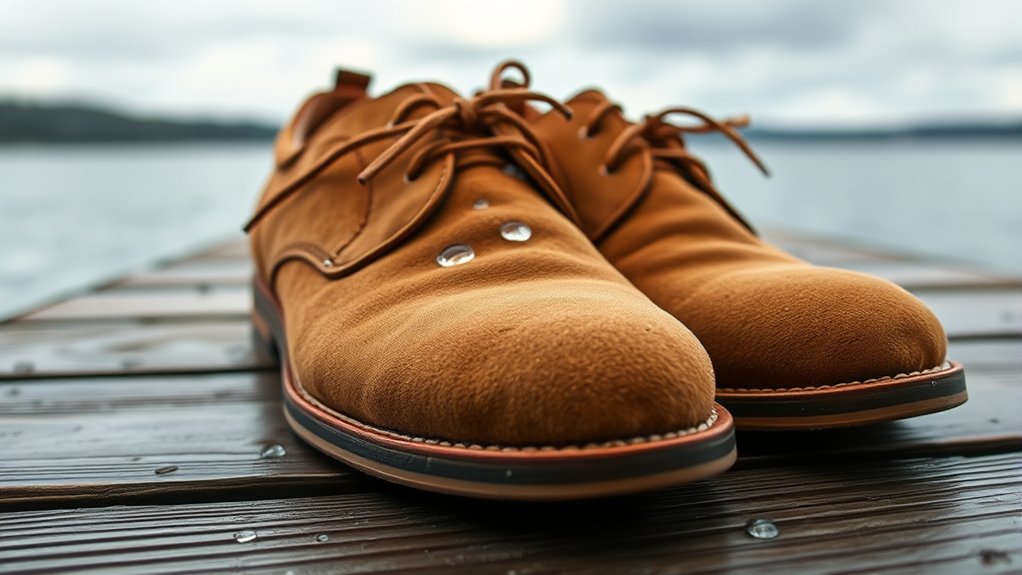
You can get suede shoes wet, but doing so risks darkening, flattening, and permanently staining the delicate nap fibers. Suede’s porous nature absorbs moisture easily, which may cause stiffness if not dried properly.
Avoid direct heat and harsh detergents; instead, blot moisture and use absorbent paper to maintain shape while air drying. Specialized cleaning and brushing restore texture afterward.
If you want to protect your suede shoes and handle water exposure correctly, understanding these precautions is essential.
Key Takeaways
- Suede absorbs water, causing fibers to flatten, darken, and potentially stain permanently.
- Wet suede requires gentle drying and brushing to prevent stiffness and restore texture.
- Avoid wearing suede shoes in rain, snow, or muddy conditions to minimize moisture damage.
- Use protective water-repellent spray on suede shoes to create a moisture barrier without altering texture.
- If suede gets wet, blot excess water, air dry naturally, and consider professional cleaning for stubborn stains.
Will Suede Shoes Get Ruined If Wet?
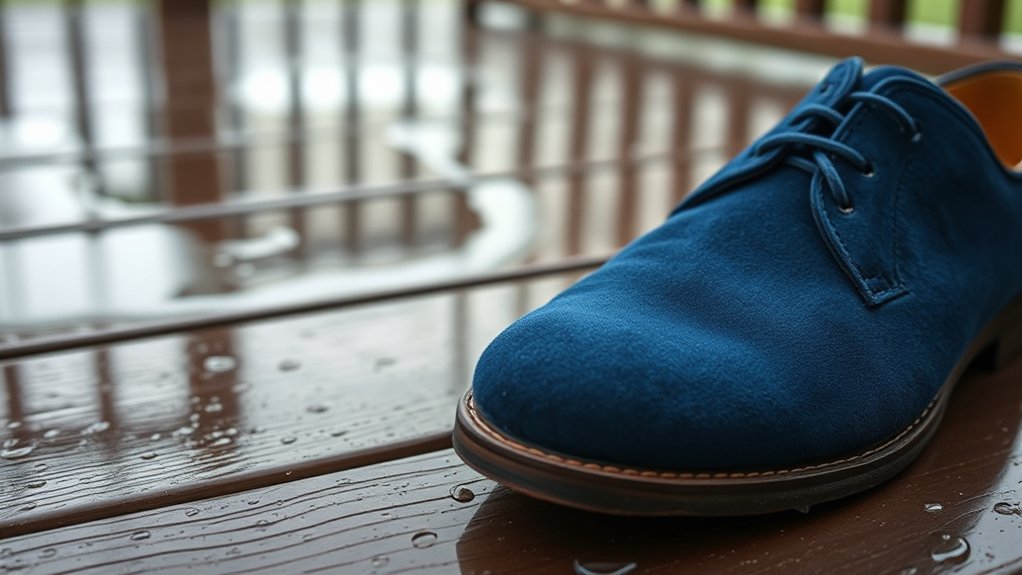
How does water affect suede shoes? When suede gets wet, its texture and appearance can change dramatically. Wet suede absorbs moisture, causing the nap, the tiny fibers on the surface, to flatten and darken, which may lead to permanent stains or water marks.
Because suede is a porous material, it’s particularly vulnerable to damage from moisture exposure. If you don’t address wet suede promptly and correctly, the material may stiffen or lose its softness after drying.
Proper cleaning methods are essential to minimize damage; you should avoid using excessive water and harsh detergents. Instead, specialized suede cleaning products and gentle brushing techniques help restore the nap and remove dirt without compromising the integrity of the material.
Understanding the risks of wet suede helps you maintain your shoes’ appearance over time.
How To Protect Suede Shoes From Water
Why should you prioritize protecting suede shoes from water damage? Suede’s porous texture absorbs moisture quickly, leading to stains, stiffness, and material degradation. To prevent this, apply protective spraying specifically designed for suede. This creates a water-repellent barrier that minimizes moisture penetration without altering the shoe’s texture.
Ensure even coverage by spraying from a 6-8 inch distance in a well-ventilated area. Allow the shoes to dry fully before use. Additionally, practice moisture control by avoiding exposure to wet environments and storing suede shoes in dry, breathable conditions.
Use silica gel packets or moisture-absorbing inserts to maintain low humidity levels inside the shoes. These preventive measures extend the lifespan of your suede footwear, preserving both appearance and structural integrity effectively.
What To Do If Your Suede Shoes Get Wet
Even with careful protection, suede shoes can still get wet unexpectedly. When this happens, act quickly to minimize damage and prevent issues like color bleeding. First, avoid applying direct heat. Instead, gently blot excess moisture with a clean cloth.
Suede shoes can get wet unexpectedly; act fast and blot moisture gently without applying heat.
Then, insert absorbent paper to maintain shape as they dry naturally in a well-ventilated area. After drying, use a suede brush to restore texture. If stains persist or the color bleeds, consider professional dry cleaning to avoid further damage.
- Blot moisture immediately; avoid rubbing
- Stuff shoes with paper to absorb water and retain shape
- Air dry away from heat sources
- Use a suede brush to lift the nap
- Seek dry cleaning for stubborn stains or color bleeding
When Should You Avoid Wearing Suede Shoes?
When should you skip wearing your suede shoes to protect their delicate texture? Prioritize avoidance strategies during conditions that expose suede to moisture, dirt, and abrasion.
Weather considerations play a crucial role. Avoid suede shoes in rain, snow, or muddy environments to prevent irreversible damage.
| Condition | Risk Level | Avoidance Strategy |
|---|---|---|
| Rainy Weather | High | Opt for waterproof alternatives |
| Snow and Slush | High | Choose insulated, water-resistant footwear |
| Muddy Terrain | Moderate | Wear durable, easy-to-clean shoes |
| Outdoor Sports | High | Select sport-specific shoes |
Best Waterproofing Products For Suede Shoes
How can you effectively protect your suede shoes from water damage without compromising their texture? The key lies in selecting high-quality waterproof sprays designed specifically for suede. These sprays form a protective barrier, preventing moisture absorption while maintaining breathability.
Protect suede shoes effectively by using high-quality waterproof sprays that shield moisture and preserve breathability.
Additionally, suede restore products help rejuvenate the nap and texture after exposure to elements. Incorporating botanical oils can also nourish the suede fibers, reducing stiffness and cracking without causing discoloration.
Consider these top products:
- Suede-specific waterproof sprays with fluoropolymer technology
- Suede restore creams enriched with conditioning agents
- Botanical oil blends formulated for delicate suede fibers
- Water and stain repellent sprays with quick-dry formulas
- Eco-friendly suede protectants free from harsh chemicals
Using these products correctly ensures durable, water-resistant suede shoes without sacrificing their soft, luxurious feel.
Frequently Asked Questions
Can Suede Shoes Be Cleaned With a Regular Washing Machine?
You shouldn’t clean suede shoes in a regular washing machine; it damages the material. Instead, follow specific care routines and apply waterproofing tips to protect and maintain their texture and appearance effectively.
How Long Does It Take for Wet Suede Shoes to Dry Completely?
How long do you expect drying times to last after water exposure? Typically, wet suede shoes take 24 to 48 hours to dry completely, depending on humidity, ventilation, and temperature.
Be patient during this delicate process.
Are There Specific Suede Shoe Brands More Resistant to Water?
You’ll find some brands use advanced waterproof coatings, enhancing water resistance considerably. When doing brand comparisons, focus on specific treatments and durability ratings to select suede shoes that perform better in wet conditions, ensuring longer-lasting wear.
Can Suede Shoes Be Dyed After Getting Wet?
You’d think dyeing suede after water damage is rocket science, but you can dye suede with proper suede care. Use water stain remedies, ensure color fastness, and waterproof suede afterward to maintain durability and appearance.
Is It Safe to Use Hairdryers on Wet Suede Shoes?
You shouldn’t use hairdryers on wet suede shoes; high heat risks damaging the texture and causing shrinkage.
Opt for gentle drying methods like air drying at room temperature to ensure heat safety and preserve suede quality.
Conclusion
You might picture suede shoes drenched in rain, their soft texture turning stiff and discolored—an irreversible mishap. Yet, with proper waterproofing, you transform vulnerability into resilience, keeping suede supple and pristine.
Avoid wet conditions when possible, but if soaked, act quickly to dry and restore them. By combining prevention with prompt care, you maintain the delicate balance between style and durability.
This ensures your suede shoes remain a reliable, elegant choice. Remember, taking care to protect and dry them properly will help your suede shoes get wet without lasting damage.