How to Bleach Shoes
You can bleach shoes, especially white or light-colored ones, to remove stubborn stains and restore brightness by using a diluted bleach solution (about 3-6%). Always test the solution on a hidden spot first and avoid soaking the shoes.
Leather and suede should not be bleached as it can cause damage. Wear gloves and work in a well-ventilated area for safety.
After applying the bleach for 5–10 minutes, rinse the shoes thoroughly. Using gentle brushes helps prevent damage.
If you want to customize or maintain your shoes safely, there are smart techniques to explore.
Key Takeaways
- Use a diluted bleach solution (1 part bleach to 5 parts water) for canvas or fabric shoes, avoiding leather or suede materials.
- Wear gloves, safety goggles, and work in a well-ventilated area to protect from bleach fumes and skin irritation.
- Remove laces and brush off dirt before applying bleach evenly with a soft brush or sponge.
- Test bleach solution on a hidden shoe area first to check for color or material damage.
- Let bleach sit 5–10 minutes, then rinse thoroughly with cold water and allow shoes to dry completely.
When and Why to Bleach Your Shoes
When should you consider bleaching your shoes? You should think about when to bleach primarily if your shoes have stubborn stains, yellowing, or discoloration that regular cleaning can’t remove. Bleach is effective at restoring white or light-colored shoes to their original brightness.
Understanding why bleach shoes can be beneficial helps you decide if this method suits your needs. Bleaching removes deep-set dirt and neutralizes odors, extending the shoe’s lifespan and maintaining a fresh appearance.
However, you should only bleach shoes made from materials that can tolerate it, like canvas or certain fabrics. Avoid using bleach on leather or suede, as it can cause irreversible damage.
Knowing when to bleach ensures you apply this strong chemical responsibly and effectively to refresh your footwear.
Essential Supplies for Safely Bleaching Your Shoes
What tools do you need to bleach your shoes safely and effectively? Start with essential supplies: a diluted bleach solution with appropriate bleach concentration, usually around 3-6% for shoes, to prevent damage. Use gloves to protect your skin and safety goggles to shield your eyes from splashes, following strict safety precautions.
Have a well-ventilated workspace to minimize inhaling fumes. A soft brush or sponge will help you apply bleach evenly without abrasion. Prepare clean water and mild detergent for rinsing post-bleaching.
It’s crucial to consider material compatibility when selecting your bleach concentration and application method, ensuring your shoes’ fabric or leather won’t degrade. Having these supplies ready ensures you work safely and achieve the best possible results without unintended harm.
Avoid Damage When Bleaching Different Shoe Materials
How can you prevent damage while bleaching different shoe materials? First, identify the shoe fabric: canvas, leather, or synthetic, and choose your method accordingly. For delicate fabrics, avoid harsh bleach; instead, opt for bleach alternatives like oxygen-based cleaners or diluted hydrogen peroxide. These fabric-safe methods reduce the risk of discoloration and fiber weakening.
When working with leather, steer clear of bleach altogether, as it can cause cracking and fading. Instead, use specialized leather cleaners or mild soap solutions. Always perform a patch test on a hidden area before treating the entire shoe.
Additionally, avoid soaking shoes for prolonged periods and rinse thoroughly to prevent residue buildup. By tailoring your approach and using gentler alternatives, you’ll maintain your shoes’ integrity while achieving a refreshed look safely.
Step-by-Step Guide to Bleaching Shoes at Home
Now that you know how to protect different shoe materials from damage, let’s outline the exact steps to bleach your shoes safely at home. First, work in a well-ventilated area and wear gloves to prioritize bleach safety.
Remove laces and brush off dirt. Dilute bleach with water, usually 1 part bleach to 5 parts water, to avoid fabric damage. Test the solution on a small, hidden area to check for adverse effects.
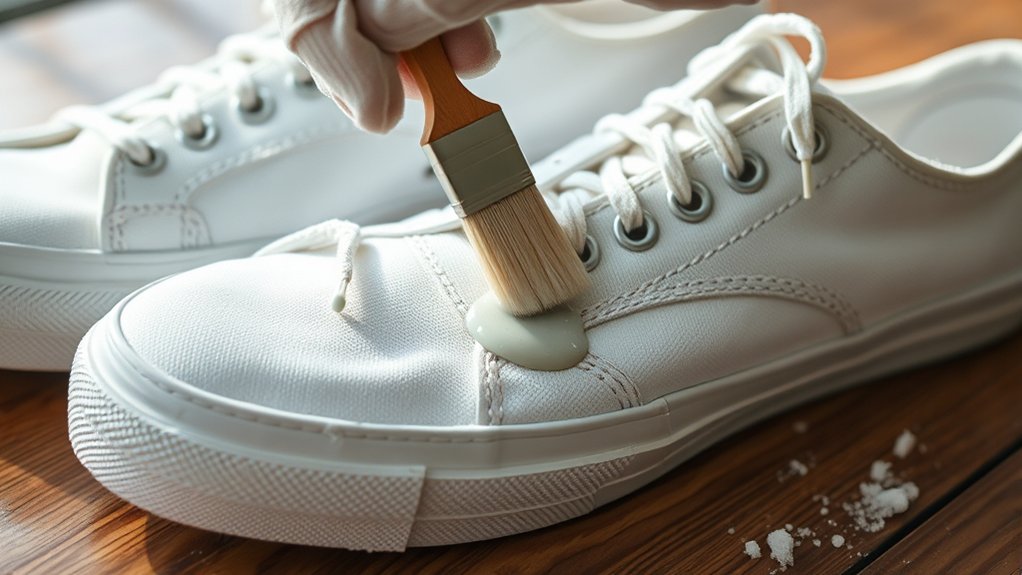
Use a soft brush or cloth to apply the bleach mixture, focusing on stained areas for effective stain removal. Let it sit for 5–10 minutes, then rinse thoroughly with cold water.
Finally, air dry your shoes away from direct sunlight. Following these steps ensures controlled, safe bleaching and optimal stain removal results.
Customizing and Maintaining Bleached Shoes
Where can you take your bleached shoes next? Customizing and maintaining them ensures longevity and style. First, always prioritize bleach safety; wear gloves and work in a ventilated area.
Second, conduct material testing before any further customization to avoid damage. Third, enhance your design by adding fabric paint or markers. Apply thin layers for precision.
Fourth, protect your shoes with a water-resistant spray to maintain the fresh look and prevent stains. Regularly clean your bleached shoes with mild soap and a soft brush to avoid harsh abrasion.
Frequently Asked Questions
Can Bleach Cause Allergic Reactions on Skin?
Oh, sure, bleach loves to throw skin irritation parties; you’re the guest of honor with possible allergic reactions. You shouldn’t ignore bleach safety; always wear gloves and avoid direct contact to keep your skin calm and reaction-free.
Is Bleaching Shoes Environmentally Friendly?
Bleaching shoes isn’t environmentally friendly due to harmful chemicals and waste. You should consider environmental impact and safety considerations, using alternatives or proper disposal methods to minimize damage to ecosystems and protect your health effectively.
How Long Does Bleached Color Last on Shoes?
The bleached color typically lasts several months, depending on wear and stain resistance. You’ll want to prioritize bleach safety and avoid over-application to maintain color integrity.
This approach helps minimize fabric damage and fading over time.
Can I Bleach Colored Shoes to White?
Of course, you can bleach colored shoes to white if you enjoy unpredictable results. Prioritize bleach safety by testing first, as improper use can worsen stains or damage fabric. Use stain removal techniques to protect your shoes.
Are There Safer Alternatives to Bleach for Whitening Shoes?
You can use safe alternatives like baking soda, white vinegar, or hydrogen peroxide to whiten shoes. These methods effectively promote stain prevention while minimizing damage, ensuring your shoes stay bright without harsh chemicals compromising their material.