How to Crochet Newborn Shoes
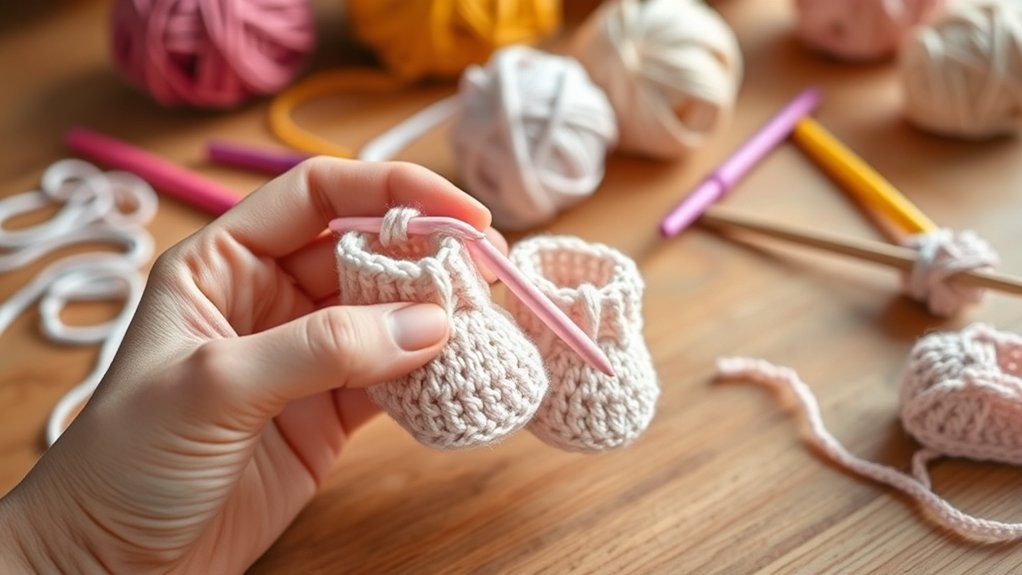
To crochet newborn shoes, start by choosing soft, breathable yarn like cotton or bamboo and matching a crochet hook to the yarn weight.
Use basic stitches—single crochet for durability and half-double crochet for softness—while keeping your tension even but not too tight.
Measure the baby’s foot carefully and add a small growth allowance.
Assemble the sole, sides, and top securely, then add any decorative elements.
Keep them gentle on delicate skin, and you’ll find detailed tips to perfect fit and care ahead.
Key Takeaways
- Select soft, breathable yarn like cotton or bamboo blends with a matching crochet hook for comfortable, gentle newborn shoes.
- Use basic stitches such as single crochet for durability and half-double crochet for softness, maintaining consistent tension.
- Measure the baby’s foot length and width, adding growth allowance and using gauge swatches to ensure proper fit.
- Crochet the sole, sides, and top separately, then carefully assemble and secure decorative elements last.
- Clean shoes gently by hand washing with mild detergent, avoiding wringing, and air drying flat away from direct heat.
Choosing Yarn and Tools
When choosing yarn and tools for crocheting newborn shoes, start by selecting a soft, breathable yarn that’s gentle on delicate skin. Cotton or bamboo blends are excellent choices because they offer comfort and easy fabric care. Avoid rough or scratchy fibers that might irritate.
Next, consider the color palette; pastel shades or neutral tones are popular for newborns and allow you to coordinate with baby outfits easily. Pick a crochet hook that matches your yarn’s weight, usually a smaller hook for newborn shoes ensures tight stitches and a snug fit.
Don’t forget to have a yarn needle on hand for weaving in ends neatly. Choosing the right yarn and tools upfront will save you time and result in cozy, durable shoes perfect for tiny feet.
Basic Crochet Stitches for Baby Shoes
Selecting the right stitches will shape the comfort and fit of your newborn shoes. Start with simple stitches like single crochet for a tight, durable fabric that holds its shape well.
Choosing the right stitches ensures your newborn shoes are comfortable, durable, and maintain their perfect fit.
Half-double crochet offers a bit more flexibility and softness, making the shoes comfortable without losing structure. Always maintain consistent tension to ensure an even fit.
Remember to prioritize crochet safety by avoiding overly tight stitches that might restrict baby’s movement or circulation. Also, be mindful of yarn allergy when choosing your materials; use hypoallergenic yarns and test a small patch on the baby’s skin.
Mastering these basic stitches will give you a solid foundation for creating cozy, safe, and well-fitting newborn shoes every time.
Step-by-Step Crochet Instructions
First, you’ll need to choose the right yarn and hook size to ensure your shoes are soft and comfortable. Next, you’ll use basic stitch techniques to create the sole, sides, and top of the shoe.
Finally, you’ll assemble the pieces carefully to complete your newborn shoes.
Choosing Yarn And Hook
How do you pick the perfect yarn and hook for crocheting newborn shoes? First, choose a soft, lightweight yarn made from natural fibers like cotton or bamboo to ensure comfort and breathability. Avoid yarns intended for unrelated embroidery, as they might be too stiff or rough for delicate baby skin.
Next, consider the dyeing methods used. Opt for yarns dyed with non-toxic, baby-safe dyes to prevent irritation. Select a crochet hook size that matches your yarn’s weight; usually, a 3.5mm to 4mm hook works well for newborn shoes.
Using the correct hook size ensures your stitches are even and the shoes hold their shape. By carefully choosing yarn and hook, you set a solid foundation for crafting cozy, safe newborn shoes.
Basic Stitch Techniques
Where do you begin when learning to crochet newborn shoes? Start by mastering the basic stitches: chain stitch, single crochet, half double crochet, and double crochet. These form the foundation of your work and help ensure proper infant sizing.
Begin with a slipknot on your hook, then create a foundation chain matching the shoe’s sole length. Use single crochet to build sturdy, tight rows that maintain shape and durability. Pay close attention to tension to avoid loose stitches that might compromise crochet safety.
Consistent stitch size ensures a snug, comfortable fit for newborns. Remember, practicing these stitches first gives you control over sizing and structure, essential for making safe, snug footwear that fits tiny feet perfectly.
Assembling The Shoe
A well-assembled shoe starts with carefully joining the sole, upper, and any decorative elements using consistent stitches and proper tension. This ensures durability and a neat finish. Follow these steps for effective shoe assembly using essential crochet techniques:
- Align the sole and upper pieces, pinning them if needed to maintain shape.
- Use single crochet stitches to join the edges, keeping your tension even to avoid puckering or loose seams.
- Attach any decorative elements last, securing them firmly with slip stitches or small sewn stitches to prevent unraveling.
Tips for Measuring and Ensuring Fit
To assure a perfect fit, start by measuring your newborn’s foot accurately using a soft tape or ruler. Always add a small growth allowance to keep the shoes comfortable as little feet grow quickly.
Finally, check the fit by gently sliding the shoes on and making sure there’s enough room without being too loose.
Accurate Foot Measurement Techniques
How can you guarantee your newborn’s crochet shoes fit perfectly from the start? Accurate foot measurement is key. First, measure your baby’s foot length and width while they’re relaxed to avoid squishing. Use a flexible tape measure or a piece of string you can later measure with a ruler.
Second, create a gauge swatch using your chosen yarn and hook to understand your stitch size. This helps translate crochet terminology into real dimensions. Third, compare your measurements to the swatch dimensions, adjusting your hook size or stitch count accordingly.
Accounting For Growth Allowance
Why should you consider growth allowance when measuring for your newborn’s crochet shoes? Newborns grow quickly, so adding a small allowance ensures the shoes fit comfortably for longer. Use growth charts as a guide to estimate how much extra length and width to add, typically around 0.5 to 1 cm. This prevents the shoes from becoming too tight too soon.
When planning your crochet shoes, factor in material safety by choosing soft, breathable yarn that won’t irritate delicate skin. A flexible material combined with a proper growth allowance allows the shoe to stretch slightly as your baby’s foot grows. Always measure carefully and add the growth allowance before you start crocheting, so the shoes fit well and stay comfortable during this crucial early stage.
Checking Shoe Fit Comfortably
Ensuring your newborn’s crochet shoes fit comfortably requires careful measuring and thoughtful checking throughout the process. Start by measuring your baby’s foot length and width accurately, leaving a small growth allowance.
Then, follow these steps to ensure a perfect fit:
- Try the shoes on your baby’s feet and observe if the shoes slip or feel tight, paying attention to the fabric texture against the skin.
- Check for comfort by gently pressing around the shoe edges to ensure there are no rough spots that could irritate.
- Coordinate the shoes with outfits to ensure they complement the fabric textures of the clothing and provide enough flexibility.
Customizing Your Newborn Shoes
Although the basic pattern provides a great foundation, customizing your newborn shoes lets you add personal touches that make each pair unique. Start by exploring custom patterns, which allow you to adjust stitch types, colors, or add motifs like flowers or animals.
These changes can make each pair special and perfectly suited to your style. For a delicate finish, try adding picot edging around the shoe’s opening; it creates a pretty, scalloped border that adds charm without bulk.
To add a bit of flair, consider attaching small crochet bows or buttons. Remember to keep decorations soft and secure to ensure baby’s comfort. By experimenting with these techniques, you’ll create adorable, one-of-a-kind shoes that are as stylish as they are cozy.
How to Clean and Care for Your Baby Shoes
How often should you clean your baby’s crochet shoes to keep them looking fresh and cozy? You should clean them regularly but gently to preserve their delicate yarn and shape. Here are essential care tips and washing guidelines:
- Spot Clean First: Use a damp cloth with mild soap to remove small stains without soaking the shoes.
- Hand Wash Gently: When deeper cleaning is needed, hand wash in lukewarm water with a gentle detergent. Avoid wringing to prevent stretching.
- Air Dry Properly: Lay the shoes flat on a towel, reshaping them as they dry. Avoid direct sunlight and heat sources.
Following these steps helps maintain softness, color, and durability. Proper care ensures your baby’s crochet shoes stay cozy and beautiful for longer.
Frequently Asked Questions
Can I Use a Sewing Machine Instead of Crocheting?
You can use machines, but sewing vs crochet offers different textures and flexibility. Using machines speeds up production, yet handcraft alternatives like crocheting provide unique softness.
Consider tool comparison to choose what suits your project best.
Are Crocheted Shoes Safe for Newborns to Wear Overnight?
Crochet safety for newborn wearability depends on using soft, breathable yarn without loose threads or tight stitches.
You shouldn’t leave newborns wearing crocheted shoes overnight to prevent circulation issues or choking hazards from embellishments.
How Long Does It Take to Crochet a Pair of Shoes?
You’ll spend about 2-4 hours crocheting a pair of shoes, depending on your skill level. This time investment varies; beginners may take longer, while experienced crocheters can finish quickly with practice and focus.
Can I Sell the Crocheted Newborn Shoes I Make?
Yes, you can monetize crochet by selling handmade items like newborn shoes. Just ensure your work is high-quality and price it fairly.
Promote your products through online platforms or local markets to attract customers effectively.
What Are Some Popular Gift Ideas to Pair With Baby Shoes?
You’d think a single pair of baby shoes solves everything, but try pairing them with gift baskets filled with essentials or charming nursery decor.
That way, you’ll give a thoughtful, complete gift the new parents actually need.