How to Wash Shoes in Washing Machine
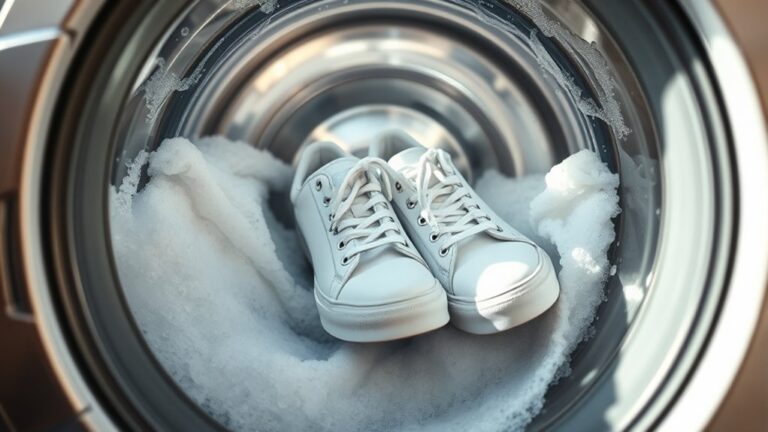
You can wash shoes in washing machine if they are made of canvas, nylon, or synthetic materials. However, avoid washing leather, suede, or delicate designs this way to prevent damage.
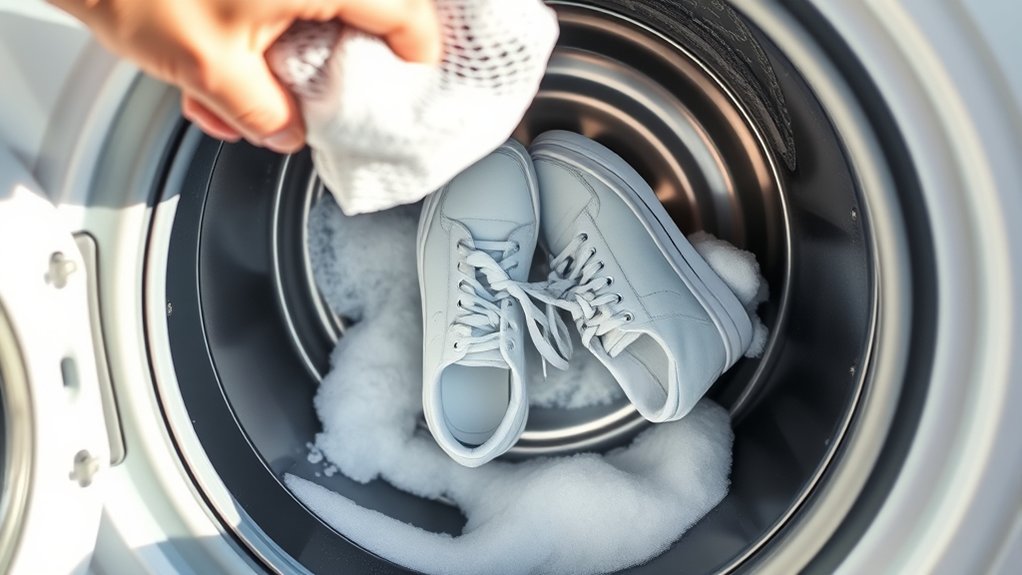
First, remove the laces and insoles, then brush off any dirt. Place the shoes inside a laundry bag along with some towels to protect them during the wash cycle.
Use a gentle cycle with cold water and mild liquid detergent. After washing, air dry the shoes away from heat sources for 24–48 hours to keep them safe and fresh.
Keep following for tips on protecting your shoes and solving common washing issues.
Key Takeaways
- Remove laces and insoles, brush off dirt, and place shoes in a mesh laundry bag before washing.
- Use a gentle cycle with cold or lukewarm water and a slow spin speed to protect shoes.
- Select mild liquid detergent without bleach to avoid damaging fabrics or adhesives.
- Avoid washing leather, suede, delicate stitching, or glued embellishments in the machine.
- Air dry shoes naturally for 24–48 hours, avoiding direct heat sources and dryers.
What Shoes Can You Wash in the Machine?
Wondering which shoes you can safely toss into your washing machine? Focus on shoe materials first. Canvas, nylon, and synthetic fabrics generally have good machine compatibility, making them safe bets for washing.
Avoid leather, suede, or shoes with glued-on embellishments, as water and agitation can damage these materials or cause them to warp. Rubber soles usually hold up well, but check if the shoe’s upper material can tolerate machine washing.
Shoes with delicate stitching or intricate designs might also suffer in the washer. Always review the manufacturer’s care label for specific instructions. Prioritizing shoe materials and machine compatibility ensures you clean your shoes effectively without risking damage, saving you time and frustration.
Preparing Shoes for Machine Washing
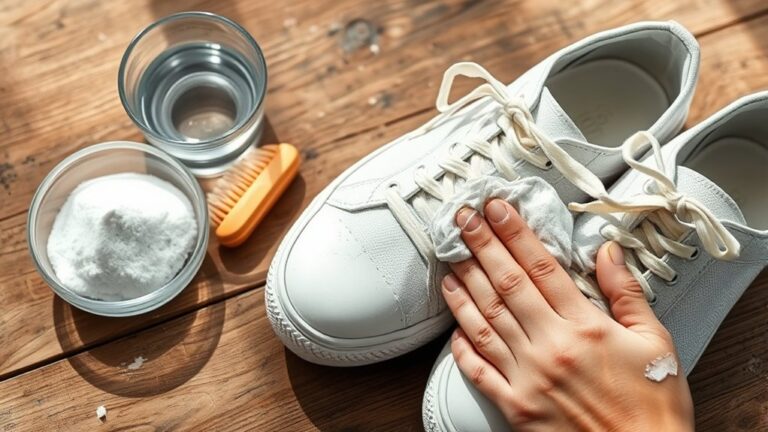
How should you get your shoes ready before tossing them into the washing machine? First, remove the laces and insoles to prevent tangling and damage. You can wash laces separately in a mesh bag.
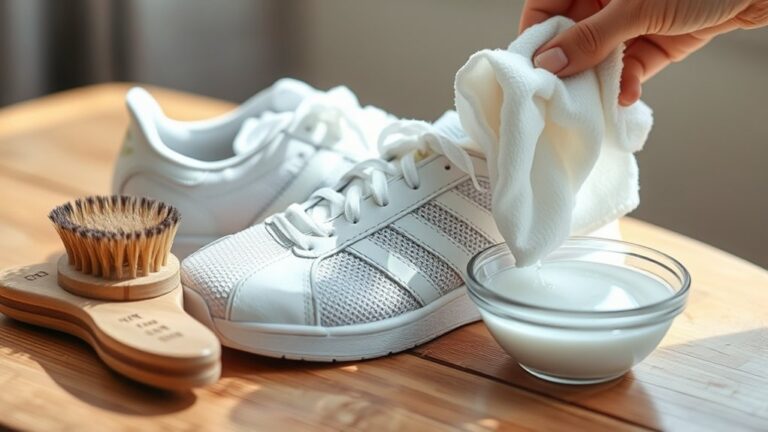
Next, brush off loose dirt and debris to protect your machine and ensure thorough cleaning. Check the shoe label for fabric safety. Avoid machine washing leather, suede, or delicate materials. Use a gentle brush or cloth for these instead.
Place your shoes in a pillowcase or laundry bag to minimize wear and protect your machine’s drum. Finally, balance the load by adding towels to prevent your shoes from banging around.
Taking these steps ensures effective shoe care and protects both your shoes and washing machine during the wash cycle.
Best Machine Settings for Washing Shoes
Which settings should you choose to get your shoes clean without damaging them or your machine? Start by selecting a gentle or delicate cycle to protect your shoes’ materials and maintain proper shoe care.
Use cold or lukewarm water to avoid shrinking or warping. Opt for a slow spin speed to reduce wear and tear while still removing excess water. Avoid hot water and high-speed spins, as they can damage both your shoes and washer.
Choosing an energy-efficient cycle not only saves electricity but also minimizes the environmental impact of your laundry routine. By following these settings, you’ll clean your shoes thoroughly while preserving their shape and extending their life, all without risking your washing machine’s performance or durability.
Protecting Shoes and Washer During Washing
Selecting the right machine settings is just one part of keeping both your shoes and washer safe during cleaning. To protect footwear, always remove laces and insoles, then place shoes inside a mesh laundry bag or pillowcase to prevent damage. Add towels to balance the load and reduce impact.
Avoid washing high-heeled or delicate shoes in the machine, as they’re more prone to damage. For washer safety, never overload the machine; this can cause imbalance and mechanical issues. Use a gentle cycle with cold water to minimize wear on both shoes and washer components.
After washing, run an empty cycle to clean any debris left behind. Following these steps ensures you’re protecting footwear and maintaining washer safety effectively.
Choosing the Right Detergents for Your Shoes
Choosing the right detergent matters when washing your shoes because proper detergent chemistry ensures effective cleaning without damaging materials like mesh, leather, or rubber. You’ll want a mild detergent that’s free from harsh additives or bleach, which can degrade glue and color.
Look for formulas with good foam control; too much foam can strain your washing machine and leave residue on your shoes. Avoid powder detergents, as they may not dissolve fully and can clog fabric fibers. Liquid detergents designed for delicate fabrics usually work best.
Always measure detergent carefully. Overuse won’t clean better but can cause buildup or irritation to sensitive shoe materials. Selecting the right detergent protects both your shoes and washer, ensuring a thorough yet safe wash every time.
How to Dry Shoes After Machine Washing
Wondering how to dry your shoes safely after machine washing? Proper drying methods are essential to maintain their shape and avoid damage. Avoid direct heat sources like radiators or dryers, which can warp or shrink shoes.
Instead, air dry them in a well-ventilated area. Patience is key. Air dry timing usually takes 24 to 48 hours depending on material and weather.
Here’s a quick guide:
| Drying Method | Notes |
|---|---|
| Air Dry (Recommended) | Keeps shape, prevents damage |
| Avoid Direct Heat | Can shrink or warp shoes |
| Stuff with Paper | Helps retain shape, speeds drying |
Follow these tips, and your shoes will dry safely, ready for your next adventure.
Troubleshooting Machine Washing Problems for Shoes
If your washing machine struggles with shoe loads, start by checking for unbalanced cycles or excessive noise. Always use a gentle setting and protective laundry bags to prevent damage to both your shoes and the machine.
To tackle odor and residue, add a small amount of baking soda or vinegar during the wash for a fresh, clean result.
Common Washing Machine Issues
When your washing machine struggles with shoes, it’s important to identify the problem quickly to avoid damage to both your footwear and the appliance. Different shoe types, like heavy boots or delicate sneakers, can cause imbalance during the wash cycle, leading to excessive washer noise.
If you hear banging or thumping, stop the machine and redistribute the shoes evenly. Avoid washing shoes with hard soles alone, as they can damage the drum. Check for loose parts inside the machine, and remove any debris that could cause unusual sounds.
If your washer vibrates excessively, place it on a level surface and ensure it’s stable. Always follow your washer’s manual guidelines for shoe washing to prevent mechanical issues and keep your shoes safe.
Preventing Shoe Damage
Although washing shoes in a machine can save time, you need to take steps to protect them from damage. First, check the shoe materials. Delicate fabrics like leather or suede aren’t machine compatible and require hand cleaning.
For canvas or synthetic shoes, remove laces and insoles to prevent tangling and damage. Use a gentle cycle with cold water to minimize wear. Placing shoes in a mesh laundry bag or pillowcase cushions them from harsh agitation.
Avoid washing shoes with heavy items like jeans to prevent impact damage. Lastly, always consult your washing machine’s manual for compatibility with shoe washing. Following these precautions helps maintain your shoes’ shape and integrity, ensuring they come out clean without compromising their durability.
Handling Odor and Residue
Protecting your shoes from damage is just one part of successful machine washing. You also need to tackle odor and residue to keep them fresh and clean. For effective odor management, use a mild detergent and add baking soda to neutralize smells.
To prevent residue buildup, rinse your shoes thoroughly and avoid overusing detergent.
| Issue | Solution |
|---|---|
| Lingering odor | Add ½ cup baking soda to wash |
| Soap residue | Use detergent sparingly |
| Mold or mildew smell | Dry shoes completely in air |
| Stiffness after wash | Use fabric softener occasionally |
Follow these tips to ensure odor management and residue prevention, keeping your shoes safe and smelling fresh after every machine wash.
Keeping Shoes Fresh Between Machine Washes
How often do you find your shoes starting to smell or look worn between washes? To keep them fresh without overusing the washing machine, focus on maintaining shoe durability by limiting washing frequency. Too many washes can break down materials and reduce lifespan.
Instead, air your shoes out after each use. Remove insoles and let both dry completely. Sprinkle baking soda inside overnight to absorb odors, or use shoe deodorizers designed for regular use.
If your shoes get damp, dry them promptly to prevent mildew. For quick cleanups, wipe the exterior with a damp cloth rather than machine washing. Following these tips helps you extend shoe life and maintain freshness safely, cutting down on how often you need to run full washing cycles.
Frequently Asked Questions
Can Washing Shoes in the Machine Damage Shoe Insoles?
Yes, washing shoes in the machine can damage shoe insoles. To ensure machine safety, remove insoles before washing.
Wash insoles separately by hand, and avoid harsh cycles to protect both your shoes and their insoles.
How Often Should I Wash My Shoes in the Machine?
You should wash your shoes in the machine only when they’re visibly dirty or smelly. Consider the shoe material; delicate fabrics need less frequent washing to avoid damage.
Always check care labels before washing for safety.
Is It Safe to Wash Shoes With Laces Tied or Untied?
You should wash shoes with tied laces to prevent loose threads from tangling in the machine. Secure the laces tightly, but avoid knots that are too tight, ensuring they don’t damage your shoes or washer during cleaning.
Can Washing Shoes Affect Their Color or Design?
Yes, washing shoes can cause colorfastness concerns and design integrity questions. To protect them, use a gentle cycle, cold water, and a laundry bag.
Always air dry to keep colors and designs intact.
Should I Remove Odor Before Machine Washing Shoes?
You don’t want your washing machine to throw a stink party. Remove odor first with baking soda or vinegar.
Odor removal respects machine washing limits, ensuring fresh shoes without overworking your appliance or risking damage.