When to Replace Shoes
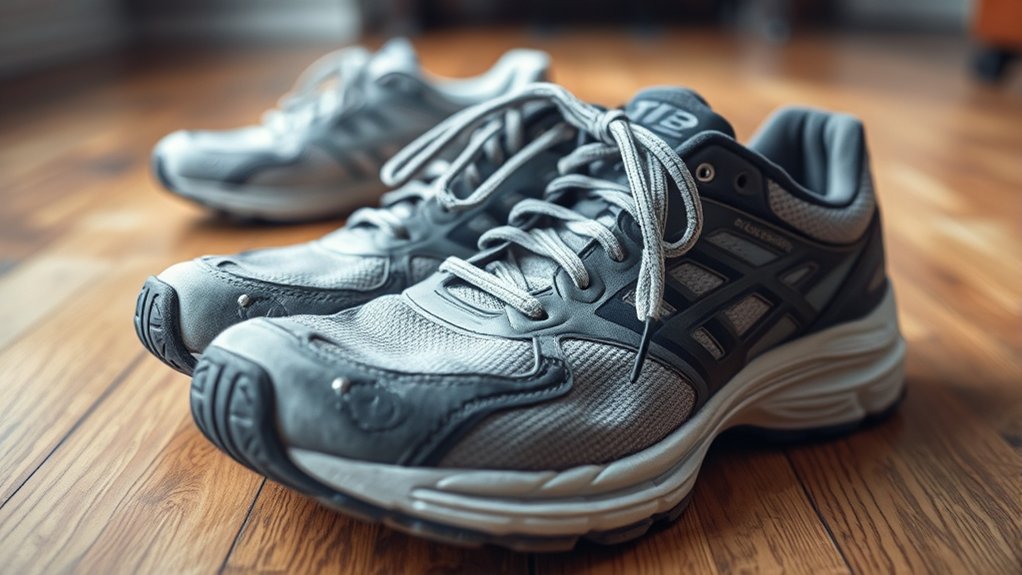
You should replace your shoes once the outsole tread wears unevenly or smooths out, cushioning compresses or cracks, and structural elements like the heel counter deform or the sole separates.
These signs indicate reduced shock absorption, compromised support, and increased injury risk.
Ignoring wear disrupts your posture and gait, leading to discomfort and potential joint problems.
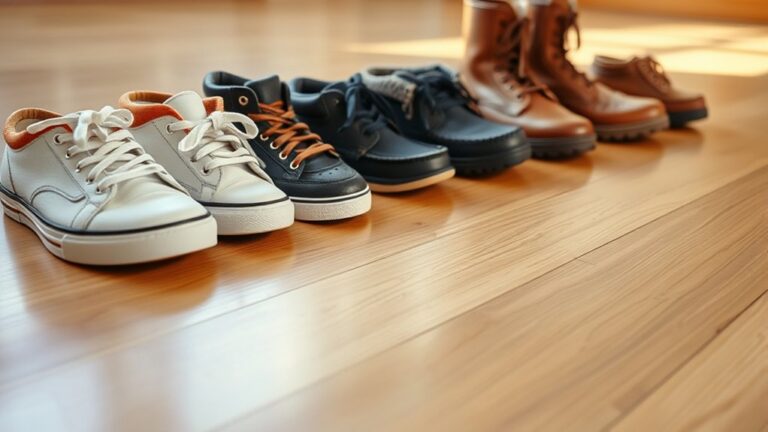
Knowing when to swap your running shoes, sneakers, or work boots ensures optimal foot health and performance.
Explore deeper insights to maintain your footwear’s effectiveness.
Key Takeaways
- Replace shoes when outsole tread is worn smooth or uneven, increasing slip and reducing traction.
- Change shoes if insoles show compression, misshaping, or cause discomfort, indicating lost cushioning.
- Running shoes typically need replacement after 300-500 miles, while boots require wear-based assessment.
- Look for sole separation, upper tears, or heel counter deformation as signs to replace footwear.
- Regularly inspect shoes for structural damage to maintain support, comfort, and injury prevention.
How to Spot When Your Shoes Are Worn Out
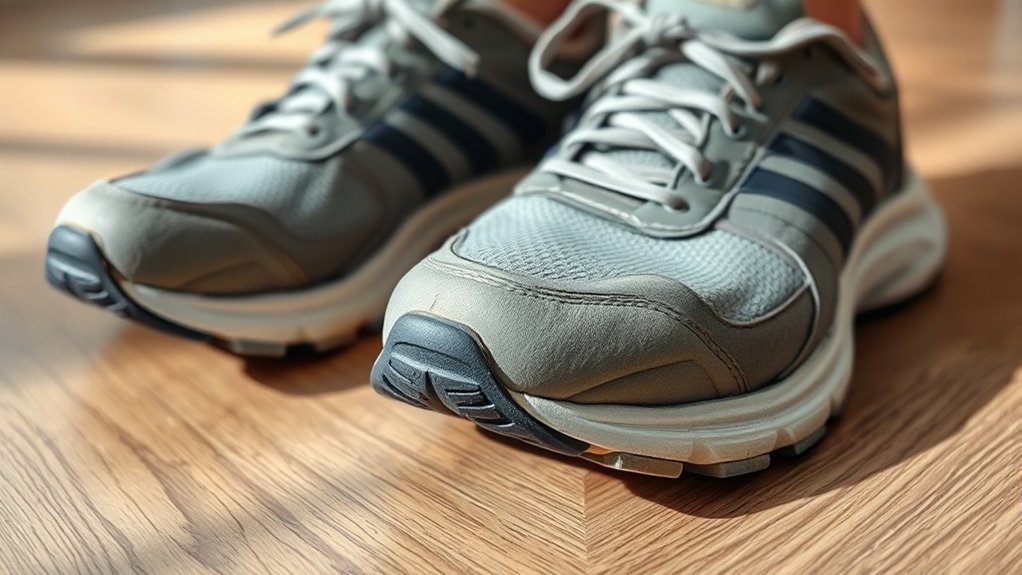
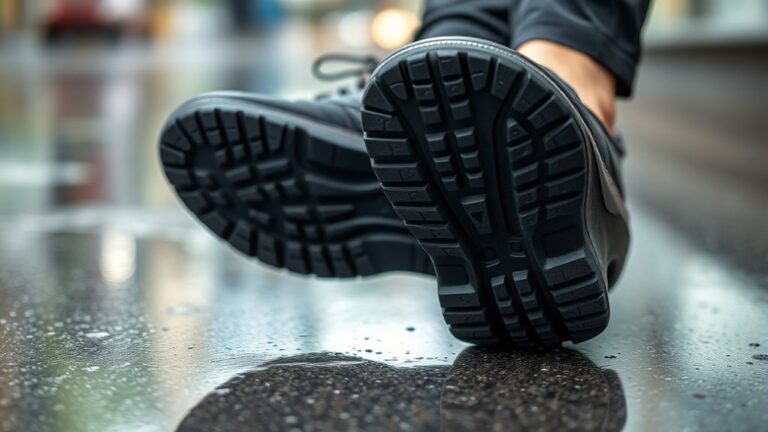
How can you tell if your shoes have reached the end of their lifespan? Start by examining their wear durability. Look closely at the outsole: if the tread pattern is significantly worn down or uneven, it indicates compromised traction and reduced shock absorption.
Inspect the midsole for compression lines or cracks, as these signs reveal material fatigue due to shoe aging. Check the upper for tears, loose stitching, or stretched areas that affect structural integrity.
Pay attention to any deformation in the heel counter or sole separation, both of which signal diminished support. By regularly assessing these indicators, you can accurately determine when your shoes no longer provide optimal performance and need replacement to maintain foot health and prevent injury.
Why Losing Support and Cushioning Matters for Your Feet
Because your shoes play a critical role in supporting your feet and absorbing impact, losing cushioning and structural support directly affects your foot health. When your shoes exhibit poor cushioning or worn tread, they fail to distribute pressure evenly, increasing strain on your feet. This can lead to discomfort and injury over time.
Here’s why it matters:
- Reduced shock absorption: Without adequate cushioning, your feet endure more impact, risking stress fractures and joint pain.
- Compromised stability: Worn tread decreases grip, increasing the chance of slips and falls.
- Altered biomechanics: Loss of support forces your muscles and ligaments to compensate, potentially causing overuse injuries.
Replacing your shoes before these issues arise helps maintain optimal foot function and prevents long-term damage.
How Your Shoes Can Throw Off Your Posture and Comfort
Can improper footwear substantially impact your posture and overall comfort? Yes, worn-out shoes with cushioning loss can disrupt your posture alignment, causing your body to compensate for the lack of support. This imbalance often results in increased strain on your lower back, hips, and knees.
When cushioning deteriorates, your feet no longer absorb shock efficiently, leading to altered gait mechanics and uneven weight distribution. Over time, this misalignment contributes to discomfort and potential musculoskeletal issues.
You might notice fatigue, joint pain, or difficulty maintaining proper stance. Ensuring your shoes maintain adequate cushioning and structural support is essential for preserving optimal posture alignment.
Ignoring these signs prolongs discomfort and increases the risk of chronic problems, emphasizing the importance of timely shoe replacement to maintain both comfort and biomechanical integrity.
When to Replace Running Shoes, Sneakers, and Work Boots
When should you replace running shoes, sneakers, or work boots to maintain peak performance and prevent injury? Knowing when to replace footwear is crucial for support and durability. Focus on these key indicators:
- How to test tread: Examine the sole’s tread pattern. If it’s worn smooth or unevenly, traction decreases, increasing slip risk. Replace shoes once tread depth significantly diminishes.
- When to replace insoles: Insoles lose cushioning and support over time. Remove and inspect them; if they’re compressed, misshapen, or cause discomfort, it’s time for a replacement.
- Mileage and wear: Running shoes generally last 300-500 miles. For work boots and sneakers, assess daily usage and visible signs such as sole separation or upper material breakdown.
Regularly monitoring these factors ensures your footwear provides adequate protection and performance.
Tips for Choosing the Right Replacement Shoes
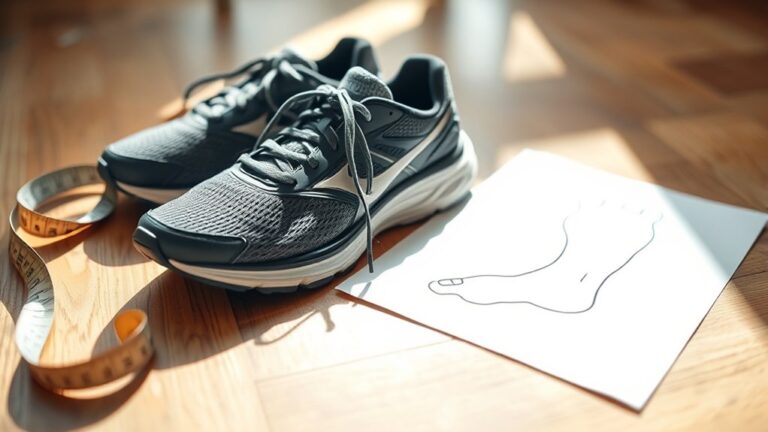
How do you guarantee your replacement shoes meet your specific needs? Begin with comfort testing. Try shoes on later in the day when your feet are slightly swollen to ensure an accurate fit. Walk or jog briefly to assess cushioning and support in real-world conditions.
Next, perform tread checks on potential replacements by inspecting outsole patterns for durability and slip resistance relevant to your usage. Prioritize shoes with advanced materials that maintain integrity under stress.
Consider your activity type: running shoes need shock absorption; work boots require impact resistance and stability. Finally, evaluate the shoe’s weight and flexibility to match your biomechanics.
Frequently Asked Questions
Can Shoe Insoles Be Replaced Separately to Extend Shoe Life?
Yes, you can perform insoles replacement to extend shoe life. Replacing worn insoles restores cushioning and support, preventing further sole damage. This effectively prolongs the shoe’s usability without needing a full shoe replacement.
How Should I Store Shoes to Prevent Premature Wear?
To gracefully extend your shoes’ vitality, implement store organization with breathable containers and maintain seasonal rotation. This minimizes structural stress, preserves material integrity, and ensures each pair enjoys optimal conditions, preventing premature wear effectively.
Do Different Shoe Brands Have Varying Lifespans?
Yes, different shoe brands exhibit varying brand longevity due to material degradation rates. You’ll notice premium brands often use durable materials, extending lifespan, while budget brands may degrade faster, affecting overall durability and performance.
Can Washing Shoes Affect Their Durability?
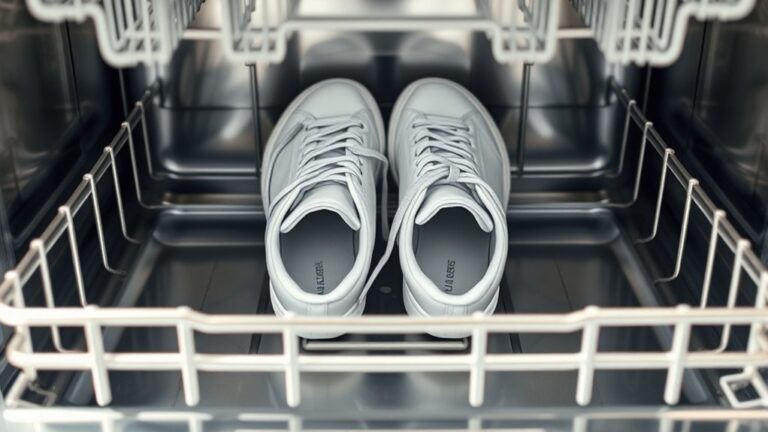
Washing shoes can reduce their durability by weakening materials and adhesives. Frequent washing especially affects insoles lifespan, causing them to lose cushioning and support faster.
You should wash shoes sparingly to maintain peak performance.
How Does Climate Impact Shoe Wear and Replacement Timing?
Like a medieval knight’s armor, your shoes endure climate wear from moisture and temperature shifts. You’ll need seasonal replacement, especially in harsh climates, to prevent material degradation and maintain optimal support and safety.
Conclusion
Think of your shoes as the foundation of a building; once cracks appear, the whole structure risks collapse. You need to replace them as soon as you notice worn-out soles, reduced cushioning, or discomfort that impacts your posture. Whether running, working, or walking, timely replacement prevents injury and maintains ideal support.
Stay vigilant, assess your shoes regularly, and choose replacements that match your activity and foot needs. This approach guarantees lasting comfort and performance. Remember, knowing when to replace shoes is key to keeping your feet healthy and supported.