What Are Non Skid Shoes
Non skid shoes help you prevent slips by maximizing traction on wet, oily, or uneven surfaces. These shoes feature rubber outsoles with special compounds and tread patterns that channel liquids away, ensuring better grip and stability.
Their flexible soles adapt to surface changes, reducing slip risk. Non skid shoes are essential in high-risk workplaces like healthcare and food service, enhancing both safety and comfort.
Keep exploring to understand their key materials, design features, and care practices.
Key Takeaways
- Non skid shoes feature specialized rubber outsoles designed to maximize traction and prevent slipping on wet or oily surfaces.
- Their tread patterns channel liquids away, maintaining solid ground contact and enhancing grip reliability on various floor types.
- These shoes use flexible soles that adapt to surface irregularities, reducing sudden slips and improving stability during movement.
- Common sole materials include rubber, polyurethane, and nitrile rubber, each providing specific slip resistance, durability, and chemical resistance.
- Non skid shoes benefit workers in high-risk environments like healthcare, food service, and manufacturing by reducing slip-related accidents.
Understanding Non Skid Shoes and How They Work
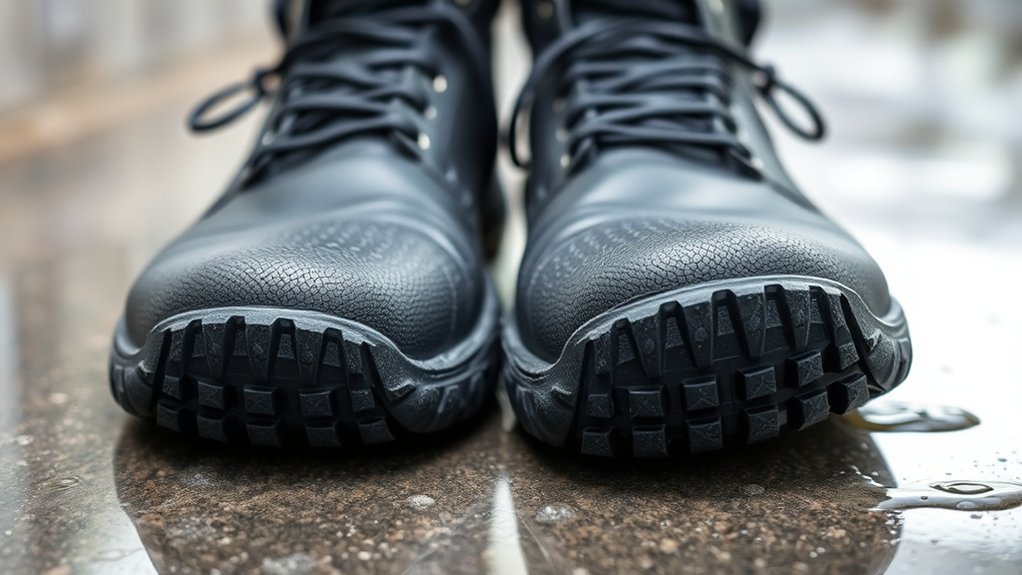
How do non skid shoes prevent slips and falls? They enhance your safety by maximizing underfoot traction, which directly improves grip reliability on various surfaces.
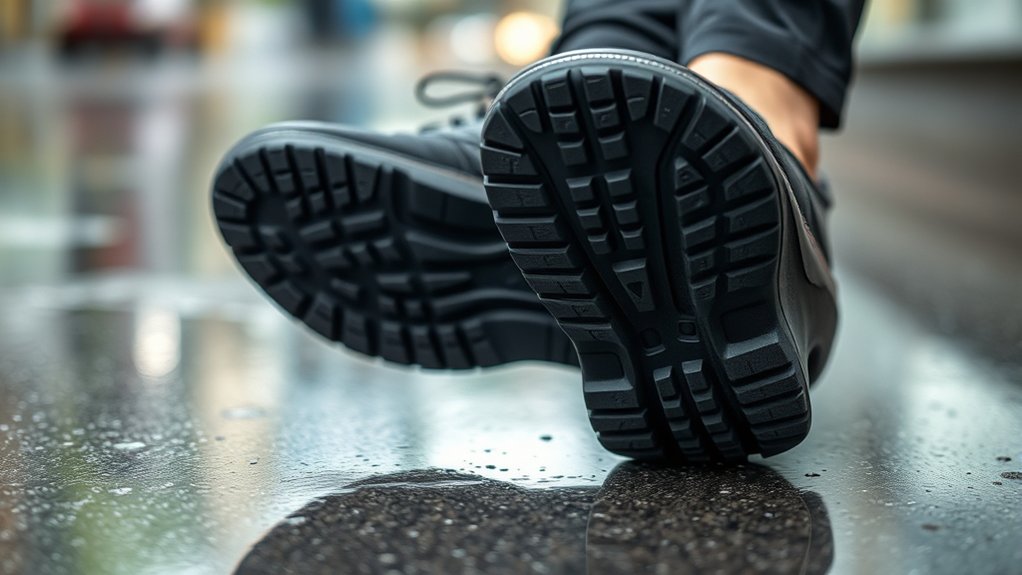
These shoes feature specially designed outsoles made from rubber compounds that resist slipping, even on wet or oily floors. The tread patterns channel liquids away, maintaining consistent contact between the shoe and ground.
You’ll notice that the soles are engineered to flex appropriately, adapting to surface irregularities and providing stable footing. This combination of material and design ensures that your foot remains firmly planted, reducing the likelihood of sudden slips.
Who Should Wear Non Skid Shoes and Why?
You should wear non skid shoes if you work in high-risk environments where slippery floors are common.
Healthcare professionals benefit from these shoes by reducing fall risks during long shifts. Additionally, those in the food industry rely on non skid footwear to maintain safety and hygiene standards.
High-Risk Work Environments
Where do non skid shoes make the most critical difference? In high-risk work environments where slippery surfaces and hazards are common, you need reliable footwear that prevents falls and injuries.
If you work in industries like construction, manufacturing, or food service, non skid shoes become essential. They provide superior traction on wet, oily, or uneven floors, reducing slip incidents significantly.
When considering discussion ideas about workplace safety, avoid non related topics and focus on how proper footwear directly impacts accident rates. Wearing non skid shoes in these environments isn’t just a recommendation; it’s a necessary precaution to protect yourself and maintain productivity.
Understanding where and why these shoes matter helps you make informed decisions and ensures compliance with safety standards.
Benefits for Healthcare Workers
Healthcare professionals face constant exposure to slippery floors caused by spills, cleaning agents, and fast-paced movement, making non skid shoes an essential component of their safety gear. As a healthcare worker, you rely on non skid shoes to minimize slip-and-fall incidents, which are a leading cause of workplace injuries in medical settings.
These shoes provide enhanced traction and stability on wet or polished surfaces, reducing your risk of accidents during critical tasks. Additionally, non skid shoes support prolonged standing and walking, common in healthcare roles, by offering comfort and reducing fatigue.
Wearing non skid shoes not only safeguards your physical well-being but also promotes efficient patient care by allowing you to move confidently and securely in demanding environments. For healthcare workers, these shoes are a vital safety investment.
Importance in Food Industry
Similar to medical environments, the food industry presents numerous hazards related to slippery floors caused by spills, grease, and wet surfaces. If you work in food preparation, service, or cleaning, wearing non skid shoes is essential for preventing slips, trips, and falls.
These shoes provide enhanced traction, reducing the risk of workplace injuries that can result from hazardous conditions common in kitchens and food processing areas. By wearing non skid shoes, you maintain stability and safety during fast-paced tasks, protecting both yourself and others.
Employers in the food industry often require non skid shoes to comply with safety regulations and promote a secure work environment. Ultimately, using non skid shoes helps you minimize accident risks and supports efficient, safe food industry operations.
Key Features That Provide Non Skid Grip
You’ll find that the sole material composition plays a pivotal role in providing effective non skid grip by enhancing traction and durability. The tread pattern design further improves stability by channeling liquids away and increasing surface contact.
Understanding these features helps you select shoes that prevent slips in various environments.
Sole Material Composition
Although many factors influence a shoe’s slip resistance, the sole material composition plays a pivotal role in providing a non-skid grip. When selecting non skid shoes, you’ll find that manufacturers commonly use specialized rubber blends engineered for premium friction and sole durability.
These rubber compounds are designed to maintain flexibility and traction across various surfaces, including wet and oily environments. The chemical makeup of these blends ensures the sole resists wear and maintains grip over time, reducing the risk of slips.
Additionally, rubber’s inherent elasticity allows it to conform subtly to floor irregularities, enhancing contact and stability. Understanding the sole’s material properties helps you appreciate how non skid shoes achieve consistent performance in demanding conditions without compromising durability.
Tread Pattern Design
How does the tread pattern contribute to a shoe’s non skid performance? The tread pattern plays a crucial role in enhancing sole traction by increasing surface contact and channeling away liquids. You’ll find that specific designs, such as deep grooves, multidirectional lugs, and siping, improve grip on slippery surfaces.
These features break the liquid film between the sole and floor, reducing hydroplaning risk. Additionally, varied tread depths optimize traction on different terrains, ensuring stability. When you examine non skid shoes, notice how the tread pattern is engineered to maximize friction and prevent slips.
Materials Used in Non Skid Shoe Soles
What materials make non skid shoe soles effective in preventing slips? You’ll find that the sole composition is critical; non skid materials must provide both grip and durability.
Manufacturers typically use rubber compounds or polyurethane, which offer excellent traction on wet or oily surfaces. These materials combine elasticity with abrasion resistance to maintain slip resistance over time.
| Material | Key Property |
|---|---|
| Rubber | High traction |
| Polyurethane | Wear resistance |
| Thermoplastic | Slip resistance |
| EVA (Ethylene Vinyl Acetate) | Lightweight cushioning |
| Nitrile Rubber | Oil and chemical resistance |
Choosing the Right Non Skid Shoes for You
When selecting non skid shoes, you need to contemplate the specific environments where you’ll use them and the types of hazards you face. Focus on choosing comfort by evaluating cushioning, arch support, and breathability, as prolonged wear demands ergonomic features.
Prioritize sizing consistency by consulting brand-specific size charts and reading customer reviews to avoid ill-fitting footwear, which can compromise safety and cause discomfort. Consider the sole material and tread pattern to match your work conditions, such as oil-resistant soles for kitchens or chemical-resistant options for industrial settings.
Additionally, ensure the shoe’s fit accommodates any orthotic inserts if necessary. By systematically evaluating these factors, you’ll select non skid shoes that enhance safety without sacrificing comfort or fit, optimizing your performance in hazardous environments.
Benefits of Non Skid Shoes Beyond Safety
Beyond ensuring safety, non skid shoes offer several advantages that can improve your overall work experience and well-being. These shoes combine function with design, providing more than just slip resistance.
You’ll appreciate the enhanced comfort and support they deliver during long shifts, reducing fatigue. Additionally, non slip aesthetics ensure you maintain a professional appearance without compromising safety standards.
The superior grip durability of these shoes means they retain their effectiveness over time, offering consistent performance. Moreover, their materials often resist stains and wear, preserving their look and function longer.
- Enhanced foot comfort and support
- Professional non slip aesthetics
- Long-lasting grip durability
- Resistance to stains and wear
- Improved confidence in diverse work environments
How to Care for Your Non Skid Shoes
How often should you clean and maintain your non skid shoes to ensure optimal performance? Ideally, you should perform cleaning routines after each use, especially if exposed to dirt, grease, or moisture. Regular maintenance prevents debris buildup that can compromise the sole’s grip.
Start by wiping down the shoes with a damp cloth to remove surface dirt. Use a soft brush to clean the treads thoroughly, eliminating trapped particles. Avoid harsh chemicals that may degrade the non skid material.
After cleaning, air-dry the shoes completely to prevent moisture damage. For care tips, store your shoes in a cool, dry place away from direct sunlight. Following these steps consistently will help preserve the shoe’s slip-resistant properties and extend their functional lifespan.
Frequently Asked Questions
Can Non Skid Shoes Be Worn Casually or Only at Work?
You can wear non skid shoes for casual wear and street use, as their design provides traction and safety. However, they’re primarily optimized for work environments, so their style may not suit all casual settings or fashion preferences.
Are Non Skid Shoes Waterproof or Water-Resistant?
Non skid shoes aren’t inherently waterproof but often feature water-resistant coatings. Their non slip materials undergo rigorous traction testing to ensure grip on wet surfaces, yet you should verify specific waterproof claims before purchase.
How Long Do Non Skid Shoes Typically Last?
Non skid shoes typically last 6 to 12 months, depending on wearability comparisons and material durability. High-quality rubber soles and reinforced uppers extend lifespan, while frequent use on abrasive surfaces reduces durability and overall wear time.
Can Non Skid Shoes Help With Foot Pain or Support?
Certainly, supportive soles substantially soothe. Non skid shoes boost foot comfort by providing firm footing and grip improvement, reducing strain and improving stability. This precise pressure distribution can help alleviate foot pain effectively during daily activities.
Are Non Skid Shoes More Expensive Than Regular Shoes?
Non skid shoes typically cost more due to specialized materials and design. When you compare, consider factors like durability and safety benefits.
Your two word discussion ideas should focus on “price difference” and “value proposition.”
Conclusion
By choosing the right non skid shoes, you anchor yourself firmly on slippery surfaces, like a ship steady in stormy seas. Their specialized soles grip with precision, reducing your risk of falls and injuries. Beyond safety, they offer comfort and durability, making each step confident and secure.
With proper care, your non skid shoes remain reliable, ensuring you navigate daily challenges with unwavering stability and control. Investing in quality non skid shoes is essential for maintaining safety and confidence in every step you take.