What Shoes Were Popular in the 80S
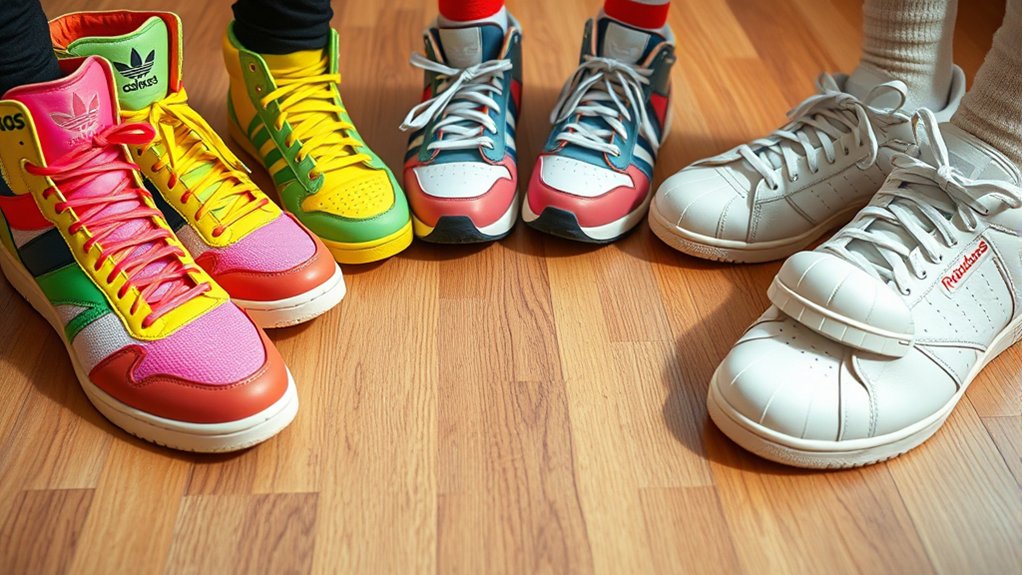
In the 80s, popular shoes included bold high-tops and chunky sneakers featuring neon laces, blending comfort with a fearless statement. High-tops offered ankle support and a confident, elevated silhouette, bridging performance and urban style. Brands like Reebok and Nike dominated by merging innovation with cultural influence.
Doc Martens and edgy boots symbolized rebellion against mainstream sneaker culture. Footwear wasn’t just fashion—it mirrored vibrant subcultures and social movements. Exploring further reveals how these styles shaped today’s trends.
Key Takeaways
- High-top sneakers were popular for their ankle support and stylish appeal in basketball and street dance cultures.
- Chunky silhouettes and neon laces defined 80s shoe styles, reflecting the decade’s bold, energetic vibe.
- Reebok dominated fitness markets with aerobics partnerships, while Nike led innovation and cultural relevance through athlete endorsements.
- Doc Martens boots symbolized rebellion and nonconformity, contrasting with mainstream athletic footwear trends.
- Footwear trends in punk, hip-hop, and new wave scenes showcased customization, DIY styles, and bold, futuristic designs.
Iconic 80s Shoe Styles That Defined the Decade
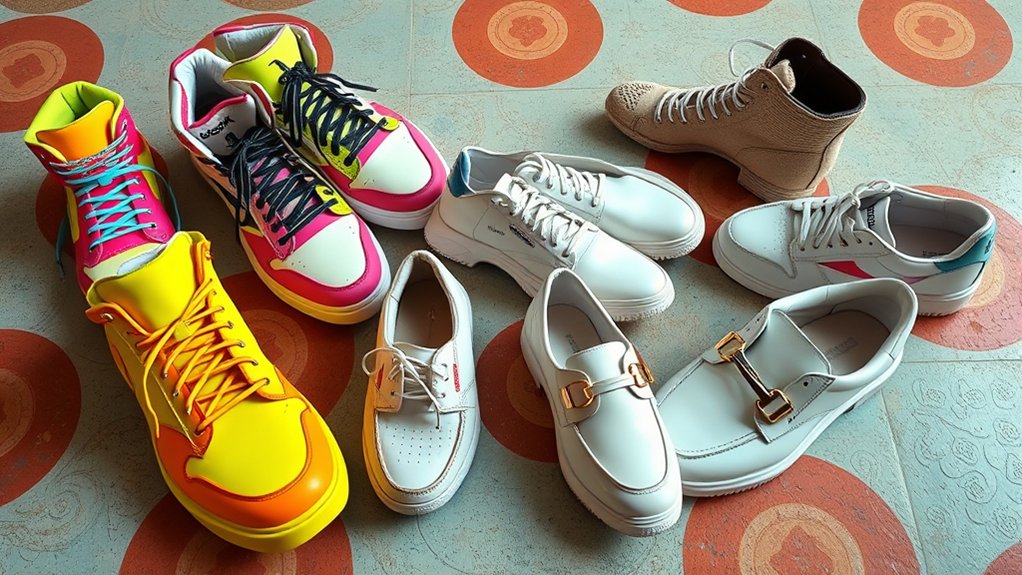
What made 80s shoe styles so iconic? You’ll notice it’s the bold blend of classic silhouettes with adventurous twists. Take the iconic t strap, for example. Its vintage charm married modern flair, making it a staple across casual and formal wear.
Neon laces weren’t just a pop of color; they symbolized the decade’s fearless attitude toward self-expression. Chunky silhouettes dominated, rejecting sleek minimalism for exaggerated shapes that commanded attention.
These designs weren’t random; they reflected 80s culture’s energetic, larger-than-life vibe. When you examine these elements, you see a deliberate fusion of comfort and statement-making aesthetics. By embracing both classic silhouettes and bold innovations, 80s shoes carved a unique niche that still influences fashion today.
Why High-Top Sneakers Were So Popular in the 80s
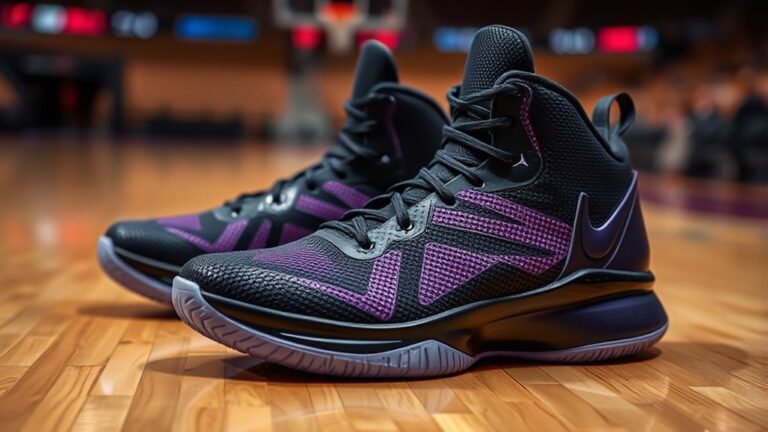
Building on the bold and expressive shoe designs of the 80s, high-top sneakers emerged as a standout choice that perfectly captured the era’s dynamic spirit. You’ll find that their popularity wasn’t just about style—it also reflected practical and cultural factors.
This subtopic explores fatigue? Yes, the high-tops provided essential ankle support during the rise of basketball and street dance, activities demanding endurance and agility. When you engage in two word discussion ideas like “performance wear” or “urban culture,” you see how high-tops bridged function and fashion.
Their elevated silhouette gave athletes and trendsetters alike the confidence to push limits while making a visual statement. So, you can appreciate why high-top sneakers became more than shoes. They were symbols of energy and resilience in a fast-moving decade.
How Reebok and Nike Shaped 80s Athletic Footwear
How did Reebok and Nike come to dominate the athletic footwear scene in the 80s? You can trace their rise to strategic moves that reshaped the market. Reebok partnerships with aerobics instructors and fitness influencers gave them a foothold in the booming workout culture.
This connection made Reebok shoes synonymous with fitness, appealing directly to a health-conscious audience. Meanwhile, Nike branding focused on innovation and cultural relevance, leveraging endorsements from athletes like Michael Jordan.
Their “Just Do It” campaign created an emotional connection that went beyond performance. Together, these strategies transformed athletic shoes into lifestyle icons. By aligning with emerging trends and influential figures, Reebok and Nike didn’t just sell shoes; they shaped an era’s identity and set standards that define athletic footwear today.
How Doc Martens and Edgy Boots Took Over the 80s
Why did Doc Martens and other edgy boots become symbols of rebellion and identity in the 80s? Unlike the mainstream appeal of Reebok sneakers and Nike athletic wear, Doc Martens and similar boots represented a countercultural stance.
You’d notice these sturdy, chunky-soled boots worn by youth rejecting the polished athletic look dominating the decade. Edgy boots conveyed toughness and nonconformity, aligning with emerging subcultures seeking to distinguish themselves from the commercialized sneaker trends.
While Nike and Reebok emphasized performance and mass appeal, Doc Martens offered durability and a raw aesthetic that matched the era’s underground music and fashion scenes. When you chose Doc Martens, you weren’t just picking footwear; you were making a statement against the homogenized sneaker culture shaping the 80s.
Popular 80s Shoe Trends in Punk, Hip-Hop, and New Wave
The shoe trends within punk, hip-hop, and new wave scenes in the 80s each captured distinct cultural identities through footwear choices. In punk circles, you’d spot boots and creepers, often adorned with DIY modifications, reflecting punk slang like “kicks” for shoes. These weren’t just shoes; they were statements of rebellion.
Hip-hop culture embraced the rise of iconic sneakers such as Adidas Superstars, where sneaker customization became a form of personal expression and street credibility. You’d often see hand-painted details or unique laces, making each pair a canvas of urban identity.
New wave fans leaned toward sleek, futuristic designs, favoring brands that emphasized bold colors and geometric shapes. Understanding these trends helps you see how footwear symbolized deeper social and artistic movements in the 80s.
How 80s Shoe Styles Influence Fashion Today
You’ve probably noticed how iconic retro sneakers from the 80s have made a strong comeback, blending nostalgia with modern design. Bold colors and patterns from that era now influence contemporary styles, making shoes statement pieces rather than just functional gear.
Plus, the fusion of comfort-focused designs from the 80s shapes how brands prioritize both style and wearability today.
Iconic Retro Sneaker Revival
How do 80s sneaker styles continue to shape contemporary fashion trends? You’ll notice the iconic sneaker silhouettes from that decade have sparked a retro revival, blending nostalgia with modern aesthetics. Brands revive classic designs like the Air Jordan 1 and Reebok Classic, maintaining their original structure but updating materials for today’s comfort and sustainability demands.
This revival isn’t just about copying the past. It’s a strategic nod to cultural heritage, appealing to both longtime fans and new generations. When you wear these retro-inspired sneakers, you tap into a rich visual history while embracing innovation.
The 80s sneaker revival also influences streetwear and high fashion, proving the decade’s designs remain relevant, versatile, and highly coveted in contemporary style circles.
Bold Colors And Patterns
Why do bold colors and patterns from the 80s continue to captivate fashion enthusiasts today? You’ll find that the era’s fearless use of bold colors redefined shoe design, pushing boundaries beyond traditional palettes.
The 80s embraced a pattern clash approach, mixing geometric shapes with animal prints and neon hues, creating vibrant, eye-catching footwear. This daring style challenges modern minimalism, encouraging you to express individuality.
When you wear shoes inspired by this decade, you’re not just making a statement; you’re tapping into a cultural moment that celebrated creativity and rebellion. Today’s designers resurrect these elements, blending nostalgia with contemporary trends, proving that bold colors and pattern clash aren’t just retro—they’re timeless tools for standout fashion.
You’ll notice this influence in how shoes continue to brighten wardrobes worldwide.
Fusion Of Comfort Styles
Where do comfort and style intersect in modern footwear? You’ll find that the fusion of 80s comfort styles greatly influences today’s shoe designs. Brands have revived nostalgic comfort by integrating retro ergonomics, think cushioned soles and supportive arches, into sleek, contemporary silhouettes.
This blend appeals to your desire for both function and fashion, echoing 80s innovations that prioritized foot health without sacrificing bold aesthetics. When you slip on shoes inspired by that era, you’re embracing a balance of vintage flair and modern technology.
The result? Footwear that feels as good as it looks, proving that comfort and style aren’t mutually exclusive. By analyzing these design choices, you’ll see how the 80s continue to shape footwear trends, making nostalgic comfort a cornerstone of today’s shoe culture.
Frequently Asked Questions
What Materials Were Commonly Used in 80S Shoe Manufacturing?
You’ll find that shoes materials in the 80s often included leather, synthetic fabrics, and rubber. Production techniques combined traditional craftsmanship with emerging synthetics, reflecting a shift towards durability, style, and mass production efficiency in footwear design.
How Did 80S Shoe Prices Compare to Today’s?
You’ll find 80s price trends show sneakers cost about $30 then, while today’s average hits over $100, illustrating sneaker inflation’s impact.
This shift reflects changing materials, branding, and consumer demand, altering affordability and market dynamics.
Were There Any Notable Shoe Advertisements or Campaigns in the 80S?
You’ll find 80s advertising campaigns groundbreaking, using bold visuals and catchy slogans. Brands like Nike led with innovative brand collaborations, boosting appeal.
These campaigns shaped sneaker culture, blending sport, music, and fashion in memorable ways.
How Did 80S Shoe Care and Maintenance Differ?
You’ll find 80s cleaning rituals were like sacred dances, using brushes and mild soaps to preserve vibrant colors. Sneaker rotation habits kept kicks fresh, preventing wear, reflecting an era valuing both style and strategic maintenance.
Which Celebrities Influenced 80S Shoe Trends the Most?
You’ll notice celebrity impact shaped 80s shoe trends through iconic figures like Michael Jackson and Madonna, whose brand collaborations fueled demand. Their influence pushed styles into mainstream culture, blending music, fashion, and marketing power effectively.
Conclusion
You’ve seen how 80s shoes like Nike’s high-tops weren’t just sneakers—they were cultural statements shaping music and sports scenes. Imagine rocking a pair of classic Reebok Pumps today; you’d not only turn heads but also tap into a rich history of innovation and style rebellion.
Understanding these trends helps you appreciate how 80s footwear still influences modern fashion. It proves that those bold choices weren’t just temporary—they’re timeless. The popularity of these iconic shoes highlights why 80s shoes were popular in the 80s and continue to inspire style today.