Why Do Women Wear High Heel Shoes
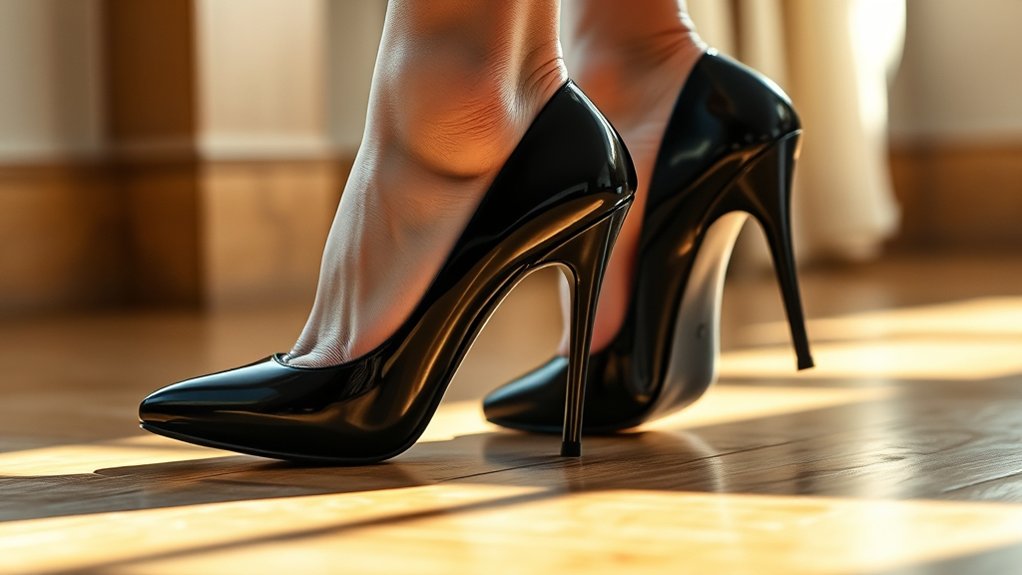
You wear high heels not just to stand taller but to shift your center of gravity forward, improving posture and adding an elegant silhouette. High heel shoes carry cultural meanings tied to status, femininity, and strength, signaling confidence and sophistication despite the discomfort they might bring.
Social expectations often pressure you to endure pain as a symbol of professionalism and allure. If you explore further, you’ll uncover how these shoes influence identity, confidence, and context in more nuanced ways.
Key Takeaways
- High heels improve posture by shifting weight forward, encouraging spine straightening and creating an elongated, elegant silhouette.
- They serve as cultural symbols of status, femininity, and sophistication, reinforcing traditional gender norms.
- Wearing heels boosts confidence by projecting height, assertiveness, and professionalism in social and formal settings.
- Despite causing discomfort, social pressure encourages women to wear heels to signal status and maintain appearance standards.
- Contexts like formal events or professional environments often dictate heel use to balance style, authority, and comfort.
How High Heels Enhance Posture and Appearance
When you slip on high heels, you immediately alter your body’s alignment, which can enhance your posture in noticeable ways. The elevated heel shifts your center of gravity forward, prompting you to engage your core and straighten your spine.
This adjustment creates a subtle arch in your lower back, elongating your silhouette and fostering the posture illusion of height and grace. These physical changes contribute to an enhanced elegance perception, as observers often associate upright posture with confidence and sophistication.
What Cultural Meanings Do High Heels Carry?
Why do high heels carry such powerful cultural meanings beyond their function as footwear? When you put on high heels, you’re engaging with deep-rooted traditional gender norms that link femininity to elegance and allure.
High heels act as a form of fashion symbolism, signaling social status, sophistication, and even power within certain contexts. These shoes have historically been coded as markers of gender identity, shaping perceptions of women’s roles in society.
You’ll notice how heels communicate a blend of vulnerability and strength, challenging and reinforcing gender expectations simultaneously. Understanding this cultural layering helps you see high heels not just as style statements but as complex symbols embedded in societal narratives around gender, beauty, and power.
How High Heels Can Boost Your Confidence
High heels do more than symbolize cultural ideals; they can directly influence how you feel about yourself. When you wear heels, your posture shifts. Your spine straightens, shoulders pull back, and your gait becomes more deliberate.
This physical change often triggers a confidence boost because you appear taller and more commanding. Beyond the internal effect, high heels serve as a form of social signaling, projecting assertiveness and style to those around you.
This external perception can reinforce your self-assurance, creating a feedback loop where how others respond elevates your confidence further. By consciously choosing heels, you engage both psychological and social mechanisms that enhance your presence, making you feel more empowered in various settings, from professional environments to social gatherings.
Why We Keep Wearing Heels Even When They Hurt
What drives you to choose style over comfort, even when your feet protest? Heels pain is a common consequence, yet you keep wearing them, influenced by entrenched social norms. Society often equates high heels with professionalism, elegance, and femininity, creating pressure to conform.
You might feel compelled to endure discomfort to fit these expectations or to signal status and confidence. Additionally, cultural messaging subtly reinforces that sacrificing comfort is part of maintaining appearance.
This tension between physical pain and social acceptance shapes your choices, making the temporary discomfort seem worthwhile. Understanding this dynamic reveals how deeply social norms govern footwear habits, explaining why, despite heels pain, you continue to prioritize style in pursuit of acceptance and identity expression.
When and Where Women Wear High Heels
Where do you typically choose to wear heels, and how does the setting influence that decision? Your choice often hinges on comfort zones shaped by social expectations and practical needs.
In formal events or professional settings, you might opt for heels to project confidence and align with fashion psychology principles that tie elevated posture to authority and attractiveness. Conversely, casual outings or environments requiring prolonged standing may push you toward flats, respecting your comfort zones.
The context dictates not only the style but also the heel height, balancing appearance with physical ease. Understanding when and where to wear heels helps you navigate social norms while managing comfort, revealing how fashion psychology subtly guides your footwear choices in different scenarios.
Frequently Asked Questions
How Did High Heels Originate Historically?
You’ll find high heels originated in 10th-century Persia, used by cavalry for stability. Origin myths often obscure this, but cultural diffusion spread heels to Europe, where they evolved into status symbols and fashion statements over centuries.
Are There Health Risks Associated With Wearing High Heels?
Yes, high heel safety concerns include foot pain, balance issues, and joint strain. You should consider shoe fit factors like arch support and heel height to reduce risks and maintain comfort while wearing heels regularly.
What Are the Best Materials Used to Make High Heels?
When it comes to high heels, you’ll want materials that stand the test of time. Eco friendly leather offers durability and style, while synthetic fabrics provide versatility and affordability, letting you strike while the iron’s hot in your shoe choices.
How Do High Heels Affect Foot Anatomy Over Time?
You’ll notice high heels shift your foot’s natural alignment, causing toe deformities and increased pressure. Over time, this cosmetic impact can lead to bunions, hammertoes, and chronic discomfort, altering both function and appearance markedly.
What Alternatives to High Heels Provide Similar Aesthetic Effects?
You can explore alternative footwear like wedges, platform shoes, or stylish flats to achieve similar fashion aesthetics.
Embracing footwear diversity lets you experiment with style while maintaining elegance and comfort, enhancing your overall look thoughtfully and confidently.