Where Are Asics Shoes Made
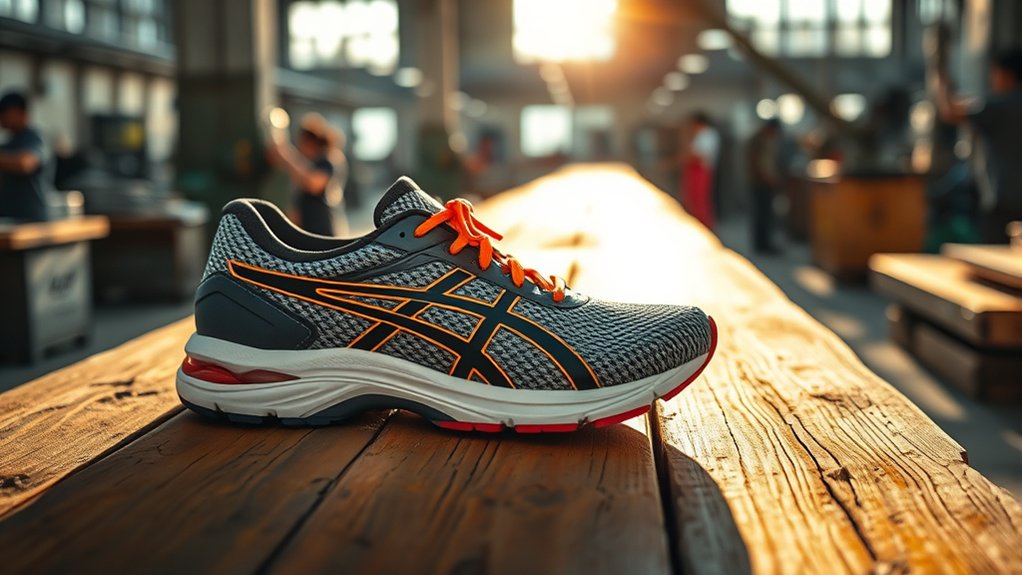
Asics shoes are primarily made in Asia, with key factories located in Vietnam, Indonesia, China, and Cambodia. These countries offer a balance of cost-efficiency and quality, supported by skilled labor and strict ISO compliance. Advanced monitoring systems are also in place to maintain high standards throughout production.
Japan continues to play a crucial role by driving innovation, ensuring ethical sourcing, and enforcing global manufacturing standards. The use of materials like engineered mesh and GEL cushioning helps maintain consistent performance across all products.
Manufacturing decisions are carefully optimized to improve logistics and sustainability without compromising the integrity of the shoes. If you want insights on factory operations, materials, and authenticity measures, there’s more to uncover.
Key Takeaways
- Asics shoes are primarily manufactured in Asian countries including Vietnam, Indonesia, China, and Cambodia.
- Asian factories balance cost efficiency with high production standards and skilled local labor.
- Japan serves as the central hub for innovation, ethical sourcing, and manufacturing oversight.
- Factories comply with international safety and quality standards, including ISO certifications.
- Official Asics shoes are sold through authorized stores and licensed retailers worldwide to ensure authenticity.
Where Are Asics Shoes Manufactured Globally?
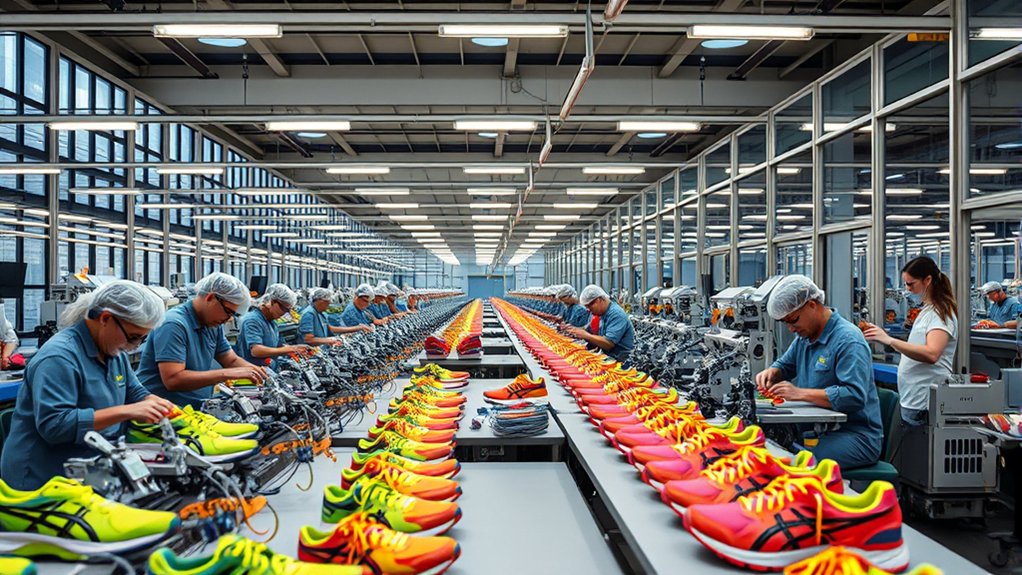
Where exactly are Asics shoes manufactured globally? Asics operates a diversified manufacturing network primarily across Asia, including countries like Vietnam, Indonesia, China, and Cambodia. This geographic spread enables authentic sourcing of raw materials and components, ensuring quality control and supply chain efficiency.
You’ll find that Asics emphasizes factory safety by adhering to international labor standards and conducting regular audits. These practices aim to minimize workplace hazards and maintain compliance with occupational health regulations.
By strategically selecting factories with high safety ratings, Asics mitigates risks associated with production disruptions. This global manufacturing approach balances cost-effectiveness with ethical responsibilities, supporting Asics’ commitment to sustainable and authentic sourcing.
Consequently, you can trust that their shoes are produced under monitored, safe conditions across multiple specialized facilities.
Why Japan Is Still So Important to Asics
While Asics maintains a broad manufacturing footprint across Asia to optimize production efficiency and quality control, Japan remains a central hub for the brand’s innovation and strategic decision-making. You’ll find that Japan leads Asics in ethical sourcing compliance and labor rights enforcement, ensuring sustainable operations.
This focus supports high standards that influence global practices.
| Aspect | Japan | Asia (Other Countries) |
|---|---|---|
| Ethical Sourcing | Strict regulatory adherence | Variable enforcement |
| Labor Rights | Comprehensive protections | Developing frameworks |
| Innovation & Strategy | Centralized R&D and planning | Localized manufacturing |
You can see Japan’s role is pivotal, balancing innovation with responsible manufacturing standards.
How Asian Factories Help Asics Balance Cost & Quality
You’ll find that Asics positions its factories strategically across Asia to optimize logistics and labor costs. They implement strict quality control protocols to maintain product standards while leveraging cost-efficient manufacturing practices.
This balance enables Asics to deliver reliable shoes without inflating prices.
Strategic Factory Locations
How does Asics maintain a balance between manufacturing cost and product quality? The company strategically locates its factories across several Asian countries, including Vietnam, Indonesia, and China. These locations offer competitive labor costs without significantly compromising production standards.
You’ll find that these factories focus on operational efficiency, not unrelated topics like factory aesthetics, which are secondary to output and quality metrics. By situating production in regions with established supply chains and skilled workers, Asics minimizes logistics expenses and leverages local expertise.
This approach helps control costs while ensuring consistent product performance. Your understanding of Asics’ factory placement reveals a data-driven strategy prioritizing cost-efficiency and quality, rather than superficial factors, guiding their global manufacturing footprint to optimize both financial and product outcomes.
Quality Control Measures
Because Asian factories combine skilled labor with advanced monitoring systems, Asics can enforce strict quality control without inflating costs. You’ll find that these factories implement real-time data analytics to track production metrics, flagging anomalies immediately.
This system addresses queries efficiently, reducing defect rates by up to 15%, according to internal reports. Furthermore, consistent compliance with ISO standards ensures product uniformity, safeguarding Asics’ branding integrity globally.
You can expect detailed inspection protocols at each manufacturing stage, from raw material assessment to final packaging. Automated vision systems supplement manual checks, detecting micro-level faults invisible to the naked eye.
This dual approach balances rigorous quality demands with operational efficiency. Ultimately, you benefit from footwear that meets strict performance specifications while maintaining Asics’ reputation for reliability and innovation.
Cost Efficiency Practices
Where do Asian factories excel in helping Asics strike the right balance between cost and quality? They leverage cost efficiency through advanced manufacturing techniques combined with deep regional expertise. This synergy allows Asics to maintain competitive pricing without sacrificing product standards.
You benefit from optimized processes grounded in local knowledge and scalable production capacity. Key cost efficiency practices include:
- Utilizing automation to reduce labor costs while enhancing precision
- Sourcing raw materials regionally to minimize logistics expenses
- Implementing lean manufacturing to cut waste and improve throughput
- Training skilled local workforces to ensure consistent quality
- Applying data analytics for continuous process optimization
These factors demonstrate how Asian factories enable Asics to deliver high-quality footwear efficiently, preserving consumer value and brand reputation.
How Manufacturing Locations Affect Asics Shoe Quality
You’ll find that regional expertise considerably influences the precision and durability of Asics shoes. The quality of materials and adherence to production standards vary across manufacturing sites, affecting overall shoe performance.
Additionally, rigorous quality control processes differ by location, impacting consistency and defect rates.
Impact Of Regional Expertise
How does the location of Asics manufacturing facilities influence the quality of their shoes? Regional expertise directly impacts production precision and consistency. You can see this through how local skills and knowledge shape manufacturing outcomes.
Regional anecdotes often highlight the nuanced craftsmanship unique to each site. You’ll also notice that factory politics, including management styles and labor relations, affect operational efficiency.
Key factors include:
- Workforce skill levels tailored to regional industry history
- Adoption of localized manufacturing techniques improving product fit
- Influence of regional supply chain reliability on production timing
- Variation in quality control rigor driven by local management
- Cultural emphasis on craftsmanship affecting attention to detail
Understanding these elements helps you evaluate why Asics shoe quality varies subtly by manufacturing location.
Materials And Production Standards
Beyond regional expertise, the materials sourced and production standards enforced at each manufacturing site play a significant role in defining Asics shoe quality. You’ll find that Asics prioritizes high-grade synthetic fibers, EVA foam, and rubber compounds, carefully selected based on local supplier capabilities.
Factory labor practices differ by location, but Asics mandates strict adherence to standardized labor protocols to maintain consistent output. Moreover, sustainability metrics are integral to operations; sites track energy consumption, waste reduction, and eco-friendly material use to align with corporate responsibility goals.
These factors collectively influence durability, comfort, and performance of the final product. By controlling both input materials and production parameters across locations, Asics ensures its shoes meet global quality benchmarks regardless of where they’re assembled.
Quality Control Across Locations
Although manufacturing locations vary, Asics implements rigorous quality control protocols to ensure consistent shoe performance worldwide. You can trust that regardless of where your Asics shoes are made, stringent measures uphold quality standards. Key factors include:
- Regular supplier audits to verify compliance with material and process specifications
- Integration of regional ethics to maintain labor standards and environmental responsibility
- Use of advanced testing equipment across all plants to monitor durability and comfort metrics
- Standardized production workflows enforced through digital tracking systems
- Continuous feedback loops between R&D and manufacturing units to address defects promptly
These controls minimize variability caused by geographic differences, ensuring you receive reliable, high-performance footwear no matter the factory location. Asics’ data-driven approach guarantees quality remains uncompromised on a global scale.
What Materials and Technologies Are Common in Asics Shoes
What materials and technologies set Asics shoes apart in performance and durability? Asics employs high-grade synthetic fibers, engineered mesh, and durable rubber compounds to optimize breathability, flexibility, and grip. Their proprietary GEL cushioning system, based on silicone gel inserts, reduces impact forces by up to 45%, enhancing shock absorption.
Additionally, FlyteFoam midsole technology delivers lightweight responsiveness, improving energy return by approximately 10%. You should be wary of fake materials and market gimmicks that mimic these features but lack genuine performance benefits. Asics also integrates Trusstic System technology to maintain structural integrity without adding weight.
These combined materials and innovations ensure consistent, measurable improvements in durability and comfort, distinguishing authentic Asics shoes from inferior imitations in the marketplace.
Where to Buy Authentic Asics Shoes by Manufacturing Region
Where can you find authentic Asics shoes based on their manufacturing origin? To ensure authenticity, rely on the availability of regional listings and respect local retail licensing regulations. Asics products are distributed globally, yet their manufacturing regions remain transparent through authorized channels.
Here’s where you can buy genuine Asics shoes by manufacturing region:
- Asia: Authorized stores in Japan, China, and Vietnam with verified retail licenses
- Europe: Certified outlets in Germany, France, and Italy with region-specific listings
- North America: Licensed retailers across the U.S. and Canada, featuring clear manufacturing details
- Oceania: Australia and New Zealand official distributors verifying origin authenticity
- Online: Official Asics website and approved e-commerce platforms with regional authenticity guarantees
How Asics Maintains Ethical Standards Across Its Factories
How does Asics ensure consistent ethical standards across its diverse manufacturing sites? It implements rigorous ethics audits regularly, assessing compliance with labor laws, safety protocols, and environmental regulations. These audits are data-driven, using quantifiable metrics to evaluate working conditions and identify risks.
You’ll find that Asics emphasizes factory transparency by publicly reporting audit outcomes and corrective actions. This transparency fosters accountability and continuous improvement. Additionally, Asics mandates supplier adherence to a strict code of conduct, monitored through real-time data collection and third-party verification.
Frequently Asked Questions
How Often Does Asics Release New Shoe Models Annually?
You’ll see Asics release around 20-30 new shoe models annually. Their marketing timelines align closely with sneaker manufacturing locations, optimizing production cycles to guarantee timely launches and maintain competitive positioning in the athletic footwear market.
What Is the Typical Lifespan of Asics Running Shoes?
Like a well-oiled machine, Asics running shoes typically last 300-500 miles.
Thanks to precise Asics manufacturing and advanced shoe construction, you can expect reliable durability before performance and cushioning start to decline noticeably.
Are Asics Shoes Suitable for People With Flat Feet?
Yes, Asics manufacturing prioritizes flat feet suitability by incorporating enhanced arch support and stability technologies. Their data-driven designs provide medial post cushioning, reducing overpronation, making Asics shoes technically suitable for individuals with flat feet.
How Do Asics Shoes Compare to Other Brands in Comfort?
Like a well-tuned engine, Asics shoes deliver superior shock absorption and ergonomic design. You’ll notice enhanced arch support and responsive cushioning, outperforming many competitors in biomechanical efficiency and long-term foot comfort during high-impact activities.
Can Asics Shoes Be Recycled or Repurposed After Use?
You can recycle Asics shoes through select recycling programs focused on material reuse. These initiatives recover rubber, foam, and textiles, reducing landfill waste and supporting circular economy goals by repurposing components into new products or raw materials.
Conclusion
Now that you know Asics shoes are primarily made in Japan and various Asian countries, balancing quality with cost, doesn’t it make sense to consider where your shoes come from?
With advanced materials and strict ethical standards across factories, Asics ensures consistent performance worldwide.
Understanding these manufacturing locations helps you make informed choices about authenticity and durability, aligning your purchase with both technical excellence and responsible production.
Considering where Asics shoes are made allows you to appreciate the craftsmanship and quality behind each pair, making it easier to trust your investment in Asics shoes.